 English (United States)
  English
  Spanish
  Portuguese
  French
  Indonesian
  Italian
 Mine tailings water management combines decant and reclaim systems, treatment for discharge quality, and mechanical evaporation to control the volume and quality of water held in a tailings storage facility. Operations typically recycle as much water as the plant can use, treat any water that needs to be released, and remove excess volume that neither system can absorb.
Key takeaways
- Recovery comes first. Decant and reclaim systems return clarified water from the tailings storage facility to the plant before any other process runs.
- Recovery rates vary by design. Well-operated conventional tailings dams recover 65 to 75% of process water, and filtered dry stacking can lift that above 90%.
- Treatment applies to what’s left. Water that can’t be reused or held is treated to meet discharge licence conditions before release.
- Evaporation targets the surplus. Mechanical evaporation reduces stored water volume once decant, reclaim and treatment capacity have been used.
- The right mix is site-specific. Climate, tailings chemistry and dam design all shape which combination of solutions fits.
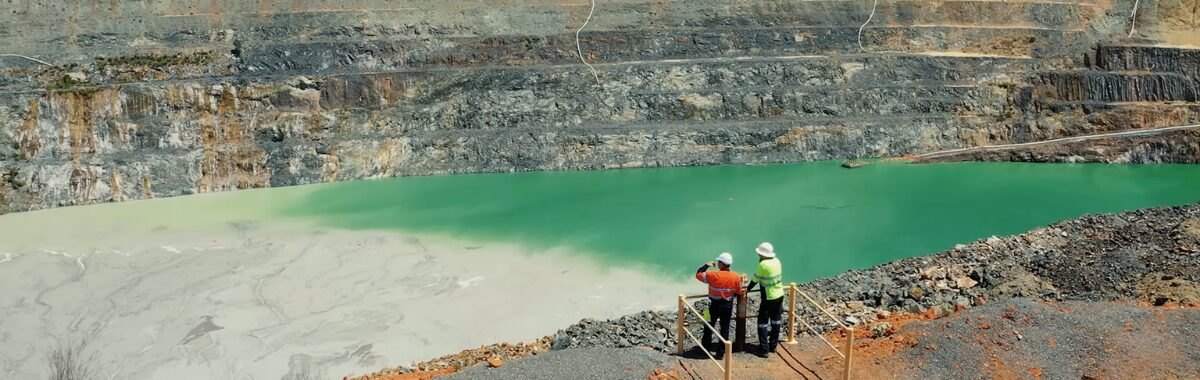
Mining water management controls the tailings facility water balance.
Mining water management at a tailings facility means controlling everything that adds water to the pond and everything that removes it. The facility holds a growing surplus whenever inflows consistently exceed what the plant reclaims and what evaporates naturally, and that surplus drives dam loading, storage risk and compliance exposure.
Three inputs add water to a tailings facility.
- Tailings slurry. Water arrives bound up with the ground rock and residual process chemicals pumped from the plant.
- Rainfall. Direct precipitation onto an uncovered pond adds to stored volume in every wet season.
- Catchment runoff. Surface water from the surrounding catchment can flow into the facility depending on site design.
Four outputs remove water from a tailings facility.
- Decant to the plant. Clarified surface water is pumped back for reuse in processing.
- Natural evaporation. Water is lost to the atmosphere at a rate that depends on climate.
- Seepage. Water moves through or under the dam wall and is captured for return to the reclaim circuit.
- Controlled discharge. Treated water is released under the conditions of an environmental licence.
The Global Industry Standard on Tailings Management, developed following the Brumadinho and Samarco dam failures, places water management at the centre of tailings facility design because of how directly it affects structural stability.
Decant, reclaim and seepage capture recover tailings water.
Decant and reclaim systems, water treatment, and mechanical evaporation are the solutions that help mining operations manage tailings water more effectively, and each addresses a different part of the site water balance.
Decant and reclaim systems recycle process water first.
Decant systems draw clarified water from the surface of the tailings pond once solids have settled, sending it to a reclaim pond for reuse in the mill. Reusing this water directly cuts the volume of fresh make-up water the plant needs to draw, which makes decant and reclaim the default recovery method on almost every active tailings facility.
Recovery rates depend on facility design.
- Conventional tailings dams with well-managed pond control and seepage collection recover 65 to 75% of process water in well-operated facilities.
- Filtered dry stacked tailings, which store an unsaturated cake rather than a slurry pond, can push water recovery above 90% while also reducing the facility’s footprint.
- Seepage collection captures water moving through or under the dam wall and returns it to the reclaim circuit rather than letting it reach groundwater uncontrolled.

Tailings water treatment handles water that recovery can’t reuse.
Tailings water treatment removes contaminants from water that decant and reclaim cannot fully recover, either because it needs to be discharged or because contamination levels are too high for direct reuse. Tailings water frequently carries elevated total dissolved solids, total suspended solids, heavy metals and extreme pH, all of which need to be managed before release.
Environment Protection Licences set the discharge conditions treatment must meet
In New South Wales, mine sites hold Environment Protection Licences that set conditions on the quality and quantity of any water discharged from the site. Treatment systems are typically sized to meet those licence conditions rather than to process the full pond volume, which makes treatment a targeted solution for the water that must leave the site rather than a substitute for recovery and reuse.
Reuse extends the value of treated water.
- Process reuse: treated water can go back into the plant alongside decant water.
- Dust suppression: treated water supports site dust control without drawing fresh supply.
- Other site processes: any process tolerant of the treated water quality can reduce fresh water demand further.
Excess water still accumulates in the facility when treatment cannot keep pace with inflow, or when discharge limits or environmental conditions restrict release, regardless of how well the treatment plant performs.
Mechanical evaporation cuts excess tailings water without new infrastructure.
Mechanical evaporation reduces stored tailings water volume once decant, reclaim and treatment capacity are fully committed and the facility still holds more water than the site wants to store. It accelerates the natural loss of water to the atmosphere, concentrating contaminants in a smaller residual volume without any discharge to the environment.
Evaporation suits water conventional treatment struggles to process.
- High total dissolved solids and total suspended solids: streams that would foul or damage many treatment systems.
- Extreme pH: Minetek’s mechanically enhanced evaporation processes a pH range from 1.8 to 14+.
- No chemical pre-treatment required: the process relies on airflow and phase change, not filtration or membranes.
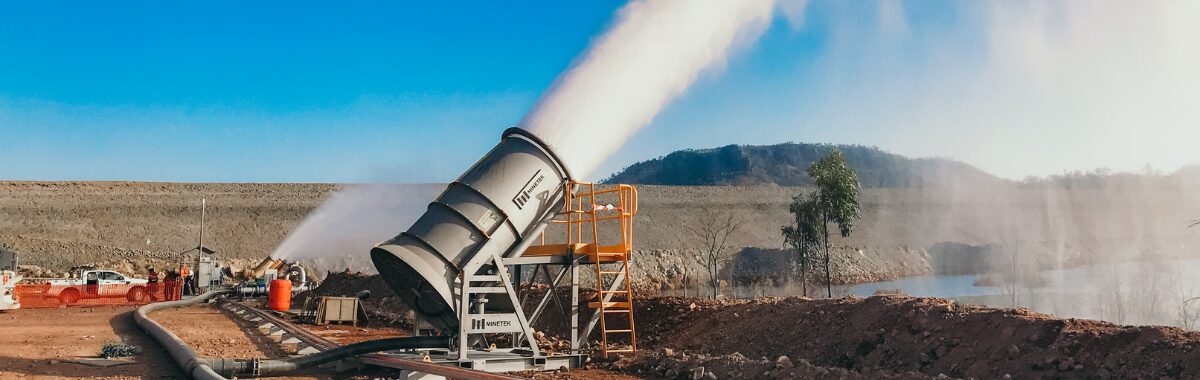
Case study: 1,340 m³/hour across a tailings dam and mining pits.
A gold mining operation in South Carolina deployed a 14-unit Water Evaporator System Package across its tailings dam and mining pits, achieving a combined throughput of 1,340 cubic metres per hour. The system reduced excess water levels across both the tailings dam and the pits without adding treatment infrastructure or raising the dam.
Tailings water management options compared.
| Approach | What it does | Best suited to | Key consideration |
| Decant and reclaim | Recycles clarified water back to the plant | Sites with a manageable water balance and settled tailings | Limited by pond clarification rate and reclaim pond capacity |
| Water treatment | Removes contaminants to meet discharge licence conditions | Water that must be released or reused off-site | Can require significant infrastructure for high TDS or extreme pH streams |
| Mechanical evaporation | Reduces stored water volume by accelerating evaporation | Excess water beyond decant, reclaim or treatment capacity | Performance depends on climate and site evaporation conditions |
Most tailings facilities run decant and reclaim as the default, apply treatment to the portion that must meet a discharge standard, and bring in evaporation when the remaining surplus still needs to come down. None of the three solutions operates in isolation from the others.
Minetek’s mechanical evaporation technology gives mining operations a way to reduce tailings dam water levels without adding a treatment plant or raising a dam, processing water that conventional systems struggle to handle. Sites carrying more water than their reclaim and treatment systems can absorb gain back storage capacity and stronger control over their water balance as a result.
Looking for a way to bring down excess water in a tailings storage facility without new treatment infrastructure? Connect with Minetek’s water management team to assess evaporation options for your site’s water chemistry and climate.
Frequently Asked Questions (FAQs)
Which solutions help mining operations manage tailings water more effectively?
Decant and reclaim systems, water treatment, and mechanical evaporation together help mining operations manage tailings water more effectively. Decant and reclaim recover process water for reuse, treatment addresses water that must meet discharge conditions, and mechanical evaporation reduces any remaining surplus without new infrastructure.
What is tailings water treatment?
Tailings water treatment is the process of removing contaminants such as heavy metals, dissolved solids and extreme pH from tailings water so it meets discharge licence conditions or can be safely reused on site.
How much tailings water can mining operations recycle?
Well-operated conventional tailings dams typically recycle 65 to 75% of process water through decant and reclaim systems, while filtered dry stacked tailings can recover more than 90%.
What are tailings pond solutions for managing excess water?
Tailings pond solutions for excess water include expanding decant and reclaim capacity, adding treatment for discharge, and mechanical evaporation to reduce stored volume once other options reach their limit.
When should a mine site consider mechanical evaporation for tailings water?
A mine site should consider mechanical evaporation when tailings water volume exceeds what decant, reclaim and treatment systems can process, particularly where the water carries high dissolved solids or an extreme pH that limits conventional treatment.