Pular para o conteúdo principal
Entre em contato conosco
Voltar para notícias e percepções

The water infrastructure gap in growing mining operations.

Publish date: 10 abril 2026

When does a mine water system stop being adequate for the operation it was built to support?

In many growing mining operations, it happens gradually. A system designed for an earlier stage of the mine starts managing more water, across longer distances, through a layout that no longer reflects how the site is operating today. 

As pits deepen, throughput rises and working areas shift, water infrastructure can fall behind production growth. Drainage, pumping, storage and transfer capacity may still be functioning, but no longer at the level the operation requires. 

That gap creates more than a water management challenge. It can restrict access, increase flooding exposure, raise operating costs and add pressure to environmental performance. What begins as a capacity mismatch can quickly become an operational constraint. 

Flexible water solutions like mechanically enhanced evaporation are becoming increasingly important as sites adapt to changing demands. 


Operational impacts of water infrastructure lag.

  • Infrastructure lag is accelerating: AI and automation are lifting output by 5% to 10% at mature sites, while mine development cycles still average 15+ years, leaving core water infrastructure behind production growth.
  • Water demand is rising with expansion: Mine water management demand is forecast to grow at a 7.5% CAGR, increasing pressure on drainage, storage, transfer and treatment systems. 
  • Deeper operations carry higher water risk: In pit-to-underground transitions, groundwater depletion and acid mine drainage recorded up to a 78% severity impact on site sustainability. 
  • Flexible infrastructure is becoming more important: Operators are increasingly looking to decentralised and redeployable systems that can scale with site demand instead of locking capital into fixed infrastructure too early. 
  • Mechanical evaporation offers scalable capacity: Demand for evaporator systems is rising, with the global market projected to reach US$32.3 billion by 2031, reflecting the need for engineered solutions that can help sites manage excess water as operations grow. 


What happens when production grows faster than water infrastructure?

When production grows faster than water infrastructure, the mine’s water system can shift from a support function to an operational constraint. 

De acordo com Infosys’ Mining Industry Outlook 2024, AI and automation have lifted output by 5% to 10% at mature sites, while the discovery-to-production cycle still averages 15+ years, creating a mismatch between faster production gains and slower infrastructure development. In practice, that means water systems designed for an earlier stage of the operation can be left carrying more volume, across greater distances, through a site layout that no longer reflects current production demands. 

As this gap widens, drainage, pumping, storage and transfer systems may still be operating, but no longer at the level the site requires. What was once adequate becomes harder to rely on as pits deepen, throughput increases and working areas shift. 

Technavio’s Global Water and Wastewater Management Market for the Mining Sector (2025–2029) points to the scale of that pressure, forecasting mine water management demand to grow at a 7.5% CAGR as operations expand. That growth does not just increase water volumes. It puts more strain on whether existing infrastructure can still support access, productivity and safe site movement. 

The risk becomes more pronounced as mines deepen or transition underground. In its 2025 study on sustainable hazards in open-pit to underground transitions, MDPI’s Água journal found that groundwater depletion and acid mine drainage reached severity impacts of up to 78% in the assessed transition context, showing how quickly water-related risks can intensify when infrastructure is not scaled with changing mine conditions. 

Group_Images_In text_02062024 (24)

Why does water infrastructure fall out of step with the mine plan?

Water infrastructure falls out of step with the mine plan when site conditions change faster than core systems can be adapted. 

As production increases, the mine footprint rarely stays fixed. Pits deepen, working areas shift, access routes change and water often must be managed across longer distances and more complex layouts. In Ausenco’s Mining’s New Water Reality, the company notes that aging drainage systems can become overwhelmed and access corridors that were once dependable can turn into vulnerable choke points as site conditions change. 

The mismatch grows when drainage, pumping, storage and transfer systems are still based on an earlier operating footprint, even as the site is managing higher throughput, deeper pits and changing production conditions. The infrastructure may still be functioning, but no longer in a way that reflects how the operation is running today. 

What once supported the mine can become progressively harder to rely on as production moves ahead of water management capacity. 


What risks emerge when water infrastructure falls behind?

When water infrastructure falls behind, water starts affecting more than storage and transfer. It begins to interfere with access, movement and day-to-day operations across the site, putting more pressure on haul routes, ramps and active working areas. 

As that pressure builds, sites can face: 

  • Restricted access to active mining areas
  • Higher flooding exposure across critical parts of the site
  • Rising pumping and transfer demands as water is moved around the operation
  • Greater reliance on reactive workarounds instead of fit-for-purpose infrastructure
  • Higher operating costs and lower flexibility as the mine continues to grow  

What starts as a capacity gap can quickly become a broader operational constraint. 


What flexible, scalable water solutions can help close the gap?

Closing the gap between production growth and water management capacity often requires more than expanding fixed infrastructure. Sites may need water solutions that can adjust as operating conditions change. 

These solutions can include: 

  • Modular treatment capacity that can be added as water demands increase
  • Decentralised systems that reduce reliance on a single fixed infrastructure path
  • Redeployable units that can be repositioned as mine layouts change
  • Real-time monitoring and control that improve visibility across changing site conditions
  • Integrated water management strategies that help align capacity with current demand  

In Seven Seas Water Group’s 2026 Water & Wastewater Infrastructure Trends, the company describes a shift toward decentralised treatment as a resilience strategy, with modular and redeployable systems helping operators align capacity more closely to real demand. 

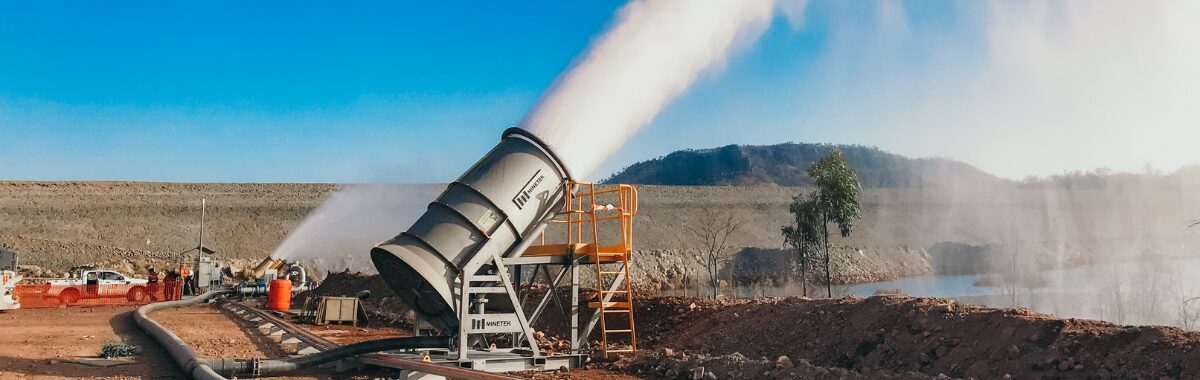
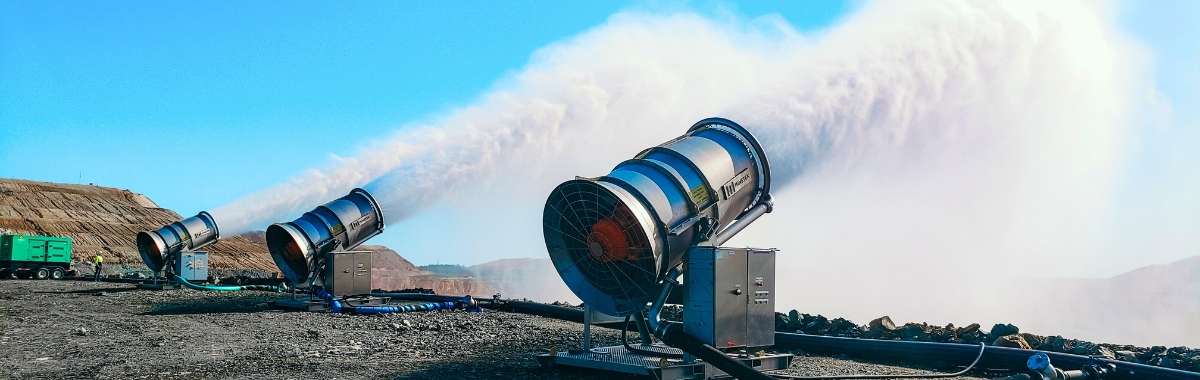
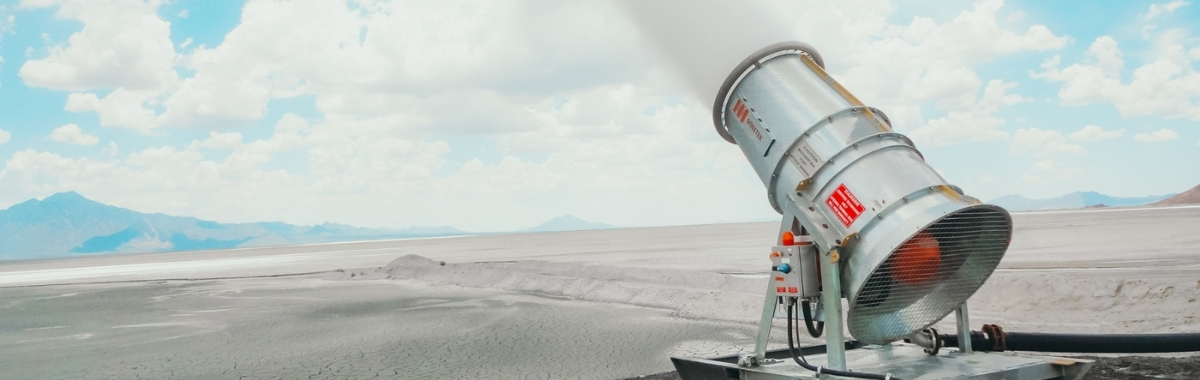
Minetek floating evaporators

Where does mechanically enhanced evaporation fit?

Mechanically enhanced evaporation is one example of a flexible water solution that can help sites add capacity as demands change. 

It is most relevant where operations need to: 

  • Manage excess stored water more efficiently
  • Add water management capacity without relying only on permanent civil expansion
  • Respond to changing water balances as production grows
  • Reduce pressure on storage and transfer systems already under strain
  • Support a broader site water strategy with a scalable response option  

According to the Knowledge Sourcing Intelligence Evaporator Market – Forecast from 2026 to 2031, the global evaporator market is projected to reach USD 32.322 billion by 2031, reflecting demand for engineered systems that can operate reliably in demanding production environments. That makes mechanically enhanced evaporation a credible example of how mining operations can add scalable water management capacity without treating every infrastructure gap as a permanent civil works problem. 


Minetek’s Mechanically Enhanced Evaporation (MEE) technology.

mechanically enhanced evaporation (MEE) technology is engineered to reduce stored water volume quickly and reliably in demanding mining environments. 

Our systems combine atomisation and optimised airflow, supported by fan engineering principles, to achieve rapid water volume reduction in demanding mining environments. That matters because mine water often contains elevated dissolved solids, suspended solids and variable chemistry, making it more difficult for conventional equipment to perform reliably. 

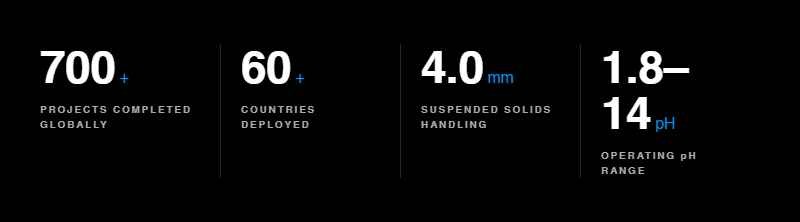
Minetek water evaporators are designed to handle high-TDS and high-TSS waters, solids up to 4.0 mm, and pH ranges from 1.8 to 14+. Our evaporation systems can process in excess of 135 m³/hour per unit, with automated 24/7 operation and scalable deployment across different site requirements. 


Minetek capability at a glance.

  • Engineered for mine water: Designed for high-TDS, high-TSS, acidic, caustic, and contaminated water conditions.
  • High-rate performance: More than 135 m³/hour per unit, with larger site configurations scaling significantly higher.
  • Low-fouling design: Engineered nozzle performance helps support reliability in difficult water conditions.
  • 24/7 automated operation: Continuous operation helps sites respond faster to changing water volumes.
  • Implementação rápida: Systems can be mobilised quickly where excess water is already affecting operations. 


Close the gap between water infrastructure and site demand.

When production growth starts to outpace water management capacity, short-term workarounds can quickly become an ongoing constraint. Minetek helps mining operations take a more proactive approach with evaporation solutions designed to reduce stored water volume and support changing site conditions. 

Connect with our Minetek water management experts to discuss the right evaporation solution for your site conditions, water volumes, and operational requirements. 


Group_Images_In text_02062024 (83)

Perguntas frequentes

What is the water infrastructure gap in mining? 

  • The water infrastructure gap is the point where drainage, pumping, storage, transfer or treatment capacity no longer matches the demands of the operation. It typically emerges as pits deepen, throughput rises and mine layouts change. 


Why does water infrastructure fall behind production growth? 

  • Water infrastructure is often designed around an earlier stage of the mine. As production expands, site conditions can change faster than core water systems are upgraded, reconfigured or replaced. 


What risks emerge when mine water infrastructure falls behind? 

  • The most common risks include restricted access, higher flooding exposure, rising pumping and transfer demands, greater reliance on reactive workarounds, and increasing pressure on operating cost and environmental performance. 


Why are fixed water systems harder to rely on in growing mining operations? 

  • Fixed systems can be harder to adapt when mine layouts, water volumes and production conditions change. What was once fit for purpose may no longer provide the flexibility or capacity the operation requires. 


What are flexible water solutions in mining? 

  • Flexible water solutions are systems or strategies that can be scaled, adjusted or deployed as site demands change. They can include modular treatment, decentralised capacity, improved monitoring and mechanically enhanced evaporation. 


How do scalable water solutions help growing mine sites? 

  • Scalable water solutions help sites respond to changing conditions without relying only on permanent large-scale infrastructure upgrades. They can improve flexibility, add capacity where needed and reduce pressure on constrained systems. 


Where does mechanically enhanced evaporation fit in a mine water strategy? 

  • Mechanically enhanced evaporation can support a broader site water strategy by helping reduce stored water volume and add water management capacity as site demands change. 


When should a mine review whether its water infrastructure is still adequate? 

  • A review is worth considering when pits deepen, throughput increases, working areas shift, excess stored water builds, or existing drainage and transfer systems are coming under more pressure. 
Voltar para notícias e percepções

Beyond pond-to-pond transfer: a stronger approach to mine water management

Publish date: 10 abril 2026

How many times can water be moved around site before transfer stops being a solution and starts becoming a risk?

Pond-to-pond transfer can relieve short-term pressure, but it does not reduce the total volume of water a mine site must continue to manage. When internal transfer becomes routine, the same water burden is spread across multiple storage areas, keeping capacity tight and limiting flexibility when rainfall, inflows, or operational demands change.  

A stronger mine water management plan needs more than internal redistribution. It needs active volume reduction. Mechanically enhanced evaporation plays an important role by removing water from site inventory, creating airspace, and helping operations maintain a safer, more resilient water balance. 

As storage pressure increases across tailings systems, process water ponds, and site-wide containment infrastructure, the cost of delaying volume reduction also increases. What starts as a practical short-term response can become a long-term operational constraint, especially when sites are already managing water under tighter climatic, regulatory, and production pressures. 


Pond-to-pond transfer impacts at mine sites.

  • No net reduction: Pond-to-pond transfer can relieve pressure in one area, but it does not reduce total site water volume. 
  • Water stress context: In 2024, 37% of industrial sites tracked for water targets were located in water-stressed areas.
  • Capacity pressure spreads: Repeated internal transfer can keep multiple ponds tight at once, reducing usable airspace when rainfall or inflows increase. 
  • Tailings risk remains: 33% of member tailings facilities were still in partial conformance with the GISTM, reinforcing the importance of controlling stored water volume. 
  • Reactive costs rise quickly: At Leviathan Mine, pond water treatment and maintenance costs reached about US$1.3 million for 2024–2025 after record precipitation pushed ponds near capacity. 
  • Proactive water reduction: Mechanically enhanced evaporation helps remove water from site inventory and create airspace before capacity becomes critical. 
  • Minetek water evaporation technology: Minetek evaporators can process more than 135 m³/hour per unit and scale beyond 2,160 m³/hour in larger configurations, with automated 24/7 operation and engineered performance for demanding mine water conditions. 
Group_Images_In text_02062024 (19)

Why does pond-to-pond transfer feel like progress?

Pond-to-pond transfer feels like progress because it creates short-term relief in one part of the site, even though it does not reduce total stored water volume. 

When one pond is close to capacity, transferring water to another area can protect access, reduce immediate pressure, and help operations respond to rainfall or inflows. In the short term, that makes it a practical operational tool. 

The limitation is that the water remains on site. Instead of reducing the total water burden, the site is redistributing it across other storage areas. That can make the system look more manageable without creating any new airspace. 

This is where transfer can become a habit rather than a strategy. Relief in one pond often means tighter capacity somewhere else, leaving multiple areas of the site exposed to the same underlying volume problem. 

De acordo com Glencore’s 2024 Sustainability Report, in 2024, 37% of the industrial sites tracked for water targets were located in water-stressed areas. In that context, internal transfer may buy time, but it does not solve the broader challenge of site-wide water balance. 


What are the risks of relying on internal water transfer?

Relying on internal water transfer can increase operational, stability, and financial risk because it keeps excess water on site instead of reducing the total volume the operation must manage. 


Operational risk increases when pressure is spread across multiple storage areas. 

What begins as relief for one pond can quickly become tighter capacity somewhere else, leaving several parts of the site exposed at the same time. When rainfall, inflows, or processing demands change, that lack of available airspace can turn a manageable situation into a site-wide constraint. 


Stability risk remains closely tied to stored water volume.  

ICMM’s Tailings Progress Report: Implementing the Global Industry Standard on Tailings Management (GISTM) found that 67% of member facilities had reached full conformance with the GISTM, while 33% remained in partial conformance. That matters because the Padrão Global do Setor para Gestão de Rejeitos (GISTM) states that operators should minimise the volume of tailings and water placed in external tailings facilities, particularly where flowable water can increase the physical area affected by a potential failure.  


Decant pond management remains a practical risk issue, not just a reporting issue.

MMG’s 2025 GISTM Disclosure Report identifies decant pond control as a critical operational priority for maintaining TSF stability, with several active facilities still assessed as only partially conformant because of water-to-tailings management challenges. 


Financial risk can escalate quickly when containment stays near capacity.

O Lahontan Water Board and US EPA’s Leviathan Mine Update in 2024 reported that summer pond water treatment and site maintenance costs for the 2024–2025 fiscal year rose to nearly US$1.3 million after record precipitation pushed ponds close to capacity. 

Taken together, these risks show why ongoing pond-to-pond transfer is rarely a complete strategy. It may preserve flexibility in the short term, but it can also leave operations managing the same water burden under tighter site-wide, regulatory, and financial constraints. 

Group_Images_In text_02062024 (20)

Why is storage alone no longer enough?

Storage still plays an important role in mine water management, but it is no longer enough as a standalone strategy when sites are carrying high water volumes, managing variable inflows, and operating under tighter compliance expectations. 


Regulatory expectations are changing.

Resources Victoria’s Guidelines for the Management of Water in Mines and Quarries state that operators should apply the waste hierarchy to mine water management, with waste minimisation and treatment preferred ahead of disposal. 

That means containment and storage may still be necessary, but they are no longer enough on their own to demonstrate a strong long-term water strategy. 


Storage preserves volume rather than reducing it.

When excess water stays on site without an active removal pathway, pressure can build across ponds, containment systems, and tailings infrastructure. This leaves less available airspace when rainfall, inflows, or operational conditions change. 


Climate variability is reducing storage buffer.

The Murray–Darling Basin Authority’s 2025 Sustainable Rivers Audit highlights the effect of increasing temperatures and higher evapotranspiration on river systems and water availability, reinforcing the need to rethink how water is stored, moved, and managed under changing climatic conditions. 


What this means for mine water management.

Storage remains part of the system, but it is no longer enough as the primary answer. Stronger mine water management depends on combining storage with active water reduction, treatment, and site-wide planning that creates capacity instead of simply preserving pressure. 

Group_Images_In text_02062024 (21)

What is mechanically enhanced evaporation and how does it reduce site water risk?

Mechanically enhanced evaporation reduces site water risk by actively removing water from site inventory, rather than redistributing it between storage areas. 


It creates airspace by reducing stored volume.

Unlike pond-to-pond transfer, mechanically enhanced evaporation addresses the underlying volume issue. By removing water from the system, it helps sites recover usable storage capacity and maintain more flexibility across ponds, containment areas, and tailings infrastructure. 


It supports a more proactive response to rainfall and inflows.

De acordo com University of Kentucky research published in the World of Coal Ash 2025 Conference Proceedings, precision mechanical evaporation can create critical airspace before extreme weather events by using atomisation to remove water mass directly from site rather than shifting it between ponds. 

That matters because creating airspace before capacity becomes critical gives operations more control over how water is managed when conditions change. 


It aligns with the need for enhanced volume reduction.

New Mexico State University’s WERC 2026 Environmental Design Contest Task 5: Enhanced Evaporation of Produced Water highlights the need for enhanced evaporation processes to manage large industrial water volumes cost-effectively. 

For mine sites managing sustained inflows, limited storage headroom, or seasonal pressure, mechanically enhanced evaporation provides a more direct pathway to reduce stored water volume and restore capacity. 


It changes the role of water management on-site.

Once water reduction becomes part of the plan, the question shifts from where water can be moved next to how much water can be removed before it becomes a constraint. That shift is important because it moves mine water management away from repeated internal redistribution and toward a more stable, proactive operating model. 

Group_Images_In text_02062024 (22)

Pond-to-pond transfer vs. mechanically enhanced evaporation.

The difference is straightforward: one moves water around site, while the other helps reduce the total volume the site must continue to manage. 

Feature  Pond-to-pond transfer  Mechanically enhanced evaporation 
Net site water volume  No reduction. Water is moved between storage areas.  Active reduction, with up to 50% efficiency per pass. 
Effect on capacity  Creates short-term relief in one area, but can tighten capacity elsewhere.  Creates usable airspace by reducing stored volume. 
Operational impact  Can help manage immediate pressure, but often requires repeated pumping and ongoing coordination.  Supports a more proactive water balance strategy by reducing reliance on repeated transfers. 
Risk profile  Can increase site-wide storage pressure if multiple ponds remain near capacity.  Helps reduce storage pressure ahead of rainfall and peak inflow periods. 
Strategic role  Tactical control measure.  Long-term volume reduction measure within a broader water management plan. 


The comparison highlights why internal transfer and evaporation serve different purposes in mine water management. Transfer can provide short-term flexibility when one area is under pressure, but it does not change total site water inventory. 

Mechanically enhanced evaporation plays a different role by actively reducing stored volume, helping sites create airspace and strengthen their overall water balance strategy. 


Minetek’s engineered approach to high-rate water evaporation.

Minetek applies high-rate mechanical evaporation through engineered system design built for mining conditions.  

Our systems use atomisation and optimised airflow, supported by fan engineering principles, to deliver rapid water volume reduction in demanding environments. This matters because mine water often contains high levels of dissolved solids, suspended solids, and variable chemistry that can challenge conventional equipment. 

Minetek water evaporators are designed to handle high-TDS and high-TSS waters, solids up to 4.0 mm, and pH ranges from 1.8 to 14+. Our evaporation systems can process in excess of 135 m³/hour per unit, with automated 24/7 operation and scalable deployment across different site requirements. 


Minetek capability at a glance.

  • Engineered for mine water: Designed for high-TDS, high-TSS, acidic, caustic, and contaminated water conditions. 
  • High-rate performance: More than 135 m³/hour per unit, with larger site configurations scaling significantly higher. 
  • Low-fouling design: Engineered nozzle performance helps support reliability in difficult water conditions. 
  • 24/7 automated operation: Continuous operation helps sites respond faster to changing water volumes. 
  • Implementação rápida: Systems can be mobilised quickly where excess water is already affecting operations. 


Move beyond short-term transfer and reduce stored water volume at the source.

If your site is relying on ongoing pond-to-pond transfer to manage capacity, Minetek Water can help you take a more proactive approach.  

Connect with our Minetek water management experts to discuss the right evaporation solution for your site conditions, water volumes, and operational requirements. 

Group_Images_In text_02062024 (23)

Perguntas frequentes

Why is pond-to-pond transfer not a long-term mine water management strategy?

  • Pond-to-pond transfer can provide short-term relief, but it does not reduce the total volume of water a site must continue to manage. 


What happens when water is repeatedly moved between ponds on a mine site?

  • Repeated internal transfer can spread capacity pressure across multiple storage areas, reducing usable airspace and limiting flexibility when rainfall or inflows increase. 


What is the main risk of relying on internal water transfer?

  • The main risk is that excess water remains on site, increasing operational, compliance, and storage pressure instead of removing the underlying volume issue. 


What is mechanically enhanced evaporation in mine water management?

  • Mechanically enhanced evaporation is a water reduction method that removes water from site inventory by accelerating evaporation, helping sites reduce stored volume and create usable airspace. 


How does mechanically enhanced evaporation reduce site water risk?

  • Mechanically enhanced evaporation reduces site water risk by actively lowering stored water volume, which helps relieve pressure on ponds, containment areas, and tailings-related water systems. 


When should a mine site consider mechanically enhanced evaporation?

  • A mine site should consider mechanically enhanced evaporation when pond-to-pond transfer becomes routine, storage capacity stays tight, or excess water starts limiting operational flexibility. 


How can Minetek help reduce excess water at mine sites? 

  • Minetek helps reduce excess water at mine sites through mechanically enhanced evaporation technology designed to create airspace, reduce stored water volume, and support stronger long-term water management.
Voltar para notícias e percepções

The hidden cost of storing excess water at Australian mine sites.

Publish date: 10 abril 2026

What happens when excess water starts taking up space your operation needs to use?

At many Australian mine sites, excess water is treated as a storage issue first. In practice, it becomes an operational constraint much earlier. Rising stored volumes can restrict access to active areas, reduce flexibility in mine planning, increase pumping and monitoring demands, and place more pressure on compliance.  

Reducing stored water early is often the most effective way to restore working capacity and regain control of site water balance. 


Excess stored water impacts at mine sites.

  • Operational restriction: Excess water can force storage into sacrificial pits, reducing access to productive mining areas and limiting operational flexibility. 
  • Production losses: In 2022, flooding and severe weather contributed to more than 20 million tonnes of lost ROM coal production, worth about AU$5 billion in potential sales.  
  • Regulatory exposure: Poor mine water management has led to major penalties, including fines and court-ordered payments exceeding AU$800,000.  
  • Mechanical evaporation advantage: High-rate mechanical evaporation uses atomisation and optimised airflow to reduce stored water volumes quickly, even in high-TDS, high-TSS, and extreme pH conditions.  
  • Proactive risk reduction: Removing excess water early helps reduce operational disruption, ease pressure on pumping and monitoring systems, and lower environmental and compliance risk before stored volume becomes a larger constraint.  
  • Minetek capability: Minetek systems process more than 135 m³/hour per unit and can scale beyond 2,160 m³/hour in larger configurations, with automated 24/7 operation and engineered performance for demanding mine water conditions. 
Group_Images_In text_02062024 (14)

Why stored water starts affecting mine performance.

The impact of excess water is usually felt in operations before it appears in reporting. 

As available storage tightens, sites may need to use sacrificial pits or other operational areas to hold water temporarily. That can reduce access to productive ground, interrupt normal mine sequencing, and leave less flexibility across the site. 

According to the Institute for Energy Economics and Financial Analysis (IEEFA) in The hidden costs of coalmines’ unquenchable thirst” report, when mine water storage dams reach capacity, excess water may need to be stored in sacrificial pits, directly inhibiting mining operations and limiting extraction from those areas. 

That makes excess stored water a broader business issue, not simply a water management issue. It can reduce operating flexibility, increase reliance on active water handling, and create pressure across production, environmental performance, and compliance at the same time. 


Why this matters on site.

  • Less access to productive ground: Water stored in operational areas can reduce access to pits and delay mining activities.
  • More reactive planning: Mine sequencing and short-term decisions become shaped by water constraints rather than operational priorities.
  • Higher management burden: Pumping, monitoring, transfers, inspections, and contingency planning all increase as stored volume grows.
  • Lower resilience to rainfall: With less available capacity, even smaller rainfall events can create added pressure across the site. 


How excess stored water affects day-to-day operations.

The cost of stored water is often felt first in the daily running of the site. 

As storage margins tighten, pumping hours increase, monitoring becomes more frequent, and water transfers can start competing with production priorities. Teams may need to adjust haul access, mine sequencing, and short-term schedules around where water is sitting and how quickly it can be moved. 

This reduces operating flexibility across the site. Instead of using available capacity for production, the operation spends more time managing constraints created by stored water. The IEEFA report further states that coal miners incur costs associated with managing excess water because it can cause flooding, disrupt production and transport, and increase the risk of contaminated water discharges. 

The production impact is not theoretical. As reported by the Australian Bureau of Statistics in its analysis of the December quarter 2022 floods, excess water at open-cut coal mines on the New South Wales north coast and in the Hunter contributed to a 1.4% decline in coal production for the quarter. 

For mine managers, that is the real cost. Stored water does not just occupy space. It can reduce output, increase operational workload, and leave the site with less room to respond when conditions change. 

Group_Images_In text_02062024 (15)

What does excess stored water cost a mine site?

The cost of excess stored water extends well beyond storage infrastructure. It can reduce output, slow recovery after rainfall events, and increase compliance exposure. For mine operators, the impact is often felt through lost production, operational disruption, regulatory penalties, and reputational risk. 

  • Production losses: IEEFA data indicated that Australian coalminers lost more than 20 million tonnes of run-of-mine coal production across the 2022 calendar and financial years, representing around AU$5 billion in potential coal sales, largely due to flooding and severe weather.
  • Extended recovery: UNEP Finance Initiative “Climate Risks in the Metals and Mining Sector” states that 1.5 gigalitres of rainfall at Capricorn Copper in Queensland in March 2023 halted operations across all five underground deposits, with two deposits remaining out of service until September 2023 and one until 2024.
  • Compliance penalties: As reported by the Queensland Department of the Environment, Tourism, Science and Innovation, a south-west Queensland mine operator was fined $85,000 and ordered to pay more than $5,000 in costs after failing to manage contaminated water ahead of the wet season. The NSW EPA also states that Clarence Colliery Pty Ltd was ordered to pay $815,000 in fines and penalties after untreated mine water discharges into the Wollangambe River.
  • Operational disruption: The IEEFA report highlights that excess water can disrupt production and transport and increase the risk of contaminated water discharges.


Mechanical evaporation for reducing stored water volumes.

Once excess water starts constraining access, flexibility, and compliance margins, the priority shifts from storing water to removing it. 

Passive storage can buy time, but it does not reduce volume quickly enough when sites are under pressure from rainfall, groundwater ingress, or rising tailings storage inventories. Mechanical evaporation provides an active way to lower stored water volumes, recover working capacity, and create more room in the site water balance. 

The value is not evaporation for its own sake. The value is what reduced water volume makes possible: more operating space, lower pumping pressure, better freeboard control, and less reliance on temporary storage decisions. 


How mechanical evaporation helps mine sites.

  • Reduces stored volume: Mechanical evaporation actively lowers the amount of water sitting on site. 
  • Restores working capacity: Less stored water can free up pits, storage margins, and operational space. 
  • Eases water handling pressure: Lower volumes can reduce the burden on pumping, transfers, and monitoring. 
  • Supports compliance: Removing water earlier can help sites maintain stronger control over freeboard, discharge risk, and water balance. 
Group_Images_In text_02062024 (16)

Minetek’s engineered approach to high-rate water evaporation.

Minetek applies high-rate mechanical evaporation through engineered system design built for mining conditions.  

Our systems use atomisation and optimised airflow, supported by fan engineering principles, to deliver rapid water volume reduction in demanding environments. This matters because mine water often contains high levels of dissolved solids, suspended solids, and variable chemistry that can challenge conventional equipment. 

Minetek water evaporators are designed to handle high-TDS and high-TSS waters, solids up to 4.0 mm, and pH ranges from 1.8 to 14+. Our evaporation systems can process in excess of 135 m³/hour per unit, with automated 24/7 operation and scalable deployment across different site requirements. 


Minetek capability at a glance.

  • Engineered for mine water: Designed for high-TDS, high-TSS, acidic, caustic, and contaminated water conditions. 
  • High-rate performance: More than 135 m³/hour per unit, with larger site configurations scaling significantly higher. 
  • Low-fouling design: Engineered nozzle performance helps support reliability in difficult water conditions. 
  • 24/7 automated operation: Continuous operation helps sites respond faster to changing water volumes. 
  • Implementação rápida: Systems can be mobilised quickly where excess water is already affecting operations. 


Real-world water reduction at a Queensland gold mine.

Queensland gold mine shows how quickly excess stored water can shift from a site management issue to an operational risk. 

Following repeated rainfall events, excess water volumes increased in both the pit and tailings storage facility, creating pressure on site capacity and continuity. To respond, we deployed a 19-unit emergency dewatering package made up of 15 land-based water evaporators and 4 floating water evaporators. 

The combined system delivered 1,477 m³/hour of throughput, equivalent to 6,560 gallons per minute. This significantly reduced onsite water volume, helping minimise disruption to production and support environmental compliance. 

This example shows how high-rate mechanical evaporation can be applied as a rapid-response solution when excess stored water begins affecting capacity, continuity, and risk across the site. 

Group_Images_In text_02062024 (17)

How Minetek helps reduce the cost of excess stored water.

Excess stored water becomes costly when it starts limiting access, reducing flexibility, increasing water handling demands, and narrowing compliance margins. The longer those volumes remain on site, the more pressure they place on production, planning, and environmental performance. 

Minetek helps mining operations address that challenge through engineered high-rate mechanical evaporation systems designed to remove excess water quickly and reliably.  

By actively reducing stored volume, we help sites restore working capacity, ease pressure on pumping and monitoring systems, support stronger water balance control, and reduce the risk of larger operational or compliance issues developing. 

Our systems are built for demanding mine water conditions, with high-rate performance, automated 24/7 operation, and configurations tailored to site requirements. Whether the priority is pit dewatering, tailings water reduction, emergency response, or broader site water balance management, the objective is the same: reduce excess water before it becomes a larger constraint on the operation. 

For sites carrying too much water, the question is not only how to store it. It is how to remove it in a way that protects continuity, capacity, and compliance.  

Connect with our Minetek water management experts for a site-specific water balance assessment. 


Perguntas frequentes

  • What leads to excess stored water at Australian mine sites? Rainfall, groundwater ingress, and process water exceed dam capacity, necessitating diversion to sacrificial pits and active areas.
  • How does mechanical evaporation surpass passive pond methods? It employs atomisation and fan-driven airflow to achieve evaporation rates far exceeding natural pond processes, unaffected by surface area or ambient limitations.
  • What water characteristics do Minetek systems manage? Systems process high-TDS and high-TSS waters, solids up to 4 mm, and function effectively across pH 1.8 to 14+.
  • What compliance benefits does evaporation deliver? It upholds freeboard margins, averts uncontrolled discharges, and fulfills proactive requirements under Queensland and New South Wales regulations.
  • How rapidly can Minetek systems be deployed? Modular construction supports quick installation, with units operational in days and providing immediate volume reduction.
  • Does Minetek offer predictive performance modelling? Yes, site-specific analysis of climate, water chemistry, and operational factors forecasts evaporation rates over 12 months for precise planning. 
Voltar para notícias e percepções

Minetek advances sustainable, responsible mine water management at Water in Mining 2026

Publish date: 26 março 2026

Water is becoming one of mining’s most defining operational and strategic pressures. Across major mining regions, operators are facing tighter scrutiny on water stewardship, rising expectations around ESG performance, and increasing pressure to build resilience into site infrastructure and long-term planning. 

That shift is changing the role of mine water management. It is no longer viewed only through the lens of excess water removal or site compliance. It is now central to how operations protect continuity, reduce environmental risk, respond to changing conditions, and maintain confidence with regulators, investors, and communities. 

Against that backdrop, Minetek is deepening its commitment to mine water leadership through a dual-event partnership with Water in Mining 2026We will take a high-level co-sponsor position at Water in Mining Vancouver in April 2026, followed by a major presence at the inaugural Water in Mining Australia conference in Perth in September 2026.  

Through Water in Mining 2026, we will deepen our engagement with global mine water stakeholders in Vancouver and extend that momentum across the Asia-Pacific mining sector in Perth. 


Why Water in Mining 2026 matters now

Mining operations are managing a more complex water environment than ever before. Water strategies now need to account for production demands, storage constraints, environmental obligations, site expansion, rehabilitation planning, and more frequent pressure from extreme weather events. At the same time, the industry is being asked to demonstrate more than compliance. It is being asked to show how water is being managed as part of a broader operational and ESG framework. 

This is why Water in Mining has become an increasingly important forum for the sector. It brings together mining companies, technical specialists, consultants, regulators, and technology partners to examine the practical realities of water management in modern mining. Discussions are no longer limited to isolated technical issues. They increasingly focus on integrated site water strategies, tailings, treatment pathways, closure planning, risk mitigation, and long-term stewardship. 

For Minetek, this partnership reflects the evolving needs of the industry and the broader role we continue to play as a trusted partner in mine water management. 

Drone_Missouri (64)

Helping sites manage water risk, compliance and resilience

Minetek has worked with mining operations across a wide range of environments to help address water-related risks, reduce the likelihood of non-compliance events and support more resilient site outcomes. 

As expectations around ESG performance, reporting and operational accountability continue to rise, mining companies are looking for practical partners who understand how water management decisions affect environmental performance, operational continuity and long-term site strategy. 

Effective water management now influences far more than compliance alone. It can shape production continuity, environmental exposure, closure planning and stakeholder confidence across the life of a mine. 

Our involvement in Water in Mining 2026 reflects that broader role. It gives us an opportunity to engage with the industry on the operational and environmental pressures shaping mine water management today, while sharing insight into how practical, site-ready solutions can support stronger outcomes. 

These are some of the questions increasingly shaping the conversation: 

  • How can water management strategies better support operational continuity?  
  • How can sites reduce risk while improving flexibility under changing conditions? 
  • How should water be considered within ESG priorities and long-term mine planning?  
  • What role can proven engineering solutions play in building more resilient water infrastructure?  

These are the conversations we are bringing to Water in Mining 2026. 


Driving mine water conversations across global and regional markets 

As a co-sponsor of Water in Mining 2026, Minetek will engage with the industry across two important mining markets in Vancouver and Perth. 

The programme begins in Vancouver in April 2026, bringing together mining leaders, technical specialists, consultants and regulators to explore the operational, environmental and strategic pressures shaping water management across the industry. For us, it provides an opportunity to engage with the global mining sector on the issues shaping mine water management today, from water stewardship and compliance to operational resilience and long-term planning. 

That engagement will continue at Water in Mining Australia in Perth in September 2026. As the inaugural Australian event, Perth will provide a dedicated regional forum to examine the specific challenges and opportunities facing the local mining sector, including water management strategy, groundwater and aquifer recharge, tailings, closure and remediation, community engagement, and evolving regulatory expectations. 

The two events give us a strong platform to connect with stakeholders across global and regional markets, while contributing to broader industry conversations around practical, site-ready approaches to mine water management. 

Drone_Missouri (17)

Water management: proven solutions for complex mine water

Água Minetek offers the world’s most comprehensive and cost‑effective mechanical water evaporation technology, designed to reduce risks associated with managing excess water and ensure environmental compliance. Our mobile, flexible solutions have been engineered to process a wide range of water qualities, delivering an efficient, cost‑effective and sustainable water management solution. 

Minetek units can process solids up to 4.0 mm in diameter and evaporate water with a pH level ranging from 1.8 to 14+. Our evaporation technology has been scientifically proven in some of the most challenging industrial landscapes and climates, with over 600 projects completed worldwide. 

Download water evaporators capability brochure 


Shaping the future of mine water management

As mining operations face increasing environmental, operational and strategic pressure around water, the need for practical and scalable approaches to mine water management will only continue to grow. 

Our partnership with Water in Mining 2026 reflects the importance of that shift. It gives us a global platform to engage with the industry on the water challenges shaping mining today, while contributing to conversations around stewardship, compliance, resilience and long-term site performance. 

Across Vancouver and Perth, we look forward to connecting with mining leaders, technical specialists and industry stakeholders on the evolving role of water management in mining. 

Visit us at Water in Mining 2026 or speak with Minetek water management experts about the practical strategies shaping stronger mine water outcomes.

Voltar para notícias e percepções

How mechanical evaporation systems help manage ammonia in industrial wastewater.

Publish date: 18 março 2026

Why ammonia management is a growing challenge in industrial wastewater

Ammonia is a common contaminant in industrial wastewater, particularly across mining operations, landfill facilities, and resource processing sites. Elevated ammonia concentrations can threaten aquatic ecosystems, create regulatory compliance risks, and increase the complexity of water management. 

At many industrial sites, ammonia management is closely linked to another challenge. Rainfall, runoff, and process water can accumulate in storage ponds and containment dams, allowing contaminants such as ammonia to concentrate over time. 

Mechanical evaporation technologies offer a practical approach to managing these conditions. By atomising wastewater into fine droplets and exposing them to airflow, evaporation systems reduce stored water volumes while increasing air–water interaction. These conditions can also support ammonia volatilisation processes. 

Minetek’s mechanically enhanced evaporation systems apply this principle to industrial water management, enabling sites to reduce water inventories while supporting ammonia management strategies. 


What causes ammonia in industrial wastewater 

Ammonia enters industrial wastewater through several common sources.  

  • Mining operations frequently generate ammonia with ammonium nitrate explosives during blasting activities. Residual nitrogen compounds dissolve into pit water, runoff, and site drainage systems.
  • Landfills produce ammonia through the biological decomposition of nitrogen-containing organic waste. These reactions generate ammonia that accumulates within leachate storage systems.
  • Industrial process water may also contain ammonia from chemical reactions or mineral processing activities. 

In water, ammonia exists in two chemical forms. 

  • Unionised ammonia (NH₃)
  • Ammonium ion (NH₄⁺) 

The balance between these forms depends on pH and temperature conditions. Higher pH and warmer temperatures favour the unionised ammonia form, which is significantly more toxic to aquatic organisms. 

U.S. Environmental Protection Agency (EPA) highlights the importance of pH and temperature when assessing ammonia toxicity in freshwater ecosystems. Because of this behaviour, ammonia concentrations are closely monitored in wastewater discharge permits. 


Group_Images_In text_02062024 - 2026-03-18T154457.113

Why ammonia is difficult to manage

Ammonia can be difficult to manage in industrial wastewater systems because it can originate from multiple sources, accumulate in stored water inventories, and pose risks to aquatic ecosystems if discharged without control. The U.S. EPA also identifies ammonia as a common contaminant in waters affected by industrial activities, wastewater discharges, and organic waste decomposition. Several factors contribute to the complexity of ammonia management in industrial water systems: 


Multiple ammonia sources

Ammonia may enter industrial wastewater through nitrogen-containing materials, including explosives residues, organic waste breakdown, and industrial process streams.


Accumulation in stored water inventories

Wastewater stored in ponds, dams, or containment basins can allow ammonia concentrations to increase over time as water volumes fluctuate. 


Treatment complexity

Removing ammonia typically requires specialised treatment processes such as biological nitrification–denitrification or physicochemical treatment methods. 


Environmental and regulatory risk

Ammonia is toxic to aquatic organisms and therefore regulated in wastewater discharge permits to protect freshwater ecosystems. 


Ammonia discharge regulations in North America and Australia 

Ammonia concentrations in wastewater are regulated in many jurisdictions because of their potential toxicity to aquatic ecosystems. 

In the United States, the U.S. EPA Aquatic Life Ambient Water Quality Criteria for Ammonia – Freshwater has established national recommended ambient water quality criteria for ammonia in freshwater under the Clean Water Act. These criteria provide guidance to states when setting water quality standards to protect aquatic life from the toxic effects of ammonia.  

Similarly, in Australia and New Zealand, ammonia concentrations are assessed using guideline values provided in the Australian and New Zealand Guidelines for Fresh and Marine Water Quality. These guidelines establish default toxicant values that help regulators and environmental managers assess risks to aquatic ecosystems. 

These regulatory frameworks highlight the importance of managing ammonia concentrations in industrial and mining wastewater systems to protect receiving water bodies. 

Group_Images_In text_02062024 - 2026-03-18T161630.820

Limitations of traditional ammonia treatment methods 

Several conventional technologies are used to remove ammonia from wastewater. However, these methods can present operational and economic limitations when applied to large industrial water systems. Reviews of wastewater nitrogen removal technologies explain that biological, physical, and chemical treatment methods each have advantages and limitations depending on wastewater conditions.   


Biological treatment sensitivity

Biological nitrogen removal processes such as nitrification–denitrification depend on microbial activity that requires stable environmental conditions. According to the U.S. EPA’s Biological Nutrient Removal Processes and Costs report, nitrifying bacteria responsible for ammonia conversion have stringent growth requirements and are sensitive to environmental conditions such as dissolved oxygen, temperature, and pH. 


Operational complexity

Nitrogen removal processes often require precise control of treatment conditions to maintain performance. According to research published in Chemical Engineering Journal’s “Separation and Purification Technology”, these operational parameters strongly influence microbial activity and treatment effectiveness. Process parameters such as aeration, dissolved oxygen levels, pH, and temperature significantly affect nitrification efficiency and overall ammonia removal performance. 

Because of these limitations, industrial sites often combine treatment technologies with broader water management strategies to control ammonia concentrations effectively 


How ammonia volatilisation works 

Ammonia volatilisation occurs when dissolved ammonia transitions from the liquid phase into the atmosphere. This transfer process depends on several environmental factors. Key drivers include: 

  • air–water contact area 
  • air-to-water ratio 
  • temperature 
  • pH 

Experimental studies investigating ammonia stripping processes have reported removal efficiencies between 91% and 98% under optimised conditions. 

The Internation Journal of Chemical Engineering’s “Recent Development in Ammonia Stripping Process for Industrial Wastewater Treatment” article also highlights droplet surface area and airflow exposure as critical factors influencing ammonia volatilisation rates. 

Hence, increasing air-water interaction therefore plays a central role in accelerating ammonia transfer from water to air. 

Group_Images_In text_02062024 - 2026-01-27T152313.966

How Minetek evaporation systems support ammonia management 


Minetek evaporation technology for industrial water management 

Minetek designs and manufactures mechanically enhanced evaporation systems used by mining and industrial operations to manage excess water inventories. 

These systems are deployed on large water storage facilities such as mine water dams, tailings storage facilities, containment ponds, and landfill leachate basins. In these environments, water accumulation can create operational challenges and increase the concentration of dissolved contaminants such as ammonia. 

Minetek evaporation systems enable sites to actively reduce stored water volumes while increasing air-water interaction within the water management system. This combination allows operators to control water inventories while supporting contaminant management strategies, including ammonia control. 


The science behind Minetek technology 

Minetek Evaporators use a process called Mechanically-Enhanced Evaporation (MEE). The technology accelerates natural evaporation by increasing both water surface area and airflow across the water. This is achieved through two key mechanisms. 


Droplet atomisation

Feed water is pumped at high pressure through a series of specialised fracturing nozzles. These nozzles break the water into millions of droplets every second. This dramatically increases the total surface area of the water exposed to the air. 

In conventional evaporation ponds, evaporation only occurs across the surface of the water. By comparison, atomising the water into droplets creates far more surface area, allowing evaporation to occur much more rapidly. 


High-velocity airflow

Minetek evaporators also use powerful industrial fans to generate airflow exceeding 150 km/h. This high-velocity airflow moves across the atomised droplets and accelerates the transfer of moisture into the atmosphere. 

As a result, evaporation occurs at a rate significantly higher than the ambient Pan Evaporation Rate (PER) that limits traditional evaporation ponds. 


Spray plume evaporation process 

Together, atomisation and airflow create a spray plume consisting of millions of droplets of the water being treated. 

As these droplets travel through the airflow: 

  • a portion of the water evaporates into the atmosphere
  • the remaining droplets fall back into the storage pond 

 Minetek evaporators are engineered to achieve approximately 50% evaporation efficiency in a single pass. 


For example: 

If 1,000 litres of water are dispersed into the spray plume, approximately 500 litres may evaporate while the remaining water returns to the feed pond. 

This continuous process allows sites to actively reduce stored water inventories while maintaining circulation within the water storage system. 

Minetek Water Evaporator

Designed for challenging industrial water chemistry 

Industrial water storage systems often contain highly variable water chemistry. 

Common water conditions encountered on mine and industrial sites include: 

  • elevated salinity and dissolved solids
  • suspended solids from sediment or tailings
  • dissolved contaminants such as ammonia
  • fluctuating water chemistry during rainfall events 

Minetek evaporation systems are designed to operate across a wide range of these conditions. Units currently operating around the world are evaporating water ranging from pH 1.0 to above 14, including water with high Total Dissolved Solids (TDS) and high Total Suspended Solids (TSS). 

Unlike conventional treatment technologies that target specific contaminants, evaporation converts liquid water into vapour. As a result, the process is largely unaffected by many dissolved constituents within the water. 

During operation, wastewater is atomised into droplets and dispersed into the air where evaporation occurs as the droplets interact with airflow. Because this process occurs outside the equipment, increasing concentrations of salts, solids, or ammonia do not significantly affect evaporator operation. 

In practice, the main requirement is that the water can be pumped through the evaporator system. Once atomised and exposed to airflow, evaporation proceeds regardless of many dissolved constituents in the water.  


Supporting ammonia management through water volume control 

Ammonia is commonly present in mining and industrial wastewater systems. It can originate from blasting activities, process chemicals, landfill leachate, or biological breakdown of nitrogen compounds. 

Managing ammonia becomes more difficult when water accumulates in pits, ponds, and containment dams. Larger water inventories can increase contaminant concentrations and reduce operational flexibility. Reducing stored water volumes is therefore an important part of many site water management strategies. 

Minetek evaporation systems provide operators with a practical way to actively manage excess water inventories. By accelerating natural evaporation through mechanically enhanced evaporation, the systems reduce stored water volumes while increasing air–water interaction within the water system. 

For sites managing ammonia-affected water, this increased air–water interaction can also influence ammonia behaviour through natural volatilisation processes. 

When integrated into broader site water management strategies, mechanically enhanced evaporation helps operators maintain storage capacity while supporting water quality management across complex industrial water systems. 


Need help managing ammonia and excess water on your site? 

Speak with a Minetek water management expert to explore evaporation solutions for complex wastewater conditions. 


Minetek Water Evaporator

FAQ 

What causes ammonia in mining wastewater?
Ammonia in mining wastewater commonly originates from ammonium nitrate explosives used in blasting operations. Residual nitrogen compounds dissolve into pit water and runoff systems where ammonia concentrations can accumulate. 

Why is ammonia harmful in wastewater?
Ammonia can damage aquatic ecosystems and reduce dissolved oxygen levels in receiving waters. Toxicity increases when ammonia shifts into its unionised form at higher pH and temperature conditions. 

Can evaporation systems reduce ammonia levels?
Evaporation systems increase air–water interaction and can encourage ammonia volatilisation while reducing stored wastewater volumes. 

How do Minetek evaporation systems help manage ammonia?
Minetek systems atomise wastewater into fine droplets and expose them to strong airflow. This increases evaporation rates while promoting ammonia volatilisation. 

Can Minetek evaporators handle difficult water chemistry?
Yes. Minetek evaporation systems have been successfully deployed in waters ranging from highly acidic to highly caustic conditions, including water with high dissolved and suspended solids. 

Voltar para notícias e percepções

2026 Mining Outlook: 7 trends shaping the future of global operations

Publish date: 27 janeiro 2026

The global mining industry is entering a decisive period of change. As demand for critical minerals accelerates, operators are under pressure to increase production while meeting stricter environmental, social, and governance expectations.  

According to the International Energy Agency (IEA), demand for minerals used in clean energy technologies could more than quadruple by 2040 under net-zero scenarios, highlighting the scale of the challenge ahead. 

Seven key forces are shaping the mining industry in 2026: the drive toward decarbonisation, evolving ESG and regulatory pressure, advances in automation and digital tools, increased focus on workforce well-being, escalating water scarcity, growing capital discipline in volatile markets, and rising geopolitical influence on supply chains and investment decisions. 

Operators that align early with these forces will be better positioned to manage risk, reduce operational complexity, and maintain long-term competitiveness. 


Key Mining trends to watch in 2026.

1. Sustainability and Decarbonisation. 

Decarbonisation is reshaping mining as operators scale supply of transition minerals while reducing emissions across energy-intensive sites. This shift is accelerating investment in renewables, electrification, and energy-efficient infrastructure, with a clear focus on delivering higher output under tighter sustainability expectations.  

According to the International Energy Agency and the UN Environment Programme, meeting global demand for clean energy technologies will require up to USD 450 billion in infrastructure investment by 2030, and the scale and urgency of that investment is driving innovation and operational change across the mining industry. 

2. Regulatory and ESG compliance. 

Globally, mining operators face mounting pressure to strengthen environmental and social governance as investor scrutiny, community expectations, and regulatory reforms converge. ESG reporting is no longer voluntary for companies seeking to secure capital or operate in sensitive jurisdictions.  

Frameworks like the Padrão Global do Setor para Gestão de Rejeitos (GISTM) are setting international benchmarks for transparency, safety, and sustainability, driving greater accountability across the industry. As compliance becomes a licence to operate, mining companies must demonstrate measurable progress in environmental stewardship, social engagement, and governance integrity. 

Group_Images_In text_02062024 - 2026-01-27T151648.946

3. Technological advancements and automation. 

Mining operations are increasingly adopting automation, artificial intelligence, and real-time systems to improve safety, efficiency, and decision-making. Autonomous equipment, remote operating centres, and AI-enabled analytics are helping operators manage complexity and reduce operational risk. Electrified systems are also gaining traction as a means to cut emissions and energy consumption.  

As analysed by Mining Magazine, operators are now integrating AI into haulage systems, mineral processing, and decision support tools to manage complexity and reduce risk. Tools like autonomous trucks, drones, and remote operating centres are becoming more common. 

4. Water scarcity and resource management. 

Water scarcity is an escalating operational and compliance challenge for mining operations globally. Climate stress, competing land use, and tighter regulation are forcing operators to improve how water is sourced, monitored, and managed, particularly in water-stressed regions. Advanced monitoring and closed-loop systems are increasingly deployed to reduce freshwater intake and environmental impact.  

De acordo com MiningWorld’s industry outlook, water management has become a top priority as mining faces new operating realities in water-stressed regions. Grand View Research forecast estimates the global ESG compliance market in mining will reach approximately USD 9.55 billion by 2033.  

5. Capital discipline and market volatility. 

Mining companies are operating in a more volatile and capital-constrained environment shaped by higher interest rates, inflation, and tighter financing conditions. These pressures are increasing scrutiny on project economics and reinforcing the importance of capital efficiency. Structural challenges such as declining ore grades and longer permitting timelines are further limiting supply growth. 

According to Discovery Alert’s Mining and Metals Forecast 2026, these dynamics are driving a shift toward brownfield expansions, asset optimisation, and more disciplined capital allocation across the mining sector. 

Group_Images_In text_02062024 (76)

6. Geopolitics and supply chain resilience. 

Geopolitical factors are increasingly influencing mining strategy as critical mineral supply chains remain highly concentrated. Trade restrictions, export controls, and government intervention are introducing new layers of risk to project development and investment decisions. Governments are responding with policies aimed at securing domestic supply and strengthening resilience.  

Market analysis from Goldman Sachs highlights that geopolitical tension and processing concentration in key jurisdictions are increasing strategic risk and influencing where capital is deployed across the mining and metals sector. 

7. Workforce well-being and safety. 

Workforce safety remains a critical priority in mining, with a growing focus on both physical and psychosocial risk. Operators are deploying advanced safety technologies such as wearable sensors, fatigue monitoring, and real-time alerts to improve visibility and reduce incidents. At the same time, regulatory expectations are evolving to address mental health and well-being.  

In North America, safety leadership is shaped by the U.S. Mine Safety and Health Administration (MSHA), which enforces strict standards for workplace conditions, training, and hazard mitigation. Safe Work Australia and state regulators have introduced new codes of practice requiring duty holders to assess and control both physical and mental health hazards. 

Group_Images_In text_02062024 - 2026-01-27T152214.280

Challenges and opportunities in 2026.

The mining industry faces heightened risk in 2026 as operational complexity continues to rise across global operations. Declining ore grades, deeper mines, cost pressure, and productivity challenges are compounding the difficulty of delivering projects on time and on budget, while capital constraints and supply chain concentration add further strain.  

De acordo com EY’s Top 10 Business Risks and Opportunities in Mining and Metals 2026 survey, complexity has overtaken external pressures as the top risk as ore grades decline, mines deepen, and cost and productivity challenges intensify. 

Despite these challenges, opportunities remain for forward-thinking operators. Investment in automation, digital capability, and resilient supply chains enables complexity to be managed, not avoided. Proactive adoption of innovation and sustainability practices reduces risk and supports long-term growth in a more demanding operating environment. 


How Minetek helps operators thrive in 2026.

As mining operations face increasing pressure from sustainability targets, regulatory scrutiny, capital discipline, and operational complexity, choosing the right partners matters. Minetek supports operators with proven, scalable solutions that help manage risk, improve efficiency, and maintain compliance across diverse operating environments.

Delivering practical water management.

Water scarcity and regulatory pressure are reshaping how mines manage excess and process water. We deliver advanced water evaporation systems designed to reduce water volumes, support compliance, and minimise environmental impact, particularly in water-stressed regions. These solutions help operators optimise water use, maintain production continuity, and meet increasingly stringent environmental requirements. 

Smart ventilation for efficiency and safety. 

Nosso high output axial fans and intelligent Power on Demand system are designed to deliver reliable airflow while reducing energy consumption and operational complexity. By optimising ventilation on demand, operators can improve underground safety conditions, lower operating costs, and align with evolving regulatory and sustainability expectations. 

Noise control that supports compliance and community. 

Noise emissions are an increasing focus for regulators and communities, particularly at sites operating near sensitive environments. Our sound attenuation technology are engineered to reduce equipment noise while maintaining machine performance and reliability. By supporting compliance with noise regulations and improving working conditions, these solutions help operators protect their social licence to operate and strengthen relationships with surrounding communities. 

Group_Images_In text_02062024 - 2026-01-27T152313.966

Looking ahead.

The mining industry in 2026 is being shaped by converging pressures across sustainability, regulation, technology, capital, and geopolitics. Operators that succeed will be those who respond early, adopt proven solutions, and build resilience into their operations as complexity increases. The trends outlined above highlight both the challenges ahead and the opportunities available to mining companies prepared to adapt. 

For a deeper analysis of the forces shaping the industry, including detailed data, regional insights, and supporting references, download the full 2026 Mining Outlook report. 

Download the full 2026 Mining Outlook (PDF)

Voltar para notícias e percepções

Water management regulations & potential violations in mining operations.

Publish date: 21 janeiro 2026

When rising water triggers regulatory exposure.

Mining operations are rarely penalised for having too much water on site. However, they can be penalised for allowing water to rise unchecked, unmanaged, or outside approved operating limits.  

Across major mining jurisdictions, regulators do not define a single maximum water level for pits or tailings storage facilities. Instead, compliance is assessed through a risk-based lens that focuses on preventing unauthorised discharges, protecting water quality, maintaining structural stability, and safeguarding people and the environment.  

Understanding how rising water triggers regulatory exposure is critical for mine operators navigating increasingly complex environmental, safety, and approval frameworks.


United States.

How rising water becomes a regulatory violation. 

In the United States, mining regulations do not impose a universal maximum water level for mine sites or tailings storage facilities. Instead, compliance is assessed through a risk-based framework that focuses on outcomes rather than fixed thresholds. Water becomes a regulatory issue when it is no longer adequately controlled in line with permits, design assumptions, and safety requirements. 

This approach reflects a core principle of US environmental law. A spill does not need to occur for a violation to exist. Regulators assess whether rising water levels cause, or are likely to cause, unauthorised discharges, water quality impacts, dam safety risks, permit non-compliance, or environmental endangerment. 

As water accumulates across a site, it can progressively undermine compliance across several regulatory regimes. The most relevant include the Clean Water Act, National Pollutant Discharge Elimination System permits, stormwater controls, state dam safety requirements, and, in higher-risk scenarios, federal endangerment authorities. 

Barragem de rejeitos

Clean Water Act and NPDES permit exposure.

Sob o Clean Water Act, mining operations are prohibited from discharging pollutants to waters of the United States unless authorised under a National Pollutant Discharge Elimination System (NPDES) permit. These permits define how mine-affected water must be managed, treated, and, where allowed, discharged. 

As water levels rise, compliance risk increases. Approaching operating limits raises the likelihood of overtopping during storm events, seepage to surface water or groundwater, and treatment systems being overwhelmed. Each of these conditions can result in unauthorised discharges or exceedance of permitted limits. 

Crucially, an actual discharge is not required for enforcement. Where rising water indicates that permit conditions, such as freeboard or discharge prevention requirements, are no longer being met, regulators may treat the situation as a violation based on imminent risk alone.


Permit conditions and operational controls.

NPDES permits establish discharge limits, operational controls, monitoring, and reporting requirements that are legally enforceable regardless of whether environmental harm has occurred.  

When water levels rise, operators may rely on emergency pumping, diversions, or temporary bypasses that fall outside approved operating envelopes. Even where these actions prevent flooding or overtopping, they may still constitute permit breaches if they are not authorised. 

This leaves little margin for error. A site can remain physically stable while still being legally non-compliant if permit conditions are not followed.


Stormwater management and runoff risk.

Stormwater discharges from mining operations are regulated as industrial activity under the NPDES program, requiring implementation of Stormwater Pollution Prevention Plans and appropriate control measures. Rising water levels can compromise these systems by reducing diversion capacity, saturating embankments, or overwhelming drainage infrastructure. 

These conditions increase the risk of sediment-laden runoff leaving the site during rainfall events. Regulators may cite failures in stormwater control design, inadequate maintenance, or non-compliance with approved plans, even where no formal discharge point is activated. 

Barragem de rejeitos

State dam safety and tailings oversight.

In the United States, tailings storage facilities are typically regulated as dams under state law with requirements for minimum freeboard, spillway capacity, and defined trigger levels. 

From a dam safety perspective, rising water is a primary risk indicator. Loss of freeboard alone is often sufficient to constitute non-compliance, even where no structural failure has occurred. As water approaches design limits, regulatory attention shifts from routine compliance to risk mitigation. 


Imminent and substantial endangerment authority.

Under RCRA Section 7003, EPA may issue orders where conditions may present an imminent and substantial endangerment to human health or the environment, allowing enforcement based on credible risk rather than an actual release. 

While mine tailings are generally exempt from hazardous waste classification, this exemption does not apply where rising water creates structural instability or a credible risk of uncontrolled release. 

Under these provisions, agencies can issue emergency orders, mandate corrective actions, or require operational changes to reduce risk. The trigger for intervention is credible endangerment, not actual harm. 


When American regulators typically intervene.

In practice, enforcement action is most likely when multiple warning signs converge. These commonly include freeboard falling below approved minimums, water levels approaching dam crests or spillway activation points, increasing seepage beyond baseline conditions, and monitoring data showing sustained upward trends without effective mitigation. 

Failure to notify regulators of deteriorating conditions can itself constitute a violation. Sites that act early and communicate proactively are far more likely to avoid formal enforcement than those that delay action until limits are breached. 

Grupo_Imagens_No_texto_02062024 (1)

Australia.

How rising water breaches environmental, safety, and licence obligations. 

Australia does not impose a single national limit on how much water a mine or tailings storage facility can hold. Instead, compliance is enforced through a combination of state-based environmental protection laws, site-specific licence conditions, dam safety requirements, and work health and safety obligations. Rising water becomes a compliance issue when it exceeds approved design limits, risks unauthorised discharge, compromises tailings dam stability, or creates unacceptable environmental or safety risk. 

Like the United States, enforcement is outcome-based. A spill is not required for non-compliance to occur. Regulators assess whether water is being managed in accordance with approvals, operating envelopes, and risk controls, with particular focus on freeboard, discharge risk, and structural safety. 

Because mining regulation in Australia is largely administered at the state and territory level, water-related compliance exposure often arises across multiple overlapping regulatory frameworks rather than a single statute. 


State environmental protection laws and unauthorised discharge.

Each Australian state and territory regulates mine water under its own environmental protection legislation. Under state environmental protection legislation, mining operations must hold environmental protection licences issued by the NSW EPA under the Protection of the Environment Operations Act 1997, with conditions that regulate pollution and water discharge limits. 

Rising water levels increase the likelihood of unauthorised discharge, particularly during wet weather events. As ponds or tailings facilities approach approved limits, the risk of overtopping, seepage, or uncontrolled release increases. Regulators may intervene where conditions indicate a material risk of pollution, even if no discharge has yet occurred. 


Environmental Authority and licence conditions.

Mining operations in Queensland must hold an environmental authority (EA) issued under the Environmental Protection Act 1994 before undertaking activities with the potential to release contaminants into the environment, including water, and these authorities include conditions designed to manage those risks. A mining lease cannot be granted unless a valid EA has been issued, and EAs put conditions on operators to help reduce or avoid environmental impacts associated with mining activities.  

Rising water can breach these conditions without any spill occurring. Exceeding approved operating envelopes, failing to maintain freeboard, or operating outside an approved water management plan may each constitute a licence offence. 

Barragem de rejeitos

Tailings storage facility and dam safety requirements.

Tailings storage facilities in Australia are regulated through mining legislation, environmental approvals, dam safety requirements, and regulator-endorsed guidelines.  

Regulatory expectations for tailings facilities are increasingly informed by the ANCOLD Guidelines e Padrão Global do Setor para Gestão de Rejeitos (GISTM) 

Loss of freeboard, reduced flood capacity, or failure to act on defined trigger levels is commonly treated as non-compliance. Where a tailings facility is classified as a dam, dam safety legislation applies, including obligations to maintain approved operating levels and notify regulators of rising risk. 


Water management and mine safety obligations.

Water storage, diversion, and release are also regulated under state water management frameworks. Rising water may breach water licences where storage exceeds approved limits or emergency releases occur without authorisation. 

In parallel, under Australia’s model Work Health and Safety laws, operators have a duty to manage risks to workers and others, including hazards that may arise from water inundation or instability on site. Rising water that creates instability or inundation risk, particularly where known risks are not addressed, may trigger safety enforcement or stop-work directions. 


When Australian regulators typically intervene.

Regulatory action most commonly occurs when freeboard drops below approved minimums, water exceeds design or approval limits, emergency discharges occur, or tailings facility risk classifications increase. Sustained upward trends in monitoring data without effective mitigation also attract scrutiny. 

Failure to notify regulators of deteriorating conditions is itself often a breach. As with US regulators, early disclosure and proactive water management are critical to maintaining compliance. 

Group_Images_In text_02062024 (73)

Proactive water management in practice 

Missouri Cobalt mine in Clayton, Missouri, USA operates a growing cobalt production site that includes reopening legacy underground workings and managing an expanding tailings storage facility. The operation faced a significant hydrological challenge when sustained inflows from underground workings exceeded 300 gallons per minute, overwhelming the site’s existing water infrastructure and threatening regulatory compliance and operational timelines.  

Although no unauthorised discharge had occurred, rising water levels reduced available freeboard and increased the risk of non-compliance with Clean Water Act and NPDES permit conditions, stormwater requirements, and dam safety triggers. This trajectory of increasing water volume, rather than a single incident, created regulatory exposure because uncontrolled accumulation risked overtopping, seepage, and breach of licence conditions if left unmanaged.  

To mitigate this exposure, Minetek supplied and commissioned a stainless steel, land-based 400/200 water evaporation system with an integrated Environmental Management System (EMS) 

Operating at approximately 40 m³/h (180 GPM) with about 45% efficiency, the system delivered measurable daily reductions in pond levels, restored freeboard capacity, and helped maintain a compliant water balance under peak inflow conditions.  

The outcome demonstrates a regulatory reality. Rising water becomes a compliance problem long before any spill or failure occurs. 


Proactive water management as a compliance strategy.

Across both the United States and Australia, mining regulations do not wait for failure before enforcement begins. Rising water levels create regulatory exposure when they move beyond approved operating limits, reduce freeboard, or signal increasing risk to water quality, structural stability, or safety. In this context, compliance is defined by anticipation and control, not reaction. 

The Missouri Cobalt project demonstrates how proactive water management can stabilise risk before it escalates into non-compliance. By addressing rising water early and restoring balance within approved parameters, operators can maintain regulatory confidence, protect assets, and avoid disruption. 

As regulatory scrutiny continues to increase, effective water management is no longer just an operational requirement. It is a core compliance strategy that underpins safe, resilient, and sustainable mining operations. 

Building a stronger foundation for industrial water excellence.

Water management defines operational resilience across today’s industries. At Minetek, we have spent more than three decades engineering high-performance water evaporation systems that help operators manage complex water with confidence. Our experience in demanding mining environments shaped the standards we uphold today. It taught us to engineer solutions that perform with precision, endure harsh conditions, and deliver measurable outcomes. 

Over the past decade, we have seen a sharp rise in demand from non-mining sectors. Food processors, municipal authorities, legacy industrial plants and manufacturers began seeking the same outcomes our mining partners relied on. Many of these operators now use our technology to stabilise their water systems, reduce environmental risk, and maintain operational certainty. This growth revealed a clear opportunity. These industries needed a dedicated platform that reflected their context, spoke their language, and supported their operational pressures with the same world-class capability. 

We created XPEL com tecnologia Minetek for this purpose. 

XPEL brings a specialised environment for our engineered water solutions. It offers targeted expertise, broader application insight, and structured support designed for industrial and municipal operators. Our mining clients still represent the majority of our global base. Yet the rapid expansion of interest across non-mining sectors made it essential to create a platform that presents our water technology with clarity and relevance for every industry we now serve. 

With XPEL, customers gain a purpose-built platform that delivers the full strength of our mechanical evaporation technology with clearer guidance, broader applicability, and industry-specific support. They gain access to solutions proven to reduce water at the lowest total cost of ownership while delivering the reliability, efficiency and performance that define Minetek’s engineering. XPEL gives operators a direct path to better outcomes, stronger control, and measurable long-term value. It positions every industry to manage water with confidence, precision and the highest standards of operational excellence. 

Group_Images_In text_02062024 (83)

Why do modern industries need a new approach to water management?

Water management has shifted from a routine operational task to a strategic priority across industrial and municipal sectors. Many facilities now handle higher water volumes, more variable chemistry and tighter compliance expectations than their infrastructure was originally designed to support. Seasonal inflows, production peaks and environmental obligations add further pressure, creating a landscape where operators must act with greater accuracy and accountability. The challenge is no longer simply about storing or treating water but about maintaining resilience across unpredictable conditions. 

Traditional solutions are struggling to meet these demands. Treatment plants face increased load and rising operational cost. Storage assets intensify risk as capacity tightens and regulatory expectations escalate. Labour-intensive methods are increasingly difficult to sustain in modern workforce structures. Organisations need a method that reduces water efficiently while controlling cost and operational complexity. They need technology that performs at scale without requiring treatment upgrades or expanded infrastructure. 

XPEL powered by Minetek provides this capability through focused engineering and sector-specific insights. We apply decades of mechanical evaporation expertise to the conditions industrial operators face today. Our systems reduce water volumes predictably and safely. They integrate with on-site controls and environmental data to maintain stable performance across seasonal shifts and variable chemistry. This gives operators a practical and economical path to manage water proactively while protecting infrastructure, improving compliance confidence and strengthening long-term resilience. 


What defines XPEL powered by Minetek?

XPEL represents a refined expression of Minetek’s water engineering capability. It is a dedicated platform built to deliver the highest standards of performance, efficiency and operational reliability for industrial and municipal operators. While our introduction outlined why industries need new solutions, this section explains what XPEL uniquely provides and why it stands apart. 

XPEL stands for engineered quality. Every system is built from a foundation of airflow science and advanced mechanical design. This ensures strong evaporation efficiency, predictable performance and long-term durability across varied industrial environments. Our focus is on delivering solutions that process water consistently while maintaining the lowest total cost of ownership. 

XPEL also represents a more specialised approach to applying this technology. We built the platform to meet the needs of operators whose challenges differ from mining. This means clearer technical guidance, sector-specific insights and solution pathways shaped for food processing, municipal networks, manufacturing and other industrial applications. Customers receive information and support aligned to their regulatory context, workforce structure and operational constraints. 

O outcome is a platform that combines engineering precision with practical applicability. XPEL allows organisations to stabilise water systems, control storage levels and strengthen compliance confidence without expanding treatment plants or increasing operational burden. It provides a direct route to stronger water control, predictable desempenho and long-term operational value.

Group_Images_In text_02062024 (86)

Who does XPEL support across industry?

XPEL is designed for operators who manage complex water in environments where performance, certainty and operational efficiency matter. Each sector faces unique pressures driven by production cycles, regulatory frameworks or environmental conditions. Bringing engineered capability to these challenges and providing systems that fit into existing operations without increasing treatment burden or infrastructure footprint. 


Food processing.

Food processors manage fluctuating wastewater volumes influenced by washdown cycles, organic loading and production variability. Many sites operate within limited footprints that restrict treatment expansion. Helping processors maintain stable water systems by providing fast, efficient volume reduction that supports peak production periods. This strengthens compliance, reduces reliance on storage and ensures continuity during seasonal demand shifts. 


Oil and gas.

Oil and gas operators handle high-salinity water, variable chemistry and strict environmental requirements. Many facilities must manage complex process streams while protecting sensitive downstream infrastructure. Delivering controlled, high-capacity evaporation that reduces stored volumes and supports safer, more predictable water balance management in environments where reliability and operational certainty are critical. 


Government and municipal.

Councils and water authorities contend with stormwater surges, seasonal inflows and storage limits. These conditions place pressure on treatment plants and require systems that react quickly without increasing operational strain. Reducing volume efficiently and helps maintain safe pond levels during peak conditions. This supports infrastructure resilience and gives authorities greater confidence in meeting regulatory and community expectations. 


Legacy industrial.

Older industrial facilities often carry inherited ponds and historical water liabilities. Many operate with infrastructure that cannot be easily upgraded. Providing a practical, economical method to reduce water volumes and relieve the load on ageing systems. It enables operators to address long-standing water challenges with technology that performs reliably across varied conditions. 


Pulp and paper.

Pulp and paper mills generate high-strength process water with elevated solids and complex chemistry. Storage and treatment assets can quickly reach capacity, particularly during production peaks. Helping mills stabilise these systems by lowering stored volumes and easing pressure on downstream treatment. This supports operational continuity and strengthens compliance outcomes. 


Manufacturing.

Manufacturing facilities manage diverse wastewater profiles that can include elevated TDS, suspended solids and intermittent flows. These variables require systems that stay consistent regardless of daily changes. Providing a scalable pathway to maintain safe storage levels, protect treatment assets and strengthen overall water balance control within complex industrial operations. 

Across all sectors, XPEL provides operators with the ability to reduce water efficiently, protect infrastructure and maintain regulatory confidence without expanding treatment plants or adding operational complexity. 

Group_Images_In text_02062024 (84)

What sets XPEL apart in industrial water management?

XPEL powered by Minetek delivers a level of performance and operational certainty that stands apart from traditional water management methods. Our approach is grounded in engineered precision and informed by more than three decades of solving water challenges across some of the world’s most demanding environments. This experience shapes every system we design and ensures customers receive solutions built for long-term value. 


Proven expertise with global reach.

Our engineering capability has been developed through large-scale projects across mining, industrial and municipal sectors worldwide. This global experience gives us a clear understanding of how water behaves under different climates, chemistries and regulatory frameworks. XPEL applies this depth of knowledge to each project to help operators achieve strong and predictable outcomes regardless of site conditions. 


A focus on performance, innovation and operational reliability.

XPEL systems are engineered to deliver high evaporation efficiency and stable, continuous operation. Our designs draw from advanced airflow modelling, mechanical optimisation and rigorous testing standards. This ensures consistent performance across variable environments and allows operators to reduce water volumes confidently without increasing labour or treatment complexity. We continue to refine and advance our technology to align with emerging industry needs and environmental expectations. 


End-to-end support tailored to operational requirements.

We work closely with customers across planning, modelling, installation and ongoing optimisation. This collaborative approach ensures each system aligns with site-specific constraints, regulatory requirements and performance targets. Our solutions are configurable to meet diverse operating environments and can integrate with remote monitoring networks, automation systems and environmental controls. This level of support helps operators adopt XPEL with confidence and maintain system performance with minimal intervention. 

Group_Images_In text_02062024 (85)

Solutions designed for lowest total cost of ownership. 

XPEL systems deliver strong evaporation performance while helping operators control long-term cost. The technology operates efficiently without chemicals or extensive processing steps. It reduces pressure on existing treatment assets and storage infrastructure. This combination of efficiency, durability and low operational demand positions XPEL as one of the most cost-effective pathways to industrial water management available today. 


What our customers experience with XPEL.

Real-world performance reflects the strength of engineered solutions. Operators across multiple industries have adopted XPEL powered by Minetek to overcome water pressures that challenged their infrastructure, compliance frameworks or operational continuity. Their feedback highlights the value of reliable evaporation, predictable outcomes and strong technical support. 

One customer shared the impact of integrating climate-controlled evaporators into their operation: 

“Good product with great service leads to a great outcome. My dealings with XPEL and their supply and service of evaporators were one of high quality. I installed 10 evaporators on climate control to maximise efficiency and the results were incredible. From the first meeting through to commissioning, nothing was a problem for the XPEL team. I would highly recommend this product to anyone with water disposal issues.” 

This type of outcome aligns with the purpose of the XPEL platform. We help operators stabilise water systems and achieve measurable improvements with systems built for efficiency, reliability and consistent on-site performance. 

In a recent project at a large animal feed facility in Georgia, USA we implemented a turn-key, land-based XPEL evaporation system to address an urgent water management challenge. The facility’s holding pond was approaching maximum capacity, which created risk of overflow, environmental exposure and potential disruption to site operations. 

The installed system delivered a volume throughput of 600 gallons per minute, equal to 135 m³hour, with an estimated evaporation efficiency of 34%. This provided a consistent daily drawdown of around 350,000 gallons. In favourable conditions, the system exceeded this figure by up to an additional 125,000 gallons. These outcomes safeguarded pond integrity, reduced environmental risk and supported regulatory compliance. 

The project also demonstrated the value of XPEL’s integrated Environmental Management System. The EMS enabled real time monitoring and automated adjustment to environmental conditions. This removed manual burden and maintained stable, optimised performance across varying water volumes and seasonal weather patterns. 

The result was a controlled, efficient and reliable water management process that allowed the facility to maintain continuous operations without risking overflow, compliance issues or treatment bottlenecks. 

Group_Images_In text_02062024 (87)

Explore the new XPEL platform.

XPEL powered by Minetek provides operators with a focused environment to explore engineered water solutions designed for industrial and municipal conditions. The platform offers detailed application insights, sector-specific guidance and a clear pathway to selecting systems that align with performance requirements and operational constraints. 

Visitors can explore: 

  • Aplicativos to understand how XPEL supports process water, leachate, tailings water, saline streams and seasonal storage: Click here
  • Industry solutions tailored for food processing, government and municipal, oil and gas, legacy industrial, pulp and paper and manufacturing: Click here
  • Estudos de caso that demonstrate measurable outcomes across real projects: Click here


We created XPEL to give operators a clearer path to world-class water management. The platform reflects our commitment to engineered excellence, operational certainty and long-term value. 

Visit the new XPEL website to explore the full range of capabilities: Click here

Voltar para notícias e percepções

Gold’s rally redefining profitability & production in Australian mining

Publish date: 24 novembro 2025

Gold is reshaping the economics of Australian mining. With prices forecast to range from US$4,000 to US$5,055 per ounce by Q4 2026, the sector is unlocking stronger margins, faster investment, and greater export returns. Profitability is rising. Project pipelines are growing. Workforce demand is surging especially in gold-dominant states like Western Australia and New South Wales. 

But with higher returns come higher risks. Volatility, cost inflation, and capital missteps remain top concerns. This is not just a boom. It is a pressure test for strategy, performance, and long-term discipline. 


Rising prices are unlocking record profit margins 

Gold prices are tracking toward US$4,000 per ounce by mid-2026, according to Natasha Kaneva, head of Global Commodities Strategy at J.P. Morgan in their June 2025 Global Research Report. This surge is lifting profitability across Australia’s gold sector. With all-in sustaining costs (AISC) averaging AU$1,700 per ounce, current price levels deliver cash margins of over AU$4,300 per ounce. This is nearly double the levels seen in 2024. 

Mid-tier miners with leaner operations are capitalising fastest. Regis Resources, for example, ended FY25 with AU$517 million in cash and bullion, up from a net-debt position just a year earlier. The company generated AU$662 million in operating cash flow since December 2023 and is now fully debt-free. This underscores how operational leverage is converting higher prices into financial strength. More miners are following suit, strengthening balance sheets and accelerating growth plans. 

The bullish outlook is reinforced by JPMorgan’s latest forecast. In a note released in late October sourced by industrial experts, the bank projected gold to average US$5,055 per ounce by Q4 2026, based on expectations that investors and central banks will continue to accumulate around 566 tonnes per quarter. Strategists at JPMorgan are also targeting US$6,000 per ounce by 2028, emphasising a long-term horizon for the rally. While gold has recently retreated from its all-time high of US$4,380 per ounce, it remains above US$4,100 and is up 58% for the year. This sustained margin expansion is already feeding into stronger national revenue and fiscal returns. 

Group_Images_In text_02062024 (75)

Gold exports are driving national revenue growth 

 Export earnings from gold are forecast to reach AU$35 billion in 2025-26, as reported by economists from Commonwealth Bank of Australia (CBA). This represents a significant lift from the AU$34 billion recorded in 2024-25. The increase is being driven by higher prices and modest production growth. Together, these trends will contribute around 0.5% to Australia’s nominal GDP. 

Furthermore, the report states that Western Australia, the nation’s gold powerhouse, accounts for 70% of national output. It is expected to deliver AU$25 billion in exports and AU$500 million in royalties, strengthening federal and state revenues and reinforcing gold’s strategic economic value. 

O Department of Industry, Science and Resources’ September 2025 Resources and Energy Quarterly reported that gold export earnings are forecast to AU$60 billion in 2025-26 and 2026-2027. This is driven by record gold prices exceeding US$3,600 per ounce in September 2025 and a projected 0.5% increase in export volumes, significantly contributing to national export revenue growth. 

These export gains are also fuelling faster investment decisions and unlocking a wave of new projects. 


High prices are fast-tracking new projects and production 

Australia’s gold production is forecast to grow from 289 tonnes in 2024 to 309 tonnes in 2025-26 as outlined in the Resources and Energy Quarterly: September 2025 report. This expansion is being fuelled by AU$2.9 billion in committed projects, many of which have been brought forward thanks to high market prices. 

Key projects include De Grey Mining’s Hemi Gold Project, expected to produce 553,000 ounces annually by 2026, and McPhillamys in New South Wales, targeting 200,000 ounces per annum by 2028.  

As production scales up, so does the demand for skilled labour and infrastructure in mining regions. 

Group_Images_In text_02062024 (76)

Workforce demand is rising across WA and NSW 

The gold boom is fuelling a surge in job creation across Australia’s mining states. The Australian Resources and Energy Employer Association (AREEA) 2025 to 2030 Resources and Energy Workforce Forecast projects that 96 mining and energy projects will create 22,279 new jobs by 2030, representing 7% workforce growth. Gold alone accounts for 16 of those projects, set to come online between 2026 and 2028. 

Western Australia is leading the expansion. The state has 27 new projects requiring 9,000 workers, including 11 gold-focused developments. Among them, the Hemi Gold Project is expected to create 1,700 jobs during construction and operations, according to Minister for Resources Madeleine King. 

In 2024, WA’s gold mining workforce grew by approximately 3,000 full-time equivalent (FTE) positions that reached 33,285 total FTEs. This brought total mining employment in the state to a record 135,693 FTEs, with gold now representing around a quarter of the sector. 

New South Wales is also gaining momentum. The state has 11 active projects projected to require 3,200 workers by 2026. Gold production in NSW was valued at AU$4.2 billion in 2024-25, supporting local economies, strengthening infrastructure, and attracting further regional investment. 

Favourable exchange rates are amplifying these returns further. 


Australia’s gold sector is entering a new high-price cycle

The surge in gold prices, exceeding US$4,000 per ounce in October 2025, marks the onset of a transformative high-price cycle for Australia’s gold sector, positioning it as a cornerstone of economic resilience.  

Geopolitical tensions, including ongoing conflicts in the Middle East and trade disputes, coupled with persistent inflation fears, are driving robust demand for gold as a safe-haven asset. This confluence of factors not only elevates gold’s value but also underscores its role as a hedge against economic volatility, offering Australia a unique opportunity to capitalize on its position as the world’s third-largest gold producer.  

However, the sector must navigate potential price volatility to sustain long-term growth, requiring strategic foresight to balance investment in new projects with cost discipline. 

Despite this volatility, precious metals, particularly gold, remain pivotal to Australia’s export value, contributing AU$60 billion in 2025-26, as noted in the Resources and Energy Quarterly: September 2025, reinforcing their strategic importance to the national economy. 

This momentum is building a platform for long-term growth. 

Group_Images_In text_02062024 (77)

Key outcomes expected by 2026 

By 2026, the impacts of sustained high gold prices are expected to be significant: 

  • Profitability: With gold forecast to range from US$4,000 to US$5,055 per ounce, miners are achieving margins of AU$4,300 per ounce. Companies like Regis Resources have strengthened their positions, turning net-debt into over AU$517 million in cash and bullion. 
  • Export Revenue: Gold export earnings are projected to reach between AU$35 billion and AU$60 billion in 2025–26. This growth is driven by high prices and a projected 0.5% increase in export volumes, contributing around 0.5% to nominal GDP. 
  • Production Growth: National output is forecast to rise from 289 tonnes in 2024 to 309 tonnes in 2025–26, with longer-term targets of 400 tonnes by 2030. Major projects like Hemi and McPhillamys are driving this growth. 
  • Employment: Workforce demand is rising, with 96 new resources projects expected to add over 22,000 jobs by 2030. WA alone added 3,000 FTE gold mining jobs in 2024, reaching 33,285. 
  • Currency Advantage: With the Australian dollar projected at US$0.665, local gold revenues are seeing a 15-20% uplift in AUD terms, supporting stronger cash positions. 
  • Risks: Sustained high costs (AISC reaching US$1,456/oz), price corrections, and investment discipline will remain key pressure points for the sector’s long-term success. 


Miners are positioned for growth, but discipline is critical 

The opportunity is clear. Miners who act deliberately in this cycle will strengthen cash flows, scale operations, and sharpen their competitive edge. But the risks are real. Overextension, reactive spending, or underestimating inflation could erode long-term value. 

To capitalise effectively, miners must focus on four priorities: 

  1. Operational control – Streamline cost structures. Reduce exposure to wage and energy volatility. Adopt modular designs and flexible planning.
  2. Capital discipline – Invest in high-return, low-risk projects. Avoid speculative acquisitions. Allocate cash based on long-term margin potential.
  3. Workforce capability – Secure skilled labour through upskilling and regional engagement. Minimise downtime with retention and training programs. 
  4. Technology integration – Use AI, automation, and data to improve exploration, reduce waste, and boost output efficiency. 

These levers will define who thrives and who stalls. Partnering with the right team who understands operational risk, performance delivery, and future-focused innovation can accelerate that advantage. This is a pivotal moment for gold. The best miners will lead with discipline, agility, and a performance mindset. 

Voltar para notícias e percepções

Navigating the top 10 mining risks in 2026

Publish date: 21 novembro 2025

Mining is entering a defining decade where standing still is falling behind. Global operations are under pressure. But within that pressure lies potential. 

Complexity, not just geology, is now the sector’s top defining risk. Success no longer comes from resource access alone but also on system performance, sustainability, and resilience. 

Every risk in mining carries the seed of opportunity. In Australia, where operational demands collide with world-class regulation, the opportunity to set a new global benchmark is real. Mines that can streamline operations, optimise performance, and adapt faster will capture long-term value. 

According to the EY Top 10 Business Risks and Opportunities survey, the industry’s focus has shifted toward operational challenges amid surging demand for critical minerals. Insights from 500 senior mining and metals executives worldwide, including 60 from Australia, indicate the sector’s sharp pivot away from external and strategic issues to short-term operational factors impacting productivity and costs.

Group_Images_In text_02062024 (72)

The top 10 business risks for mining.

1. Operational complexity 

As mines deepen and orebodies become more complex, operational challenges intensify. Declining ore grades, aging infrastructure, and variable output due to adverse weather and geometallurgical variability increase costs and disrupt productivity. In Australia, remote mines like those in the Pilbara face additional complexities from harsh climates and logistical constraints, making efficient operations critical.

2. Rising costs and productivity 

Persistent high energy, labor, and input costs strain profitability. The need to improve productivity is urgent, as miners face pressure to deliver consistent output while managing escalating expenses. High labor costs and energy-intensive operations in Australia exacerbate this risk, particularly for coal and iron ore producers.

3. Capital allocation 

Miners balance reinvestment with shareholder expectations. With large-scale mergers challenging, companies are shifting from shareholder payouts to funding exploration and operational upgrades.  

4. Resource & reserve depletion 

Depletion is driven less by scarcity and more by declining ore quality and underinvestment in extraction. Global exploration spending fell to US$12.5 billion in 2024, despite an estimated US$5.4 trillion in investment needed by 2035 to meet demand. In Australia, many Tier 1 deposits are mature, and new discoveries often sit in deeper, more complex or environmentally sensitive areas. 

5. License to Operate (LTO) 

Growing community expectations and resource nationalism require miners to build trust beyond regulatory compliance. Reduced government spending in some regions increases reliance on corporate social responsibility. In Australia, Indigenous community partnerships and stringent ESG regulations make LTO critical for project approvals and social capital. 

6. Workforce shortages 

A worsening skills crisis, with over 50% of the US and Canadian mining workforce expected to retire within a decade and a 10% workforce increase needed in Australia for over 100 new projects, threatens productivity and safety. Skills gaps in engineering, sustainability, and mine planning are particularly acute in Australia’s remote regions.

 7. Geopolitics 

Surging demand for minerals in defence, energy and tech is driving governments to tighten control over supply chains. Tariffs, export restrictions, and trade policy shifts disrupt critical mineral supply chains. Carbon pricing is also expanding. As climate impacts grow, these measures could reshape trade and investment decisions. 

8. Digital innovation 

Digital transformation is accelerating as mining companies seek to improve cost control, safety, and sustainability in a more complex operating environment. According to EY, one in five miners plans to increase AI investment by over 20% in the next year. Agentic AI is emerging as a transformative force, with the potential to extend human capability and unlock deeper operational insights. However, many digital initiatives still struggle to deliver ROI due to siloed data and misalignment with core business needs. 

In Australia, 55% of mining executives plan to increase AI investment. EY Regional Mining & Metals Leader (Oceania) Michael Rundus stated that digital transformation is the top capital priority for the sector, laying out the groundwork for long-term growth. 

9. Sustainability 

Confidence in achieving nature-positive goals has declined, with only 56% of executives optimistic. Pressures to reduce emissions, manage water, and restore biodiversity are intensifying, particularly in Australia, where environmental regulations are stringent and Indigenous land management expertise is vital. 

10. Evolving business models 

Miners are shifting toward vertical integration and circular economy practices to capture value across the supply chain. Investments in smelting and recycling offer opportunities for cleaner products and decarbonization. This trend aligns with the push for sustainable mining and premium critical mineral exports in Australia. 

Group_Images_In text_02062024 (73)

Mitigating the risks through a strategic response. 

Navigating the risks reshaping mining requires more than reactive fixes. These are complex, interconnected challenges that span operations, environment and workforce systems. A strategic response demands system-level thinking, integrated design and a long-term focus on performance and accountability. 

The following strategic focus areas reflect how risk can be actively mitigated across core parts of the mining business: 

1. Streamlining operational systems to reduce complexity 

Operational complexity is often the result of disjointed systems, overlapping responsibilities, and ageing infrastructure. A strategic response involves rethinking how critical site systems, such as energy, ventilation, noise control and water management, function together. Consolidating these through engineered, modular solutions allows for simplified maintenance, better asset visibility and reduced downtime exposure. 

2. Embedding data intelligence in decision cycles

Siloed data is a hidden risk. Without system-wide visibility, mines struggle to forecast issues, track compliance or justify investment. A strategic response involves establishing unified data environments, connecting physical infrastructure with real-time monitoring, smart sensors and control systems. 

3. Operationalising environmental performance
 Sustainability is no longer a separate initiative. It must be embedded in operational workflows. A strategic response means shifting from reactive compliance to proactive environmental control. That includes managing noise emissions, water discharge, dust and air quality at the point of impact. 

4. Designing for workforce efficiency and self-sufficiency
 Labour constraints and capability gaps cannot be solved by recruitment alone. A strategic response involves redesigning operational systems for low-touch, high-efficiency performance. This includes remote operability, lower maintenance demand and intuitive operation.

5. Engineering for resilience and regulatory readiness

Strategic risk management means building systems that not only work today, but evolve with tomorrow’s standards. A proactive approach involves investing in infrastructure that is modular, regulation-ready and adaptable across different sites or conditions. 

Each of these strategic responses helps transform risk into operational advantage. By rethinking systems, aligning data, embedding compliance and designing for efficiency, mining operations can move beyond mitigation. They can achieve measurable performance gains. 

What high-performance mining demands now.

When heavy assets are running and output targets are tight, every minute of uptime counts. System failures stall production, disrupt supply chains, and compound pressure on already stretched crews. For years, many in the mining and energy sector have accepted this as the cost of doing business, navigating complexity with ageing infrastructure, disjointed systems, and reactive fixes. But the ground is shifting. 

The risks outlined in this report are not abstract. They show up in real, everyday ways. An underground fan runs below capacity. A dam nears overflow limits. A haul truck breaches noise thresholds and halts night operations. These are the moments where margins shrink, compliance cracks, and credibility is tested. 

Minetek is built for these realities. 

For over 30 years, we’ve worked alongside mining operators who face these pressures daily. Our mine site technologies don’t just solve problems. They reframe what’s possible by giving operators more control, more certainty, and more room to perform. 


Optimising safety and energy efficiency through advanced underground ventilation.

Effective airflow underground is non-negotiable. Poor airflow management slows re-entry, increases energy use and puts workers at risk. Minetek provides a precise, high-performance approach to airflow control across all underground operations.  

 Nosso soluções de ventilação include primary, secondary and booster fans engineered for the harshest conditions. High-Output Axial Fans triple the pressure of conventional units, allowing for longer duct runs and fewer installations. With Performance On Demand (POD) technology, operators can control airflow where and when it’s needed.  

 This combination of precision, power and adaptability helps mining operations meet safety standards, manage costs, and improve operational flexibility underground. 

Group_Images_In text_02062024 (74)

Supporting mineral extraction via sustainable water management solutions.

Water presents both operational risk and regulatory pressure. When poorly managed, it becomes a serious operational liability, leading to environmental breaches, financial penalties and strained community relations. Minetek provides a cost-effective, sustainable approach to water management across the full lifecycle of a mine.  

Nosso mechanical evaporation systems provide scalable, high-efficiency water management. They are designed for harsh conditions and can handle pit water, process discharge and acid mine drainage. These systems operate without chemicals and significantly reduce reliance on conventional treatment or storage, cutting water management costs by up to ten times.  

By helping operators manage water sustainably, Minetek strengthens site compliance, resilience and production continuity. 

Protecting workers and earning community trust through noise suppression

Excessive noise is a major challenge in mining. It affects worker safety, breaches regulatory limits and strains community relations. Minetek provides proven noise control systems. These systems reduce equipment noise without compromising performance, allowing the site to operate 24/7. 

Nosso sound attenuation solutions lower sound output by up to 50% while maintaining full operational efficiency. More than 1,500 machines from over 90 OEMs have been successfully fitted with M-STEALTH™ system tailored to site-specific requirements. 

By helping operators manage sound at the source, Minetek improves workforce safety, supports social licence and ensures regulatory compliance across operations. 


Shaping what’s next in mining.
The next decade in mining will be defined by how well operators manage risk while driving performance. As complexity increases, success will belong to those who can integrate systems, respond with agility and maintain control under pressure. 

Minetek partners with operators to deliver that control. Across underground ventilation, water management and sound attenuation, our solutions are proven to perform in the most demanding conditions. We help operations stay compliant, productive and future-ready. 

In a sector where standing still means falling behind. Minetek helps shape what’s next.