Vai al contenuto principale
Contatto
Torna a notizie e approfondimenti

Wastewater evaporation systems vs traditional treatment in 2026.

Publish date: 19 Maggio 2026

Wastewater evaporation systems are often a better fit than traditional treatment on high-complexity industrial sites where discharge is restricted, water chemistry is variable, and secondary waste disposal adds cost and compliance pressure. Unlike biological, chemical, or membrane-based treatment systems, mechanical evaporation reduces wastewater volume on-site without generating sludge, brine, or a treated discharge stream.

For mining, oil and gas, and food production facilities dealing with rising water inventories, limited storage capacity, or tightening discharge conditions, the difference is not only technical. It affects operating cost, maintenance burden, site scalability, and licence-to-operate risk. In the right application, mechanical wastewater evaporation can provide a simpler and more robust pathway than conventional treatment.

Key differences between evaporation and traditional treatment

  • Treatment limitations: Traditional treatment can become difficult to sustain when wastewater is highly variable, saline, chemically aggressive or solids-laden.
  • Secondary waste burden: Chemical and membrane-based systems can reduce water volume, but they also create sludge or brine that must be managed, transported and disposed of.
  • Storage and compliance pressure: When treatment cannot keep pace and discharge is restricted, stored wastewater can quickly become an operational and compliance risk.
  • Evaporation advantage: Mechanical wastewater evaporation reduces water volume on-site without chemicals, membranes or a treated discharge stream.
  • Minetek engineering advantage: Minetek’s mechanical evaporation systems are engineered for complex wastewater streams and harsh operating environments where conventional treatment can become difficult to sustain.
  • Proven, scalable deployment: Minetek delivers modular evaporation solutions that scale with site demand, helping operations reduce stored water volumes through a practical, field-proven approach.
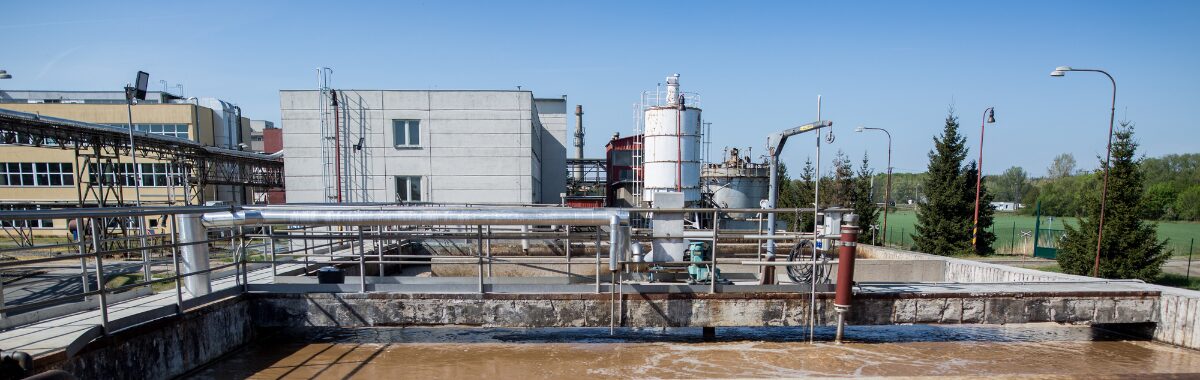
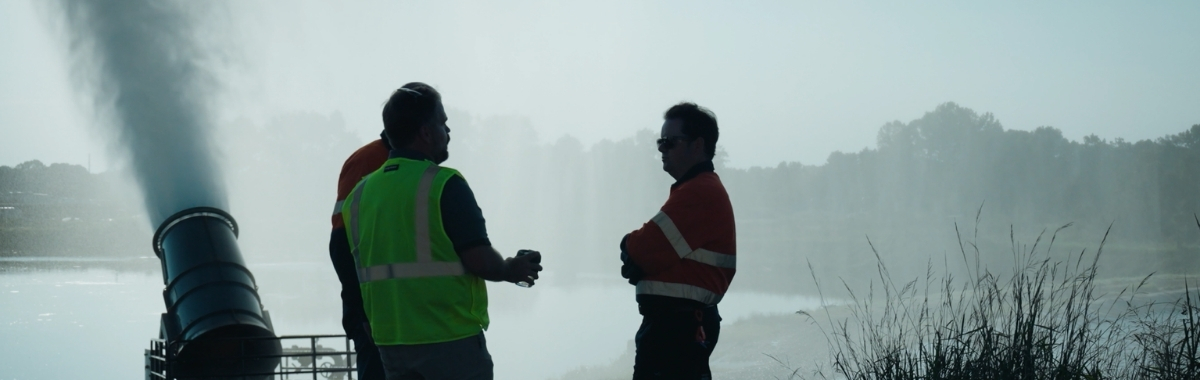
Water treatment facility

Why does traditional wastewater treatment struggle on complex industrial sites?

Biological and chemical treatment plants are typically designed for relatively stable effluent streams. On complex industrial sites, that stability is rarely guaranteed. In mining process water, oil and gas produced water, and food processing effluent, wastewater quality can shift quickly. High salinity can disrupt biological treatment, while elevated total dissolved solids (TDS) and variable pH can make chemical dosing harder to control. Membrane systems can also become more difficult to sustain when fouling and maintenance demands increase, particularly on remote sites with limited technical labour.

The challenge is not only treatment performance. Conventional systems can also create secondary waste streams that still need to be managed. Chemical treatment can generate sludge. Membrane systems can produce concentrated brine. Both add disposal, transport and compliance requirements, increasing the total cost and complexity of wastewater management.

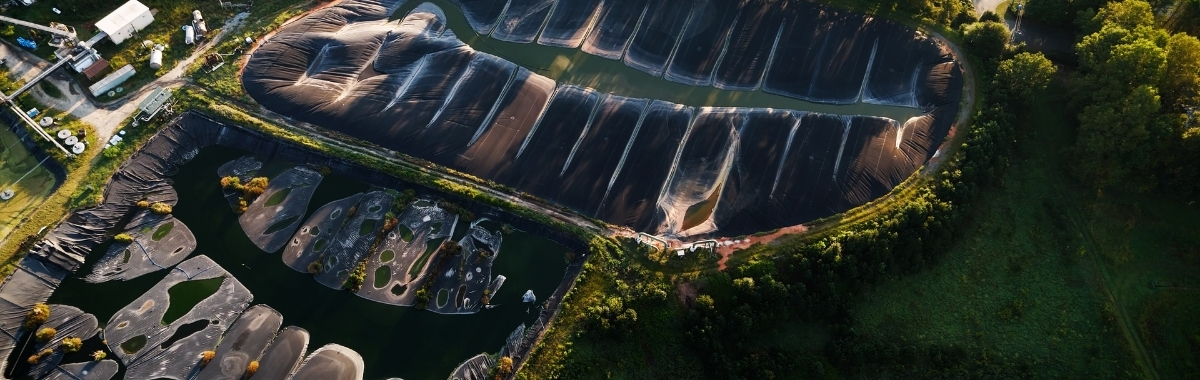
When treatment cannot keep pace, sites often rely on ponds, dams or other storage infrastructure as a buffer. But storage capacity is finite, and discharge conditions are tightening. The result is a growing number of sites where treatment is difficult to sustain, storage is under pressure, and discharge is restricted. That can quickly become an operational and compliance issue, not just a treatment issue.
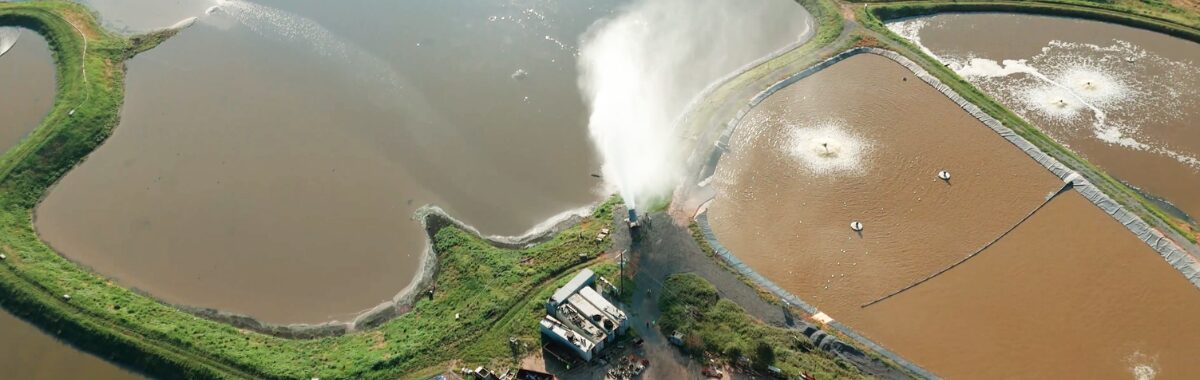
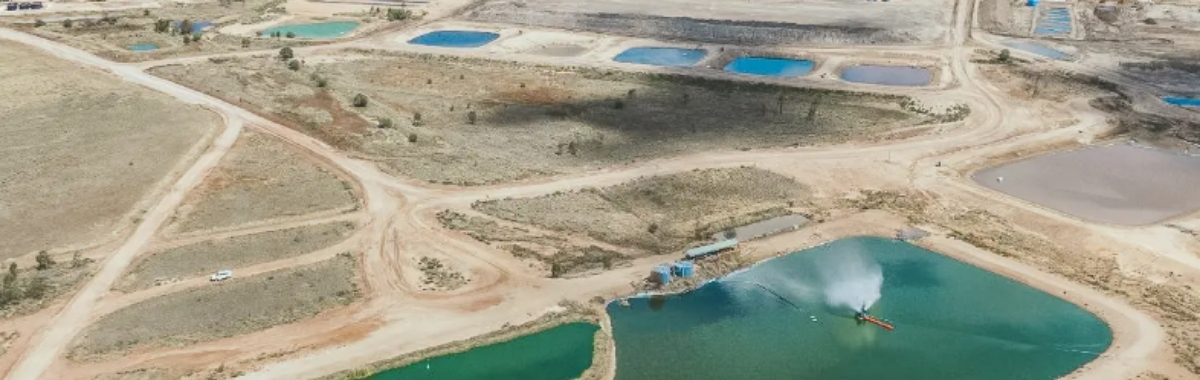
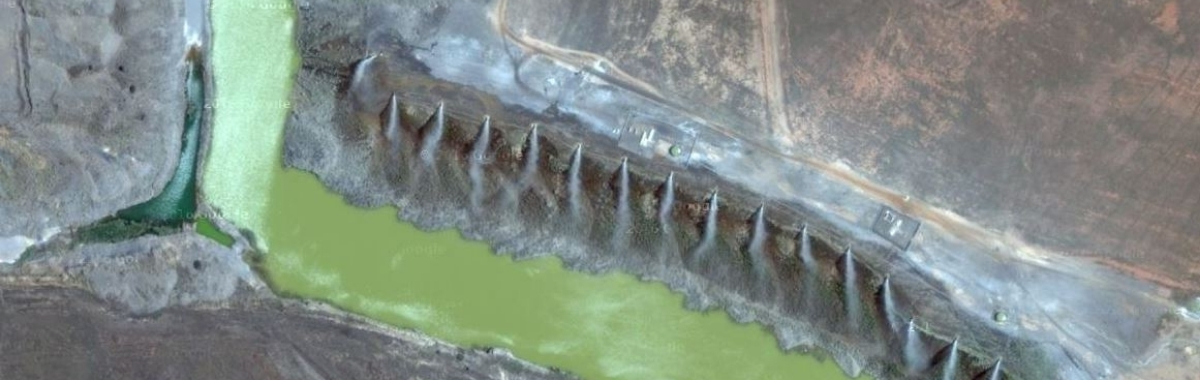
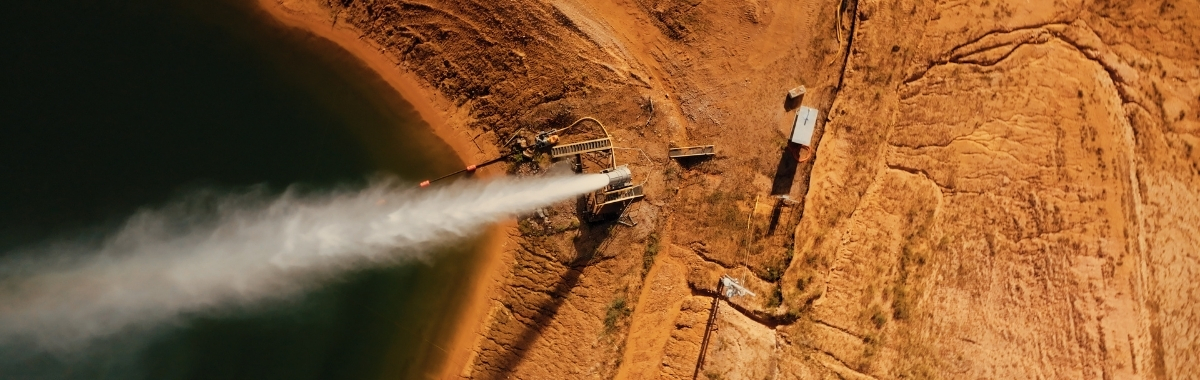
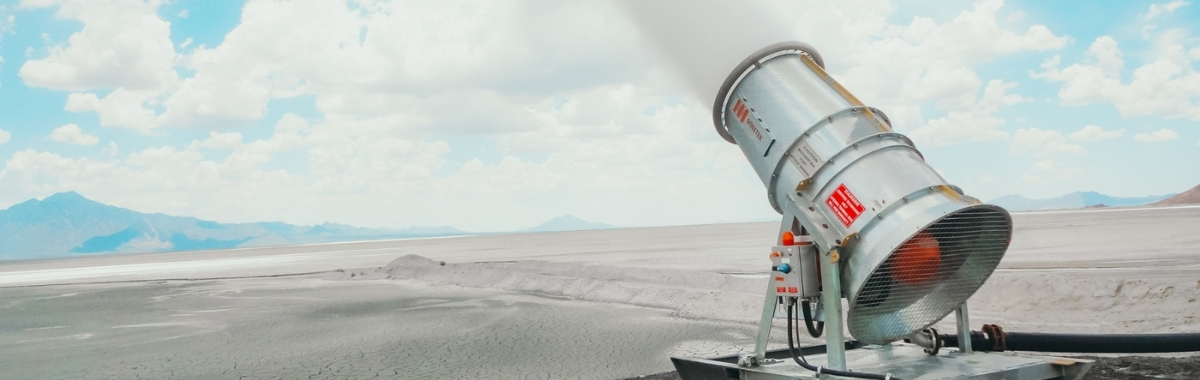
Minetek water evaporator

How do mechanical wastewater evaporation systems work?

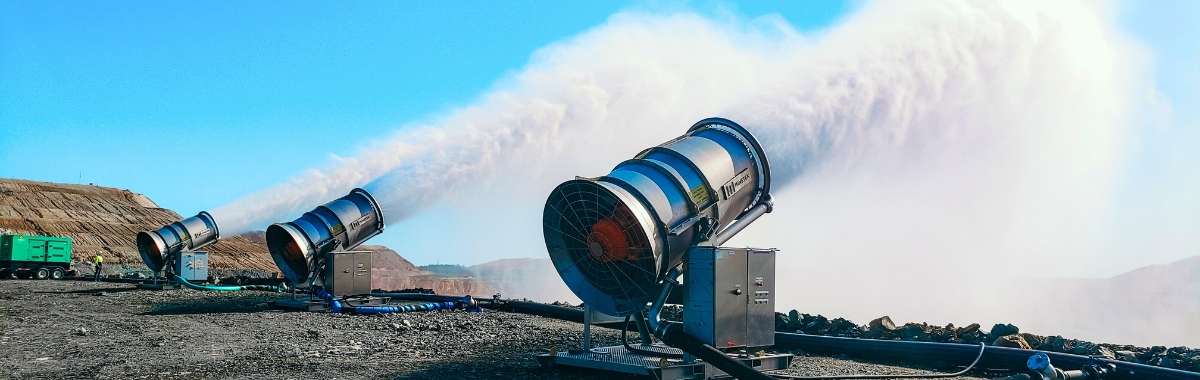
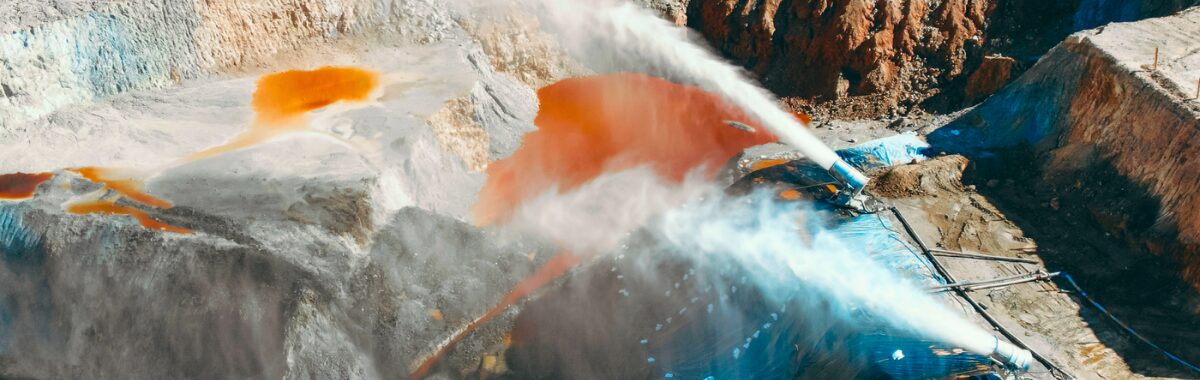
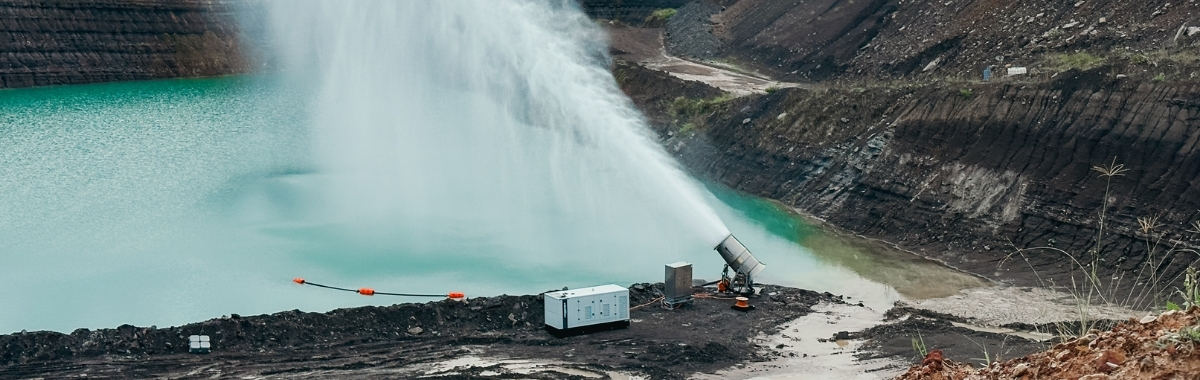
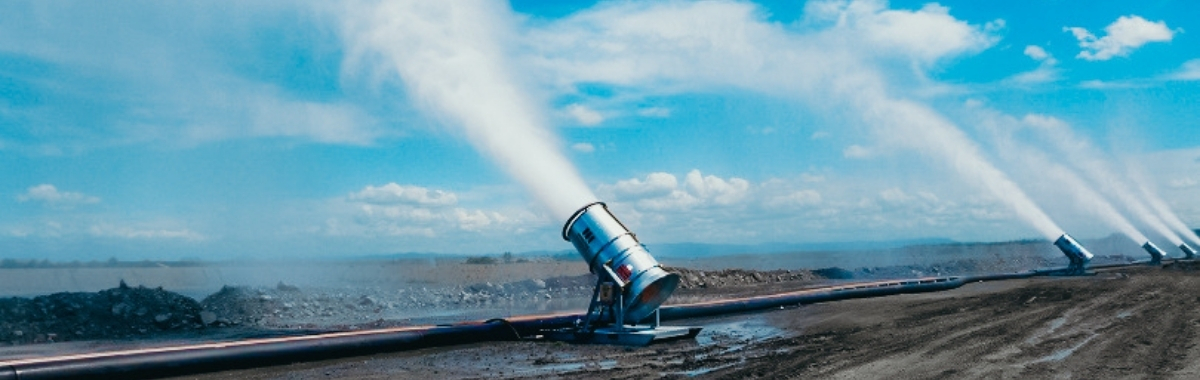
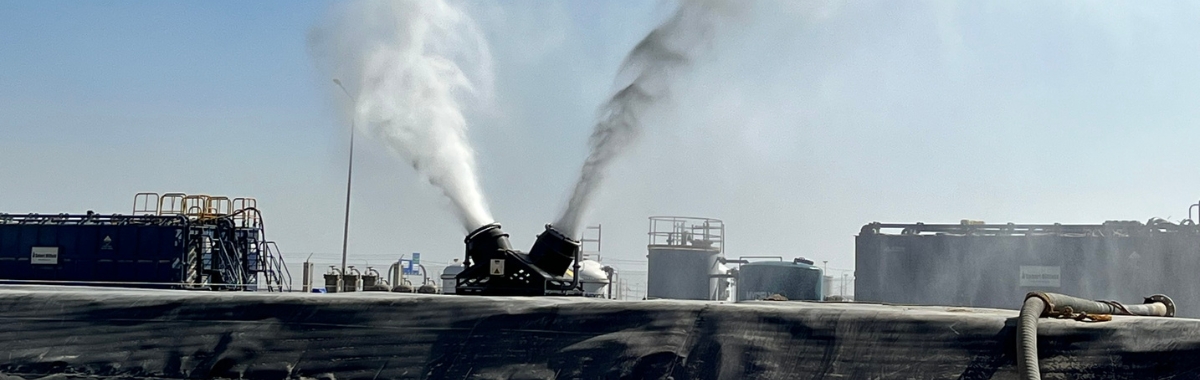
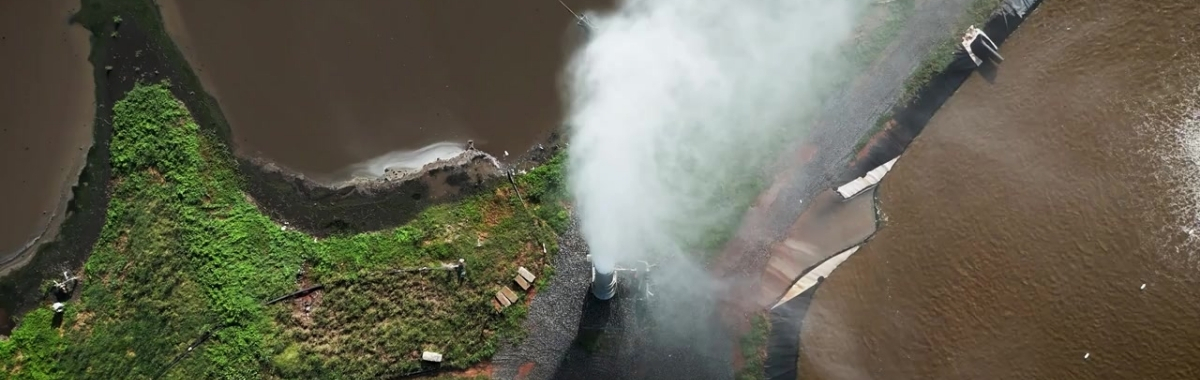
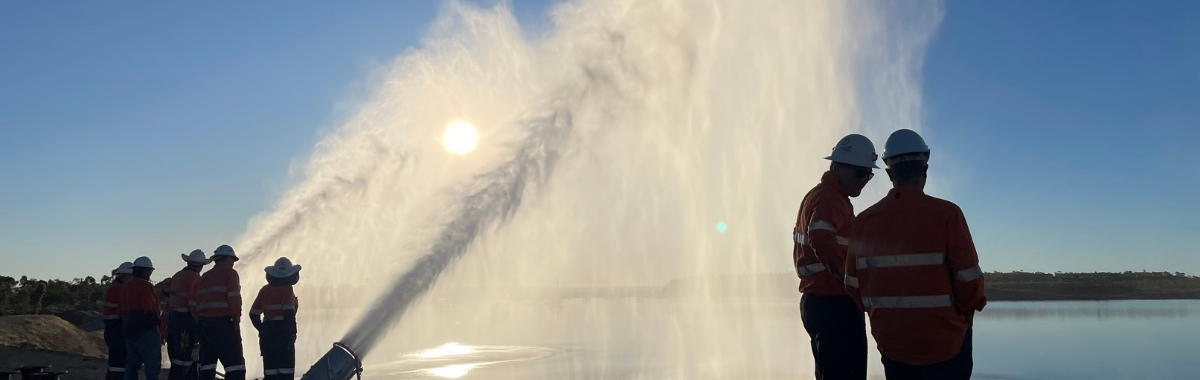
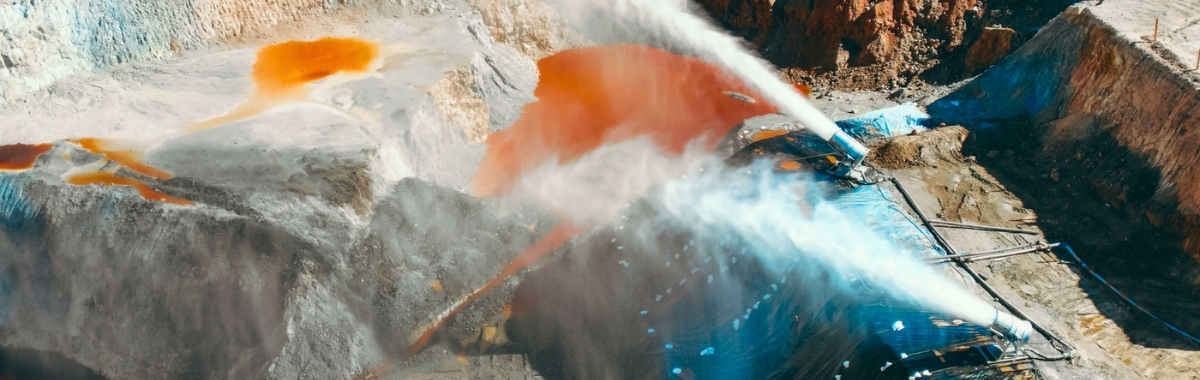
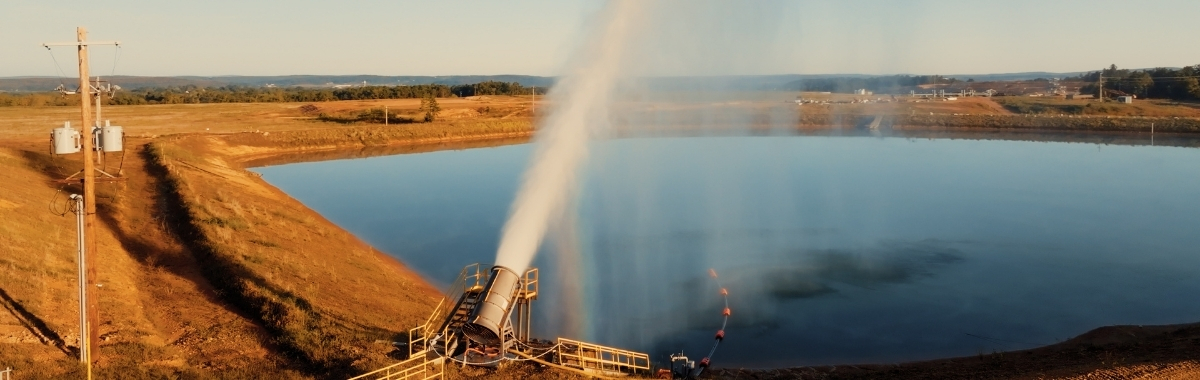
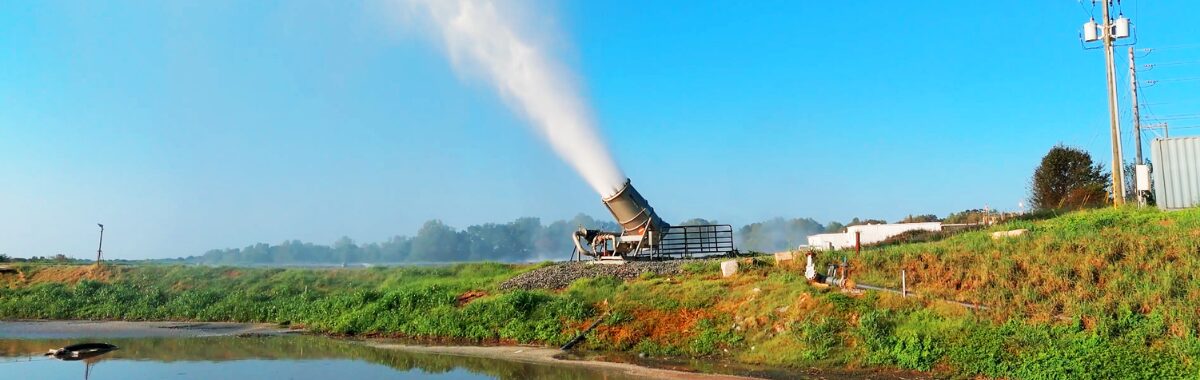
Mechanical wastewater evaporation systems use motorised atomisation to break wastewater into fine droplets and project them into the air. This increases the surface area exposed to atmospheric conditions, accelerating evaporation far beyond what passive storage alone can achieve.

Unlike conventional treatment systems, mechanical evaporation is designed to reduce water volume on-site rather than produce a treated discharge stream. There are no chemicals, membranes or biological processes in the evaporation step itself, which can reduce process complexity and avoid secondary waste such as sludge or concentrated brine.

For industrial sites, system performance depends on factors such as droplet size, projection, climate conditions, water chemistry and required throughput.

Minetek’s evaporation systems are built to process water with suspended solids up to 4.0mm and pH from 1.8 to 14 or above. That range covers most industrial and mining effluent streams that would foul or destroy conventional treatment plant. Units are constructed from hot-dipped galvanised steel, stainless steel, or epoxy-coated materials selected to match site chemistry. There are no consumables in the evaporation process itself: no chemicals, no filters, no membranes to replace.
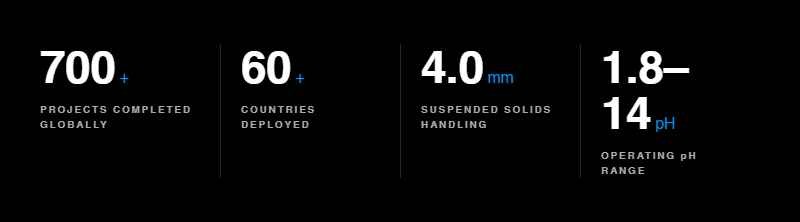
01-stat-strip

Each system is modular. Units can be deployed individually to augment an existing evaporation pond, or staged in arrays to address higher volumes. Capacity scales with the number of units deployed, which means a site can start with what it needs now and add capacity as water balance requires it. Commissioning is handled turnkey, from site water balance assessment through to final installation and handover.

With over 700 projects completed globally, the deployment record spans mining tailings dams in Western Australia, process water management at oil and gas operations, and industrial effluent reduction at food production and manufacturing facilities across multiple continents.

How does wastewater evaporation compare with traditional treatment on cost, compliance and operations?

Mechanical evaporation and traditional treatment serve different purposes, but on sites with variable wastewater, restricted discharge and rising storage pressure, evaporation can offer a simpler and more practical pathway for long-term water volume reduction.

Comparison area Traditional treatment Mechanical wastewater evaporation
Primary objective Treat wastewater to meet discharge or reuse requirements Reduce wastewater volume on-site through evaporation
Suitability for variable wastewater Can become harder to sustain when chemistry, solids or flow conditions change Better suited to difficult and variable wastewater streams in the right application
Process inputs May require chemicals, membranes, biological control or multiple treatment stages Uses mechanical atomisation without chemicals, membranes or biological treatment in the evaporation step
Secondary waste Can generate sludge or concentrated brine requiring disposal Does not create sludge or brine as part of the evaporation process
Compliance focus Ongoing discharge quality, waste handling and disposal obligations On-site volume reduction without a treated discharge stream
Operational complexity Higher process oversight, maintenance and operator input may be required Simpler operating pathway, particularly on remote or high-demand sites
Scalabilità Expansion may require plant upgrades or added treatment infrastructure Modular systems can scale with changing site demand
Cost profile Capital cost plus chemicals, consumables, waste disposal, labour and maintenance Capital cost plus energy, with fewer consumables and no secondary waste disposal in the evaporation step
04-quote-vapour

On compliance, the critical advantage of evaporation is that it produces no discharge. Water that evaporates leaves the site as vapour. There is no treated effluent stream to monitor against EPA limits, no PFAS pathway to a receiving waterway, and no ongoing discharge licence management. For sites operating under tightening discharge restrictions, or where a permit to discharge has been refused entirely, that is not a marginal advantage. It is the difference between a viable water management pathway and a regulatory impasse.

Operationally, mechanical evaporation is well-matched to remote and harsh environments. Units do not require resident chemical expertise or biological management protocols. Modular deployment means units can be added, relocated, or decommissioned as site water balance changes.
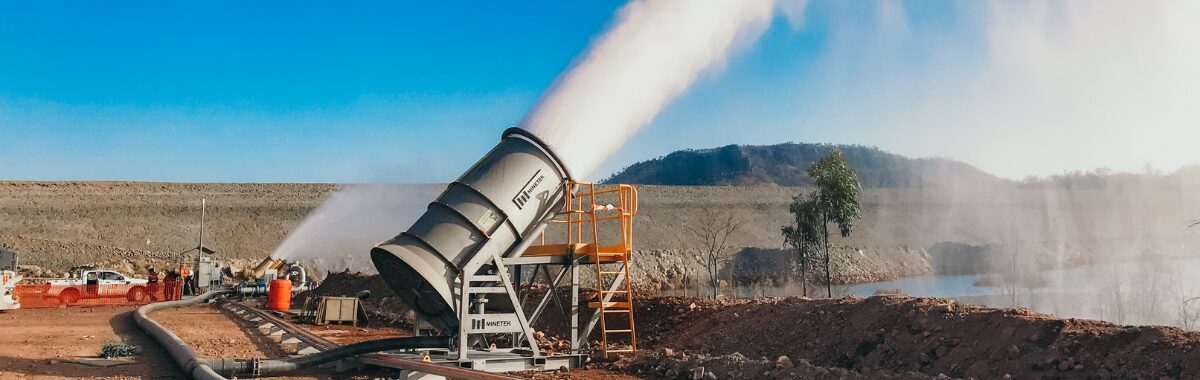
Minetek water evaporator

What should operators look for in a wastewater evaporation supplier?

Not all wastewater evaporation systems perform equally in industrial conditions. The differences become more noticeable when water chemistry is aggressive, ambient conditions are challenging, or the site requires sustained evaporation performance over time. When comparing suppliers, five criteria are worth assessing before making a decision.

1. Materials of construction
System durability starts with material selection. Wastewater chemistry can be highly corrosive, so metallurgy and coatings should be matched to site conditions rather than supplied as a single standard configuration. Minetek offers galvanised steel, stainless steel and epoxy-coated options, with materials selected through site-specific water assessment.

2. Solids-handling capability
Many industrial wastewater streams contain suspended solids that can affect system reliability and performance. Mining tailings water, produced water and food processing effluent all present this challenge. Systems with limited solids tolerance may block, wear faster or underperform against their rated capacity. Minetek systems can process solids up to 4.0 mm.

3. Proven field performance
Performance claims should be supported by real project experience, not only controlled test conditions or modelled outputs. Operators should ask for case studies in comparable applications, climates and water chemistries. Minetek has completed more than 700 projects across 60 countries, giving operations access to documented field performance across a wide range of industrial environments.

4. Turnkey delivery capability
Supplier capability matters beyond the equipment itself. Water balance assessment, system design, installation and commissioning all affect project outcomes. A turnkey delivery model reduces coordination complexity and gives operators a clearer line of accountability from assessment through to handover.

5. Modular scalability
Water management requirements rarely stay fixed. Production changes, storage constraints and regulatory conditions can all shift site demand over time. A modular system that can scale with changing water balance is often a lower-risk option than a fixed installation sized to a single operating assumption. Minetek’s modular deployment approach allows capacity to expand as site conditions change.

Field-proven across three continents.
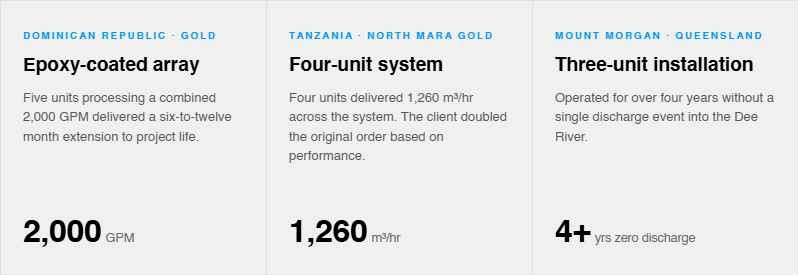
07-field-proven-cases

Domande frequenti

What is a wastewater evaporation system?

A wastewater evaporation system uses mechanical atomisation, motorised nozzle arrays or high-volume fans, to break wastewater into fine droplets and project them into the air. The increased surface area exposed to the atmosphere accelerates evaporation far beyond what a passive pond can achieve. The water leaves the site as vapour, leaving no treated effluent, no sludge, and no brine concentrate to dispose of.

How does mechanical evaporation compare to traditional wastewater treatment on cost?

Conventional treatment carries capital cost plus ongoing chemical, consumable, sludge disposal, labour, and upgrade costs. Mechanical evaporation carries capital and energy cost only, no chemicals, no consumables, and no secondary waste to dispose of. On sites with high-salinity or chemically complex effluent, lifecycle cost comparisons consistently favour evaporation.

Is mechanical evaporation suitable for high-salinity or high-TDS wastewater?

Yes. Minetek’s evaporation systems operate across a pH range of 1.8 to 14 and handle suspended solids up to 4.0mm, chemistry conditions that foul membranes and stress biological treatment plants. Material specifications (galvanised, stainless, epoxy-coated) are matched to site chemistry.

Does mechanical evaporation require a discharge licence?

No. Because the process produces no liquid effluent stream, only water vapour, there is no discharge event to regulate. This is a fundamental compliance advantage at sites operating under tightening EPA discharge limits or where a discharge permit has been refused.

What kinds of facilities use mechanical wastewater evaporation?

Mining tailings dams, oil and gas produced-water management, food and beverage processing, industrial manufacturing, and power generation sites. Minetek has deployed more than 700 systems across 60+ countries spanning these applications.
Torna a notizie e approfondimenti

Filter systems and maintenance planning for mine water operations.

Publish date: 6 Maggio 2026

Filter system design affects maintenance planning in mine water operations by shaping cleaning frequency, labour requirements, and system reliability over time.  

When filters are not designed for the solids profile and variability of site water, maintenance demands can increase quickly and place added pressure on operational continuity. 

For mining operations, solids management is not only about protecting equipment. It also influences servicing frequency, maintenance predictability, and the reliability of water infrastructure during both routine and high-pressure operating periods. Filter design should therefore be treated as part of long-term maintenance strategy, not as a secondary equipment consideration. 


Maintenance pressures in mine water.

  • Filter performance: Filter system design shapes cleaning frequency, servicing requirements, and overall maintenance demands in mine water operations.
  • Solids loading: Higher solids volumes can accelerate filter fouling, increase maintenance frequency, and affect long-term system reliability.
  • Workforce impact: Frequent cleaning can place added pressure on maintenance teams and increase labour demands across site operations.
  • Operational continuity: Poorly matched filter systems can reduce system availability and disrupt broader water management performance.
  • Excess water management: Minetek Water evaporators support excess mine water management, tailings water management, pit dewatering support, emergency water management, and broader site water balance strategies. 


Why does filter system design affect maintenance planning in mine water operations? 

Filter system design affects maintenance planning because it determines cleaning frequency, labour demands, and system reliability. When filters are not aligned with solids loading and changing water conditions, maintenance becomes more frequent, less predictable, and more disruptive to mine water operations. 

A filter system does more than remove solids. It also shapes how easily the system can be maintained over time. In mine water operations, a system that performs well under steady conditions may require significantly more upkeep as solids volumes increase, water quality varies, or service access becomes more difficult. 

Maintenance planning should therefore begin with system design. Filters need to be selected and configured based on long-term operating conditions, not only initial performance requirements. 

Filter design factor  Maintenance effect  Operational impact 
High solids loading  Faster fouling  More frequent cleaning 
Variable water quality  Unpredictable servicing needs  Harder maintenance scheduling 
Limited service access  Longer maintenance tasks  Higher labour demand 
Poor system fit  Repeated manual intervention  Reduced reliability 


For mine sites managing variable water conditions, effective filter design supports more predictable maintenance intervals, improved system availability, and more reliable long-term water management.

Group_Images_In text_02062024 (83)

How do solids affect filter cleaning frequency and system reliability? 

Solids affect filter cleaning frequency by increasing the rate of fouling, which shortens servicing intervals and raises maintenance demands. As solids loading increases or water quality becomes more variable, filter performance can decline faster, making system reliability harder to maintain over time. In mine water operations, solids are rarely consistent. Sediment, suspended fines, slurry-related material, and debris can all change how quickly filters block, lose efficiency, or require intervention.  

This makes maintenance planning more difficult because cleaning needs often shift with site conditions. 

  • Higher solids loading: More material reaches the filter, increasing buildup and shortening cleaning intervals.
  • Fine suspended solids: Smaller particles can accumulate quickly across filter surfaces and reduce filtration efficiency.
  • Variable particle size: Changing solids profiles can make servicing needs less predictable over time.
  • Debris and coarse material: Larger material can increase blockage risk and interrupt normal system performance.  


When filters are not designed for the solids profile they need to handle, maintenance intensity can increase quickly. Over time, this can reduce system availability, disrupt routine water management, and make long-term performance harder to sustain. 


How should mine sites plan maintenance for filter systems?

Mine sites should plan filter maintenance around solids loading, water variability, service access, and available labour. A practical maintenance plan helps sites reduce reactive cleaning, improve servicing predictability, and maintain more reliable water system performance over time. A clear maintenance planning process should include: 

  • Assess the solids profile
    Review the expected solids volume, particle size, and material type the filter system will need to handle under normal and variable operating conditions. 
  • Account for water variability
    Consider how rainfall, production activity, pit conditions, or changes in site water balance may affect filter loading over time.
  • Review cleaning and service access
    Confirm whether filters can be inspected, cleaned, and maintained efficiently within the physical constraints of the site.
  • Match maintenance demands to site resources
    Evaluate how often servicing may be required and whether site labour and maintenance schedules can realistically support that demand.
  • Plan for long-term operating conditions
    Select filter systems based on how they will perform over time, not only how they perform at initial commissioning.  

Maintenance planning is more effective when maintainability is treated as part of system design for mine water operations. This helps reduce servicing pressure, improve system availability, and support more consistent long-term performance. 

minetek water evaporator

How does evaporation support broader mine water management strategies? 

Evaporation supports broader mine water management strategies by helping operations remove excess water, reduce pressure on storage infrastructure, and maintain greater control over site water balance.  

In mining environments where water volumes can change quickly, evaporation can complement other water management systems and support more reliable long-term performance. This is particularly relevant where sites are managing: 

  • excess mine water accumulation
  • tailings water volumes
  • pit dewatering pressures
  • emergency water during rainfall events
  • broader water balance constraints across site infrastructure  

Evaporation is a cost-effective complement to broader mine water management strategies, helping operations remove excess water without relying solely on storage, transport, or disposal pathways. When stored water volumes begin to affect capacity, access, or operational flexibility, evaporation can provide a practical way to reduce pressure on site infrastructure and improve water balance control. 

Minetek Water evaporators are engineered for high-capacity water removal in demanding mining environments, with evaporation capacity of up to 135 m³/hour per system through scalable modular units. They are designed to manage challenging water conditions across pH 1–14, including high TDS/TSS, saline, acid, and caustic water sources. 

Available in land-based or floating configurations for pits, dams, and TSFs, Minetek Water evaporators support broader site water balance strategies with automated controls that adjust to real-time weather conditions. This helps operations remove excess water with a low footprint, low power demand, and greater operational flexibility. 


Reliable mine water management starts with practical system design.

Long-term performance depends on more than water removal capacity alone. Filter design, solids management, and maintenance planning all influence how reliably a system can operate over time. A practical design approach helps sites reduce maintenance pressure, improve operational continuity, and maintain greater control over excess water.

Speak with a Minetek water expert to discover how our evaporation systems can help your operations achieve a sustainable and performing water management.

Domande frequenti

How does filter system design affect maintenance planning in mine water operations?

Filter system design affects maintenance planning by shaping cleaning frequency, servicing requirements, labour demands, and overall system reliability. When filters are not matched to solids loading and changing water conditions, maintenance can become more frequent, less predictable, and more disruptive to broader mine water operations. 

How do solids increase filter cleaning frequency in mine water systems?

Solids increase filter cleaning frequency by accelerating fouling and buildup across filter surfaces. As suspended fines, sediment, slurry-related material, or debris accumulate, filters can lose efficiency more quickly and require more frequent cleaning to maintain system performance and continuity. 

What should mine sites consider when planning filter maintenance?

Mine sites should consider solids loading, water variability, service access, labour availability, and long-term operating conditions when planning filter maintenance. A practical maintenance plan should reflect how the system will perform over time, not only how it performs at initial commissioning. 

How can poor filter design affect mine water system reliability?

Poor filter design can reduce mine water system reliability by increasing servicing frequency, raising manual maintenance demands, and creating a greater risk of blockage or interruption. Over time, this can reduce system availability and make long-term water management performance harder to sustain. 

How does evaporation support broader mine water management strategies?

Evaporation supports broader mine water management strategies by providing a cost-effective way to remove excess water and reduce pressure on storage infrastructure. Used alongside other water management systems, Minetek water evaporators can help operations improve water balance control, maintain operational flexibility, and respond more effectively when rising water volumes begin to affect site capacity or access. 

Torna a notizie e approfondimenti

Low-fouling nozzle design in high-performing mining evaporators.

Publish date: 6 Maggio 2026

Low-fouling nozzle design helps high-performing mining evaporators maintain reliable spray performance in demanding mine water conditions.  

Minetek designs low-fouling nozzles as a practical performance feature within its water evaporation systems. In mine water environments with high total dissolved solids (TDS), high total suspended solids (TSS), acid, or caustic chemistry, nozzle design can directly influence operating continuity.  

A nozzle built to resist fouling helps sustain atomisation quality, reduce unnecessary intervention, and support more consistent evaporation performance across changing site conditions.

For mining operations managing excess water, this makes nozzle design more than a component detail. It is part of how a high-performing evaporation system supports reliable day-to-day operation in demanding water environments. 


Key factors affecting nozzle reliability in mining evaporators.

  • Consistent spray performance: Low-fouling nozzle design helps maintain atomisation quality and supports more stable day-to-day operation.
  • Designed for demanding water: Water with high TDS, high TSS, acid, or caustic chemistry places greater importance on nozzle design and material suitability.
  • Reliability through design: Nozzle design influences resistance to buildup, spray consistency, and the level of intervention needed over time.
  • Support for uptime: In continuous mining environments, low-fouling nozzles help support more reliable evaporation performance and smoother operation.
  • Minetek advantage: Minetek’s low-fouling, high-pressure atomising stainless steel nozzles are designed for demanding mine water conditions, regardless of pH. 


Nozzle design supporting reliable evaporator performance.

In high-performing mining evaporators, nozzle design plays a direct role in maintaining consistent spray performance. It affects how water is atomised, how evenly it is distributed, and how reliably the system continues operating across changing site conditions. 

That matters because evaporator performance depends on more than pressure and flow alone. The nozzle is the point where water is converted into a spray pattern that supports efficient evaporation. When that spray remains consistent, the evaporator is better positioned to deliver reliable day-to-day performance. 

In practical terms, nozzle design can influence spray quality, resistance to buildup, and the level of intervention required over time. In demanding mine water environments, those factors become even more important. A low-fouling nozzle design helps support cleaner flow paths, more consistent atomisation, and stronger operating continuity across variable water conditions. 

Evaporatori d'acqua Minetek

Demanding mine water conditions and low-fouling performance.

Mine water can place very different demands on evaporator components. Elevated total dissolved solids (TDS), high total suspended solids (TSS), acidic chemistry, and caustic water can all increase the importance of nozzle design. 

In these conditions, low-fouling performance helps maintain spray consistency and supports more reliable evaporator operation. That matters because nozzle performance affects how consistently water is atomised and distributed across the system. This becomes especially important in water profiles with: 

  • high TDS
  • high TSS
  • acidic conditions
  • caustic chemistry  

For mining operations managing excess water, nozzle design is part of overall system performance. When it is better matched to the water profile, the evaporator is better positioned to support reliable day-to-day operation. 


Minetek’s advanced water evaporation technology.

In demanding mine water environments, component design matters because it influences how reliably the broader system performs. Minetek incorporates low-fouling, high-pressure atomising stainless steel nozzles into its water evaporation systems. 

These nozzles are designed for mining and industrial applications where water quality can vary significantly, including sites managing water with elevated dissolved solids, suspended solids, or more aggressive chemistry. In these conditions, nozzle design plays an important role in maintaining spray performance and supporting more reliable evaporator operation. 

For mining operations managing excess water, Minetek evaporators provide a practical, cost-effective solution built for demanding water conditions. Our low-fouling nozzle design supports reliable spray performance where water quality can place greater pressure on system operation, helping sites maintain performance with less unnecessary intervention. 


Reliable evaporation performance in demanding water conditions.

For mining operations, reducing excess water on site is essential to maintaining operational control and lowering the risk of storage constraints, compliance pressure, and potential discharge-related violations. As stored water volumes rise, sites can face increasing pressure on infrastructure, water balance, and day-to-day flexibility. 

Water evaporation provides a practical path to reducing that pressure. It offers a fast, reliable, and cost-effective solution for operations that need to remove excess water efficiently and maintain more predictable site conditions. 

Minetek high-performing evaporators built for demanding water conditions help operations manage excess water with greater confidence, where site conditions, water quality, and operational demands require dependable performance. 


Need a high-performing water evaporator to help solve excess water challenges at your site?

Connect with Minetek’s water management experts to discuss the right evaporation solution for your operating conditions, water profile, and site requirements.

Domande frequenti

What are low-fouling nozzles in mining evaporators?

Low-fouling nozzles are designed to resist buildup and maintain more consistent spray performance in demanding mine water conditions. In mining evaporators, they help support reliable atomisation and smoother day-to-day operation. 

Why does nozzle design matter in water evaporation systems?

Nozzle design affects how water is atomised and distributed through the evaporator. That can influence spray consistency, operating reliability, and overall system performance in the field. 

Which water conditions increase the importance of low-fouling nozzle design?

Low-fouling nozzle design becomes more important in water environments with high total dissolved solids (TDS), high total suspended solids (TSS), or more aggressive chemistry. These conditions can place greater pressure on evaporator components and spray performance. 

How do low-fouling nozzles support uptime in mining?

They help maintain more consistent spray performance in demanding operating conditions. That supports reliable evaporator operation and reduces the need for unnecessary intervention. 

Where can Minetek’s water evaporation technology be applied?

Minetek water evaporation technology is designed for challenging mining and industrial water applications where reliable performance matters under demanding site conditions. 

Torna a notizie e approfondimenti

A practical guide to site-specific evaporation modelling.

Publish date: 6 Maggio 2026

Site-specific evaporation modelling is the process of estimating how effectively an evaporation system is likely to perform at a specific mine site before it is sized or deployed. It uses local climate conditions such as humidity, rainfall, temperature, wind, and elevation, along with water quality data, to forecast likely evaporation performance under real operating conditions.  

In practice, it helps mining operations answer a simple question early: How much water can this system realistically remove at this site, under these conditions, across the year? That makes it an important planning step for system sizing, deployment decisions, material selection, and maintenance planning. 

According to the Australian Bureau of Meteorology in its Reference Evapotranspiration Calculations Report, evaporation reflects the combined effect of radiation, wind, temperature, and humidity on an open water surface. That is why evaporation performance cannot be based on equipment capacity alone. It has to be assessed against the actual environmental conditions the system will face on site.


Key factors shaping evaporation performance.

  • Climate-driven performance: Evaporation efficiency is shaped by humidity, temperature, wind, rainfall, and elevation, not just equipment capacity.
  • Seasonal pressure points: Annual averages can mask the wetter, more restrictive periods when stored water builds faster and evaporation conditions weaken.
  • More accurate planning: Site-specific modelling gives operations a more realistic basis for system sizing, deployment planning, and expected field performance.
  • Water quality implications: Chemistry, salinity, scaling potential, and solids content can influence material selection, maintenance needs, and long-term reliability.
  • Minetek’s planning advantage: Minetek combines site-specific evaporation efficiency modelling with a free assessment, helping operations understand likely performance early and make more informed water management decisions. 


Climate conditions shaping evaporation performance.

Evaporation performance is not determined by equipment alone. It depends heavily on the conditions the system will operate in. 

According to the Bureau of Meteorology on its climate observations platform, standard weather datasets already track the core variables relevant to evaporation planning, including temperature, rainfall, humidity, wind, and evaporation. That makes these inputs a practical starting point for site-specific modelling. 

In simple terms: 

  • Humidity affects how much moisture the air can still absorb. Drier air generally supports stronger evaporation.
  • Temperature influences evaporation potential, but high temperatures alone do not guarantee strong performance.
  • Wind helps move saturated air away from the evaporation zone and replace it with drier air.
  • Rainfall adds more water to the site water balance and can reduce short-term evaporation efficiency during wet periods.
  • Elevation can also matter. In Irrigation and Drainage Paper 56, the Food and Agriculture Organization of the United Nations notes that altitude should be considered because it affects atmospheric pressure and may require adjustment of weather parameters used in evaporation calculations. 


Why this matters for design.

A system that performs well in a hot, dry, exposed region may deliver very different results in a humid, sheltered, high-rainfall environment. Site-specific modelling helps operators move beyond generic assumptions and size infrastructure around actual site conditions. 

Gruppo_Immagini_In testo_02062024 (1)

Seasonal conditions and rising stored water pressure.

Average climate data only tells part of the story. In practice, evaporation systems need to perform through changing seasonal conditions, not just under annual averages. 

Rainfall periods can increase stored water volumes faster than water can be removed, treated, or lawfully discharged.  

Il U.S. Environmental Protection Agency, in its overview of the Ore Mining and Dressing Effluent Guidelines, states that mine wastewater can be generated by precipitation entering mines and by contaminated stormwater at storage facilities. For operators, that means wet-weather inflows are not a side issue. They directly affect how much excess water must be managed. 

Australian regulation reinforces the same point. According to the Queensland Department of the Environment, Tourism, Science and Innovation, mine water releases in the Fitzroy Basin are managed during extreme weather events and may only occur when stream flows allow it. In its Model water conditions for coal mines in the Fitzroy basin, Queensland further states that releases must only occur during natural flow events, with monitoring and flow triggers designed to prevent discharge during no-flow or low-flow conditions. 


What this means in practice.

When seasonal inflows rise, operations can face a combination of pressures: 

  • more stored water on site
  • less flexibility to release water
  • greater reliance on active water reduction methods
  • higher risk of storage systems approaching operational limits  

That is why evaporation modelling should look at seasonality, not just long-term averages. Operators need to understand when storage pressure is most likely to build and how much performance the system may need during those periods. 

Group_Images_In text_02062024 (33)

A practical starting point for site-specific evaporation planning.

For site teams, the value of evaporation modelling is not just in understanding the variables. It is in knowing how to use them to make better early decisions. 

A practical starting point is to review the site through four planning lenses: 

  • Climate inputs: Review local humidity, rainfall, temperature, wind, and elevation data to understand the conditions that will shape expected evaporation performance.
  • Seasonal variability: Look beyond annual averages and identify the periods when rainfall increases, humidity rises, or other conditions may reduce short-term efficiency.
  • Qualità dell'acqua: Assess chemistry, salinity, scaling potential, and solids content early to understand possible implications for materials, maintenance, and long-term reliability.
  • Engineering decisions: Use those findings to guide system sizing, deployment planning, and performance expectations under real operating conditions.  

This approach gives operations a more realistic basis for planning. It also helps reduce the risk of sizing a solution around average conditions that may not reflect the periods when water pressure is highest. 


Water quality considerations in system design and maintenance.

Climate conditions help estimate evaporation potential. Water quality helps determine how the system should be built and maintained. Water chemistry can influence: 

  • corrosion risk
  • scaling potential
  • solids handling requirements
  • component wear
  • cleaning and maintenance frequency  

As the U.S. Geological Survey explains in its overview of mining and water quality, mine drainage can contaminate water and it be viewed from an engineering and maintenance perspective. 


Early water quality assessment and long-term system reliability.

Water quality should be assessed early because it influences decisions that are difficult or expensive to correct later. Once a system has been sized, specified, and deployed, any mismatch between the water chemistry and the selected materials or maintenance approach can create avoidable operational pressure. 

For example, water with elevated salinity, aggressive chemistry, suspended solids, or scaling potential can affect how different components perform over time. If those conditions are not understood upfront, the system may require more frequent cleaning, more intensive maintenance, or earlier component replacement than originally expected. Assessing water quality early helps operators make better decisions in four key areas: 

  • Material selection
    Water chemistry can influence whether standard materials are suitable or whether more resistant options are needed for long-term reliability.  
  • Component suitability
    Some water characteristics may affect nozzles, pumps, pipework, and other wetted components more than others. Early assessment helps ensure the selected configuration matches the operating environment.  
  • Maintenance planning
    If scaling, fouling, or solids buildup is likely, those risks can be considered before deployment and built into inspection and servicing plans.  
  • Lifecycle expectations
    Early water quality assessment gives operators a clearer view of how the system is likely to perform over time, not just at commissioning.  

In practical terms, this means water quality is not just a treatment issue. It is also a design, maintenance, and reliability issue. Understanding it early helps reduce uncertainty and supports a more realistic plan for long-term performance. 


Group_Images_In text_02062024 (84)

Minetek’s role in site-specific evaporation planning.

Site-specific evaporation modelling is most valuable when it leads to practical engineering decisions. It helps operators estimate likely performance, understand seasonal risk, and prepare for the water quality conditions the system will face. 

That broader context is becoming more important across the industry. The Australian Bureau of Statistics, in the Water Account, Australia, 2023–24, reported that mining industry water use reached 132 gigalitres, up 14.2%, supported by higher production activity and operational demand. The Institute for Energy Economics and Financial Analysis 2025 fact sheet on coal mining water use reported that Australian mining water consumption increased 20% between 2018 and 2022, reaching 1,504 gigalitres in 2022. Against that backdrop, early modelling helps operations make better decisions around: 

  • system sizing
  • deployment planning
  • material selection
  • requisiti di manutenzione
  • expected performance under real site conditions  

Minetek supports that planning process with site-specific evaporation efficiency modelling. Using project and climate inputs such as humidity, rainfall, elevation, pan evaporation, temperature, and water quality indicators such as total dissolved solids (TDS), Minetek can assess expected evaporation performance across a 12-month operating profile and provide a more realistic basis for planning.

Minetek also offers a free site-specific assessment for operations that want an early view of likely evaporation performance before sizing or deployment. It is a practical way to understand how local conditions and site setup may influence expected outcomes, and whether additional planning considerations should be factored into the solution. 


Planning for reliable evaporation performance.

Effective evaporation planning starts before a system arrives on site. Humidity, rainfall, temperature, wind, elevation, and water quality all influence how an evaporation system is likely to perform in practice. Site-specific modelling brings those variables together into a more useful engineering view. It supports better sizing decisions, more informed material selection, and more practical maintenance planning. 

For operations managing excess stored water, that early understanding can make the difference between theoretical capacity and reliable field performance. 


Need to understand how efficiently an evaporation system is likely to perform at your site?

Request site-specific evaporation efficiency modelling from Minetek’s water management experts to assess likely performance before finalising system sizing, deployment, and planning decisions. 


Domande frequenti

What is site-specific evaporation modelling?

Site-specific evaporation modelling estimates how effectively an evaporation system is likely to perform at a specific site before it is sized or deployed. It uses local climate and water quality inputs to build a more realistic view of expected performance under actual operating conditions. 

Why is site-specific evaporation modelling important before system sizing?

It helps operations understand how much water an evaporation system can realistically remove across the year. That supports better decisions around system sizing, deployment planning, and expected field performance. 

Which site conditions affect evaporation performance the most?

The main factors are humidity, rainfall, temperature, wind, and elevation. Together, these conditions shape how efficiently water can evaporate and how performance may change across different seasons. 

Why does water quality matter in evaporation planning?

Water quality can affect corrosion risk, scaling potential, solids handling, component wear, and maintenance frequency. Assessing it early helps guide material selection, maintenance planning, and long-term reliability. 

When should a mining operation request evaporation efficiency modelling?

It is best requested before final system sizing or deployment. Early modelling helps operators assess likely performance, understand seasonal constraints, and make better planning decisions before excess stored water creates greater operational pressure. Minetek offers free site-specific evaporation efficiency modelling to support that early planning process. 

Torna a notizie e approfondimenti

Mine water management delays and the cost of waiting.

Publish date: 24 Aprile 2026

Mine water management delays affect site control by allowing excess water to build before response measures are approved, delivered, and operating. As that delay extends, storage pressure can increase, available margin can narrow, and operational flexibility can reduce, particularly during sustained rainfall or unexpected inflows. 

Earlier action gives sites more time to respond before water volumes begin limiting control. Faster deployment can also reduce pressure on storage infrastructure and help operations maintain greater flexibility as conditions change. 


Site pressure and response timing.

  • Lead time matters: Delays allow water pressure to build.
  • Storage risk rises: Available capacity can narrow quickly.
  • Control reduces: Response windows can shrink.
  • Water balance requirement: GISTM calls for a maintained water balance model and associated water management plans.
  • Rapid response: Mobile, flexible evaporation systems can support scalable excess water management.
  • Real-time optimisation: Minetek’s Environmental Management System (EMS) adjusts to humidity, rain, and wind in real time. 


Mine water management lead times and site risk.

 Mine water risk rarely starts when storage reaches capacity. It often begins earlier, while a site is still moving through approvals, design review, procurement, and mobilisation. 

According to the Global Industry Standard on Tailings Management (GISTM), operators are required to develop, implement, and maintain a water balance model and associated water management plans across the tailings facility lifecycle, taking into account climate change, mine planning, overall operations, and facility integrity. 

That requirement highlights a practical issue for mine sites. Water management is not only about treatment or disposal capacity. It is also about response timingstorage margin, e site control. As lead times extend, excess water can keep accumulating while control measures are still being approved or delivered. That can increase: 

  • Storage pressure
  • Operational disruption risk
  • Response costs
  • Pressure on ponds, dams, and containment infrastructure
  • Exposure during rainfall events or unexpected inflows  

According to the Australian Bureau of Meteorology (BOM) State of the Climate 2024, warmer air can hold about 7% more water vapour per degree of warming. 

BOM also reports that rare daily rainfall extremes in Australia are likely to intensify by around 8% per degree of global warming, while hourly extreme rainfall may increase by around 15% per degree. 

For mining operations, that makes lead time more important. Water volumes can rise while response capacity is still moving through internal processes. The operational risk is not always an immediate failure. More often, it is a gradual loss of control that leads to: 

  1. Reduced storage flexibility
  2. Narrower response windows
  3. Higher operational pressure
  4. Greater disruption risk
  5. Fewer practical options once conditions worsen  

The longer a response is delayed, the more likely it becomes that a manageable water balance issue turns into a broader costcompliance, e operational control problem.

Group_Images_In text_02062024 (32)

Approval, design and procurement delays in mine water management.

ine water delays rarely come from a single bottleneck. More often, response time is extended across a sequence of internal and external steps before any control measure is operating on site. Typical delay points include:

  • Problem recognition: Water pressure may be visible on site before it is formally escalated into a funded response.
  • Internal approval and budget allocation: Operational need still has to compete with budget timing, internal priorities, and capital approval processes.
  • Engineering and design review: Technical scope, infrastructure requirements, and site constraints often need to be assessed before a solution is approved.
  • Procurement and supplier lead time: Once a decision is made, sourcing equipment and confirming delivery can add further delay.
  • Site preparation, mobilisation, and commissioning: Power access, civils, installation planning, and commissioning can all extend the timeline before a system is fully operational.  


According to the GISTM, operators are required to maintain a water balance model and associated water management plans across the facility lifecycle. That expectation reinforces the need for water management decisions to keep pace with changing site conditions. 

The issue is not that these steps are unnecessary. The issue is that each one can extend the gap between identifying a water problem and putting a working response in place. When several stages move slowly at once, lead time becomes a practical constraint in mine water management. 


Storage pressure and operational risk from delayed action.

Delayed action changes how a site has to manage water. As excess water remains in storage for longer, available capacity can narrow and everyday water management decisions can become more constrained. That pressure can show up through: 

  • Fuller storages
  • Reduced freeboard margin
  • More reactive water transfers
  • Greater reliance on temporary workarounds
  • Less flexibility ahead of further inflows  

In practical terms, the cost of waiting is not only measured in time. It can also affect how confidently a site manages changing conditions as storage margins tighten and response pathways become more limited. 

 Delayed action does not only leave more water on site. It can leave the site with fewer workable options for managing it. 


Contingency capacity for rainfall and excess mine water.

Contingency capacity gives sites more room to respond before excess water becomes harder to manage. It is not only about preparing for major weather events. It is also about maintaining enough flexibility to absorb changing inflows, operational shifts, and short-term pressure on storage systems. 

This is where timing becomes critical. Once excess water starts reducing available buffer, sites may have fewer low-disruption options available. Earlier contingency planning helps preserve more control before conditions force a more reactive response. For mine sites, contingency capacity can support: 

  • More stable water balance management
  • Greater flexibility during wet periods
  • Better readiness for unexpected inflows
  • Less reliance on short-term workarounds
  • More time to implement longer-term water strategies 

Contingency capacity does not remove water risk on its own. It gives sites more time, more flexibility, and more control before that risk escalates. 

Group_Images_In text_02062024 (33)

Rapid-deployment evaporation systems for urgent water management.

 When excess water volumes rise faster than a site can comfortably absorb, response speed becomes part of the water management strategy. In these situations, the value of a system is not only in its capacity. It is also in how quickly it can be deployed, integrated, and scaled as conditions change. 

Minetek’s advanced water evaporation systems are designed for mobile, flexible, and rapid deployment, helping operations respond faster when storage pressure is building and response time is limited. Our water evaporation technology is capable of: 

  • Evaporating up to 135 m³/hour per unit
  • Operating in high-rainfall and extreme climates
  • Supporting Zero Liquid Discharge (ZLD) treatment
  • Handling high TDS, high TSS, and wide pH ranges
  • Deploying on land or in floating configurations
  • Rapid mobilisation without major civil expansion
  • Adjusting operation based on real-time weather conditions 

In this context, rapid deployment is not only a convenience. It can help sites act earlier, reduce pressure sooner, and maintain more control as water conditions change. 


Proactive and rapid response for better control in mine water management.

Better control in mine water management depends on more than capacity alone. It also depends on having a response that can be used early enough to reduce pressure before conditions become more difficult to manage, or deployed quickly when excess water begins building faster than expected. 

Minetek evaporators support both approaches:

  •  As a proactive measure, they help operations reduce excess water before storage pressure escalates. That can support stronger water balance control, preserve available capacity, and maintain greater flexibility as site conditions change.
  • As a rapid response solution, they provide deployable evaporation capacity when rainfall intensifies, stored water volumes rise unexpectedly, or existing response measures are not enough to absorb the pressure. 


For mine sites managing variable inflows and tighter storage margins, the advantage is not only evaporation performance. It is the ability to respond proactively when time allows, and rapidly when conditions demand it. Minetek evaporators help operations act earlier when they can and respond faster when they need to. 


Need help choosing the right evaporator setup for your site? Need the right response before excess water limits site control? 

Connect with our Minetek water management experts to discuss whether a floating or land-based evaporator is the better fit for your site conditions, storage layout, and operational requirements 


Domande frequenti

How do mine water management delays affect site control? 

Mine water management delays can reduce site control by allowing excess water to build before response measures are approved, delivered, and operating. As storage pressure increases, available margin can narrow and response options can become more limited. 

What delays usually affect mine water management projects? 

Common delays include problem recognition, internal approval, budget allocation, engineering review, procurement, site preparation, mobilisation, and commissioning. Together, these steps can extend the time between identifying rising water pressure and putting a working response in place. 

What happens when excess mine water is not addressed early? 

When excess mine water is not addressed early, sites may face fuller storages, tighter freeboard margins, more reactive water transfers, and less flexibility during rainfall events or unexpected inflows. The longer action is delayed, the harder conditions can become to manage.

When should a mine consider rapid-deployment evaporation systems? 

Rapid-deployment evaporation systems should be considered when stored water volumes are rising, storage margins are tightening, rainfall pressure is increasing, or existing response capacity is not enough to manage changing site conditions. They can support both proactive water reduction and urgent response.


Can mine water evaporation systems be used for both planned and emergency response? 

Yes. Mine water evaporation systems can be used proactively to reduce excess water before storage pressure escalates, and they can also be deployed rapidly as an emergency response measure when conditions change unexpectedly. 

Torna a notizie e approfondimenti

Choosing between floating and land-based evaporators for site water management.

Publish date: 24 Aprile 2026

How do you know whether a floating or land-based evaporator is the better fit for your site?

The right setup depends on how and where water needs to be managed. Pond layout, available access, mobility requirements and day-to-day operating conditions can all influence which setup makes more sense. 

A floating evaporator may suit sites where in-pond placement improves access to stored water, while a land-based evaporator may be better suited to locations with stable ground access and changing deployment needs. 

Both floating and land-based evaporators can support site water management, but they suit different site conditions and operational requirements. The choice comes down to practical fit, including pond conditions, site layout, access, mobility and how the system needs to operate over time. 


Application factors that shape evaporator selection.

  • Water location affects placement: Floating evaporators may be better suited to ponds or storage where in-pond positioning improves access to stored water.
  • Ground access affects setup: Land-based evaporators may be a better fit where stable ground access supports positioning, operation and maintenance.
  • Mobility affects fit: If the system may need to be repositioned as site conditions change, deployment flexibility becomes more important.
  • Pond conditions affect practicality: Water level variability, pond layout and available space can all influence which setup works best.
  • Operating needs affect the decision: The better option depends on how the system needs to perform over time, including access, maintenance and day-to-day site demands. 


What is a floating evaporator? 

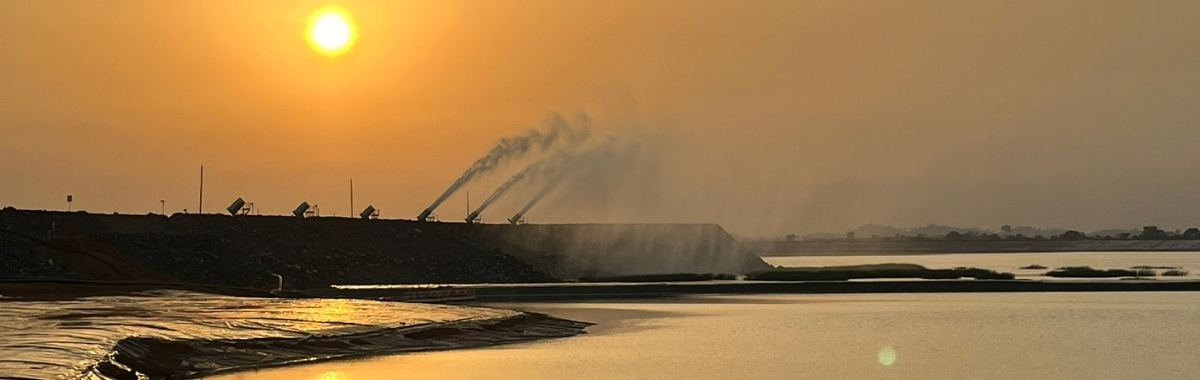
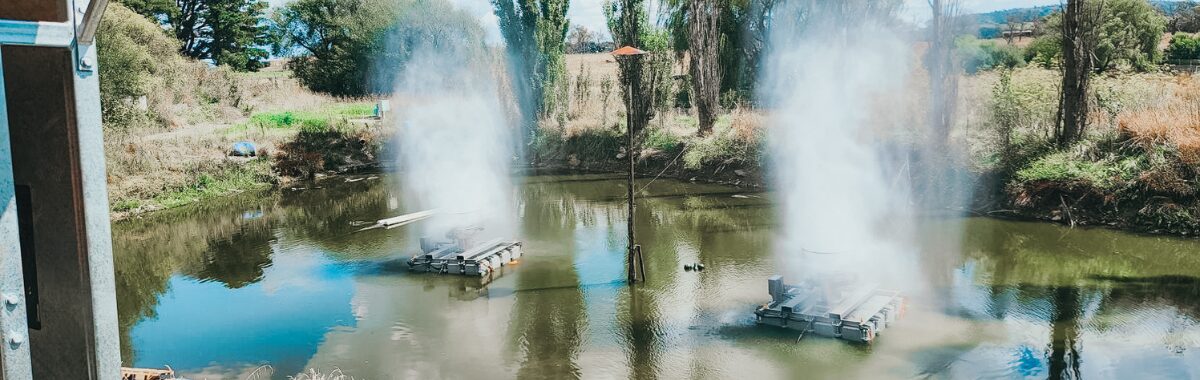
Minetek floating evaporators are designed to operate on the water body itself, using engineered pontoons to position the unit in the pond or dam rather than on the bank. This can make them a practical option where real estate is limited, where in-pond placement improves access to stored water, or where the layout of the storage area makes shoreline placement less effective. 

The floating platform is part of the system’s application fit. Minetek’s pontoons are designed in-house to provide a stable platform for equipment while supporting safe access for maintenance and operations. Built to rigorous safety standards such as AS1648, they are engineered for durability, safety and ease of use in challenging environmental conditions.  

Minetek floating evaporators are engineered for stored water conditions that can vary significantly in chemistry and solids loading, including acid water, caustic water, and water with high TDS and TSS. Depending on the climate, a global average of 50% of spray volume can evaporate as pure water vapour, while the balance returns to the pond. 

Group_Images_In text_02062024 (22)

Floating evaporator applications in practice.

Power station – Queensland, Australia 

  • Industria: Power generation
  • Sfida: Rising water levels in coal ash ponds were creating dewatering, cost and compliance pressure.
  • Soluzione: Minetek applied a twin floating water evaporation system package mounted on engineered pontoons.
  • Result: The system delivered 380 GPM (86 m³/h), helping reduce pond water and support uninterrupted operation.  

Alumina refinery – Western Australia 

  • Industria: Alumina refining
  • Sfida: Excess water in residue disposal areas was increasing instability, environmental and operational risk.
  • Soluzione: Minetek deployed 15 floating water evaporators across the residue disposal areas.
  • Result: The system delivered 2,850 GPM (648 m³/h), helping reduce stored water and support continuous operations.  

Landfill site – New South Wales, Australia 

  • Industria: Waste management
  • Sfida: Leachate accumulation was increasing contamination, compliance and operational risk.
  • Soluzione: Minetek installed 19 floating water evaporators across the leachate storage areas.
  • Result: The package delivered 2,662 GPM (605 m³/h), helping the site manage leachate and reduce environmental risk. 


What is a land-based evaporator? 

Minetek land-based evaporators are installed on land beside or near the water source, giving sites a ground-based setup that can be aligned to access conditions, operating areas and deployment requirements.  

Mounted on mobile skids, they are designed to be portable and versatile across different operational needs, making them well suited to sites where positioning may need to change over time or where an in-pond setup is less practical. 

Built for demanding environments, Minetek land-based evaporators are available in a range of heavy-duty construction options to suit different applications and withstand challenging site conditions.  

They are designed to process a wide range of water qualities, including acid water, caustic water, and water with high TDS and TSS. Depending on the weather condition, the systems can evaporate a global average of 50% of spray volume as pure water vapour, with the remaining droplets returning to the feed pond. 

Group_Images_In text_02062024 (31)

Land-based evaporator applications in practice.

Cobalt mine – Missouri, USA 

  • Industria: Mining
  • Sfida: Sustained inflows from underground workings were overwhelming the tailings storage facility and creating risk of overtopping, non-compliance and delays to mine reopening.
  • Soluzione: Minetek delivered a turn-key land-based evaporation system with Environmental Management System (EMS).
  • Result: The system achieved 180 GPM (40 m³/h) at 45% efficiency, helping reduce pond levels and support compliant operation.  

Animal feed facility – Georgia, USA 

  • Industria: Food industry
  • Sfida: A holding pond was close to maximum capacity, creating overflow, contamination and operational risk.
  • Soluzione: Minetek installed a turn-key land-based evaporation system with an Environmental Management System (EMS) to manage pond levels.
  • Result: The system delivered 600 GPM (135 m³/h) at an estimated 34% evaporation efficiency, helping reduce excess water and maintain continuity.  

Coal mine – New South Wales, Australia 

  • Industria: Mining
  • Sfida: Excess water was putting production continuity, compliance and site water balance under pressure.
  • Soluzione: Minetek supplied 10 land-based water evaporators for site-wide water balance management.
  • Result: The package delivered 4,000 GPM (900 m³/h), helping the site reduce excess water and maintain operations. 


Floating vs land-based evaporators: summary of key differences.

Consideration  Floating evaporators  Land-based evaporators 
Positioning  Operate on the water body itself using engineered pontoons  Installed on land beside or near the water source 
Best fit  Sites where in-pond placement improves access to stored water or where real estate is limited  Sites where stable ground access supports setup, operation and maintenance 
Access requirements  Suited to pond or dam environments where shoreline placement is less practical  Suited to locations where ground-based deployment is more practical 
Mobility  Fixed to the water body once deployed in the pond or dam  Mounted on mobile skids for portability across different operational needs 
Platform design  Uses engineered pontoons designed for stability, safety and maintenance access  Uses skid-mounted units designed for portability and versatility 
Decision driver  Best where water-body placement improves fit  Best where land-based access and skid-mounted deployment improve fit 


How does Minetek’s Environmental Management System (EMS) enhance floating and land-based evaporators?

Both floating and land-based evaporators can be optimised with Minetek’s Environmental Management System (EMS), giving sites greater control over how the system responds to changing environmental and operating conditions. 

Key EMS capabilities include: 

  • Real-time monitoring of evaporator performance and site conditions
  • Remote connectivity through wireless communication and PLC integration
  • Adaptive optimisation using environmental inputs such as wind, rainfall, temperature and humidity
  • Dynamic control of system parameters including flow, pressure and operating schedules
  • Autonomous operation through automated start-up and shut-down functions
  • Data logging and analysis to support visibility, review and ongoing performance improvement
  • Scalabilità to support changing site requirements over time

Whether the evaporator is land-based or floating, EMS helps the system respond more precisely to site conditions and operating demands over time. 

In-text Images (33)

Need help choosing the right evaporator setup for your site?

Connect with our Minetek water management experts to discuss whether a floating or land-based evaporator is the better fit for your site conditions, storage layout and operational requirements. 

Domande frequenti 

What is the difference between a floating and land-based evaporator? 

A floating evaporator operates on the water body itself using engineered pontoons, while a land-based evaporator is installed on land beside or near the water source. The main difference comes down to placement, access and how each setup fits site conditions.

When is a floating evaporator the better fit? 

A floating evaporator may be the better fit when in-pond placement improves access to stored water, where real estate is limited, or where shoreline placement is less practical.

When is a land-based evaporator the better fit? 

A land-based evaporator may be better suited to sites with stable ground access, changing deployment needs or operating conditions that make a skid-mounted setup more practical. 

What site conditions should be assessed before choosing? 

Key factors include where the water is stored, pond layout, available access, mobility requirements, platform suitability and how the system needs to operate over time. 

Can floating and land-based evaporators both be optimised with EMS? 

Yes. Both setups can be optimised with Minetek’s Environmental Management System (EMS) to improve control, visibility and responsiveness to changing environmental and operating conditions.

How does EMS improve evaporator performance? 

EMS supports real-time monitoring, remote connectivity, adaptive optimisation, dynamic control and autonomous operation, helping the system respond more precisely to site conditions.

Are floating evaporators only used in mining? 

No. Floating evaporators can also be applied in other industrial environments, including alumina refineries, power stations and waste processing sites, depending on the storage setup and application requirements.

How do you choose the right evaporator setup for your site? 

The right choice depends on practical fit. That includes where the water is stored, how the site is laid out, what access is available, and whether a floating or land-based setup better suits long-term operating requirements. 

Torna a notizie e approfondimenti

Minetek earns 2026 Great Place To Work Certification™ across Australia, the United States and the Philippines.

Publish date: 17 Aprile 2026

Minetek has earned 2026 Great Place To Work Certification™ across Australia, the United States and the Philippines. 

This is an important milestone for our business. It reflects the culture we have built over time and the experience our people are having across multiple regions. For a global engineering company operating in demanding industrial environments, that matters. 


A milestone shaped by our people.

This recognition reflects the experience our people have of Minetek every day. It speaks to the quality of our leadership, the strength of our culture and the standards we hold across the business.

Great Place To Work® is the global authority on workplace culture, employee experience and leadership behaviours proven to drive performance, retention and innovation. For Minetek, this reflects an environment built with intention over time.  


Built over time, with intention.

Culture at Minetek has been built deliberately as the business has grown, with a clear focus on trust, accountability, leadership and performance. 

We support mining and industrial operators through specialised engineering solutions in water management, underground ventilation and sound attenuation. That work demands capable people, clear standards and strong alignment across teams. As Minetek has expanded across North America, South America, Asia and other key regions, maintaining that culture has remained a priority. 

What sits behind this milestone is sustained effort over time: clear expectations, visible leadership and an environment that supports people to perform. 


A shared standard across Australia, the United States and the Philippines.

Australia remains the foundation of Minetek’s culture and operating standards. It is where many of the expectations that shape how we lead, collaborate and perform were established, and that foundation continues to guide the business as we grow. 

Across the business, our people understand how their work contributes to Minetek’s success. They are welcomed into the organisation, trusted to take ownership, and supported by clear direction from leadership. There is pride in what we achieve, a strong sense of responsibility for results, and a workplace culture where people care about each other and work together to move the business forward.  

This recognition reflects exactly the kind of business we are building. One where people feel safe, included and respected, where expectations are clear, and where leadership acts with consistency and integrity. That standard matters as we continue to grow.  

The certifications in the United States and the Philippines show that this standard is not limited to one market. In the United States, 100% of employees said Minetek is a great place to work. Certification in the Philippines reinforces that the same culture is being experienced across regions. Together, these results show that as Minetek grows internationally, the cultural foundation established in Australia is being carried forward with consistency.  

Gruppo_Immagini_In testo_02062024 (1)

Culture as a standard for growth.

A strong culture supports better leadership, stronger alignment and greater consistency across a growing global business. 

That matters in our sector. We work with operators who rely on performance, safety and reliability in complex operating environments. To support them effectively, we need teams that are trusted, capable and aligned around clear standards. Culture is part of that operating model. 

Strong culture supports strong performance at Minetek. People are trusted to perform, expected to take ownership and supported to grow with clear direction. 


A shared view from leadership.

Martin G. NisbetManager, People & Culture at Minetek said this certification reflects the culture Minetek has been building over many years. 

“This recognition matters because it comes directly from our people. We have always believed that strong culture supports strong performance. As Minetek continues to grow globally, it is important that our people experience the same clarity, trust and leadership wherever they are in the business. It is especially meaningful to see that standard reflected across Australia, the United States and the Philippines.” 


Looking ahead.

We see this milestone as both recognition and responsibility. 

As Minetek continues to grow, we will keep investing in our people, our leaders and the culture that supports long-term performance. That means continuing to strengthen the environment, behaviours and leadership capability that help our teams perform at their best. 

This certification recognises where we are today. Just as importantly, it reflects the standard we intend to keep building on. 


Build your career with Minetek.

Join a global team focused on performance, innovation, and long-term growth. 

Explore current opportunities: View careers at Minetek 

Torna a notizie e approfondimenti

The water infrastructure gap in growing mining operations.

Publish date: 10 Aprile 2026

When does a mine water system stop being adequate for the operation it was built to support?

In many growing mining operations, it happens gradually. A system designed for an earlier stage of the mine starts managing more water, across longer distances, through a layout that no longer reflects how the site is operating today. 

As pits deepen, throughput rises and working areas shift, water infrastructure can fall behind production growth. Drainage, pumping, storage and transfer capacity may still be functioning, but no longer at the level the operation requires. 

That gap creates more than a water management challenge. It can restrict access, increase flooding exposure, raise operating costs and add pressure to environmental performance. What begins as a capacity mismatch can quickly become an operational constraint. 

Flexible water solutions like mechanically enhanced evaporation are becoming increasingly important as sites adapt to changing demands. 


Operational impacts of water infrastructure lag.

  • Infrastructure lag is accelerating: AI and automation are lifting output by 5% to 10% at mature sites, while mine development cycles still average 15+ years, leaving core water infrastructure behind production growth.
  • Water demand is rising with expansion: Mine water management demand is forecast to grow at a 7.5% CAGR, increasing pressure on drainage, storage, transfer and treatment systems. 
  • Deeper operations carry higher water risk: In pit-to-underground transitions, groundwater depletion and acid mine drainage recorded up to a 78% severity impact on site sustainability. 
  • Flexible infrastructure is becoming more important: Operators are increasingly looking to decentralised and redeployable systems that can scale with site demand instead of locking capital into fixed infrastructure too early. 
  • Mechanical evaporation offers scalable capacity: Demand for evaporator systems is rising, with the global market projected to reach US$32.3 billion by 2031, reflecting the need for engineered solutions that can help sites manage excess water as operations grow. 


What happens when production grows faster than water infrastructure?

When production grows faster than water infrastructure, the mine’s water system can shift from a support function to an operational constraint. 

Secondo Infosys’ Mining Industry Outlook 2024, AI and automation have lifted output by 5% to 10% at mature sites, while the discovery-to-production cycle still averages 15+ years, creating a mismatch between faster production gains and slower infrastructure development. In practice, that means water systems designed for an earlier stage of the operation can be left carrying more volume, across greater distances, through a site layout that no longer reflects current production demands. 

As this gap widens, drainage, pumping, storage and transfer systems may still be operating, but no longer at the level the site requires. What was once adequate becomes harder to rely on as pits deepen, throughput increases and working areas shift. 

Technavio’s Global Water and Wastewater Management Market for the Mining Sector (2025–2029) points to the scale of that pressure, forecasting mine water management demand to grow at a 7.5% CAGR as operations expand. That growth does not just increase water volumes. It puts more strain on whether existing infrastructure can still support access, productivity and safe site movement. 

The risk becomes more pronounced as mines deepen or transition underground. In its 2025 study on sustainable hazards in open-pit to underground transitions, MDPI’s Acqua journal found that groundwater depletion and acid mine drainage reached severity impacts of up to 78% in the assessed transition context, showing how quickly water-related risks can intensify when infrastructure is not scaled with changing mine conditions. 

Group_Images_In text_02062024 (24)

Why does water infrastructure fall out of step with the mine plan?

Water infrastructure falls out of step with the mine plan when site conditions change faster than core systems can be adapted. 

As production increases, the mine footprint rarely stays fixed. Pits deepen, working areas shift, access routes change and water often must be managed across longer distances and more complex layouts. In Ausenco’s Mining’s New Water Reality, the company notes that aging drainage systems can become overwhelmed and access corridors that were once dependable can turn into vulnerable choke points as site conditions change. 

The mismatch grows when drainage, pumping, storage and transfer systems are still based on an earlier operating footprint, even as the site is managing higher throughput, deeper pits and changing production conditions. The infrastructure may still be functioning, but no longer in a way that reflects how the operation is running today. 

What once supported the mine can become progressively harder to rely on as production moves ahead of water management capacity. 


What risks emerge when water infrastructure falls behind?

When water infrastructure falls behind, water starts affecting more than storage and transfer. It begins to interfere with access, movement and day-to-day operations across the site, putting more pressure on haul routes, ramps and active working areas. 

As that pressure builds, sites can face: 

  • Restricted access to active mining areas
  • Higher flooding exposure across critical parts of the site
  • Rising pumping and transfer demands as water is moved around the operation
  • Greater reliance on reactive workarounds instead of fit-for-purpose infrastructure
  • Higher operating costs and lower flexibility as the mine continues to grow  

What starts as a capacity gap can quickly become a broader operational constraint. 


What flexible, scalable water solutions can help close the gap?

Closing the gap between production growth and water management capacity often requires more than expanding fixed infrastructure. Sites may need water solutions that can adjust as operating conditions change. 

These solutions can include: 

  • Modular treatment capacity that can be added as water demands increase
  • Decentralised systems that reduce reliance on a single fixed infrastructure path
  • Redeployable units that can be repositioned as mine layouts change
  • Real-time monitoring and control that improve visibility across changing site conditions
  • Integrated water management strategies that help align capacity with current demand  

In Seven Seas Water Group’s 2026 Water & Wastewater Infrastructure Trends, the company describes a shift toward decentralised treatment as a resilience strategy, with modular and redeployable systems helping operators align capacity more closely to real demand. 

Minetek floating evaporators

Where does mechanically enhanced evaporation fit?

Mechanically enhanced evaporation is one example of a flexible water solution that can help sites add capacity as demands change. 

It is most relevant where operations need to: 

  • Manage excess stored water more efficiently
  • Add water management capacity without relying only on permanent civil expansion
  • Respond to changing water balances as production grows
  • Reduce pressure on storage and transfer systems already under strain
  • Support a broader site water strategy with a scalable response option  

According to the Knowledge Sourcing Intelligence Evaporator Market – Forecast from 2026 to 2031, the global evaporator market is projected to reach USD 32.322 billion by 2031, reflecting demand for engineered systems that can operate reliably in demanding production environments. That makes mechanically enhanced evaporation a credible example of how mining operations can add scalable water management capacity without treating every infrastructure gap as a permanent civil works problem. 


Minetek’s Mechanically Enhanced Evaporation (MEE) technology.

Minetek mechanically enhanced evaporation (MEE) technology is engineered to reduce stored water volume quickly and reliably in demanding mining environments. 

Our systems combine atomisation and optimised airflow, supported by fan engineering principles, to achieve rapid water volume reduction in demanding mining environments. That matters because mine water often contains elevated dissolved solids, suspended solids and variable chemistry, making it more difficult for conventional equipment to perform reliably. 

Minetek water evaporators are designed to handle high-TDS and high-TSS waters, solids up to 4.0 mm, and pH ranges from 1.8 to 14+. Our evaporation systems can process in excess of 135 m³/hour per unit, with automated 24/7 operation and scalable deployment across different site requirements. 


Minetek capability at a glance.

  • Engineered for mine water: Designed for high-TDS, high-TSS, acidic, caustic, and contaminated water conditions.
  • High-rate performance: More than 135 m³/hour per unit, with larger site configurations scaling significantly higher.
  • Low-fouling design: Engineered nozzle performance helps support reliability in difficult water conditions.
  • 24/7 automated operation: Continuous operation helps sites respond faster to changing water volumes.
  • Rapid deployment: Systems can be mobilised quickly where excess water is already affecting operations. 


Close the gap between water infrastructure and site demand.

When production growth starts to outpace water management capacity, short-term workarounds can quickly become an ongoing constraint. Minetek helps mining operations take a more proactive approach with evaporation solutions designed to reduce stored water volume and support changing site conditions. 

Connect with our Minetek water management experts to discuss the right evaporation solution for your site conditions, water volumes, and operational requirements. 


Group_Images_In text_02062024 (83)

Domande frequenti

What is the water infrastructure gap in mining? 

  • The water infrastructure gap is the point where drainage, pumping, storage, transfer or treatment capacity no longer matches the demands of the operation. It typically emerges as pits deepen, throughput rises and mine layouts change. 


Why does water infrastructure fall behind production growth? 

  • Water infrastructure is often designed around an earlier stage of the mine. As production expands, site conditions can change faster than core water systems are upgraded, reconfigured or replaced. 


What risks emerge when mine water infrastructure falls behind? 

  • The most common risks include restricted access, higher flooding exposure, rising pumping and transfer demands, greater reliance on reactive workarounds, and increasing pressure on operating cost and environmental performance. 


Why are fixed water systems harder to rely on in growing mining operations? 

  • Fixed systems can be harder to adapt when mine layouts, water volumes and production conditions change. What was once fit for purpose may no longer provide the flexibility or capacity the operation requires. 


What are flexible water solutions in mining? 

  • Flexible water solutions are systems or strategies that can be scaled, adjusted or deployed as site demands change. They can include modular treatment, decentralised capacity, improved monitoring and mechanically enhanced evaporation. 


How do scalable water solutions help growing mine sites? 

  • Scalable water solutions help sites respond to changing conditions without relying only on permanent large-scale infrastructure upgrades. They can improve flexibility, add capacity where needed and reduce pressure on constrained systems. 


Where does mechanically enhanced evaporation fit in a mine water strategy? 

  • Mechanically enhanced evaporation can support a broader site water strategy by helping reduce stored water volume and add water management capacity as site demands change. 


When should a mine review whether its water infrastructure is still adequate? 

  • A review is worth considering when pits deepen, throughput increases, working areas shift, excess stored water builds, or existing drainage and transfer systems are coming under more pressure. 
Torna a notizie e approfondimenti

Beyond pond-to-pond transfer: a stronger approach to mine water management

Publish date: 10 Aprile 2026

How many times can water be moved around site before transfer stops being a solution and starts becoming a risk?

Pond-to-pond transfer can relieve short-term pressure, but it does not reduce the total volume of water a mine site must continue to manage. When internal transfer becomes routine, the same water burden is spread across multiple storage areas, keeping capacity tight and limiting flexibility when rainfall, inflows, or operational demands change.  

A stronger mine water management plan needs more than internal redistribution. It needs active volume reduction. Mechanically enhanced evaporation plays an important role by removing water from site inventory, creating airspace, and helping operations maintain a safer, more resilient water balance. 

As storage pressure increases across tailings systems, process water ponds, and site-wide containment infrastructure, the cost of delaying volume reduction also increases. What starts as a practical short-term response can become a long-term operational constraint, especially when sites are already managing water under tighter climatic, regulatory, and production pressures. 


Pond-to-pond transfer impacts at mine sites.

  • No net reduction: Pond-to-pond transfer can relieve pressure in one area, but it does not reduce total site water volume. 
  • Water stress context: In 2024, 37% of industrial sites tracked for water targets were located in water-stressed areas.
  • Capacity pressure spreads: Repeated internal transfer can keep multiple ponds tight at once, reducing usable airspace when rainfall or inflows increase. 
  • Tailings risk remains: 33% of member tailings facilities were still in partial conformance with the GISTM, reinforcing the importance of controlling stored water volume. 
  • Reactive costs rise quickly: At Leviathan Mine, pond water treatment and maintenance costs reached about US$1.3 million for 2024–2025 after record precipitation pushed ponds near capacity. 
  • Proactive water reduction: Mechanically enhanced evaporation helps remove water from site inventory and create airspace before capacity becomes critical. 
  • Minetek water evaporation technology: Minetek evaporators can process more than 135 m³/hour per unit and scale beyond 2,160 m³/hour in larger configurations, with automated 24/7 operation and engineered performance for demanding mine water conditions. 
Group_Images_In text_02062024 (19)

Why does pond-to-pond transfer feel like progress?

Pond-to-pond transfer feels like progress because it creates short-term relief in one part of the site, even though it does not reduce total stored water volume. 

When one pond is close to capacity, transferring water to another area can protect access, reduce immediate pressure, and help operations respond to rainfall or inflows. In the short term, that makes it a practical operational tool. 

The limitation is that the water remains on site. Instead of reducing the total water burden, the site is redistributing it across other storage areas. That can make the system look more manageable without creating any new airspace. 

This is where transfer can become a habit rather than a strategy. Relief in one pond often means tighter capacity somewhere else, leaving multiple areas of the site exposed to the same underlying volume problem. 

Secondo Glencore’s 2024 Sustainability Report, in 2024, 37% of the industrial sites tracked for water targets were located in water-stressed areas. In that context, internal transfer may buy time, but it does not solve the broader challenge of site-wide water balance. 


What are the risks of relying on internal water transfer?

Relying on internal water transfer can increase operational, stability, and financial risk because it keeps excess water on site instead of reducing the total volume the operation must manage. 


Operational risk increases when pressure is spread across multiple storage areas. 

What begins as relief for one pond can quickly become tighter capacity somewhere else, leaving several parts of the site exposed at the same time. When rainfall, inflows, or processing demands change, that lack of available airspace can turn a manageable situation into a site-wide constraint. 


Stability risk remains closely tied to stored water volume.  

ICMM’s Tailings Progress Report: Implementing the Global Industry Standard on Tailings Management (GISTM) found that 67% of member facilities had reached full conformance with the GISTM, while 33% remained in partial conformance. That matters because the Global Industry Standard on Tailings Management (GISTM) states that operators should minimise the volume of tailings and water placed in external tailings facilities, particularly where flowable water can increase the physical area affected by a potential failure.  


Decant pond management remains a practical risk issue, not just a reporting issue.

MMG’s 2025 GISTM Disclosure Report identifies decant pond control as a critical operational priority for maintaining TSF stability, with several active facilities still assessed as only partially conformant because of water-to-tailings management challenges. 


Financial risk can escalate quickly when containment stays near capacity.

Il Lahontan Water Board and US EPA’s Leviathan Mine Update in 2024 reported that summer pond water treatment and site maintenance costs for the 2024–2025 fiscal year rose to nearly US$1.3 million after record precipitation pushed ponds close to capacity. 

Taken together, these risks show why ongoing pond-to-pond transfer is rarely a complete strategy. It may preserve flexibility in the short term, but it can also leave operations managing the same water burden under tighter site-wide, regulatory, and financial constraints. 

Group_Images_In text_02062024 (20)

Why is storage alone no longer enough?

Storage still plays an important role in mine water management, but it is no longer enough as a standalone strategy when sites are carrying high water volumes, managing variable inflows, and operating under tighter compliance expectations. 


Regulatory expectations are changing.

Resources Victoria’s Guidelines for the Management of Water in Mines and Quarries state that operators should apply the waste hierarchy to mine water management, with waste minimisation and treatment preferred ahead of disposal. 

That means containment and storage may still be necessary, but they are no longer enough on their own to demonstrate a strong long-term water strategy. 


Storage preserves volume rather than reducing it.

When excess water stays on site without an active removal pathway, pressure can build across ponds, containment systems, and tailings infrastructure. This leaves less available airspace when rainfall, inflows, or operational conditions change. 


Climate variability is reducing storage buffer.

The Murray–Darling Basin Authority’s 2025 Sustainable Rivers Audit highlights the effect of increasing temperatures and higher evapotranspiration on river systems and water availability, reinforcing the need to rethink how water is stored, moved, and managed under changing climatic conditions. 


What this means for mine water management.

Storage remains part of the system, but it is no longer enough as the primary answer. Stronger mine water management depends on combining storage with active water reduction, treatment, and site-wide planning that creates capacity instead of simply preserving pressure. 

Group_Images_In text_02062024 (21)

What is mechanically enhanced evaporation and how does it reduce site water risk?

Mechanically enhanced evaporation reduces site water risk by actively removing water from site inventory, rather than redistributing it between storage areas. 


It creates airspace by reducing stored volume.

Unlike pond-to-pond transfer, mechanically enhanced evaporation addresses the underlying volume issue. By removing water from the system, it helps sites recover usable storage capacity and maintain more flexibility across ponds, containment areas, and tailings infrastructure. 


It supports a more proactive response to rainfall and inflows.

Secondo University of Kentucky research published in the World of Coal Ash 2025 Conference Proceedings, precision mechanical evaporation can create critical airspace before extreme weather events by using atomisation to remove water mass directly from site rather than shifting it between ponds. 

That matters because creating airspace before capacity becomes critical gives operations more control over how water is managed when conditions change. 


It aligns with the need for enhanced volume reduction.

New Mexico State University’s WERC 2026 Environmental Design Contest Task 5: Enhanced Evaporation of Produced Water highlights the need for enhanced evaporation processes to manage large industrial water volumes cost-effectively. 

For mine sites managing sustained inflows, limited storage headroom, or seasonal pressure, mechanically enhanced evaporation provides a more direct pathway to reduce stored water volume and restore capacity. 


It changes the role of water management on-site.

Once water reduction becomes part of the plan, the question shifts from where water can be moved next to how much water can be removed before it becomes a constraint. That shift is important because it moves mine water management away from repeated internal redistribution and toward a more stable, proactive operating model. 

Group_Images_In text_02062024 (22)

Pond-to-pond transfer vs. mechanically enhanced evaporation.

The difference is straightforward: one moves water around site, while the other helps reduce the total volume the site must continue to manage. 

Feature  Pond-to-pond transfer  Mechanically enhanced evaporation 
Net site water volume  No reduction. Water is moved between storage areas.  Active reduction, with up to 50% efficiency per pass. 
Effect on capacity  Creates short-term relief in one area, but can tighten capacity elsewhere.  Creates usable airspace by reducing stored volume. 
Operational impact  Can help manage immediate pressure, but often requires repeated pumping and ongoing coordination.  Supports a more proactive water balance strategy by reducing reliance on repeated transfers. 
Risk profile  Can increase site-wide storage pressure if multiple ponds remain near capacity.  Helps reduce storage pressure ahead of rainfall and peak inflow periods. 
Strategic role  Tactical control measure.  Long-term volume reduction measure within a broader water management plan. 


The comparison highlights why internal transfer and evaporation serve different purposes in mine water management. Transfer can provide short-term flexibility when one area is under pressure, but it does not change total site water inventory. 

Mechanically enhanced evaporation plays a different role by actively reducing stored volume, helping sites create airspace and strengthen their overall water balance strategy. 


Minetek’s engineered approach to high-rate water evaporation.

Minetek applies high-rate mechanical evaporation through engineered system design built for mining conditions.  

Our systems use atomisation and optimised airflow, supported by fan engineering principles, to deliver rapid water volume reduction in demanding environments. This matters because mine water often contains high levels of dissolved solids, suspended solids, and variable chemistry that can challenge conventional equipment. 

Minetek water evaporators are designed to handle high-TDS and high-TSS waters, solids up to 4.0 mm, and pH ranges from 1.8 to 14+. Our evaporation systems can process in excess of 135 m³/hour per unit, with automated 24/7 operation and scalable deployment across different site requirements. 


Minetek capability at a glance.

  • Engineered for mine water: Designed for high-TDS, high-TSS, acidic, caustic, and contaminated water conditions. 
  • High-rate performance: More than 135 m³/hour per unit, with larger site configurations scaling significantly higher. 
  • Low-fouling design: Engineered nozzle performance helps support reliability in difficult water conditions. 
  • 24/7 automated operation: Continuous operation helps sites respond faster to changing water volumes. 
  • Rapid deployment: Systems can be mobilised quickly where excess water is already affecting operations. 


Move beyond short-term transfer and reduce stored water volume at the source.

If your site is relying on ongoing pond-to-pond transfer to manage capacity, Minetek Water can help you take a more proactive approach.  

Connect with our Minetek water management experts to discuss the right evaporation solution for your site conditions, water volumes, and operational requirements. 

Group_Images_In text_02062024 (23)

Domande frequenti

Why is pond-to-pond transfer not a long-term mine water management strategy?

  • Pond-to-pond transfer can provide short-term relief, but it does not reduce the total volume of water a site must continue to manage. 


What happens when water is repeatedly moved between ponds on a mine site?

  • Repeated internal transfer can spread capacity pressure across multiple storage areas, reducing usable airspace and limiting flexibility when rainfall or inflows increase. 


What is the main risk of relying on internal water transfer?

  • The main risk is that excess water remains on site, increasing operational, compliance, and storage pressure instead of removing the underlying volume issue. 


What is mechanically enhanced evaporation in mine water management?

  • Mechanically enhanced evaporation is a water reduction method that removes water from site inventory by accelerating evaporation, helping sites reduce stored volume and create usable airspace. 


How does mechanically enhanced evaporation reduce site water risk?

  • Mechanically enhanced evaporation reduces site water risk by actively lowering stored water volume, which helps relieve pressure on ponds, containment areas, and tailings-related water systems. 


When should a mine site consider mechanically enhanced evaporation?

  • A mine site should consider mechanically enhanced evaporation when pond-to-pond transfer becomes routine, storage capacity stays tight, or excess water starts limiting operational flexibility. 


How can Minetek help reduce excess water at mine sites? 

  • Minetek helps reduce excess water at mine sites through mechanically enhanced evaporation technology designed to create airspace, reduce stored water volume, and support stronger long-term water management.
Torna a notizie e approfondimenti

The hidden cost of storing excess water at Australian mine sites.

Publish date: 10 Aprile 2026

What happens when excess water starts taking up space your operation needs to use?

At many Australian mine sites, excess water is treated as a storage issue first. In practice, it becomes an operational constraint much earlier. Rising stored volumes can restrict access to active areas, reduce flexibility in mine planning, increase pumping and monitoring demands, and place more pressure on compliance.  

Reducing stored water early is often the most effective way to restore working capacity and regain control of site water balance. 


Excess stored water impacts at mine sites.

  • Operational restriction: Excess water can force storage into sacrificial pits, reducing access to productive mining areas and limiting operational flexibility. 
  • Production losses: In 2022, flooding and severe weather contributed to more than 20 million tonnes of lost ROM coal production, worth about AU$5 billion in potential sales.  
  • Regulatory exposure: Poor mine water management has led to major penalties, including fines and court-ordered payments exceeding AU$800,000.  
  • Mechanical evaporation advantage: High-rate mechanical evaporation uses atomisation and optimised airflow to reduce stored water volumes quickly, even in high-TDS, high-TSS, and extreme pH conditions.  
  • Proactive risk reduction: Removing excess water early helps reduce operational disruption, ease pressure on pumping and monitoring systems, and lower environmental and compliance risk before stored volume becomes a larger constraint.  
  • Minetek capability: Minetek systems process more than 135 m³/hour per unit and can scale beyond 2,160 m³/hour in larger configurations, with automated 24/7 operation and engineered performance for demanding mine water conditions. 
Group_Images_In text_02062024 (14)

Why stored water starts affecting mine performance.

The impact of excess water is usually felt in operations before it appears in reporting. 

As available storage tightens, sites may need to use sacrificial pits or other operational areas to hold water temporarily. That can reduce access to productive ground, interrupt normal mine sequencing, and leave less flexibility across the site. 

According to the Institute for Energy Economics and Financial Analysis (IEEFA) in The hidden costs of coalmines’ unquenchable thirst” report, when mine water storage dams reach capacity, excess water may need to be stored in sacrificial pits, directly inhibiting mining operations and limiting extraction from those areas. 

That makes excess stored water a broader business issue, not simply a water management issue. It can reduce operating flexibility, increase reliance on active water handling, and create pressure across production, environmental performance, and compliance at the same time. 


Why this matters on site.

  • Less access to productive ground: Water stored in operational areas can reduce access to pits and delay mining activities.
  • More reactive planning: Mine sequencing and short-term decisions become shaped by water constraints rather than operational priorities.
  • Higher management burden: Pumping, monitoring, transfers, inspections, and contingency planning all increase as stored volume grows.
  • Lower resilience to rainfall: With less available capacity, even smaller rainfall events can create added pressure across the site. 


How excess stored water affects day-to-day operations.

The cost of stored water is often felt first in the daily running of the site. 

As storage margins tighten, pumping hours increase, monitoring becomes more frequent, and water transfers can start competing with production priorities. Teams may need to adjust haul access, mine sequencing, and short-term schedules around where water is sitting and how quickly it can be moved. 

This reduces operating flexibility across the site. Instead of using available capacity for production, the operation spends more time managing constraints created by stored water. The IEEFA report further states that coal miners incur costs associated with managing excess water because it can cause flooding, disrupt production and transport, and increase the risk of contaminated water discharges. 

The production impact is not theoretical. As reported by the Australian Bureau of Statistics in its analysis of the December quarter 2022 floods, excess water at open-cut coal mines on the New South Wales north coast and in the Hunter contributed to a 1.4% decline in coal production for the quarter. 

For mine managers, that is the real cost. Stored water does not just occupy space. It can reduce output, increase operational workload, and leave the site with less room to respond when conditions change. 

Group_Images_In text_02062024 (15)

What does excess stored water cost a mine site?

The cost of excess stored water extends well beyond storage infrastructure. It can reduce output, slow recovery after rainfall events, and increase compliance exposure. For mine operators, the impact is often felt through lost production, operational disruption, regulatory penalties, and reputational risk. 

  • Production losses: IEEFA data indicated that Australian coalminers lost more than 20 million tonnes of run-of-mine coal production across the 2022 calendar and financial years, representing around AU$5 billion in potential coal sales, largely due to flooding and severe weather.
  • Extended recovery: UNEP Finance Initiative “Climate Risks in the Metals and Mining Sector” states that 1.5 gigalitres of rainfall at Capricorn Copper in Queensland in March 2023 halted operations across all five underground deposits, with two deposits remaining out of service until September 2023 and one until 2024.
  • Compliance penalties: As reported by the Queensland Department of the Environment, Tourism, Science and Innovation, a south-west Queensland mine operator was fined $85,000 and ordered to pay more than $5,000 in costs after failing to manage contaminated water ahead of the wet season. The NSW EPA also states that Clarence Colliery Pty Ltd was ordered to pay $815,000 in fines and penalties after untreated mine water discharges into the Wollangambe River.
  • Operational disruption: The IEEFA report highlights that excess water can disrupt production and transport and increase the risk of contaminated water discharges.


Mechanical evaporation for reducing stored water volumes.

Once excess water starts constraining access, flexibility, and compliance margins, the priority shifts from storing water to removing it. 

Passive storage can buy time, but it does not reduce volume quickly enough when sites are under pressure from rainfall, groundwater ingress, or rising tailings storage inventories. Mechanical evaporation provides an active way to lower stored water volumes, recover working capacity, and create more room in the site water balance. 

The value is not evaporation for its own sake. The value is what reduced water volume makes possible: more operating space, lower pumping pressure, better freeboard control, and less reliance on temporary storage decisions. 


How mechanical evaporation helps mine sites.

  • Reduces stored volume: Mechanical evaporation actively lowers the amount of water sitting on site. 
  • Restores working capacity: Less stored water can free up pits, storage margins, and operational space. 
  • Eases water handling pressure: Lower volumes can reduce the burden on pumping, transfers, and monitoring. 
  • Supports compliance: Removing water earlier can help sites maintain stronger control over freeboard, discharge risk, and water balance. 
Group_Images_In text_02062024 (16)

Minetek’s engineered approach to high-rate water evaporation.

Minetek applies high-rate mechanical evaporation through engineered system design built for mining conditions.  

Our systems use atomisation and optimised airflow, supported by fan engineering principles, to deliver rapid water volume reduction in demanding environments. This matters because mine water often contains high levels of dissolved solids, suspended solids, and variable chemistry that can challenge conventional equipment. 

Minetek water evaporators are designed to handle high-TDS and high-TSS waters, solids up to 4.0 mm, and pH ranges from 1.8 to 14+. Our evaporation systems can process in excess of 135 m³/hour per unit, with automated 24/7 operation and scalable deployment across different site requirements. 


Minetek capability at a glance.

  • Engineered for mine water: Designed for high-TDS, high-TSS, acidic, caustic, and contaminated water conditions. 
  • High-rate performance: More than 135 m³/hour per unit, with larger site configurations scaling significantly higher. 
  • Low-fouling design: Engineered nozzle performance helps support reliability in difficult water conditions. 
  • 24/7 automated operation: Continuous operation helps sites respond faster to changing water volumes. 
  • Rapid deployment: Systems can be mobilised quickly where excess water is already affecting operations. 


Real-world water reduction at a Queensland gold mine.

Queensland gold mine shows how quickly excess stored water can shift from a site management issue to an operational risk. 

Following repeated rainfall events, excess water volumes increased in both the pit and tailings storage facility, creating pressure on site capacity and continuity. To respond, we deployed a 19-unit emergency dewatering package made up of 15 land-based water evaporators and 4 floating water evaporators. 

The combined system delivered 1,477 m³/hour of throughput, equivalent to 6,560 gallons per minute. This significantly reduced onsite water volume, helping minimise disruption to production and support environmental compliance. 

This example shows how high-rate mechanical evaporation can be applied as a rapid-response solution when excess stored water begins affecting capacity, continuity, and risk across the site. 

Group_Images_In text_02062024 (17)

How Minetek helps reduce the cost of excess stored water.

Excess stored water becomes costly when it starts limiting access, reducing flexibility, increasing water handling demands, and narrowing compliance margins. The longer those volumes remain on site, the more pressure they place on production, planning, and environmental performance. 

Minetek helps mining operations address that challenge through engineered high-rate mechanical evaporation systems designed to remove excess water quickly and reliably.  

By actively reducing stored volume, we help sites restore working capacity, ease pressure on pumping and monitoring systems, support stronger water balance control, and reduce the risk of larger operational or compliance issues developing. 

Our systems are built for demanding mine water conditions, with high-rate performance, automated 24/7 operation, and configurations tailored to site requirements. Whether the priority is pit dewatering, tailings water reduction, emergency response, or broader site water balance management, the objective is the same: reduce excess water before it becomes a larger constraint on the operation. 

For sites carrying too much water, the question is not only how to store it. It is how to remove it in a way that protects continuity, capacity, and compliance.  

Connect with our Minetek water management experts for a site-specific water balance assessment. 


Domande frequenti

  • What leads to excess stored water at Australian mine sites? Rainfall, groundwater ingress, and process water exceed dam capacity, necessitating diversion to sacrificial pits and active areas.
  • How does mechanical evaporation surpass passive pond methods? It employs atomisation and fan-driven airflow to achieve evaporation rates far exceeding natural pond processes, unaffected by surface area or ambient limitations.
  • What water characteristics do Minetek systems manage? Systems process high-TDS and high-TSS waters, solids up to 4 mm, and function effectively across pH 1.8 to 14+.
  • What compliance benefits does evaporation deliver? It upholds freeboard margins, averts uncontrolled discharges, and fulfills proactive requirements under Queensland and New South Wales regulations.
  • How rapidly can Minetek systems be deployed? Modular construction supports quick installation, with units operational in days and providing immediate volume reduction.
  • Does Minetek offer predictive performance modelling? Yes, site-specific analysis of climate, water chemistry, and operational factors forecasts evaporation rates over 12 months for precise planning.