 Indonesian
  English (United States)
  English
  Spanish
  Portuguese
  French
  Italian
 Planned shutdowns and maintenance periods reduce site activity, but they do not remove water risk. Rainfall, seepage, runoff, and stored water pressures can continue building while staffing, inspections, and equipment access are temporarily reduced. Mine shutdown water management focuses on protecting storage capacity, maintaining visibility over changing site conditions, and avoiding reactive decisions while normal operating rhythms are paused.
In the United States, the U.S. Environmental Protection Agency’s overview of stormwater discharges from industrial activities explains that runoff from industrial areas remains a regulated risk where stormwater can contact exposed materials and carry pollutants off-site. In Queensland, the Department of the Environment, Tourism, Science and Innovation’s guidance on high-risk weather preparation advises operators to review water management plans, site water balances or models, and notification procedures before wet conditions arrive.
Water planning pressures during phased mine expansion
- Regulatory pressure: Section 402 permits and the proposed 2026 MSGP reinforce site-specific water controls as mine conditions change.
- Storage risk: Capricorn Copper reported an additional 1.5 GL of water on site above pre-event levels after extreme rainfall.
- Operational disruption: Flood impacts left Capricorn Copper not fully operational until the first half of 2024 after the March 2023 event.
- Compliance cost: Clarence Colliery was ordered to pay A$815,000 after untreated mine-water discharges polluted the Wollangambe River.
- Advanced water evaporation: Minetek uses high-capacity mechanical evaporation to reduce stored volumes and preserve storage flexibility.
- Minetek advantage: A Tanzania gold mine expanded from 4 to 8 Minetek water evaporators, showing how water reduction capacity can scale with site demands.
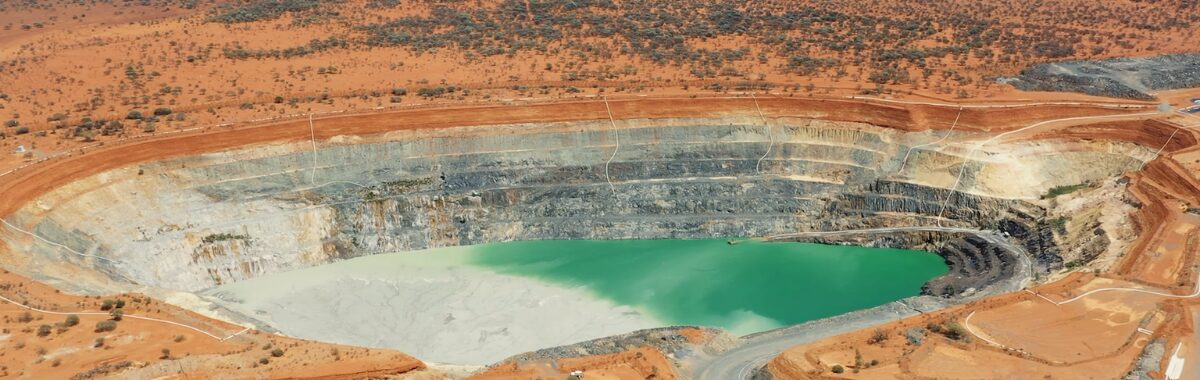
Water planning demands during phased mine expansion.
Phased mine expansion changes water planning requirements long before a site reaches a visible capacity limit. As pits deepen, cutbacks advance, and throughput increases, the mine water balance changes with them. Storage requirements can grow, runoff pathways can shift, and water infrastructure that suited an earlier stage of the operation may no longer provide the same level of control.
In practice, phased mine expansion often changes:
- where water accumulates across the site
- how much storage flexibility is required
- how quickly water must be moved or reduced
- which operational areas are most exposed to access and water control issues
Water planning cannot remain fixed as mine conditions evolve. A strategy built around an earlier pit layout, production rate, or storage footprint can begin to fall behind once expansion changes the physical and operational profile of the site.
According to the U.S. Environmental Protection Agency’s overview of Clean Water Act Section 402, NPDES permits are built around site-specific discharge controls and operating conditions, reinforcing the need for water management approaches that reflect how a site is functioning as it changes over time. In Queensland, the Department of Environment, Science and Innovation’s model water conditions for coal mines in the Fitzroy basin also emphasise structured water management planning, storage controls, and freeboard requirements tied to site conditions.
The planning gap often appears before a full system failure. Storage margins can tighten gradually, operational flexibility can narrow, and excess water can start affecting site access or compliance long before the site is formally out of capacity. Phase-based water planning helps operations assess those pressures earlier, while water reduction capacity still has time to scale with the next stage of mine growth.
3 water control risks during mine expansion.
As mine conditions change, water pressure can extend beyond storage alone. During phased mine expansion, the most common risks tend to emerge across storage capacity, operational accessdan compliance control.
1. Storage pressure can build faster than capacity
As pits deepen and cutbacks advance, stored water volumes can rise while freeboard and contingency capacity begin to narrow. A site may still appear operational, but storage flexibility can erode well before a formal capacity limit is reached. In phased mine expansion, this often happens when water infrastructure remains aligned to an earlier stage of the mine rather than current site conditions.
2. Access and production can be disrupted
When water management capacity falls behind, the effects can move quickly into active operations. According to ABC News’ report on Capricorn Copper, 2023, the Queensland mine was not expected to be fully operational until the first half of 2024 after major flooding damaged infrastructure and disrupted underground production. In a separate update, 29Metals reported that water held on site had increased by around 1.5 GL above pre-event levels, showing how quickly storage pressure can escalate when site conditions overwhelm existing water controls.
3. Compliance exposure can rise with excess water
Compliance risk can increase when excess water exceeds the site’s ability to contain, treat, or discharge it appropriately. As reported by the NSW Environment Protection Authority’s Clarence Colliery update, the operation was ordered to pay A$815,000 after untreated mine-water discharges polluted the Wollangambe River. The case shows how quickly storage, treatment, and discharge failures can become regulatory and financial consequences.
During phased mine expansion, these risks often build progressively rather than all at once. A site may still be producing while storage flexibility narrows, access becomes harder to maintain, and compliance margins begin to erode.
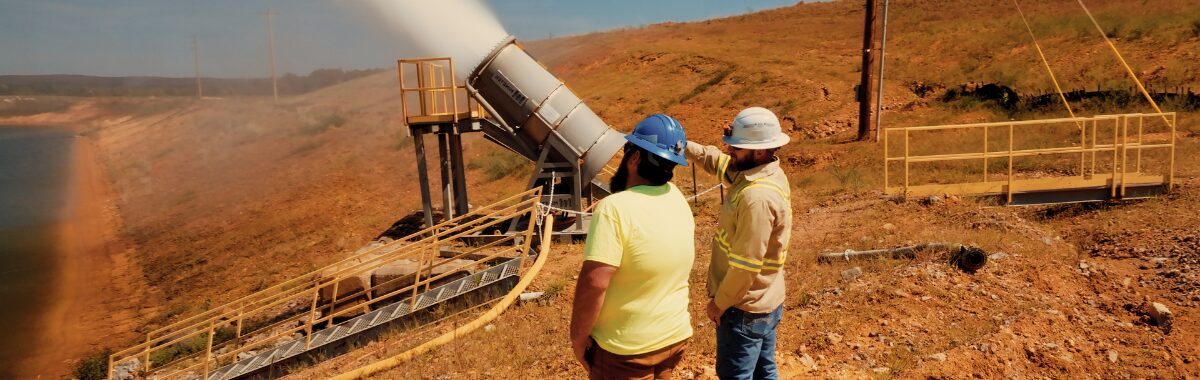
Phase-based water planning during mine expansion.
Water planning during phased mine expansion needs to keep pace with changing mine conditions, not the assumptions of an earlier stage. As pits deepen, cutbacks advance, and throughput increases, sites can face new pressure on storage capacity, operational accessdan water reduction requirements.
| Planning area | Expansion impact | Operational impact |
| Storage | Stored water volumes can rise, while freeboard and contingency margin begin to narrow. | Capacity that worked earlier in the mine life may no longer provide the same level of control. |
| Access | Water can accumulate in different operational areas as mine layouts change. | Pit access, haul routes, and site movement can be affected before storage is formally exhausted. |
| Water reduction | Excess water can build faster than existing reduction methods were designed to manage. | Evaporation and other reduction capacity may need to scale to preserve flexibility and compliance. |
As mine expansion progresses, these pressures need to be reviewed together rather than in isolation. A site may still appear to have available storage, but water can already be affecting access, reducing flexibility, or increasing reliance on emergency transfers and short-term controls.
That planning task becomes more important where discharge constraints remain in place and stored volumes continue to build. In those conditions, water reduction capacity becomes a practical part of maintaining control over storage and preserving operational flexibility as the mine moves into its next stage.
Phase-based water planning helps operations review storage, access, and water reduction together before capacity falls behind the next stage of mine growth.
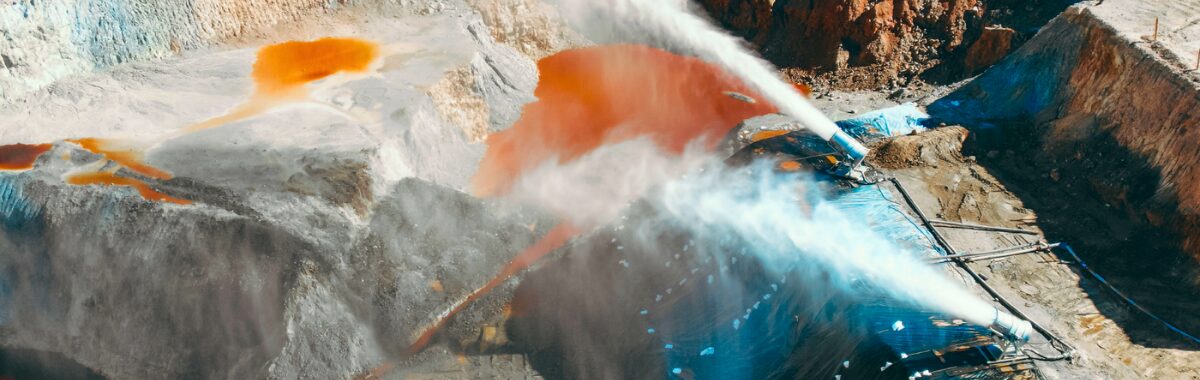
Minetek Water evaporation for phased mine expansion.
During phased mine expansion, water reduction capacity needs to do more than remove excess water. It needs to scale with changing site demands, adapt to different operating conditions, and help preserve control over storage, access, and compliance as the mine grows.
Minetek Water’s high-capacity mechanical evaporation systems are designed for exactly that environment. They give operations a practical way to reduce stored water volumes while maintaining flexibility across different stages of mine life. Key capabilities include:
- high evaporation throughput to manage large excess water volumes
- scalable deployment as water demands increase over time
- portable system design that supports changing site conditions
- operational flexibility across different water sources and storage areas
- support for freeboard management and broader site water balance control
Di a gold mine in Tanzania, Minetek initially deployed 4 water evaporators to reduce excess water in the tailings pond. The Tanzania installation achieved 1,260 m³/hour (3,440 GPM) of evaporation throughput. As site demands evolved, the operation expanded the system to 8 evaporators, demonstrating how evaporation capacity can grow alongside changing site requirements.
For operations expanding in stages, that combination of throughput, scalability, and portability gives water planning a more proactive path forward. Instead of waiting for stored volumes to constrain access or erode storage flexibility, sites can scale water reduction capacity in line with the next stage of mine growth.
Planning water reduction during phased mine expansion?
Speak with Minetek about scalable evaporation systems designed to reduce stored water volumes and support control as site demands change.
Pertanyaan Umum
What is phased mine expansion in water planning?
Phased mine expansion means water planning is reviewed as pits deepen, cutbacks advance, and throughput increases. It focuses on keeping storage, access, and water reduction capacity aligned with each stage of mine growth.
Why does mine expansion affect water planning?
Mine expansion changes where water accumulates, how much storage flexibility is available, and how quickly water must be moved or reduced. Earlier water systems may not suit later operating conditions.
What water risks can develop during mine expansion?
The main risks are reduced storage margin, restricted site access, and higher compliance exposure. These pressures can build before a site reaches a formal capacity limit.
How can mines maintain water control as expansion progresses?
Mines can maintain water control by reviewing storage capacity, operational access, and water reduction capacity at each stage of expansion. This helps prevent water infrastructure from falling behind site growth.
What role does water evaporation play during phased mine expansion?
Water evaporation helps reduce stored water volumes as mine conditions change. Scalable evaporation capacity can support freeboard, preserve storage flexibility, and reduce pressure on site water infrastructure