 Indonesian
  English (United States)
  English
  Spanish
  Portuguese
  French
  Italian
 Site-specific evaporation modelling is the process of estimating how effectively an evaporation system is likely to perform at a specific mine site before it is sized or deployed. It uses local climate conditions such as humidity, rainfall, temperature, wind, and elevation, along with water quality data, to forecast likely evaporation performance under real operating conditions.
In practice, it helps mining operations answer a simple question early: How much water can this system realistically remove at this site, under these conditions, across the year? That makes it an important planning step for system sizing, deployment decisions, material selection, and maintenance planning.
According to the Australian Bureau of Meteorology in its Reference Evapotranspiration Calculations Report, evaporation reflects the combined effect of radiation, wind, temperature, and humidity on an open water surface. That is why evaporation performance cannot be based on equipment capacity alone. It has to be assessed against the actual environmental conditions the system will face on site.
Key summary: Factors shaping evaporation performance.
- Climate-driven performance: Evaporation efficiency is shaped by humidity, temperature, wind, rainfall, and elevation, not just equipment capacity.
- Seasonal pressure points: Annual averages can mask the wetter, more restrictive periods when stored water builds faster and evaporation conditions weaken.
- More accurate planning: Site-specific modelling gives operations a more realistic basis for system sizing, deployment planning, and expected field performance.
- Water quality implications: Chemistry, salinity, scaling potential, and solids content can influence material selection, maintenance needs, and long-term reliability.
- Minetek’s planning advantage: Minetek combines site-specific evaporation efficiency modelling with a free assessment, helping operations understand likely performance early and make more informed water management decisions.
Climate conditions shaping evaporation performance.
Evaporation performance is not determined by equipment alone. It depends heavily on the conditions the system will operate in.
According to the Bureau of Meteorology on its climate observations platform, standard weather datasets already track the core variables relevant to evaporation planning, including temperature, rainfall, humidity, wind, and evaporation. That makes these inputs a practical starting point for site-specific modelling.
In simple terms:
- Humidity affects how much moisture the air can still absorb. Drier air generally supports stronger evaporation.
- Temperature influences evaporation potential, but high temperatures alone do not guarantee strong performance.
- Wind helps move saturated air away from the evaporation zone and replace it with drier air.
- Rainfall adds more water to the site water balance and can reduce short-term evaporation efficiency during wet periods.
- Elevation can also matter. In Irrigation and Drainage Paper 56, the Food and Agriculture Organization of the United Nations notes that altitude should be considered because it affects atmospheric pressure and may require adjustment of weather parameters used in evaporation calculations.
Why this matters for design.
A system that performs well in a hot, dry, exposed region may deliver very different results in a humid, sheltered, high-rainfall environment. Site-specific modelling helps operators move beyond generic assumptions and size infrastructure around actual site conditions.
Seasonal conditions and rising stored water pressure.
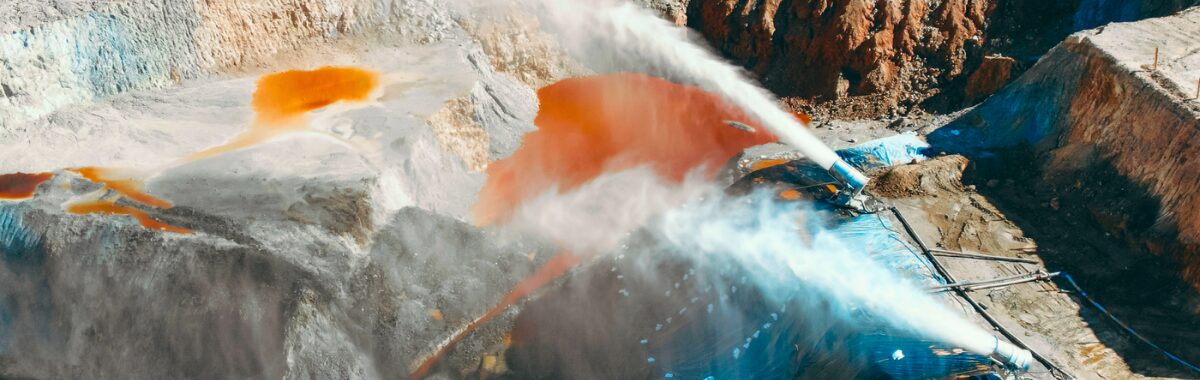
Average climate data only tells part of the story. In practice, evaporation systems need to perform through changing seasonal conditions, not just under annual averages.
Rainfall periods can increase stored water volumes faster than water can be removed, treated, or lawfully discharged.
The U.S. Environmental Protection Agency, in its overview of the Ore Mining and Dressing Effluent Guidelines, states that mine wastewater can be generated by precipitation entering mines and by contaminated stormwater at storage facilities. For operators, that means wet-weather inflows are not a side issue. They directly affect how much excess water must be managed.
Australian regulation reinforces the same point. According to the Queensland Department of the Environment, Tourism, Science and Innovation, mine water releases in the Fitzroy Basin are managed during extreme weather events and may only occur when stream flows allow it. In its Model water conditions for coal mines in the Fitzroy basin, Queensland further states that releases must only occur during natural flow events, with monitoring and flow triggers designed to prevent discharge during no-flow or low-flow conditions.
What this means in practice.
When seasonal inflows rise, operations can face a combination of pressures:
- more stored water on site
- less flexibility to release water
- greater reliance on active water reduction methods
- higher risk of storage systems approaching operational limits
That is why evaporation modelling should look at seasonality, not just long-term averages. Operators need to understand when storage pressure is most likely to build and how much performance the system may need during those periods.
A practical starting point for site-specific evaporation planning.
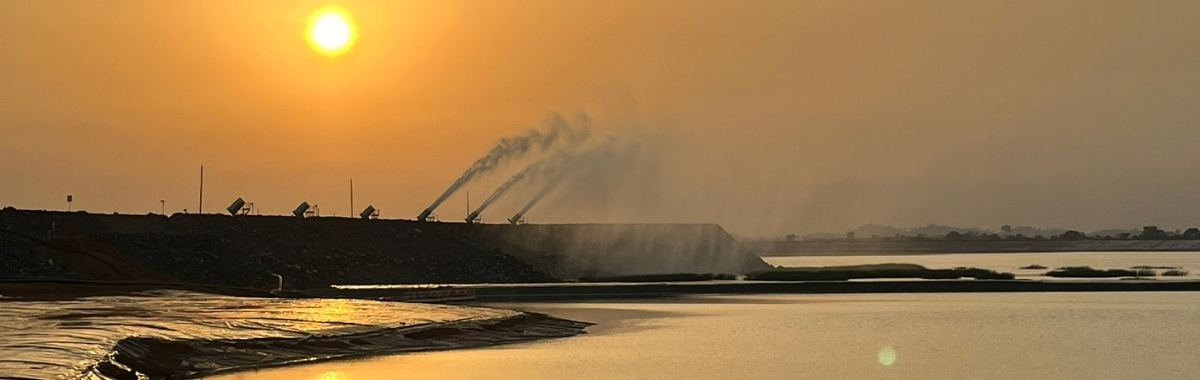
For site teams, the value of evaporation modelling is not just in understanding the variables. It is in knowing how to use them to make better early decisions.
A practical starting point is to review the site through four planning lenses:
- Climate inputs: Review local humidity, rainfall, temperature, wind, and elevation data to understand the conditions that will shape expected evaporation performance.
- Seasonal variability: Look beyond annual averages and identify the periods when rainfall increases, humidity rises, or other conditions may reduce short-term efficiency.
- Kualitas air: Assess chemistry, salinity, scaling potential, and solids content early to understand possible implications for materials, maintenance, and long-term reliability.
- Engineering decisions: Use those findings to guide system sizing, deployment planning, and performance expectations under real operating conditions.
This approach gives operations a more realistic basis for planning. It also helps reduce the risk of sizing a solution around average conditions that may not reflect the periods when water pressure is highest.
Water quality considerations in system design and maintenance.
Climate conditions help estimate evaporation potential. Water quality helps determine how the system should be built and maintained. Water chemistry can influence:
- corrosion risk
- scaling potential
- solids handling requirements
- component wear
- cleaning and maintenance frequency
As the U.S. Geological Survey explains in its overview of mining and water quality, mine drainage can contaminate water and it be viewed from an engineering and maintenance perspective.
Early water quality assessment and long-term system reliability.
Water quality should be assessed early because it influences decisions that are difficult or expensive to correct later. Once a system has been sized, specified, and deployed, any mismatch between the water chemistry and the selected materials or maintenance approach can create avoidable operational pressure.
For example, water with elevated salinity, aggressive chemistry, suspended solids, or scaling potential can affect how different components perform over time. If those conditions are not understood upfront, the system may require more frequent cleaning, more intensive maintenance, or earlier component replacement than originally expected. Assessing water quality early helps operators make better decisions in four key areas:
- Material selection
Water chemistry can influence whether standard materials are suitable or whether more resistant options are needed for long-term reliability.
- Component suitability
Some water characteristics may affect nozzles, pumps, pipework, and other wetted components more than others. Early assessment helps ensure the selected configuration matches the operating environment.
- Maintenance planning
If scaling, fouling, or solids buildup is likely, those risks can be considered before deployment and built into inspection and servicing plans.
- Lifecycle expectations
Early water quality assessment gives operators a clearer view of how the system is likely to perform over time, not just at commissioning.
In practical terms, this means water quality is not just a treatment issue. It is also a design, maintenance, and reliability issue. Understanding it early helps reduce uncertainty and supports a more realistic plan for long-term performance.
Minetek’s role in site-specific evaporation planning.
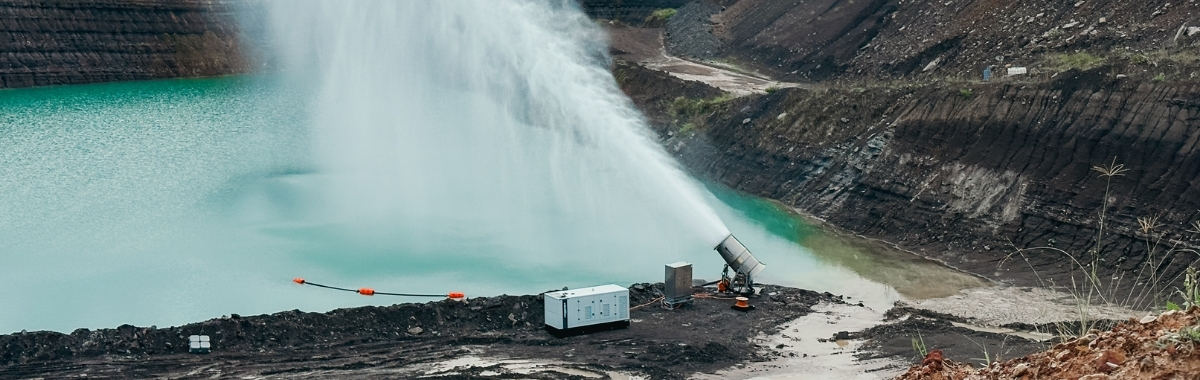
Site-specific evaporation modelling is most valuable when it leads to practical engineering decisions. It helps operators estimate likely performance, understand seasonal risk, and prepare for the water quality conditions the system will face.
That broader context is becoming more important across the industry. The Australian Bureau of Statistics, in the Water Account, Australia, 2023–24, reported that mining industry water use reached 132 gigalitres, up 14.2%, supported by higher production activity and operational demand. The Institute for Energy Economics and Financial Analysis 2025 fact sheet on coal mining water use reported that Australian mining water consumption increased 20% between 2018 and 2022, reaching 1,504 gigalitres in 2022. Against that backdrop, early modelling helps operations make better decisions around:
- system sizing
- deployment planning
- material selection
- persyaratan pemeliharaan
- expected performance under real site conditions
Minetek supports that planning process with site-specific evaporation efficiency modelling. Using project and climate inputs such as humidity, rainfall, elevation, pan evaporation, temperature, and water quality indicators such as total dissolved solids (TDS), Minetek can assess expected evaporation performance across a 12-month operating profile and provide a more realistic basis for planning.
Minetek also offers a free site-specific assessment for operations that want an early view of likely evaporation performance before sizing or deployment. It is a practical way to understand how local conditions and site setup may influence expected outcomes, and whether additional planning considerations should be factored into the solution.
Planning for reliable evaporation performance.
Effective evaporation planning starts before a system arrives on site. Humidity, rainfall, temperature, wind, elevation, and water quality all influence how an evaporation system is likely to perform in practice. Site-specific modelling brings those variables together into a more useful engineering view. It supports better sizing decisions, more informed material selection, and more practical maintenance planning.
For operations managing excess stored water, that early understanding can make the difference between theoretical capacity and reliable field performance.
Need to understand how efficiently an evaporation system is likely to perform at your site?
Request site-specific evaporation efficiency modelling from Minetek’s water management experts to assess likely performance before finalising system sizing, deployment, and planning decisions.
Pertanyaan Umum
Site-specific evaporation modelling estimates how effectively an evaporation system is likely to perform at a specific site before it is sized or deployed. It uses local climate and water quality inputs to build a more realistic view of expected performance under actual operating conditions.
It helps operations understand how much water an evaporation system can realistically remove across the year. That supports better decisions around system sizing, deployment planning, and expected field performance.
The main factors are humidity, rainfall, temperature, wind, and elevation. Together, these conditions shape how efficiently water can evaporate and how performance may change across different seasons.
Water quality can affect corrosion risk, scaling potential, solids handling, component wear, and maintenance frequency. Assessing it early helps guide material selection, maintenance planning, and long-term reliability.
It is best requested before final system sizing or deployment. Early modelling helps operators assess likely performance, understand seasonal constraints, and make better planning decisions before excess stored water creates greater operational pressure. Minetek offers free site-specific evaporation efficiency modelling to support that early planning process.