 English (United States)
  English
  Spanish
  Portuguese
  French
  Indonesian
  Italian
 One mine water strategy across multiple ponds and pits means deciding where water reduction is most urgent while maintaining control over total site storage capacity. As conditions shift across a site, the highest-priority storage area can change quickly based on stored volume, remaining capacity, and operational impact.
Managing water across several ponds, pits, or holding areas can become difficult when each area is under different pressure at different times. A practical site-wide strategy helps teams prioritise water reduction more effectively, protect remaining storage capacity, and respond to changing site conditions without losing control of the overall water balance.
Key summary: Site-wide water control across multiple storage areas
- Shifting priorities: Water reduction priorities can change quickly across ponds, pits, and holding areas as site conditions change.
- Site-wide strategy: Managing multiple storage areas requires a broader view of total site water balance, not isolated decisions at each pond or pit.
- Priority-based reduction: Water reduction is most effective when directed to the storage area placing the most pressure on site capacity and operations.
- Minetek Water systems: Portable, mobile, and scalable evaporation systems help sites reduce water where it matters most across changing site conditions.
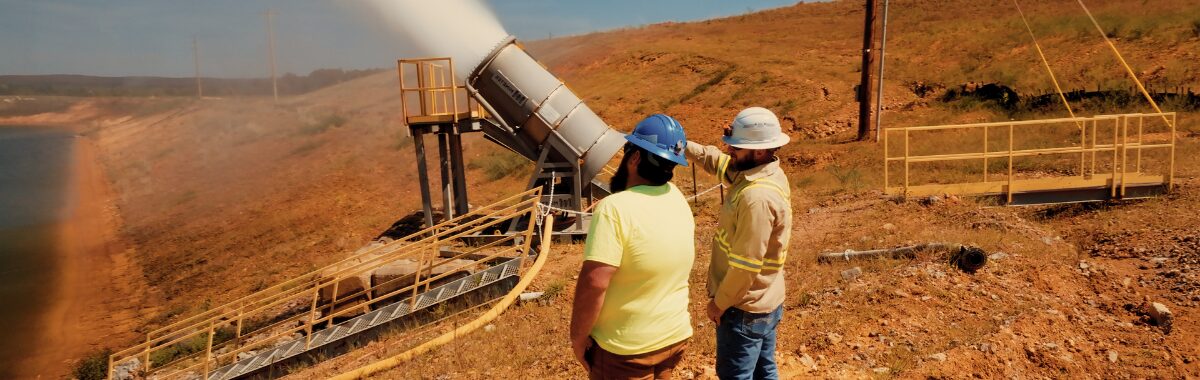
3 factors that shape water priorities across multiple ponds and pits.
Water priorities across multiple ponds and pits are shaped by current stored volume, remaining available capacity, and site-level operational impact. When several storage areas are being managed at once, teams need to look beyond one pond or pit in isolation and decide where water reduction will have the greatest immediate effect on overall site storage control.
- Current stored volumeStorage areas holding the largest water volumes can create immediate pressure on the site’s overall water balance. These areas may become a priority when reducing stored water quickly is necessary to maintain broader storage control.
- Remaining available capacityA pond or pit with less remaining capacity can become more urgent even if it does not hold the highest water volume. In practice, available buffer matters as much as current storage because it affects how much flexibility the site has as conditions change.
- Operational impact across siteWater priorities also shift based on what each storage area affects. A pond, pit, or holding area may become more important if rising water levels begin to influence access, infrastructure use, or short-term operational planning.
Creating storage buffer across multiple ponds and pits.
Managing multiple ponds and pits requires more than tracking stored volumes. The practical objective is to reduce excess water where it creates the greatest pressure, so more usable buffer can be created across the wider storage system.
For mine sites, this means treating water reduction as a site-wide action rather than a location-by-location reaction. When excess water is reduced in the areas under the most pressure, teams can create more operating flexibility across the site and maintain better control over total storage capacity.
A practical site-wide approach should include:
- Identify the storage areas under the most pressureFocus on the ponds, pits, or holding areas with the least remaining buffer or the greatest operational constraint.
- Direct water reduction where it creates the most usable capacityPrioritise the locations where reducing stored water will create the greatest immediate improvement in available storage.
- Manage storage areas as one connected systemAvoid treating each pond or pit in isolation. Water reduction decisions should support total site storage control.
- Reassess buffer across the site as conditions changeReview priorities as rainfall, inflows, and operational demands shift from one storage area to another.
This approach helps sites create usable storage capacity sooner and respond more effectively as pressure shifts across the system.
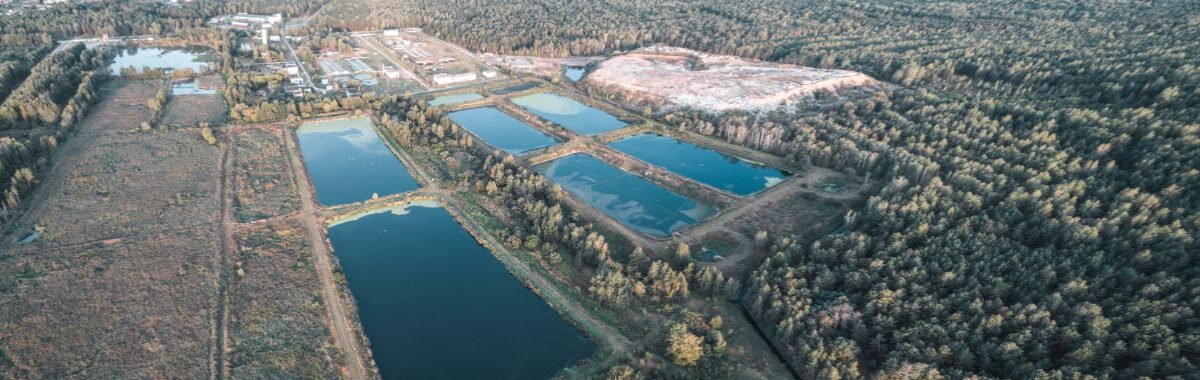
Minetek Water evaporation systems for site-wide water reduction.
Minetek Water evaporation systems provide up to 135 m³/hour per unit and can be deployed, moved, and scaled across multiple ponds and pits as site priorities change.
This makes the systems well suited to site-wide water reduction strategies that require:
- Portable deployment across multiple ponds and pits
- Mobile systems that can be repositioned as storage pressure shifts
- Fast deployment to the area where water reduction is most urgent
- Scalable capacity as site water demands change
See how this model is applied in practice across different dewatering and multi-storage challenges:
- QLD, Australia coal mine – Pit dewatering and excess water levels in the mine pit were creating operational pressure. We deployed 4 x Minetek water evaporators to support water reduction.
- NSW, Australia coal mine – Excess water levels across open pits required a larger-scale evaporation response. We deployed 6 x Minetek water evaporators with automated control and monitoring support.
- Arizona, USA copper mine – High volumes of acidic water from pit dewatering required active water reduction. We deployed 3 x Minetek water evaporators to manage the site’s dewatering challenge.
Create storage buffer across the site.
Connect with a Minetek Water expert to explore water evaporation solutions for your site.
Frequently Asked Questions (FAQs)
Managing water across multiple ponds and pits requires one site-wide strategy because storage pressure does not stay fixed in one location. As water levels, remaining capacity, and operational priorities change across site, teams need a broader view of total storage capacity and where water reduction is most urgent.
Water priorities are typically shaped by current stored volume, remaining available capacity, and operational impact. The most urgent reduction point is not always the largest pond or pit. It is the storage area placing the most pressure on total site capacity and day-to-day operations.
Mine sites create storage buffer by reducing excess water in the storage areas under the most pressure. This helps free up usable capacity across the broader system and improves the ability to respond as conditions shift from one pond, pit, or holding area to another.
Minetek Water evaporation systems support site-wide water reduction by providing portable, mobile, and scalable evaporation capacity that can be deployed where water reduction is most urgent. With evaporation rates of up to 135 m³/hour per unit, they help sites reduce excess water across multiple storage areas as priorities change.
Portable and scalable evaporation systems are useful in complex mine layouts because water pressure can move across different ponds, pits, and holding areas over time. Systems that can be deployed quickly, repositioned, and expanded give sites a more practical way to reduce excess water where it has the greatest site-wide impact.