 English (United States)
  English
  Spanish
  Portuguese
  French
  Indonesian
  Italian
 Sound attenuation reduces mining equipment noise at the source, cutting site noise levels by up to 50% without restricting airflow, cooling or machine output. Attenuation systems fitted to dozers, excavators, drills and haul trucks help mining operations stay under regulatory noise exposure limits and reduce noise complaints from nearby communities.
Key takeaways
- Source treatment: Sound attenuation reduces noise at the machine itself, not after it’s generated.
- Regulatory alignment: Standards sit at 85 dB(A) LAeq,8h in Australia and a 90 dBA permissible exposure level under MSHA in the US.
- Machine-specific engineering: M-STEALTH covers 115+ OEM models across more than 3,000 mining machines worldwide.
- No performance trade-off: Properly engineered systems preserve OEM airflow and backpressure.
- Part of a layered approach: Attenuation cuts source noise; barriers, monitoring and hearing protection handle the rest.
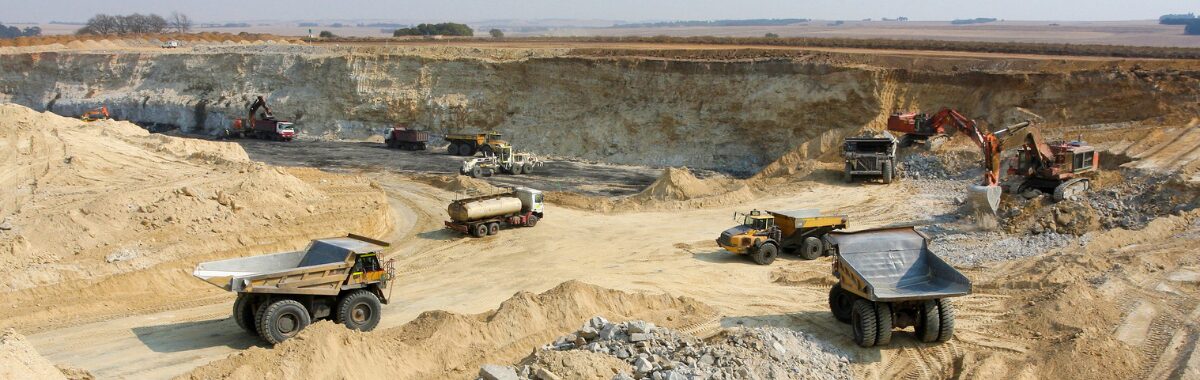
Engineered sound attenuation is the best noise reduction technology for mining operations.
Engineered sound attenuation is the most effective noise reduction technology for mining operations because it treats noise at the equipment itself rather than after it has spread across a site. Mining sites typically combine several of the noise reduction technologies below, since each one targets a different noise source:
- Engineered sound attenuation: reduces noise at the equipment itself, engine bays, fans, exhausts and airflow pathways, and is the strongest option for mobile fleet such as haul trucks, excavators, dozers and drills.
- Acoustic enclosures: contain noise around stationary or fixed plant such as crushers, generators and pumps, but restrict access for maintenance and don’t suit mobile equipment.
- Vibration isolation and damping: reduce noise radiated by panels, housings and structures affected by resonance or rattle, rather than airborne equipment noise.
- Industrial silencers: reduce exhaust and ventilation noise using baffles and absorptive materials, typically fitted to engine exhausts and pneumatic systems.
- Hearing protection (PPE): manages any noise exposure that remains after engineering controls are in place, protecting the individual worker rather than the wider site.
Mobile fleet is generally best served by engineered attenuation, because haul trucks, excavators, drills and dozers can’t be boxed in the way fixed plant can. Equipment that runs for extended shifts benefits most from a solution built into the machine, since it doesn’t rely on downtime, distance or added structures to keep noise under control.
Sound attenuation treats equipment noise at the source.
Sound attenuation reduces equipment noise by treating the specific components that generate it, rather than relying on external containment after the noise has already spread. Minetek’s M-STEALTH technology is engineered around each machine’s acoustic profile and typically addresses:
- Engine bays: treated to reduce mechanical and combustion noise at its point of origin.
- Cooling fans: engineered so airflow noise is reduced without cutting the airflow the engine needs.
- Exhaust systems: fitted with attenuation that lowers exhaust noise without adding excessive backpressure.
- Airflow pathways: designed so noise-reducing material doesn’t restrict ventilation or cause overheating.
Sound attenuation differs from noise suppression because attenuation reduces the sound a component produces, while suppression only masks noise without lowering it. An attenuation system engineered this way lowers a machine’s overall noise output while keeping its cooling, airflow and power delivery intact.
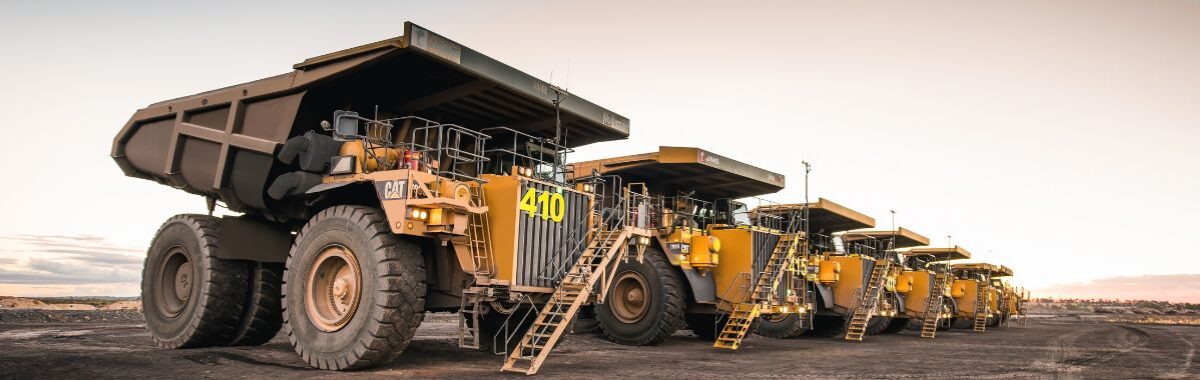
Sound attenuation, enclosures and vibration control solve different problems.
Sound attenuation treats noise at its source on operating equipment, while enclosures and vibration control treat noise after it has already been generated or transmitted through a structure. As Minetek’s comparison of attenuation and dampening sets out, the right choice depends on whether the noise problem is equipment noise travelling into the surrounding environment, or vibration, resonance and echo inside a structure or enclosure. Mining sites often need more than one of these approaches, because mobile fleet, fixed plant and enclosed structures each generate noise differently.
| Approach | Where it works best | Main limitation |
| Sound attenuation | Mobile equipment: haul trucks, excavators, dozers, drills | Needs engineering specific to each machine model |
| Acoustic enclosures | Fixed and stationary plant: crushers, generators, pumps | Not practical for mobile fleet; can restrict maintenance access |
| Vibration isolation and damping | Panels, housings, cabins and processing structures with resonance or rattle | Addresses structure-borne noise, not airborne equipment noise |
| Hearing protection (PPE) | Any residual exposure after engineering controls are in place | Protects the individual worker, not the site or surrounding community |
Sound attenuation supports regulatory compliance in mining.
Sound attenuation supports regulatory compliance in mining by lowering equipment noise output before it contributes to a worker’s exposure or a site’s boundary noise levels, helping sites stay under the limits set by their regulator.
Australian noise exposure standards
Australia’s WHS Regulation sets the exposure standard for noise at an LAeq,8h of 85 dB(A) and a peak level of 140 dB(C). Where a noise assessment shows this standard has been exceeded, the business conducting the operation must eliminate the risk where possible, or apply the hierarchy of controls to minimise it as far as reasonably practicable.
United States noise exposure standards (MSHA)
The United States regulates mine noise under MSHA’s occupational noise standard, 30 CFR Part 62, which sets an 85 dBA action level and a 90 dBA permissible exposure level as an eight-hour time-weighted average. A mine operator must also ensure no miner is exposed at any time to sound levels exceeding 115 dBA, regardless of hearing protection worn.
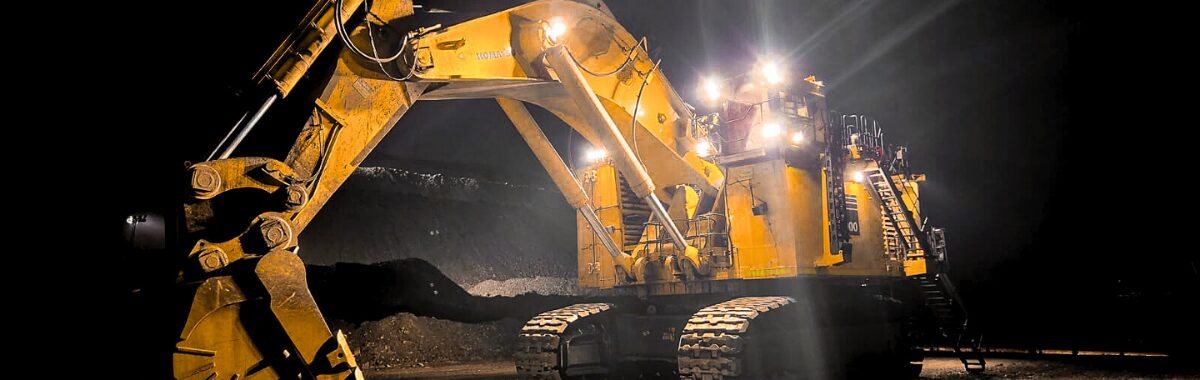
Sound attenuation lowers the noise a machine produces, which supports staying under these limits, but it works as part of a broader noise management program rather than as a standalone fix. Sites still need monitoring, administrative controls and hearing protection to manage any noise that remains after engineering controls are in place. Minetek’s sound attenuation systems can also be verified against compliance testing standards to document the reduction achieved on a given machine or site.
Sound attenuation solutions used across mining operations.
Mining operations typically use engineered attenuation packages fitted to mobile fleet, including haul trucks, excavators, dozers, drills and generators, with the system design matched to each machine’s OEM specification and acoustic profile. Minetek’s M-STEALTH range is built on this model, with attenuation packages developed across 115+ OEM models and fitted to more than 3,000 mining machines worldwide, designed with minimal components and weight to preserve critical airflow and maintenance accessibility.
Typical equipment fitted with attenuation packages includes:
- Dozers and loaders: engine bay and fan noise treated without restricting cooling.
- Excavators: attenuation built around cab, engine and hydraulic noise sources.
- Haul trucks: engine and exhaust attenuation suited to continuous operating cycles.
- Drills: compact packages designed for equipment with limited free space.
- Generators and fixed plant: attenuation paired with enclosures where the asset is stationary.
Minetek engineers sound attenuation packages around each machine’s OEM specification, reducing site noise without compromising airflow, cooling or productivity. With systems proven across 115+ OEM models and more than 3,000 machines worldwide, Minetek helps mining operations reduce noise exposure and respond to tightening regulatory and community expectations.
Looking for a noise reduction technology that won’t cost you equipment performance? Connect with Minetek sound attenuation team to assess attenuation options for your fleet.
Frequently Asked Questions (FAQs)
What noise reduction technologies work best for continuous mining operations?
Engineered sound attenuation generally works best for equipment that runs continuously, because it reduces noise at the machine rather than relying on downtime or external containment. It suits mobile fleet such as haul trucks, excavators and drills that can’t be enclosed the way fixed plant can.
How can noise from mining equipment be effectively reduced?
Noise from mining equipment is reduced most effectively by treating the source, such as engine bays, cooling fans and exhaust systems, with engineered attenuation, then adding barriers, vibration isolation or hearing protection where any noise remains.
Which mining noise reduction technology best helps meet regulatory limits?
Engineered sound attenuation best helps sites meet regulatory noise limits because it lowers equipment noise output before it reaches the worker or the site boundary, supporting compliance with standards such as Australia’s 85 dB(A) eight-hour exposure limit and the United States’ 90 dBA permissible exposure level under MSHA, which mine operators must not exceed as an eight-hour time-weighted average.
What noise reduction technology works best for continuous mining operations?
As with continuous operations generally, engineered sound attenuation performs best because it keeps reducing noise while the equipment keeps running, without needing shutdowns or added enclosures.
Which sound attenuation solutions do mining operations typically use?
Mining operations typically use engineered attenuation packages fitted to haul trucks, excavators, dozers, drills and generators, with the system design matched to each machine’s OEM specification and acoustic profile.
What are the top noise reduction technologies for mining equipment?
The main noise reduction technologies for mining equipment are engineered sound attenuation, acoustic enclosures, vibration isolation, industrial silencers and hearing protection, each suited to a different noise source, from mobile equipment through to exhaust and structure-borne noise.