Vai al contenuto principale
Contatto
Torna a notizie e approfondimenti

7 Industrial noise control systems for large mine sites.

Publish date: 15 Giugno 2026

Industrial noise reduction at large sites relies on selecting the right sound attenuation systems for the actual noise source. Common noise control solutions include source-based attenuation, acoustic enclosures, barriers, silencers, vibration isolation, and other forms of acoustic insulation. The most effective option depends on whether the noise comes from mobile equipment, fixed plant, exhaust systems, or temporary work areas.

For environmental and operations managers, this is a practical site issue with direct compliance and performance implications. Poor noise control can increase regulatory pressure, affect manufacturing plant safety, create construction site noise control challenges, and strain relationships with nearby communities. Large sites often deal with multiple noise sources at once, which means the right solution must reduce sound without affecting equipment reliability or operational efficiency.

This guide reviews 7 industrial noise reduction systems used across large industrial environments and outlines where each one is most effective.

Quick guide: 7 industrial noise control systems for large sites.

  1. Minetek M-STEALTH™: The most advanced engineered sound attenuation for heavy mobile equipment at mining and construction sites
  2. Acoustic enclosures: Fixed housing for stationary machinery and generators
  3. Sound barriers and walls: Perimeter control for facilities with defined boundaries
  4. Acoustic curtains and blankets: Portable options for temporary work zones
  5. Silencers and mufflers: Exhaust-focused reduction for engines and ventilation
  6. Vibration isolation mounts: Address structure-borne noise at the source
  7. Active noise cancellation systems: Electronic approach for specific frequency ranges

What factors matter most when choosing an industrial noise control system?

Selecting the right noise control approach depends on site conditions, equipment types, and the relevant regulatory environment. These systems were assessed against the factors that matter most to environmental and operations managers at large industrial sites.

  • Noise reduction performance: Measured decibel (dBA) reduction across relevant frequency ranges to support permit and compliance requirements
  • Equipment compatibility: Whether the system is suited to mobile machinery, stationary plant, or both, while maintaining operational continuity
  • Installation footprint: Physical space requirements and integration with existing site layouts to minimise disruption
  • Maintenance requirements: Ongoing service needs that affect total cost of ownership and uptime
  • Regulatory compliance: Alignment with environmental noise standards and occupational health requirements across Australia, North America, and other operating regions
  • Operational impact: Effect on machine performance, payload capacity, airflow, and fuel efficiency

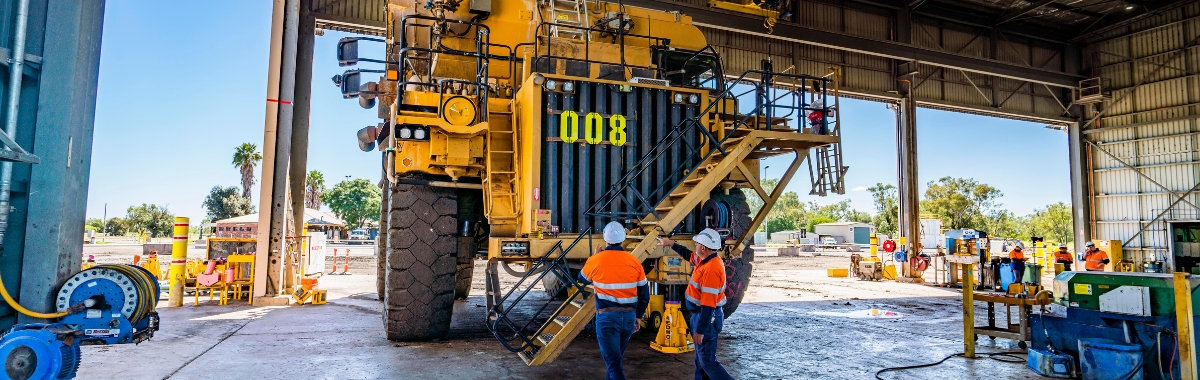
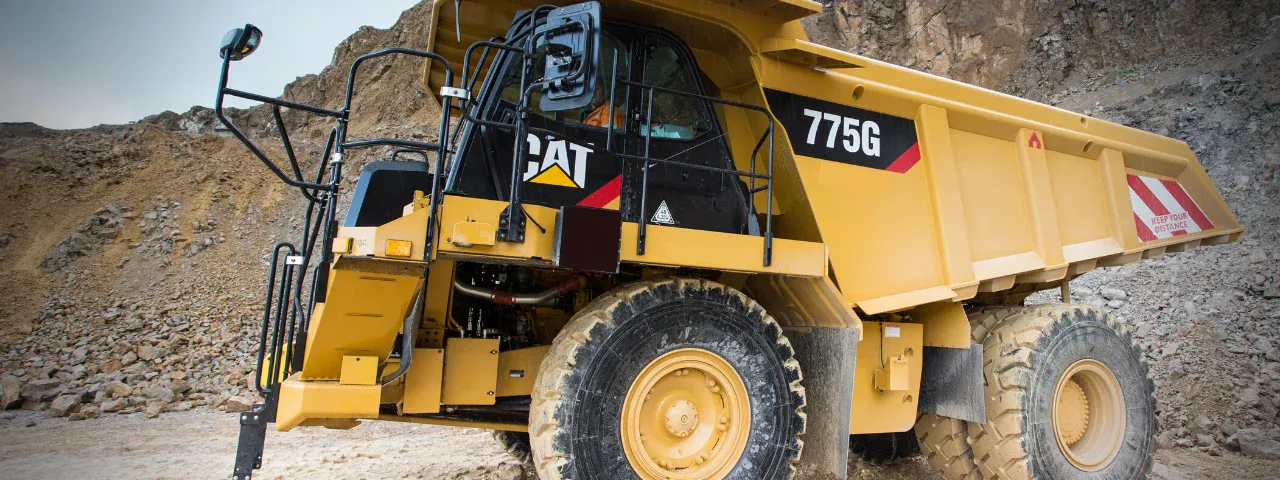
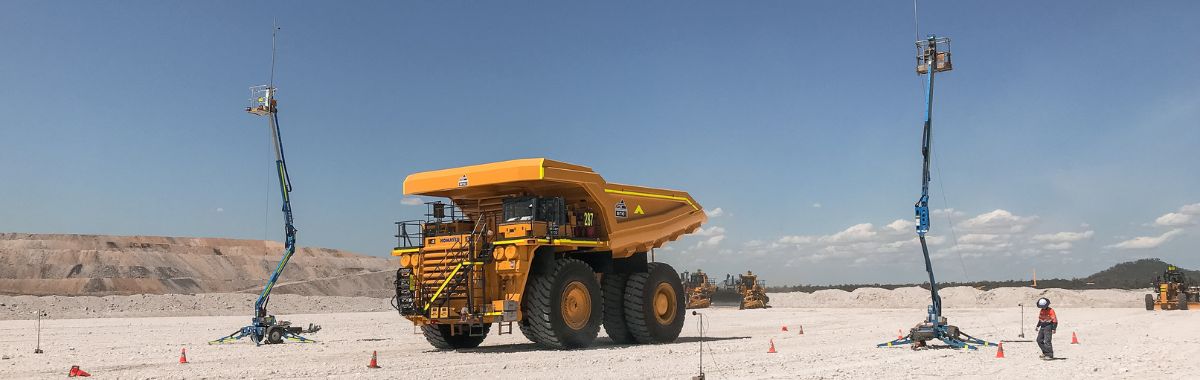
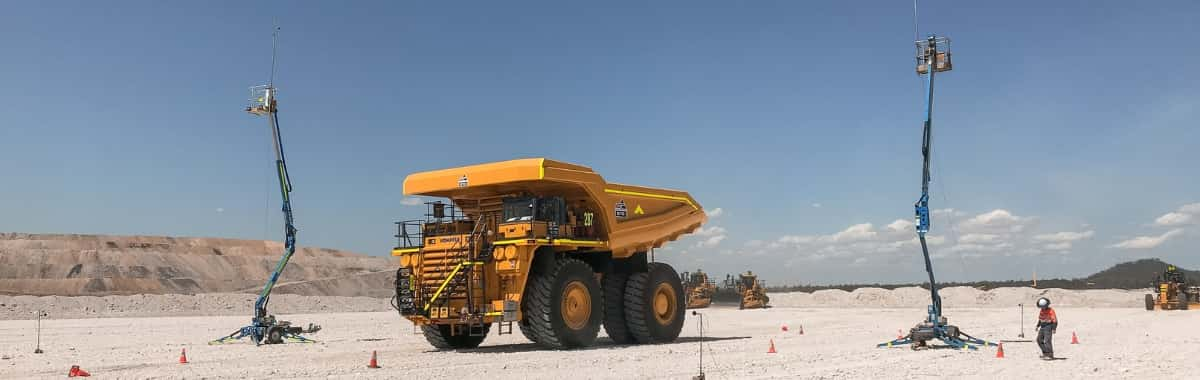
Haul truck

The 7 industrial noise control systems for large sites.

Large industrial sites use different noise control systems depending on where the noise is generated, whether the source is mobile or stationary, and what level of compliance the site needs to achieve. Some solutions are designed for heavy mobile equipment, while others are better suited to fixed plant, temporary work zones, or boundary-level noise management.

1. Minetek M-STEALTH™: Engineered sound attenuation for heavy mobile equipment

Minetek’s M-STEALTH™ system represents a purpose-built approach to industrial noise management. Unlike generic solutions, M-STEALTH™ targets specific noise sources on heavy machinery, including haul trucks, excavators, dozers, drills, and loaders, using acoustic visualisation and sound intensity testing.

What sets this system apart is how it addresses noise at the source without compromising machine performance. Minetek’s in-house acoustic engineers design each system to site-specific requirements, helping operations reduce noise while minimising payload impact.

The dual-skin exhaust construction maintains OEM backpressure levels while keeping surface temperatures below 150°C. This removes the need for thermal blankets and can reduce maintenance downtime compared to traditional sound-suppressed exhaust systems.

With more than 3,000 mining machines fitted globally since 1984, Minetek brings proven expertise to projects across 60+ countries. The M-STEALTH™ system integrates with equipment from Caterpillar, Komatsu, Hitachi, Liebherr, and other major OEMs.

Caratteristiche principali

  • Acoustic visualisation and sound intensity testing to identify exact noise sources
  • Dual-skin exhaust system for durability and reduced heat stress
  • OEM-compliant design to maintain factory backpressure and airflow specifications
  • Weight-optimised construction to minimise payload impact
  • AS-5062-2022 fire prevention protection
  • Multi-OEM compatibility across major equipment manufacturers

What to consider

M-STEALTH™ is best suited to heavy mobile equipment where source-based attenuation is needed across a large site. Its main advantage is that it reduces noise without compromising OEM performance, payload capacity, or machine reliability. Because it is engineered to suit each machine and site condition, it requires acoustic assessment and machine-specific design.
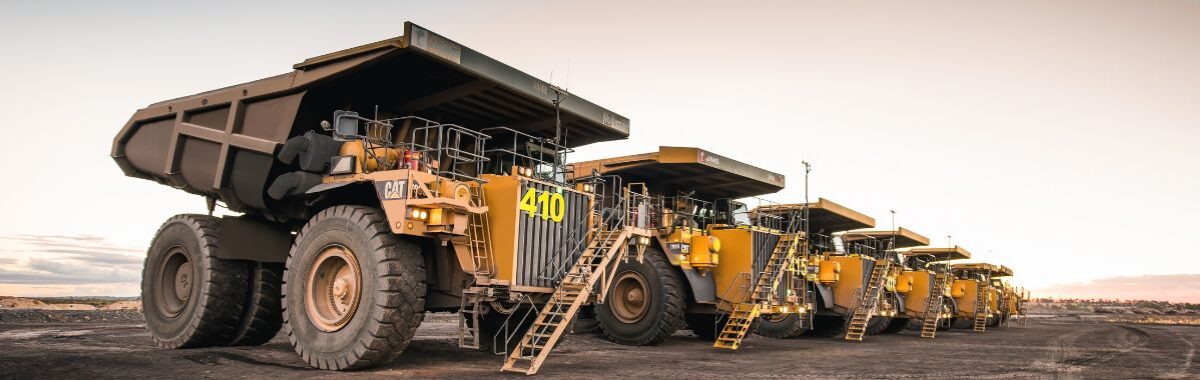
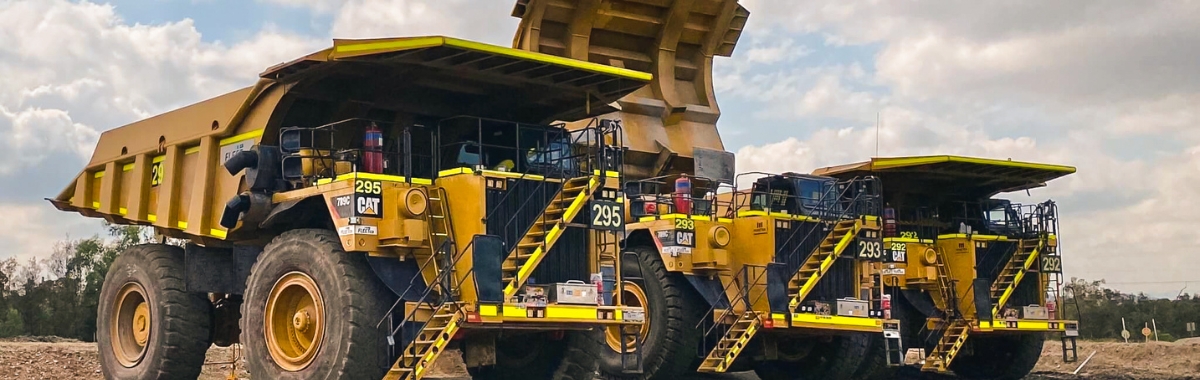
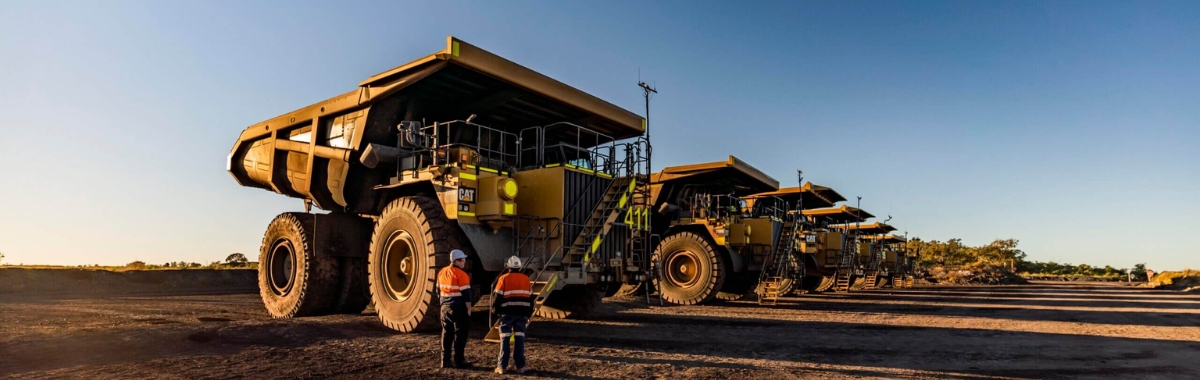
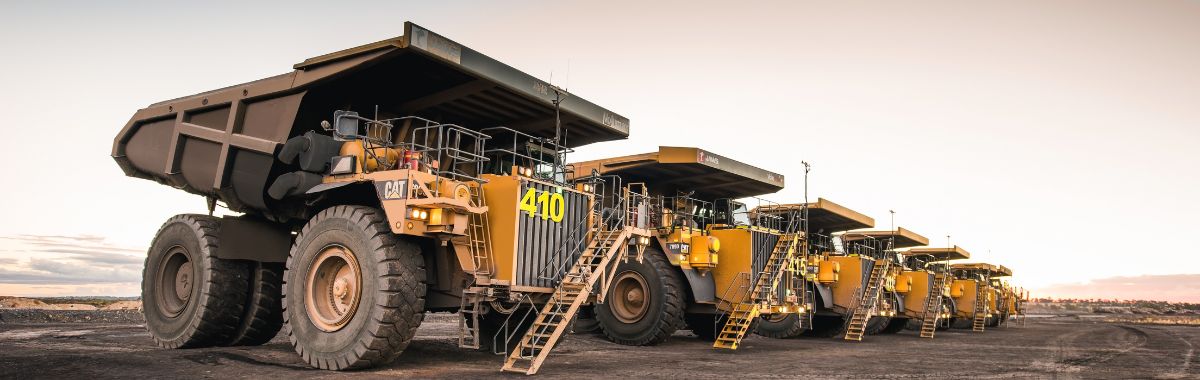
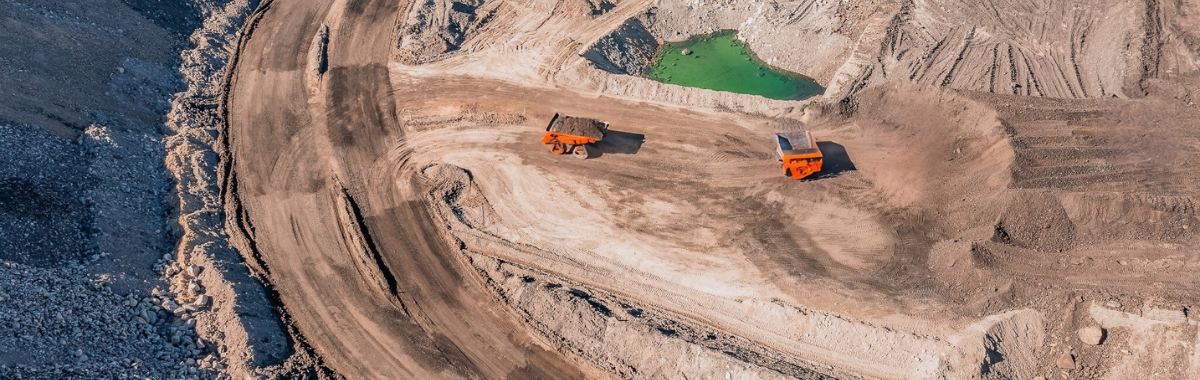
Mine haul truck fleet

2. Acoustic enclosures: Housing for stationary machinery

Acoustic enclosures are purpose-built structures that surround noisy stationary equipment such as generators, compressors, and pumps. These enclosures use sound-absorbing materials in walls, ceilings, and doors to contain noise at the source.

For fixed plant applications, enclosures can achieve significant dBA reductions. However, they require careful ventilation design to prevent equipment overheating, which adds complexity and cost to larger installations.

Caratteristiche principali

  • Modular panel construction sized to suit equipment dimensions
  • Ventilated designs for safe operating temperatures
  • Access doors and panels for maintenance access

What to consider

Acoustic enclosures are effective for stationary equipment in defined locations. They can provide strong containment and weather protection, but they are not suitable for mobile equipment and can require significant floor space and ongoing ventilation management.

3. Sound barriers and walls: Perimeter noise management

Sound barriers are vertical structures positioned between noise sources and receivers, typically site boundaries or nearby communities. They work by blocking the direct path of sound waves and creating an acoustic shadow zone behind the barrier.

These systems are commonly used around industrial facilities, along highways, and at construction site perimeters. Their effectiveness depends heavily on barrier height, length, and positioning relative to both the noise source and the area requiring protection.

Caratteristiche principali

  • Absorptive or reflective panels depending on the acoustic objective
  • Modular sections for irregular site boundaries and terrain
  • Weather-resistant materials for long-term outdoor use

What to consider

Sound barriers can help reduce off-site noise where boundaries are clearly defined. They are relatively straightforward to install, but they do not treat noise at the source and are less effective for elevated or moving noise sources. They may also require substantial foundation work and site preparation.

4. Acoustic curtains and blankets: Portable industrial solutions

Acoustic curtains and blankets offer a flexible approach to temporary noise control. Made from dense, sound-absorbing materials, these systems can be hung, draped, or positioned around equipment and work areas.

Construction sites often use acoustic blankets during demolition or concrete cutting operations. Manufacturing facilities also use curtains to create temporary sound barriers between noisy processes and quieter work zones.

Caratteristiche principali

  • Portable installation for changing work areas
  • Multiple hanging systems, including track-mounted and freestanding options
  • Fire-rated materials for industrial applications

What to consider

Acoustic curtains and blankets are useful where flexibility and speed of deployment matter most. They are generally lower cost and reusable, but they offer less attenuation than engineered systems or enclosures and may wear more quickly in exposed site conditions.
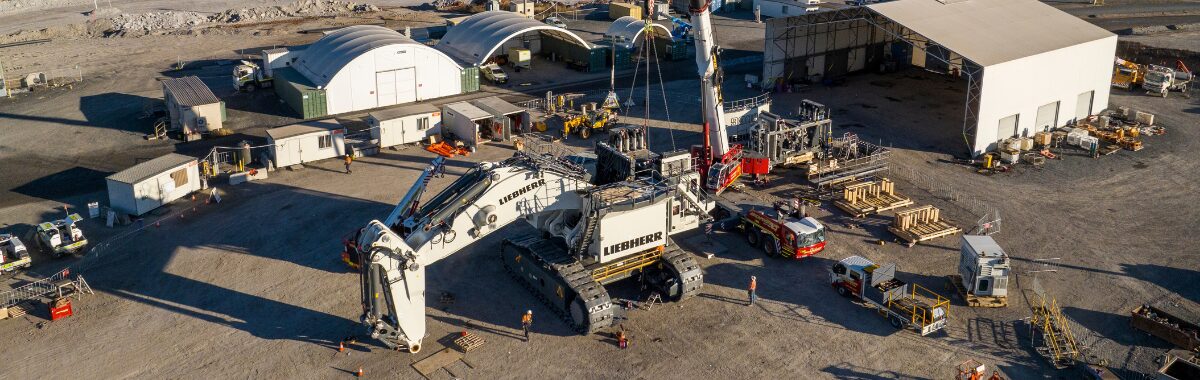
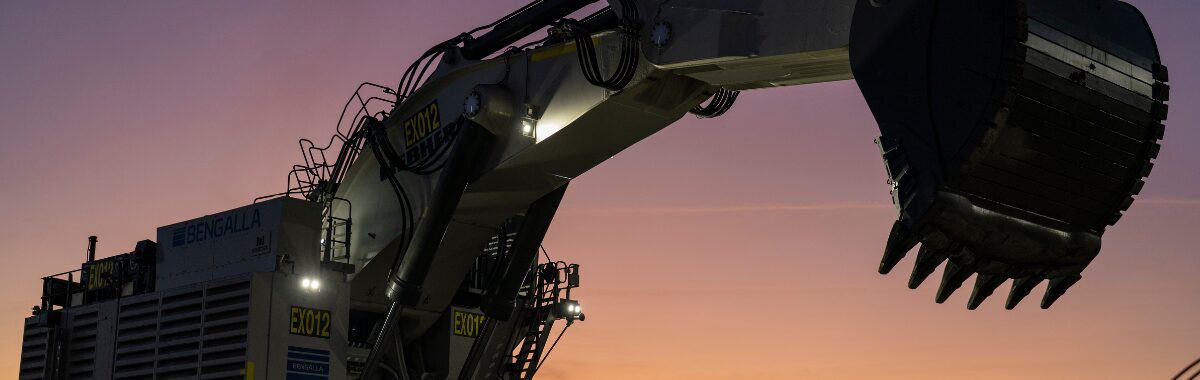
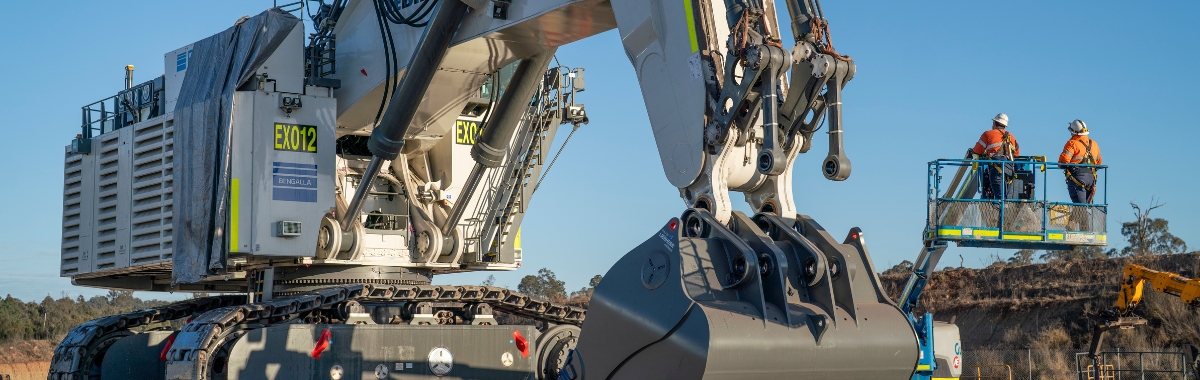
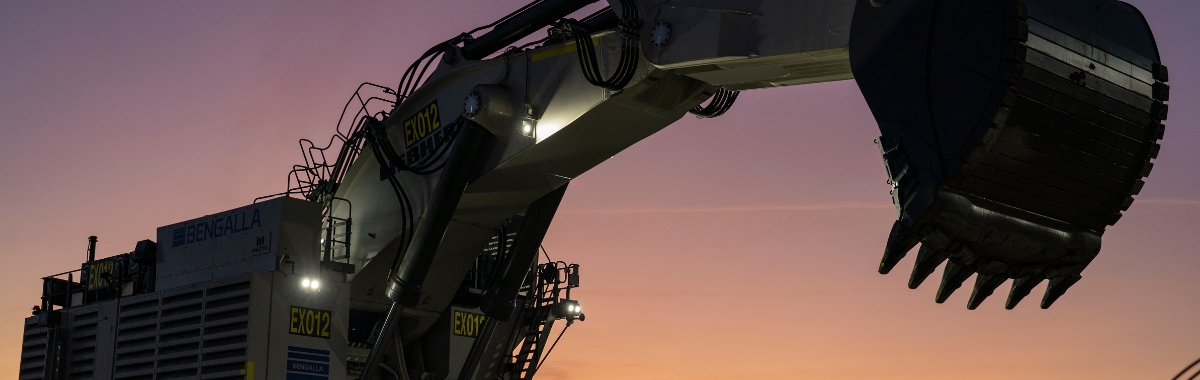
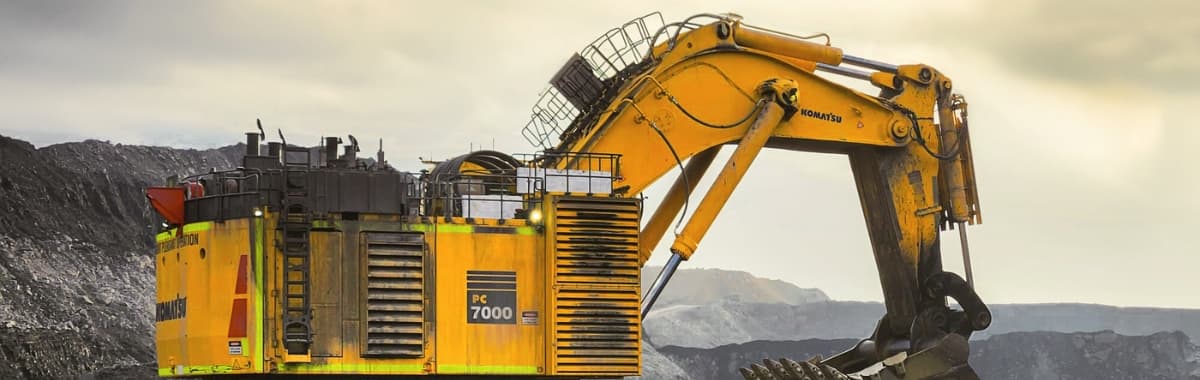
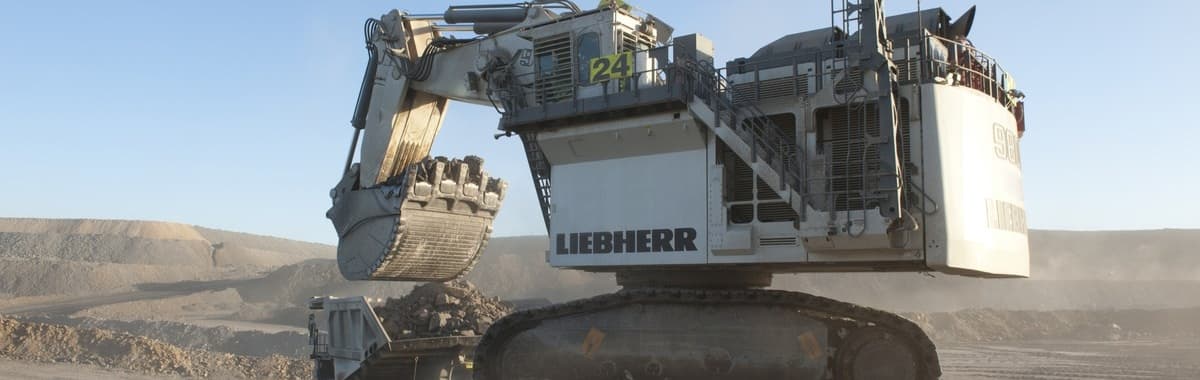
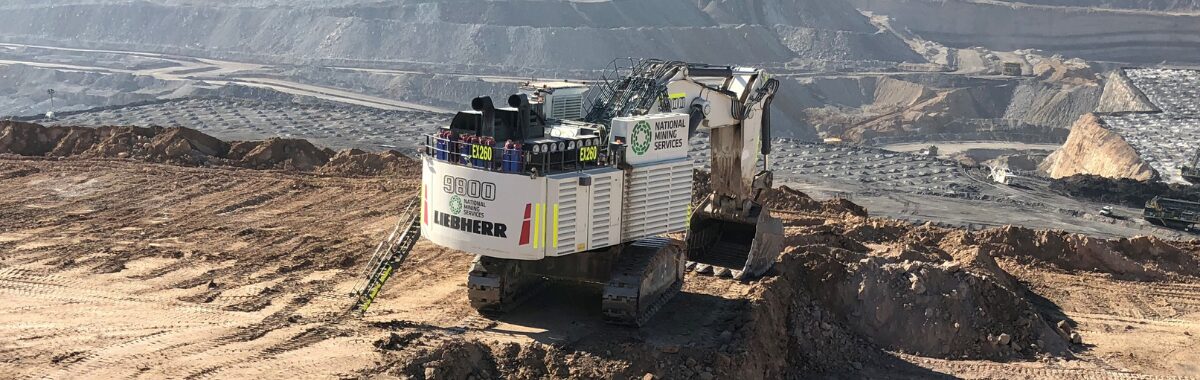
Liebherr R 9800 Excavator

5. Silencers and mufflers: Exhaust-focused noise reduction

Silencers and mufflers target noise from engine exhausts, ventilation systems, and pneumatic equipment. These devices use baffles, chambers, and absorptive materials to reduce sound energy before it exits the exhaust stream.

Industrial silencers range from compact inline units to large duct-mounted systems for HVAC applications. Performance varies depending on the design, size, and frequency characteristics of the noise source.

Caratteristiche principali

  • Reactive or absorptive designs for different frequency ranges
  • Inline installation within existing ductwork or exhaust systems
  • Custom sizing to suit airflow and backpressure requirements

What to consider

Silencers and mufflers are effective where exhaust noise is a primary contributor to the site noise profile. They can often be retrofitted to existing equipment, but they do not address other mechanical noise sources and may affect airflow or engine performance if poorly specified.

6. Vibration isolation mounts: Structure-borne noise control

Vibration isolation mounts address noise that travels through building structures and equipment frames. By decoupling machinery from its supporting surface, these systems prevent vibration energy from being transmitted and radiated as sound.

Common applications include mounting compressors, fans, pumps, and HVAC equipment. Proper isolation can reduce both airborne noise and perceptible vibration in adjacent work areas.

Caratteristiche principali

  • Elastomeric or spring mounts for different loads and frequencies
  • Inertia bases to reduce transmission of low-frequency vibration
  • Floating floor systems for sensitive installations

What to consider

Vibration isolation mounts are useful when structure-borne transmission is a major source of site noise. They can also help reduce equipment stress, but they do not directly control airborne noise from the equipment itself and need correct engineering specification to perform properly.

7. Active noise cancellation systems: Electronic sound management

Active noise cancellation (ANC) uses microphones and speakers to generate sound waves that interfere with and reduce specific noise frequencies. While common in consumer headphones, industrial applications remain limited to controlled environments and specific frequency ranges.

In industrial settings, ANC systems are generally used in enclosed spaces such as operator cabins, control rooms, and HVAC ducts. Large-scale outdoor applications remain challenging because of variable sound fields and the power required to generate effective cancellation.

Caratteristiche principali

  • Real-time processing of incoming sound
  • Frequency targeting for predictable low-frequency tones
  • Cabin integration for enclosed operator environments

What to consider

ANC can be effective for targeted low-frequency noise in controlled environments. It offers an electronic alternative where passive methods have limits, but it is not practical for broad outdoor site applications or multiple moving noise sources.

Summary table: industrial noise control systems at a glance.

System Typical application Mobile equipment Main advantage Main limitation
Minetek M-STEALTH™ Heavy mobile equipment Yes Source-based attenuation with OEM-aligned performance Requires engineered assessment
Acoustic enclosures Stationary machinery No Strong containment at the source Large footprint and ventilation needs
Sound barriers and walls Perimeter noise management No Helps reduce off-site noise transmission Does not treat source noise
Acoustic curtains and blankets Temporary work zones Limited Flexible and portable Lower attenuation performance
Silencers and mufflers Exhaust and duct systems Sometimes Targets exhaust noise directly Does not address all noise sources
Vibration isolation mounts Structure-borne noise control No Reduces vibration transmission Does not directly reduce airborne noise
Active noise cancellation systems Controlled enclosed spaces Limited Effective for specific frequencies Not practical for broad outdoor use

What regulations govern industrial noise at large sites?

Industrial noise regulations vary by jurisdiction, but the core requirements are broadly similar. In Australia, according to the NSW EPA Noise Policy for Industry, the policy sets assessment noise levels, consistent methods, and best-practice measures for managing industrial noise impacts, including for mines, quarries, and large industrial sites. For construction activity, the NSW EPA construction noise page states that the EPA sets noise limits in environment protection licences and uses guideline-based assessment to support approvals and licence conditions.

Occupational noise is regulated separately from environmental noise. Moreover, Safe Work Australia’s noise guidance states that workers must not be exposed to noise of 85 dB(A) or higher over an 8-hour day or 40-hour week. Safe Work Australia also states that workers must not be exposed to noise above 140 dB peak, and that risks should be eliminated or minimised under work health and safety duties. Additional guidance is also set out in the Model Code of Practice: Managing noise and preventing hearing loss at work.

Noise complaints can also trigger regulatory attention. According to the NSW EPA’s explainer on investigating noise issues, the regulator may investigate complaints through monitoring and enforcement tools such as noise abatement directions. For large sites operating under approvals or licence conditions, that means reliable noise control is not just an engineering issue. It is part of demonstrating ongoing compliance under real operating conditions.

How should operators calculate the true cost of industrial noise control?

Upfront purchase cost is only one part of the equation. A proper evaluation should also account for installation complexity, integration with existing equipment, maintenance requirements, and the operational life of the system. For environmental and operations managers, the real question is not just what a system costs to buy, but what it costs to run, maintain, and manage over time.

For mobile equipment, productivity impact is a major consideration. Systems that add significant weight can reduce payload capacity, which directly affects output per cycle. In high-utilisation environments, even small performance trade-offs can compound into material operating costs over the life of the asset.

Downtime also needs to be factored into the calculation. Systems that require frequent servicing, complex repairs, or difficult access can increase indirect costs and reduce uptime. In practice, engineered systems designed for harsh industrial environments often deliver better long-term value when they maintain equipment performance and reduce maintenance burden.
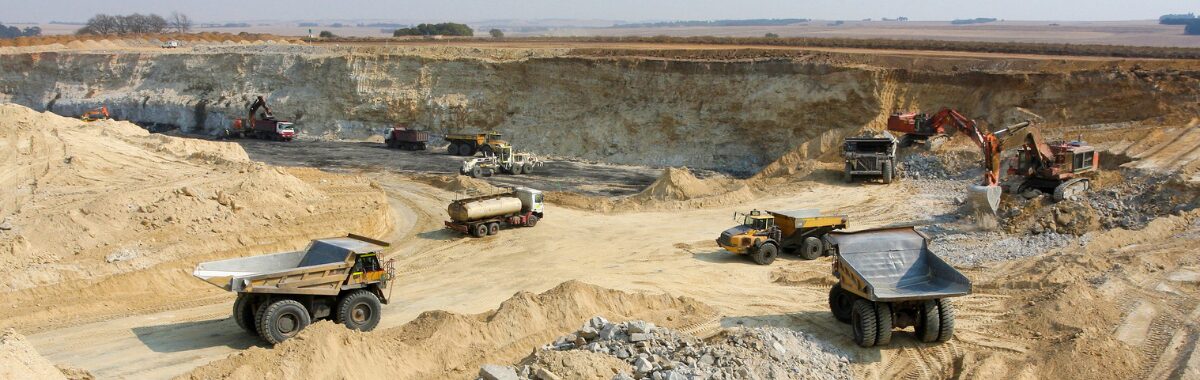
294

Why is Minetek M-STEALTH™ effective for industrial noise reduction on large sites?

Minetek M-STEALTH™ is effective for industrial noise reduction on large sites because it reduces noise at the source on heavy mobile equipment without compromising machine performance. Unlike fixed barriers or enclosures, it is engineered for the machines themselves, allowing haul trucks, excavators, and dozers to operate across the site while supporting compliance and reducing impact on nearby communities.

The system is designed to suit the machine, the operating environment, and the site’s acoustic requirements. It maintains OEM specifications, preserves payload capacity, and helps sites manage noise without creating new operational constraints.

With more than 40 years of industrial noise expertise and over 3,000 machines fitted globally, Minetek brings proven capability to heavy industry applications. That makes M-STEALTH™ a strong fit for large sites where mobile equipment noise is a major operational and compliance challenge.

Frequently Asked Questions (FAQs)

What is the most effective noise control for heavy mining equipment?

For mobile equipment like haul trucks, excavators, and dozers, source-based attenuation delivers the most effective results. The Minetek M-STEALTH™ system targets specific noise emissions while preserving machine performance. Barriers and enclosures cannot move with your equipment across the site.

How much noise reduction can industrial sound attenuation systems achieve?

Noise reduction varies by system type and application. Engineered solutions like Minetek’s M-STEALTH™ can achieve measurable dBA reductions tailored to specific equipment. Generic barriers typically offer 5-15 dB reduction depending on positioning and frequency content.

Do noise control systems affect equipment performance?

Poorly designed systems can restrict airflow and increase backpressure, affecting engine performance. Minetek M-STEALTH™ maintains OEM specifications by design, preserving factory airflow requirements while reducing noise. The weight-optimised construction also minimises impact on payload capacity.

What maintenance do industrial noise control systems require?

Maintenance needs vary significantly. Acoustic curtains require regular inspection and replacement. Silencers need periodic cleaning. The Minetek M-STEALTH™ dual-skin construction resists rust and heat stress, reducing maintenance intervals compared to traditional approaches.

Can noise control systems help meet environmental compliance requirements?

Yes. Industrial sites operating under environmental licences must meet specific noise conditions. Minetek has helped mining and manufacturing operations across 60+ countries achieve compliance while maintaining productivity. Proper noise control protects your operating licence.

How do I choose between fixed barriers and equipment-based noise control?

Consider where your noise originates. For stationary plant, enclosures and barriers can work well. For mobile equipment that operates across large sites, source-based systems like Minetek M-STEALTH™ are more practical since the noise control moves with the machine.
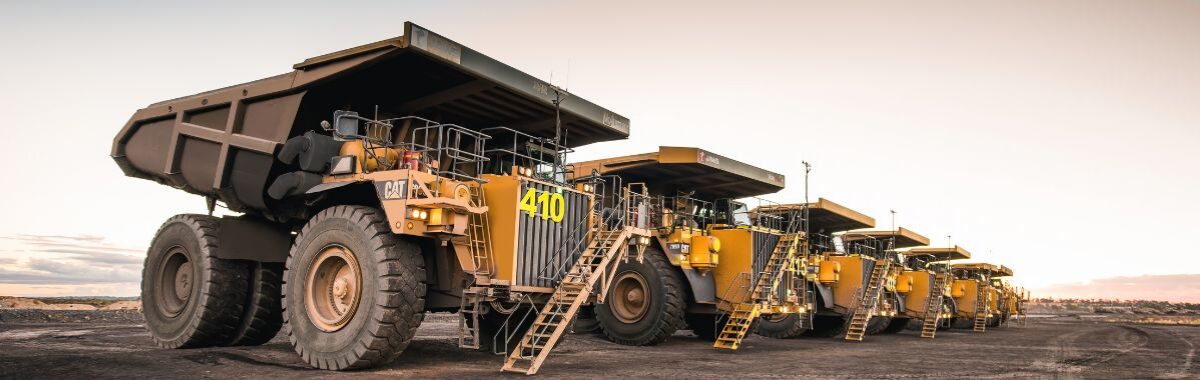
Torna a notizie e approfondimenti

Top 10 industrial noise reduction solutions for 2026.

Publish date: 5 Giugno 2026

Industrial noise reduction solutions reduce noise by controlling it at the source, interrupting how it travels, or limiting exposure at the point of impact. In mining and industrial environments, the right approach depends on the equipment, required noise reduction, operational constraints, and compliance targets. Common solutions include engineered sound attenuation systems, acoustic enclosures, silencers, barriers, vibration control treatments, and ventilation modifications. These methods are used to help reduce workplace exposure, support environmental compliance, protect nearby communities, and maintain safe, productive operating conditions across complex industrial sites.

Heavy machinery in mining operations, manufacturing plants, and power generation facilities can generate noise levels that affect worker safety, community relations, and regulatory standing. For environmental managers, EHS leaders, and operations directors, reducing equipment noise without compromising performance remains a critical operational priority.

Minetek delivers engineered industrial noise reduction solutions that help operations meet regulatory requirements while maintaining equipment reliability and productivity. This guide outlines 10 noise control methods ranked by cost and performance to support informed decision-making across industrial facilities.

Quick guide: 10 noise reduction solutions for industrial facilities.

  • Minetek M-STEALTH: Engineered sound attenuation system for mobile mining and industrial equipment
  • Acoustic enclosures: Fixed structures designed to contain noise from stationary machinery
  • Vibration damping: Materials that reduce noise radiated by panels and housings
  • Sound barriers: Walls and partitions that block noise transmission
  • Industrial silencers: Devices that reduce exhaust and vent noise
  • Acoustic absorption panels: Surface treatments that capture sound reflections
  • Vibration isolation pads: Mountings that prevent vibration transfer
  • Fan optimisation retrofits: Aerodynamic modifications for quieter ventilation
  • Pneumatic exhaust silencing: Attachments that reduce compressed air noise
  • Machine guard modifications: Existing guards adapted into acoustic barriers
Mine haul trucks

The 10 noise reduction solutions for mining, manufacturing, and power generation.

Industrial facilities use a range of noise control methods to manage risks related to worker exposure, environmental compliance, and community impact. The 10 solutions below address different equipment types, operating conditions, and acoustic challenges, from mobile mining fleets to stationary plant infrastructure.

1. Minetek M-STEALTH: Best overall sound attenuation system for industrial equipment.

Minetek’s M-STEALTH™ system is an engineered sound attenuation system designed to reduce noise from heavy mobile equipment while preserving machine performance. It is used on assets such as haul trucks, excavators, dozers, and generators where operations need to lower site noise levels without compromising airflow, backpressure, payload, or reliability.

Unlike generic acoustic treatments, M-STEALTH targets specific noise sources through engineered design informed by sound intensity testing and acoustic visualisation. This approach allows noise reduction strategies to be tailored to the actual operating profile of each machine rather than relying on standardised treatments.

The system is engineered to maintain OEM backpressure levels while reducing exhaust surface temperatures below 150°C. This removes the need for thermal blankets and can help reduce maintenance-related downtime. Minetek has fitted more than 3,000 mining machines globally with sound attenuation packages, with site noise reductions of up to 50% reported across selected applications.

Minetek delivers custom-engineered solutions tailored to specific equipment and operating conditions. Supported by in-house acoustic engineering capability, each M-STEALTH package is designed to maximise noise reduction while preserving machine payloads and airflow. The dual-skin exhaust construction is built to resist rust and heat-related stress, supporting longer service life than traditional sound-suppressed systems.

M-STEALTH features

  • Dual-skin exhaust system: Designed for durability, with resistance to heat stress and corrosion that supports longer service intervals between replacements.
  • AS 5062:2022 fire prevention protection: Built to support compliance with Australian fire prevention requirements for mobile and fixed plant.
  • OEM-compatible design: Designed for compatibility with Caterpillar, Hitachi, Komatsu, Liebherr, and other major equipment manufacturers.
  • Reduced exhaust surface temperature: Surface temperatures remain below 150°C, eliminating the need for thermal blankets and reducing burn hazard risks.
  • Site-specific engineering: Each system is based on acoustic testing of the actual equipment rather than generic specifications.
  • Minimal weight impact: Engineered to preserve machine payloads so productivity is not unnecessarily affected by noise compliance measures.

M-STEALTH advantages

  • Reduces site noise by up to 50% while maintaining machine performance
  • Backed by more than 40 years of noise management experience
  • Custom engineering supports equipment-specific and compliance-driven requirements

Implementation considerations

  • An initial acoustic assessment supports a more accurate, equipment-specific solution design
  • Installation scheduling is coordinated to minimise disruption to maintenance and production plans
  • Best suited to mobile equipment applications, with complementary solutions available for fixed plant noise sources
Liebherr R 9800 Excavator

2. Acoustic enclosures: Best for stationary equipment noise containment

Acoustic enclosures are fixed structures designed to contain noise from stationary equipment at the source. Minetek acoustic enclosures apply this approach to pump systems and fixed plant areas where operations need to reduce noise while maintaining safe access, airflow, and equipment performance.

Designed for demanding industrial conditions, Minetek acoustic enclosures combine weatherproof construction, resistance to grease and contaminants, airflow management, and high-quality sound media to support reliable acoustic performance. This makes them well suited to mining and industrial sites where durability, ventilation, and maintenance access are essential.

For operations managing fixed plant noise, Minetek acoustic enclosures provide a practical way to contain sound within designated areas and support a quieter working environment. Each enclosure is engineered to suit the specific pump or stationary equipment being attenuated, helping operations manage noise in a way that supports occupational health and safety compliance outcomes.

Minetek acoustic enclosure features

  • Application-specific engineering: Designed to specification for the specific pump or stationary equipment being attenuated.
  • Weatherproof construction: Built for demanding environments with resistance to grease and other contaminants.
  • Ventilation integration: Engineered to maintain adequate airflow while controlling noise.
  • High-quality sound media: Designed for demanding acoustic applications.
  • Noise containment for designated areas: Supports pump room and fixed plant noise control within defined operating zones.

Advantages

  • Supports effective noise containment for stationary equipment and fixed plant areas.
  • Extends Minetek’s sound attenuation capability beyond mobile equipment.
  • Combines acoustic control with weather protection and site durability.
  • Can be customised to suit pump systems and other stationary noise sources.

Implementation considerations

  • Requires sufficient space around the equipment for enclosure design, access, and installation.
  • Ventilation and thermal management need to be engineered alongside acoustic performance.
  • Best outcomes depend on equipment-specific design rather than standard enclosure layouts.
  • Most effective where stationary noise can be contained within a defined operating area.
Mining excavator

3. Vibration damping: Best for reducing noise radiated by panels and housings

Vibration damping reduces noise by treating metal surfaces that radiate sound during equipment operation. In mining and industrial environments, guards, conveyor housings, tanks, and similar components can amplify mechanical noise when vibration causes them to act as secondary sound sources.

This approach applies damping materials or sound-deadened steel to existing components to reduce structure-borne vibration and limit radiated noise. It is most effective where thin metal surfaces contribute significantly to overall equipment noise and where operations need a retrofit-friendly solution with minimal disruption.

Vibration damping features

  • Constrained layer damping: Uses high-damping material between metal layers to dissipate vibration energy.
  • Retrofit application: Can be applied to existing equipment without major structural modifications.
  • Targeted surface treatment: Focuses on panels and housings that contribute most to radiated noise.
  • Material flexibility: Can be implemented using different damping materials depending on the operating environment.

Advantages

  • Addresses noise at the source rather than along the transmission path.
  • Can be retrofitted to existing equipment with limited disruption.
  • May help reduce vibration-related wear on treated components.
  • Well suited to plant areas where panels and housings amplify equipment noise.

Implementation considerations

  • Best suited to surfaces that have been identified as significant noise radiators.
  • Less effective on thicker or heavily reinforced panels.
  • Multiple treatment areas may be required to achieve meaningful overall noise reduction.
  • Often most effective when used as part of a broader site noise management strategy.

4. Sound barriers: Best for blocking noise transmission paths

Sound barriers reduce noise by interrupting the path between the source and the receiver. In mining and industrial environments, they are commonly used to shield workers, nearby infrastructure, or site boundaries from equipment noise where direct containment is not practical.

These barriers can take the form of fixed acoustic walls or movable curtain systems, depending on the site layout and operating conditions. Their effectiveness depends on correct placement, sufficient height and width, and limiting gaps that allow noise to pass through.

Sound barrier features

  • Fixed acoustic walls: Permanent structures for defined noise control zones.
  • Curtain barriers: Flexible systems for changing plant layouts.
  • Absorptive surfaces: Help reduce reflected noise on the source side.

Advantages

  • Helps create quieter zones in open plant areas.
  • Does not require modification to the equipment.
  • Flexible options are available for changing operations.

Implementation considerations

  • Performance depends heavily on barrier placement and coverage.
  • Gaps and openings can reduce effectiveness.
  • Best suited to blocking transmission rather than reducing noise at the source.

5. Industrial silencers: Best for reducing exhaust and vent noise

Industrial silencers reduce noise from exhaust systems, steam vents, and pressure relief points. In mining and industrial environments, they are commonly used where discharge noise needs to be controlled without significantly affecting airflow or system performance.

These systems are typically designed as absorptive or reactive silencers, depending on the frequency profile and operating conditions. When correctly specified, they can deliver meaningful noise reduction while supporting reliable operation across a range of temperature and pressure conditions.

Industrial silencer features

  • Absorptive silencers: Reduce high-frequency exhaust and vent noise.
  • Reactive silencers: Control low-frequency pulsation noise.
  • Application-specific designs: Suited to different pressure, temperature, and flow requirements.

Advantages

  • Reduces noise directly at the emission point.
  • Available for a wide range of industrial applications.
  • Can support noise control without major equipment changes.

Implementation considerations

  • Performance depends on correct sizing and specification.
  • Backpressure must be managed in the design.
  • Multiple discharge points may require separate treatment.
Mining excavator operator

6. Acoustic absorption panels: Best for reducing reverberation in enclosed spaces

Acoustic absorption panels reduce reflected noise from hard surfaces such as concrete walls, metal roofs, and ceilings. In mining and industrial environments, they are used to control reverberation in enclosed spaces where sound buildup can increase overall noise levels.

These treatments are typically installed on walls or suspended from ceilings to capture reflected sound energy rather than block noise at the source. They are most effective in plant areas where hard, reflective surfaces amplify noise and reduce speech clarity.

Acoustic absorption features

  • Wall-mounted panels: Reduce reflections from hard vertical surfaces.
  • Ceiling baffles: Help control noise buildup in high-roof areas.
  • Material options: Available in different finishes for different operating environments.

Advantages

  • Helps reduce reverberant noise in enclosed areas.
  • Can improve speech clarity and warning signal audibility.
  • Can be added to existing facilities without major construction.

Implementation considerations

  • Works best in enclosed or semi-enclosed spaces.
  • Does not reduce direct noise from the equipment itself.
  • Requires enough treatment area to achieve meaningful results.

7. Vibration isolation pads: Best for preventing structure-borne noise

Vibration isolation pads reduce noise by separating vibrating equipment from the structures that support it. In mining and industrial environments, they are commonly used under motors, pumps, compressors, and similar equipment where vibration would otherwise transfer into floors, beams, or platforms.

These pads help limit structure-borne noise and vibration by breaking the rigid connection between the machine and the supporting structure. They are most effective where structural transmission is contributing to overall site noise and where a simple retrofit solution is needed.

Vibration isolation features

  • Isolation pads: Separate equipment from supporting structures.
  • Elastomeric materials: Help absorb transmitted vibration.
  • Retrofit suitability: Can be installed on existing equipment foundations or mounts.

Advantages

  • Helps reduce structure-borne noise at the source.
  • Relatively simple and cost-effective to install.
  • Can also help protect equipment from transmitted vibration.

Implementation considerations

  • Performance depends on correct installation and load distribution.
  • Less effective for some low-frequency vibration conditions.
  • Only addresses vibration transfer, not airborne noise directly.

8. Fan optimisation retrofits: Best for reducing ventilation system noise

Fan optimisation retrofits reduce noise by improving airflow efficiency and reducing turbulence within the fan system. In mining and industrial environments, they are commonly used where poor installation geometry, restrictive ducting, or inefficient airflow is contributing to unnecessary noise.

These retrofits can include aerodynamic modifications, ducting improvements, and speed adjustments to reduce tonal and turbulence-related noise at the source. They are most effective where fan performance and noise control can be improved together.

Fan optimisation features

  • Aerodynamic modifications: Reduce turbulence and tonal noise.
  • Ducting improvements: Improve airflow into and out of the fan.
  • Speed control options: Lower fan speed where operating conditions allow.

Advantages

  • Can reduce noise while improving airflow efficiency.
  • Addresses noise at the source rather than adding containment.
  • May reduce energy demand in some fan applications.

Implementation considerations

  • Requires system-specific assessment and design.
  • Results depend on the existing fan installation and operating conditions.
  • May require layout changes to support improved airflow paths.

9. Pneumatic exhaust silencing: Best for compressed air discharge noise

Pneumatic exhaust silencing reduces noise from compressed air exhaust points. In mining and industrial environments, it is commonly used where unsilenced air discharge creates sharp, high-impact noise across plant areas.

These systems use silencers or manifold arrangements to reduce exhaust noise without unnecessarily restricting performance. They are most effective where compressed air systems have multiple discharge points or repeated noise events across the facility.

Pneumatic exhaust features

  • Exhaust silencers: Reduce compressed air discharge noise.
  • Manifold systems: Combine multiple exhaust points into a single treatment area.
  • Retrofit suitability: Can be added to existing pneumatic systems.

Advantages

  • Can deliver significant noise reduction at relatively low cost.
  • Supports quieter plant conditions without major equipment changes.
  • Well suited to repetitive compressed air noise sources.

Implementation considerations

  • Each exhaust point may require treatment.
  • Performance depends on correct sizing and airflow design.
  • Best results come from a facility-wide approach rather than isolated fixes.

10. Machine guard modifications: Best for adapting existing guards into acoustic barriers

Machine guard modifications reduce noise by improving the acoustic performance of existing safety guards. In mining and industrial environments, this can involve sealing gaps, adding internal absorbent material, or modifying guard panels so they help block and contain airborne noise.

This approach is most effective where existing guards already sit close to the noise source and can be adapted without disrupting safe access or equipment function. It can provide a practical retrofit option where operations want to improve noise control using existing plant structures.

Machine guard modification features

  • Gap sealing: Reduces open areas that allow noise to escape.
  • Internal acoustic lining: Helps absorb reflected sound within the guard.
  • Panel upgrades: Improves the barrier performance of existing guard surfaces.

Advantages

  • Uses existing infrastructure rather than adding separate structures.
  • Can be a practical retrofit option for targeted noise issues.
  • Supports noise control close to the source.

Implementation considerations

  • Performance depends on the guard design and remaining openings.
  • May need to be combined with damping or absorbent treatments.
  • Must maintain safe access, visibility, and operational function.
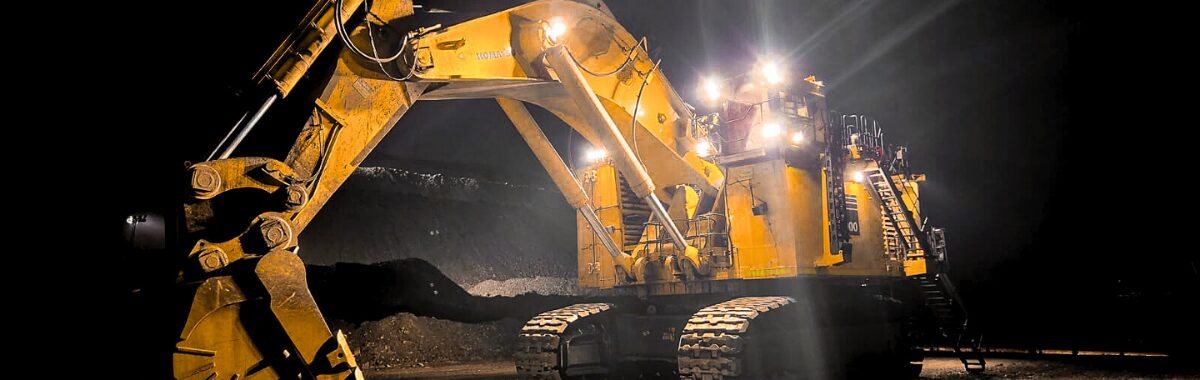
Komatsu excavator

Comparison table: Noise reduction solutions for mining and industrial facilities.

Soluzione Best for Typical application Mobile equipment Performance preservation
Minetek M-STEALTH Mobile equipment noise attenuation Haul trucks, excavators, dozers, generators, blast hole drill rigs, graders, loaders, water trucks
Acoustic enclosures Stationary equipment noise containment Pump systems, fixed plant areas
Vibration damping Reducing noise from panels and housings Guards, tanks, conveyor housings, metal panels
Sound barriers Blocking noise transmission paths Open plant areas, worker zones, site boundaries
Industrial silencers Exhaust and vent noise reduction Exhaust systems, vents, pressure relief points Varies
Acoustic absorption panels Reducing reverberation in enclosed spaces Buildings, workshops, enclosed plant areas
Vibration isolation pads Preventing structure-borne noise Pumps, motors, compressors, mounted equipment
Fan optimisation retrofits Reducing ventilation system noise Fans, ducted systems, ventilation infrastructure
Pneumatic exhaust silencing Compressed air discharge noise Pneumatic exhaust points and air systems
Machine guard modifications Adapting existing guards into acoustic barriers Guarded plant and processing equipment

How do noise regulations affect manufacturing plant compliance?

Manufacturing facilities face noise limits from multiple regulatory bodies, and the requirements differ between jurisdictions. In the United States, OSHA requires hearing conservation programs when worker noise exposure reaches 85 dB over an 8-hour time-weighted average (TWA). In Australia, Lavoro sicuro in Australia‘s model exposure standard is 85 dB over 8 hours o 140 dB peak, with state and territory regulators enforcing local WHS requirements.

These regulations affect manufacturing plant compliance in several ways:

  • Worker exposure management: Sites need to monitor worker noise exposure and act when levels exceed regulatory thresholds.
  • Noise control requirements: Engineering or administrative controls may be required where exposure remains too high.
  • Environmental compliance: Property boundary and community noise limits can apply in addition to workplace exposure rules.
  • Operational planning: Equipment selection, attenuation measures, and maintenance strategies may need to account for compliance obligations.
  • Documentation and verification: Noise monitoring records and documented mitigation measures help demonstrate compliance to regulators.

Non-compliance carries financial and operational risks. Fines, legal actions, operating restrictions, and shutdowns until conditions improve can disrupt production schedules. Regular noise monitoring, documented control measures, and effective hearing conservation or workplace noise management programs also help demonstrate good-faith compliance efforts to regulators.

When should operations choose engineered attenuation over generic barriers?

Generic barriers and enclosures are effective for stationary equipment where the noise source can be fully contained. Mobile equipment such as haul trucks, excavators, and dozers requires a different approach because a moving machine cannot be enclosed in the same way as fixed plant.

Engineered sound attenuation systems such as M-STEALTH target specific noise sources on the equipment itself. Minetek designs each package based on acoustic testing of the actual machine, addressing engine, exhaust, and cooling system noise that generic treatments often cannot reach.

Engineered attenuation is typically the better option when:

  • Mobile equipment operates across the site rather than in fixed locations.
  • Generic treatments would affect machine performance or payload capacity.
  • Documented noise reduction is required for regulatory compliance verification.
  • OEM warranty preservation and airflow maintenance are key project priorities.
Attrezzature per l'estrazione mineraria

Why is Minetek M-STEALTH the best sound attenuation system for industrial noise?

Minetek stands apart through the engineering approach behind every installation. While some solutions treat noise as a general issue, each M-STEALTH system is designed using sound intensity testing and acoustic visualisation of the specific equipment being assessed. This targeted method supports measurable results rather than estimated improvements.

Minetek has been a mining noise management specialist since 1984. With sound attenuation solutions developed for more than 115 OEM models and over 3,000 mining machines fitted globally, M-STEALTH offers a proven track record that operations can rely on. Minetek’s in-house acoustic engineers bring multidisciplinary expertise across mechanical, electrical, and environmental engineering to every project.

For environmental managers and operations leaders seeking compliance without compromising productivity, M-STEALTH provides a practical path forward. The system can reduce site noise levels by up to 50% while preserving machine payloads, OEM backpressure requirements, airflow, and maintenance accessibility. Minetek supports operations with engineered assessments aligned to site and equipment requirements.

Looking for a practical way to reduce site noise while maintaining machine performance?

Talk to one of our Minetek sound attenuation experts about an engineered solution tailored to your equipment and compliance requirements.

FAQs about industrial noise reduction solutions.

What is the typical cost range for industrial noise control?

Costs vary significantly based on the approach and scale. Simple treatments like vibration isolation pads cost relatively little per machine, while engineered systems require greater initial investment for design and installation.

Minetek’s approach focuses on total cost of ownership including reduced maintenance downtime and preserved machine performance. Many noise control investments recover costs through avoided regulatory penalties and extended operating hours.

How much noise reduction is needed for regulatory compliance?

Most facilities need to achieve workplace exposure below 85 dB for an eight-hour average, with engineering controls required above 90 dB. Environmental limits at property boundaries often require reductions to 50-55 dB depending on jurisdiction and time of day.

Minetek helps operators determine specific compliance targets and designs solutions to meet them with documented verification.

Can noise reduction systems be retrofitted to existing equipment?

Yes, most industrial noise solutions install on equipment already in operation. Minetek’s M-STEALTH system is specifically designed for retrofit installation on existing haul trucks, excavators, and other mobile equipment without requiring new machines. Installation timing coordinates with maintenance schedules to minimise production impact.

How long do industrial noise control systems typically last?

Durability varies by solution type. Minetek’s M-STEALTH dual-skin exhaust construction resists rust and heat-related stress, extending service life compared to traditional sound-suppressed systems. The system eliminates thermal blanket requirements, reducing ongoing maintenance needs. Properly installed vibration damping and isolation systems can last the life of the equipment they treat.

Do noise reduction systems affect equipment performance?

Poor noise control design can introduce backpressure, restrict airflow, or add excessive weight. Minetek specifically engineers M-STEALTH to maintain OEM backpressure levels and preserve machine payloads. The dual-skin design enhances fuel efficiency while delivering noise reduction, a combination that protects both compliance and productivity.

Torna a notizie e approfondimenti

Advanced attenuation sound techniques for mining noise reduction

Publish date: 6 Novembre 2025

Why noise control is critical in mining.

The loudest risk in mining isn’t always visible. It’s the constant, unseen noise that undermines safety, compliance, and community confidence.  

Sound attenuation, the engineering process that reduces noise intensity and propagation, has become essential as global standards tighten. Heavy machinery such as drills, haul trucks, and crushers often operate above safe noise limits, creating serious health risks and potential regulatory penalties.  

Without effective attenuation, operations face reputational damage and restricted hours. When implemented correctly, sound attenuation enhances safety, ensures compliance, and improves equipment reliability for quieter, more efficient, and sustainable mining operations. 


Ensuring compliance with global noise standards.

Regulatory compliance is the foundation of sustainable mining. The World Health Organization (WHO) recommends limiting occupational noise exposure to 85 dB(A) over an eight-hour shift. In the United States, the Mine Safety and Health Administration (MSHA) enforces a permissible exposure limit of 90 dB(A), requiring regular audiometric testing. Australia, Canada, and the European Union maintain similar standards, focusing on both occupational and environmental impacts. 

Failure to comply with these standards can result in heavy fines, community complaints, and even operational shutdowns. To remain compliant and sustainable, mining companies should: 

  • Conduct regular noise audits following ISO 9613-2 standards. 
  • Implement real-time noise monitoring across key mining equipment such as conveyors and excavators.
  • Include comprehensive noise control documentation in environmental impact assessments. 
Group_Images_In text_02062024 (63)

Health impacts of long-term noise exposure.

According to the World Health Organization, occupational noise contributes to roughly 16% of adult hearing loss globally, with miners among the most affected. Prolonged exposure above 85 dB(A) can result in permanent hearing damage known as Noise-Induced Hearing Loss (NIHL). 

Common health impacts include: 

  • Hearing loss and tinnitus: Permanent auditory damage and communication difficulties. 
  • Cardiovascular stress: Elevated blood pressure and increased risk of heart disease. 
  • Cognitive and psychological effects: Fatigue, anxiety, and reduced concentration, all of which heighten accident risks. 
  • Sleep disturbance and headaches: Affecting overall performance and decision-making. 

Beyond health, noise exposure directly reduces productivity through increased fatigue and absenteeism, creating long-term financial and operational consequences for mining companies. 


Engineering solutions for noise attenuation.

 Effective noise management depends on three engineering pillars: controlling noise at the source, managing propagation, and implementing employer-led initiatives. 

  1. Controlling Noise at the Source
  •  Mufflers and Silencers: Reduce exhaust noise from drills and haul trucks without compromising performance. 
  • Vibration Isolation Systems: Use mounts and dampers for pumps and fans to minimise noise generation. 
  • Equipment Maintenance: Prevent mechanical friction and part misalignment to reduce sound output. 
Group_Images_In text_02062024 (64)
  1. Controlling Noise Propagation
  • Acoustic Enclosures and Barriers: Custom casings can reduce ambient noise by 20–30 dB(A) while maintaining ventilation. 
  • Sound-Absorbing Materials: Use advanced foams or composites to absorb high-frequency sounds efficiently. 
  • Perimeter Buffers: Deploy barriers that prevent noise from spreading into surrounding communities. 
  1. Employer Noise Control
  • Real-time noise monitoring systems with predictive analytics. 
  • Worker training programs on safe equipment operation. 
  • Regular hearing tests and baseline audiometric screenings. 

These solutions not only improve environmental compliance but also enhance equipment longevity and worker safety. 


Minetek Sound: Pioneering global attenuation technology.

Since 1984, Minetek has been a global leader in industrial noise management. Il nostro M-STEALTH™ system targets emissions from key equipment used in mining, including haul trucks, excavators, drills, generators, dozers, loaders, and fixed assets. This modular, turn-key technology incorporates advanced components such as dual-skin exhaust systems, radiator attenuators, and engine panels to control noise at the source and limit propagation, ensuring OEM compliance for backpressure, airflow, and accessibility. 

Minetek’s integrated services provide end-to-end support for noise management, aligning with employer-led control principles: 

  • Sound Attenuation: Custom-engineered packages for over 90 OEM models (e.g., Komatsu, Caterpillar, Liebherr), with more than 3,000 machines equipped worldwide. These lightweight solutions maintain payloads and reduce targeted frequencies, enabling operations closer to site boundaries without regulatory breaches. 
Haul truck
  • Sound Testing: Full-spectrum assessments, including ISO 6393/6395 compliance testing, sound intensity measurements, and operator noise exposure evaluations. Post-installation verification confirms reductions and supports ongoing optimization. 
  • Sound Visualiser: Portable acoustic visualization technology that generates thermal sound maps and high-contrast images to pinpoint noise sources onsite. This tool enhances accuracy in identifying problem areas, backing traditional microphone testing for faster, safer diagnostics. 
  • Fleet Noise Monitoring: Mobile fleet screening programs, conducted up to three times annually, simulate real-world conditions (e.g., full power on inclines) to ensure uniform compliance across assets. Real-time data capture enables proactive adjustments and minimizes downtime. 

Our consultative approach, including on-site audits, engineering, installation, and maintenance, delivers measurable results that enhance worker safety, productivity, and community relations. 


Actionable steps for a quieter, safer mine. 

Mining companies can achieve meaningful noise reduction by integrating modern attenuation sound techniques into daily operations. The most effective approach combines: 

  • Source control through engineered equipment design. 
  • Propagation management with targeted barriers and enclosures. 
  • Employer-led control through ongoing monitoring and worker engagement. 

By adopting these measures, operators can safeguard worker health, maintain compliance, and enhance their environmental and social reputation. 

Ready to create a quieter, safer mine site? 

Connect with a Minetek Sound expert today to discover tailored solutions for your operation. 

Torna a notizie e approfondimenti

The real sound of winter: What mine operators should be ready for.

Publish date: 6 Novembre 2025

In cold climate regions, winter brings a sharp rise in acoustic risk. As temperatures drop, sound travels farther, inversion layers trap emissions near the ground, and ambient noise masking disappears. The result? Equipment noise once contained on-site becomes a compliance liability and a community flashpoint. Yet many operators overlook how winter alters sound propagation. Without the right sound suppression in place, mines risk fines, delays, and reputational fallout.  


How cold weather amplifies mining noise pollution.

The physics behind amplified winter noise 

  • Cold air increases air density. Sound waves propagate more efficiently in denser media. In practice, a machine’s acoustic “reach” can extend in colder months. 
  • Atmospheric temperature inversions-common during calm, clear winter nights create a layer where temperature increases with altitude. That inversion acts like an acoustic duct, trapping and channeling sound back toward the ground. Some studies report enhancements of 3–10 dB at receiver points under such conditions. 
  • Snow, ice, and frozen surfaces have complex acoustic behavior. Fresh snow can absorb some higher frequencies, but compacted snow or ice surfaces may reflect lower frequencies, effectively creating “harder” ground for sound. 
  • Meanwhile, ambient noise levels (wind, wildlife, human activity) tend to drop in winter. Lower masking means your machinery noise stands out more clearly. 

Result: your machine sound “footprint” expands. Neighbors hear more. Regulators listen harder. 

Winter noise and how it effects mines

Compliance and operational risks from winter mining noise.

When winter amplifies your acoustic signature, consequences follow: 

Regulatory & compliance exposure 

Your site’s noise permit or environmental license typically tolerates a set maximum (e.g., Leq thresholds). But winter conditions can push you over the limit even if your equipment performance is unchanged. Exceedance fines, mitigation orders, or operations restrictions may follow. 

In Nord America, regulators in both the U.S. and Canada are sharpening their focus on acoustic impact particularly in regions near residential zones, indigenous territories, or protected ecosystems. Winter-related complaints have triggered retrospective assessments and, in some cases, the tightening of permissible limits. 

According to the U.S. Environmental Protection Agency (EPA), “In a temperature inversion, cold air at the surface gets trapped under a layer of warmer air. During the winter, snow-covered valley floors reflect rather than absorb heat, preventing normal vertical mixing of warm and cold air that keeps pollutants from dissipating.” This same condition traps sound near the ground, worsening its perceived intensity. 

Community and social license 

Perception matters. Increased complaints from nearby residents, towns, or stakeholders can escalate quickly. Disgruntled communities can delay permits, pressure regulators, or drive reputational damage that burdens your permitting for expansions. 

Winter noise and how it effects mines

Worker safety, health & productivity 

Louder sound means higher risk of hearing damage for frontline workers, increased fatigue, and lower comfort. Even with PPE, elevated ambient noise creates stress and communication barriers. 

Operational surprises & maintenance stress 

Cold temperatures stress engine systems, exhausts, seals, vibration dampers, and enclosures. Faulty components or degraded acoustic materials may worsen noise emissions just when you need attenuation most. 


Lessons from past winters: Sound propagation in cold climates.

  • In previous seasonal cycles, many mines discovered that noise trespass complaints spike in late fall to early spring, not in summer. That pattern is no accident; it’s physics at work. 
  • Some operations, when modeling noise, assume “standard meteorological conditions.” But winter’s inversions, stable layers, calm nights, and cold ground surfaces fall outside typical assumptions meaning models underpredict. 
  • According to the environmental study notes by the Northern Territory Environment Protection Authority (NETPA), “the greatest noise impact usually occurs during the cool dry season” because cooler conditions favour long-distance propagation and ambient noise is lower.  
  • In mines with nearby residential zones, winter noise spikes triggered unanticipated complaints. In some jurisdictions, regulators demanded retrospective mitigation or offered buyouts for adjacent properties. 

These lessons show that winter noise is not a future hypothetical. It’s a known, recurring risk. The smart operator treats it as a design parameter, not a surprise. 

Winter noise and how it effects mines

Minetek’s sound suppression technology for cold-climate noise control.

Minetek’s Solutions are not seasonal; they are engineered for extremes. 

Key strengths of Minetek’s approach

  • Modular, scalable design: Systems (enclosures, baffles, exhaust attenuation) are configured per machine and per site, with flexibility for retrofit or expansion. 
  • OEM-approved sound packages: We partner with machinery OEMs to design mounting, airflow, and structural interfaces that preserve machine function while maximizing acoustic performance. 
  • Cold-climate durability: Materials, welds, seals, and mounting hardware are chosen for temperature resilience. Performance is validated under freeze–thaw cycles. 
  • Consistent attenuation: Even under inversion or snow cover, the systems maintain effective noise suppression that mitigates the winter noise “stretch.” 
  • Proven track record: Across 1,200+ machine installations and 90+ OEM approvals, we’ve reduced noise footprints up to 50% in real mining settings. 

Example technologies & use cases 

  • Acoustic enclosures & shrouds for engines, compressors, generators 
  • Exhaust silencers / attenuators designed for high flow, variable loads 
  • Vibration isolation & dampers optimised for cold-phase resonance control 
  • Haul-truck / loader noise packages integrating undercarriage, engine, and exhaust attenuation 
  • Field-tuned baffle arrays placed around high-noise zones or in community-facing directions 

The objective: suppress what matters most (frequencies that carry far), maintain access/servicing, and do so reliably across seasons. 

Haul truck

Reducing mining noise pollution: Why winter planning matters.

Winter is not just a seasonal concern; it’s a multiplier for risk. Noise control is not optional. It must be baked into your machine spec, maintenance plan, and community strategy. 

Minetek’s Sound Division offers mining operations a trusted partner not just a supplier. We help you convert acoustic risk into predictable performance, compliance, and social license. We innovate with durability, engineering precision, and cross-season reliability so that winter becomes predictable, not disruptive. 

Your next move: Ask your environmental or engineering team to run a winter-propagation “what-if” study. Then have Minetek match suppression packages to your highest-risk assets before the first freeze sharpens the soundscape. 

Group_Images_In text_02062024 (57)
Torna a notizie e approfondimenti

Understanding the impact of mining noise.

Publish date: 1 Luglio 2025

Mining operations are integral to global industrial processes, yet they often produce significant noise pollution, which poses challenges not just to compliance with regulatory standards, but also to operational efficiency and worker safety. This article explores the critical aspects of mining noise, its impact, and the strategies for effective noise management.

As the demand for minerals and metals continues to grow, understanding and addressing the environmental and human impacts of mining noise becomes increasingly important. By delving into the sources, implications, and management of mining noise, we can better appreciate the complexities of this issue and the need for comprehensive solutions.

In mining, noise pollution is an inevitable by-product of the operation of heavy machinery, drilling, blasting, and the movement of materials. Each of these activities contributes to a cacophony that can have far-reaching implications. The noise generated is not just a by-product but a significant operational consideration that affects both the internal functioning of mining operations and their external impact on nearby communities and ecosystems. The sheer scale of mining activities means that noise levels can be substantial, leading to potential conflicts with surrounding land uses, wildlife disturbances, and challenges in meeting regulatory requirements.

Sources of mining noise.

The primary sources of noise in mining operations include:

  1. Drilling and Blasting: These are among the most significant contributors to noise pollution, with sound levels often exceeding safe exposure limits. The use of explosives in blasting creates a sudden and intense noise that can carry over long distances, affecting not just workers but also nearby residents and wildlife.
  2. Heavy Machinery: Excavators, loaders, and haul trucks generate substantial noise, especially when operating continuously in confined spaces. The operation of such machinery often involves a combination of engine noise, mechanical vibrations, and the sound of materials being loaded and transported, all contributing to a high-decibel environment.
  3. Material Handling: The movement and processing of extracted materials further add to the noise levels.
    Conveyors, crushers, and processing plants operate continuously, creating a consistent hum that can contribute to the overall noise footprint of a mining site.
Methods-to-reduce-mining- truck-noise-feature-article

Implications of noise pollution.

Noise pollution in mining isn’t merely a nuisance; it has profound implications:

  • Health Risks: Prolonged exposure to high noise levels can lead to hearing loss, stress, and other health issues among workers. Noise-induced hearing loss is one of the most common occupational hazards in the mining industry, highlighting the need for effective hearing protection and noise management strategies.


  • Operational Efficiency: Excessive noise can hinder communication, affecting coordination and leading to inefficiencies. In environments where clear communication is critical for safety and productivity, high noise levels can lead to misunderstandings, errors, and accidents.


  • Regulatory Compliance: Mining operations must adhere to noise regulations to avoid penalties and ensure the safety and well-being of workers. Compliance with these regulations requires ongoing monitoring and adaptation of noise control measures to meet changing standards and operational conditions.


Monitoring and managing mining noise.

Effective management of mining noise begins with precise monitoring and the implementation of strategic measures to mitigate its impact. By understanding the specific sources and patterns of noise within a mining operation, managers can develop targeted strategies that address the most significant contributors to noise pollution. This proactive approach not only helps in maintaining compliance with regulatory standards but also enhances the overall efficiency and safety of mining operations.


Mining noise monitoring.

Noise monitoring involves systematically measuring sound levels at various points on a mining site. This data is crucial for:

  • Assessing Compliance: Ensuring that noise levels are within the permissible limits set by regulatory bodies.
    Regular monitoring helps in identifying areas where noise levels exceed acceptable thresholds, allowing for timely interventions.


  • Identifying Noise Sources: Pinpointing specific machinery or processes contributing to excessive noise.
    By understanding which activities generate the most noise, targeted noise reduction strategies can be developed to address these specific sources.


  • Developing Mitigation Strategies: Using data to inform targeted noise reduction initiatives.
    The insights gained from noise monitoring can guide the implementation of noise control measures, from equipment modifications to changes in operational procedures.
Gruppo_Immagini_In testo_02062024

Noise reduction strategies.

The implementation of noise reduction strategies is critical for enhancing operational efficiency and maintaining compliance:

  1. Sound Attenuation Technology: Applying advanced materials and engineering solutions to dampen noise emissions from machinery and equipment. Innovations such as acoustic panels and noise-cancelling technologies can significantly reduce the noise footprint of mining operations.
  2. Maintenance and Upgrades: Regular maintenance of equipment to ensure it operates within optimal noise parameters. Upgrading to newer, quieter machinery can also be beneficial. Consistent maintenance not only prolongs the life of equiment but also ensures that it operates at peak efficiency with minimal noise output.
  3. Operational Adjustments: Modifying operational schedules or procedures to minimize noise exposure during peak working hours. By scheduling noisy activities during times when fewer workers are present, the impact of noise on human health and productivity can be reduced.


Active noise control systems.

Active noise control involves the use of sophisticated technology to cancel out noise by emitting sound waves that are the exact inverse of the unwanted noise.

This technology is particularly effective in environments with consistent noise patterns. By actively neutralizing noise, these systems can create a quieter, more comfortable working environment without the need for extensive structural modifications.

sound-image-blog-cat-775g-1280x480.png

Case study. Successful implementation.

Consider the case of a mining operation that successfully reduced noise pollution by integrating a comprehensive noise management system. By employing a combination of sound attenuation materials, regular equipment maintenance, and strategic operational changes, the operation not only achieved compliance but also enhanced productivity and worker satisfaction. This case highlights the importance of a multi-faceted approach to noise management, one that leverages both technological innovations and operational best practices.


The role of regulatory compliance.

Compliance with noise regulations is non-negotiable in the mining industry. Regulatory bodies set strict limits on permissible noise levels to protect workers’ health and ensure environmental sustainability. Adhering to these regulations is essential for legal reasons and maintaining a positive reputation and relationship with the local community. By proactively managing noise levels, mining companies can demonstrate their commitment to responsible and sustainable operations.


Ensuring compliance.

To ensure compliance, mining operations must:

  • Conduct regular audits: Regularly assess noise levels and evaluate the effectiveness of existing noise control measures. Audits provide valuable insights into the current state of noise management and highlight areas for improvement.
  • Implement training programs: Educate workers on noise risks and protective measures, fostering a culture of safety and awareness.
    Training programs empower workers to protect themselves and contribute to the overall noise management strategy.
  • Stay informed: Keep abreast of changes in noise regulations and emerging technologies that can aid in noise management.
    By staying updated on industry developments, mining companies can ensure that their noise management strategies remain effective and compliant.
Riduzione del rumore Minetek sull'escavatore

Engineered sound attenuation for compliance, safety, and performance.

Minetek M-STEALTH Sound Attenuation system offers a proven, compliant solution for reducing site noise across mining operations, without compromising machine performance or payload capacity. Designed for mobile and fixed plant machinery—including haul trucks, dozers, excavators, and generators. M-STEALTH delivers up to 50% reduction in cumulative site noise through precision acoustic engineering and site-specific tuning.

Key system advantages:

  • Compliance-first engineering: Meets OEM airflow and backpressure specs while exceeding noise standards.
  • Fire-risk mitigation: Dual-skin construction keeps surface temps under 150°C in line with AS-5062-2022—no thermal blankets required.
  • Operational efficiency: Lightweight design maintains fuel economy and payloads.
  • Field-proven results: Installed on more than 2,500 machines across 90+ OEM-approved platforms.

With M-STEALTH, mine operators can move closer to boundary lines while remaining fully compliant, enabling safer, more productive operations.


Mining noise impacts operations and can be managed effectively.

Understanding and managing the impact of mining noise is essential for the sustainability and success of mining operations.

By leveraging advanced noise attenuation technologies and adopting a proactive approach to noise management, mining managers can enhance productivity, ensure compliance, and create a safer, more efficient working environment.

The journey towards effective noise management is ongoing, requiring continuous assessment and adaptation. However, the benefits of a quieter, more efficient mining operation are well worth the investment.

In conclusion, addressing mining noise is not just about meeting regulatory requirements but also about fostering a work environment that prioritizes the health and wellbeing of workers.
By continually refining noise management practices and embracing innovative solutions, the mining industry can achieve a balance between operational demands and environmental stewardship.

Torna a notizie e approfondimenti

Il futuro della gestione del rumore: Attenuazione del suono

Data di pubblicazione: 5 Giugno 2025

Nell'industria mineraria, il rumore è molto più di un inconveniente: è una sfida operativa critica che influisce sulla sicurezza dei lavoratori, sulla conformità alle normative e sui rapporti con la comunità. Con la crescita della domanda globale di risorse, le miniere si trovano ad affrontare normative ambientali sempre più severe, che richiedono soluzioni innovative per l'attenuazione del suono. Minetek Tecnologia di attenuazione del suono M-STEALTH è all'avanguardia in questa trasformazione, offrendo un approccio innovativo alla riduzione delle emissioni acustiche. Con oltre tre decenni di esperienza ingegneristica, Minetek sta ridefinendo la gestione del rumore, consentendo alle operazioni minerarie di ottenere risultati più silenziosi, sicuri e sostenibili, mantenendo la produttività e la conformità.

Perché l'attenuazione del suono è fondamentale nelle miniere?

Le operazioni minerarie si basano su macchinari pesanti come autocarri, trivelle ed escavatori, che generano livelli di rumore spesso superiori a 90-110 dB. Il rumore non gestito mette a rischio la salute dei lavoratori, causando la perdita dell'udito, e disturba le comunità vicine, portando a sanzioni normative e a limitazioni dell'orario di lavoro. I metodi tradizionali di controllo del rumore, come i dispositivi di protezione individuale (DPI), sono inadeguati in quanto si limitano a mitigare l'esposizione. Le tecniche di soppressione del suono, che racchiudono o ovattano le apparecchiature, spesso compromettono le prestazioni limitando il flusso d'aria, aumentando il calore e aumentando i rischi di incendio, riducendo così l'efficienza e la sicurezza.

L'attenuazione del suono, tuttavia, affronta il rumore alla fonte, offrendo una soluzione superiore. La tecnologia M-STEALTH Sound di Minetek consente di ottenere una precisa attenuazione del suono senza ostacolare la funzionalità della macchina. A differenza della soppressione, che maschera il rumore, l'attenuazione riduce il suono prodotto dalle apparecchiature, preservando il flusso d'aria, il raffreddamento e le prestazioni ottimali. Questa distinzione fa di M-STEALTH un elemento decisivo per le miniere che vogliono rispettare le severe normative in materia di rumore, migliorando al contempo la sicurezza e la produttività. Concentrandosi sull'attenuazione del suono, Minetek offre soluzioni personalizzate che si allineano al profilo acustico di ogni macchina, stabilendo un nuovo standard di gestione del rumore nelle miniere.

Gruppo_Immagini_In testo_02062024

Come M-STEALTH ottiene risultati sonori superiori.

M-STEALTH di Minetek Tecnologia di attenuazione del suono è stato progettato per eliminare le emissioni acustiche specifiche dei macchinari e dei suoni delle attrezzature minerarie mobili e fisse, tra cui apripista, escavatori, autocarri e generatori. Progettato per le esigenze specifiche del sito, riduce i livelli di rumore accumulati in loco fino a 50%, senza compromettere le prestazioni della macchina con un peso minimo, preservando il carico utile della macchina, i requisiti di contropressione OEM e il flusso d'aria. Le caratteristiche principali di questa soluzione di attenuazione del suono includono:

  • Analisi del suono di precisione: Il test avanzato dell'intensità sonora e la visualizzazione acustica mirano a frequenze di rumore specifiche per un'attenuazione ottimale del suono.

  • La sicurezza attraverso il design: La sua struttura a doppia pelle mantiene le temperature superficiali al di sotto dei 150°C, allineandosi agli standard di prevenzione degli incendi AS-5062-2022 ed eliminando la necessità di coperte termiche. Questo riduce i rischi di incendio, gli OPEX e i tempi di inattività per la manutenzione, migliorando al contempo la sicurezza dell'operatore. 
  • Leggerezza e durata: M-STEALTH è fino a 50% più leggero dei silenziatori convenzionali. Riduce al minimo il peso aggiunto per mantenere il carico utile e l'efficienza del carburante, elementi fondamentali per le prestazioni operative. Il dLa costruzione a pelle dei componenti dello scarico garantisce una durata superiore, resistendo alla ruggine e alle sollecitazioni termiche per una maggiore durata rispetto ai tradizionali sistemi di scarico insonorizzati.

  • Compatibilità OEM: Garantisce la conformità agli standard di contropressione e flusso d'aria del produttore di apparecchiature originali (OEM), preservando la longevità delle apparecchiature.

  • Soluzioni su misura: Personalizzato per oltre 90 modelli approvati dagli OEM, con più di 2.500 macchine equipaggiate in tutto il mondo.

Questa attenzione all'attenuazione del suono consente alle miniere di operare più vicino ai confini del sito senza violare le normative sul rumore, migliorando sia la conformità che l'efficienza.

Gruppo_Immagini_In testo_02062024 (1)

I vantaggi della tecnologia di attenuazione del suono M-STEALTH

Il sistema M-STEALTH SOUND di Minetek offre vantaggi completi, in linea con la missione dell'azienda di fornire soluzioni sostenibili attraverso l'attenuazione del suono:

  1. Conformità normativa: Significative riduzioni del rumore garantiscono la conformità ai severi standard ambientali. Ad esempio, una miniera di carbone a cielo aperto della Glencore, utilizzando l'attenuazione acustica M-STEALTH per i carrelli Komatsu, ha ridotto il rumore da 124 dBA a 115 dBA, con una riduzione di 9 dBA. Ciò ha permesso agli autocarri di operare più vicino ai confini del sito, pur rimanendo conformi alle normative sul rumore, prolungando così le ore di lavoro.

  2. Maggiore sicurezza per i lavoratori: Un'efficace attenuazione del suono riduce il rischio di danni all'udito, un problema importante nelle miniere, dove le operazioni di estrazione del carbone devono far fronte a un elevato numero di richieste di risarcimento per sordità.

  3. Relazioni con la comunità: La riduzione del rumore riduce al minimo il disturbo per i residenti nelle vicinanze, favorendo i legami positivi con la comunità e sostenendo le pratiche sostenibili.

  4. Efficienza operativa: Il design leggero e chiavi in mano riduce i tempi di inattività durante l'installazione e la manutenzione, massimizzando la produttività.


Attenuazione del suono basata sui dati

L'approccio di Minetek all'attenuazione del suono si basa sulla precisione dei dati. Utilizzando sensori e strumenti di misura avanzati, gli ingegneri acustici identificano e quantificano le fonti di rumore, consentendo strategie di attenuazione del suono mirate. Questa analisi dettagliata garantisce soluzioni su misura per il profilo acustico unico di ogni macchina. I test successivi all'installazione verificano l'efficacia dell'attenuazione acustica, confrontando i livelli di rumore prima e dopo per confermare le riduzioni e identificare le opportunità di ulteriore ottimizzazione. I nostri servizi completi di test di rumorosità comprendono la conformità alle norme ISO 6393/6395 e i test di esposizione dell'operatore, per garantire il rispetto dei requisiti acustici e offrire agli operatori la sicurezza di soddisfare gli standard normativi e comunitari in continua evoluzione.

Gruppo_immagini_nel_testo_02062024 (2)

Il futuro della gestione del rumore

Con l'evoluzione dell'industria mineraria, la gestione del rumore rimarrà una pietra miliare delle operazioni sostenibili. La tecnologia di attenuazione del suono M-STEALTH di Minetek rappresenta il futuro dell'attenuazione del rumore, combinando innovazione, precisione e impegno per la sicurezza e la conformità. Affrontando il rumore alla fonte, Minetek consente alle società minerarie di operare in modo efficiente, proteggere i lavoratori e mantenere relazioni positive con la comunità.

Siete pronti a trasformare la vostra strategia di gestione del rumore? Contatto Minetek per scoprire come la tecnologia di attenuazione del suono M-STEALTH possa garantire operazioni più silenziose, sicure e produttive per la vostra miniera.

Torna a notizie e approfondimenti

Meno rumore, più ore: ecco come Minetek ha trasformato l'Hitachi EH5000

Data di pubblicazione: 26 febbraio 2025

Affrontare le sfide del rumore nelle moderne operazioni minerarie 

Nell'industria mineraria odierna, le severe normative sul rumore rappresentano una sfida significativa per l'efficienza operativa e spesso limitano i siti minerari a massimizzare le ore di produzione. Le emissioni sonore eccessive possono portare al superamento delle normative, alle lamentele della comunità e ai tempi di inattività operativa, con un impatto sia sulla produttività che sulla conformità. Riconoscendo queste sfide, Minetek è stata incaricata di sviluppare una soluzione completa di attenuazione del suono per un autocarro Hitachi EH5000, assicurando la conformità alle normative sul rumore e mantenendo le prestazioni operative. 

La sfida: superare le limitazioni del rumore per sbloccare la produttività 

Operando nel rispetto di severe normative ambientali in materia di rumore, il cliente ha dovuto affrontare limitazioni alla capacità della flotta a causa di livelli di rumore eccessivi, pari a 122 dBA. Queste elevate emissioni acustiche rappresentavano un rischio di superamento delle normative e di potenziali limitazioni al prolungamento delle operazioni. Inoltre, l'eccessiva rumorosità contribuiva a disturbare la comunità, mettendo a rischio la licenza sociale della miniera. Il cliente aveva bisogno di una soluzione innovativa e robusta per ridurre in modo significativo la rumorosità senza compromettere le prestazioni delle apparecchiature, il flusso d'aria o l'accessibilità per la manutenzione. 

Suono Minetek Hitachi EH5000

La soluzione: attenuazione del rumore leader del settore per la massima conformità 

Minetek ha sviluppato e implementato un pacchetto di attenuazione acustica completamente integrato su misura per l'Hitachi EH5000. Questa soluzione è stata progettata per attenuare il rumore eccessivo alla fonte, garantendo al contempo l'affidabilità della macchina. I componenti chiave comprendevano: 

  • Sistema di scarico a doppia pelle 
  • Attenuatore del radiatore 
  • Pannelli motore destro e sinistro 
  • Pannello pancia 
  • Attenuazione del cofano 

Incorporando questi componenti specializzati, Minetek è riuscita a ottenere una riduzione del livello di potenza sonora da 122 dBA a 114 dBA, assicurando la piena conformità ai limiti di rumore previsti dalla normativa. Questa riduzione ha permesso alla flotta di operare entro soglie di rumore accettabili, salvaguardando la capacità della miniera di funzionare senza interruzioni. 

L'impatto: espansione della capacità operativa e rafforzamento della conformità 

L'implementazione della soluzione di attenuazione del rumore di Minetek ha apportato benefici significativi alle attività del cliente, sbloccando nuovi livelli di efficienza e conformità. I risultati principali sono stati: 

  • Estensione del raggio d'azione - Con una riduzione significativa dei livelli di rumore, la flotta Hitachi EH5000 ha potuto operare a 600 metri di distanza dal confine/ricevitore acustico, massimizzando la produttività del cantiere. 
  • Aumento delle ore di funzionamento - L'eliminazione dei superamenti del rumore ha permesso al cliente di estendere le ore di funzionamento fino a tre ore in più al giorno, migliorando la produzione complessiva. 
  • Maggiore conformità alle normative - La soluzione ha garantito la piena conformità alle severe normative sul rumore, riducendo il rischio di restrizioni operative e multe. 
  • Migliori relazioni con gli stakeholder e la comunità - Affrontando in modo proattivo le problematiche legate al rumore, la miniera ha rafforzato la sua licenza sociale ad operare, riducendo le lamentele della comunità e promuovendo relazioni positive con gli stakeholder locali. 
Suono Minetek Hitachi EH5000

Implementazione senza problemi: minimizzazione dei tempi di inattività, massimizzazione della produttività

Comprendendo l'importanza di ridurre al minimo le interruzioni operative, il team di installazione dedicato di Minetek ha lavorato in linea con la disponibilità delle risorse, garantendo l'integrazione del pacchetto di attenuazione con tempi di inattività minimi. Questo approccio strategico ha permesso al cliente di mantenere la produttività durante tutto il processo di installazione, dimostrando l'impegno di Minetek nel fornire soluzioni pratiche e orientate ai risultati. 

Un nuovo punto di riferimento per la soppressione del rumore nelle miniere 

L'innovativo pacchetto di attenuazione sonora di Minetek per l'Hitachi EH5000 stabilisce un nuovo standard per la riduzione del rumore nell'industria mineraria, dimostrando che conformità e produttività possono coesistere senza compromessi. Affrontando in modo proattivo il problema del rumore alla fonte, le operazioni minerarie possono prolungare le ore di lavoro, eliminare i superamenti e rafforzare la loro licenza sociale ad operare, garantendo sostenibilità ed efficienza a lungo termine. 

Minetek continua a essere leader nella soppressione del rumore nelle miniere, fornendo soluzioni avanzate che consentono ai siti minerari di tutto il mondo di raggiungere la conformità ottimizzando la produttività. 

Scoprite come le soluzioni di riduzione del rumore leader del settore di Minetek possono supportare le vostre attività. Contattate il nostro team oggi stesso. 

Torna a notizie e approfondimenti

Comprendere le norme ISO 6393 e ISO 6395 per le operazioni minerarie

Data di pubblicazione: 22 novembre 2024

L'industria mineraria è nota per il suo ampio quadro normativo e gli elevati costi operativi, che la rendono uno dei settori più strettamente controllati a livello mondiale. I governi e gli organismi internazionali applicano norme rigorose per affrontare diverse aree, tra cui l'impatto ambientale, gli standard di lavoro, i protocolli di sicurezza e l'impegno della comunità.

Tra queste normative, un aspetto particolarmente impegnativo è la gestione delle emissioni sonore, soprattutto quelle prodotte dai macchinari nei siti minerari. La conformità alle normative sul rumore rappresenta una sfida significativa, creando un panorama normativo complesso per i responsabili della gestione del rumore dei macchinari in loco.

Le norme ISO 6393 e ISO 6395 sono standard fondamentali che costituiscono la base della gestione del rumore nelle operazioni minerarie. Questi standard sono essenziali per definire i parametri di riferimento e le linee guida per le emissioni acustiche delle macchine da miniera, garantendo la conformità alle normative e promuovendo ambienti di lavoro più sicuri.

Che cos'è la norma ISO 6393?

La norma ISO 6393 è uno standard fondamentale per la gestione delle emissioni sonore dei macchinari. Definisce protocolli rigorosi per la misurazione delle emissioni sonore in condizioni stazionarie, garantendo coerenza e affidabilità nella valutazione dei livelli di potenza sonora durante il funzionamento delle macchine.

Minetek Sound

Lo standard ISO 6393 sottolinea la necessità cruciale di testare i macchinari in configurazioni che riproducano le condizioni reali, come l'utilizzo di attrezzature come benne o apripista. Ciò garantisce che i produttori e gli operatori possano valutare con precisione se i loro macchinari sono conformi ai limiti di rumore stabiliti dalle autorità.

Inoltre, la ISO 6393 funge da pietra miliare per le iniziative di riduzione del rumore nelle operazioni minerarie. Non solo aiuta a raggiungere la conformità ai requisiti normativi, ma supporta anche gli sforzi più ampi per ridurre al minimo l'impatto ambientale e migliorare la sicurezza sul posto di lavoro.

Che cos'è la norma ISO 6395?

La norma ISO 6395 definisce un approccio sistematico alla valutazione delle emissioni acustiche delle macchine per il movimento terra. Invece di cicli di lavoro reali, utilizza condizioni di prova dinamiche simulate per produrre dati di rumorosità coerenti e affidabili. La norma fornisce procedure dettagliate per la misurazione delle emissioni di potenza sonora in condizioni dinamiche, concentrandosi sulle attrezzature tipiche utilizzate nella configurazione di produzione della macchina.

Aderendo alla norma ISO 6395, i produttori e gli operatori possono garantire la conformità ai limiti normativi di rumorosità. Le norme complementari, come la ISO 6396, riguardano i livelli di rumore nella posizione dell'operatore durante i test dinamici, mentre la ISO 6393 e la ISO 6394 si concentrano sulle emissioni di rumore nell'ambiente e nella posizione dell'operatore in condizioni stazionarie.

Nel complesso, la norma ISO 6395 offre un quadro strutturato per la gestione del rumore dei macchinari nelle operazioni minerarie, garantendo la conformità alle normative, migliorando la sicurezza e supportando strategie efficaci di mitigazione del rumore.

La comprovata esperienza di Minetek nelle soluzioni antirumore

Minetek si distingue nel settore per la sua leadership, riconosciuta a livello mondiale, nello sviluppo, nella produzione e nell'implementazione di soluzioni avanzate e modulari per attenuazione del suono e riduzione del rumore delle macchine nell'industria mineraria. Le nostre tecnologie innovative, progettate per ridurre il rumore fino a 50% senza compromettere l'integrità della macchina, il flusso d'aria o l'accessibilità per la manutenzione, consentono alle operazioni minerarie di soddisfare i severi standard normativi e comunitari in materia di rumore.

Minetek Sound

Soluzioni innovative di attenuazione del rumore per le macchine da miniera

Le soluzioni Minetek sono progettate con competenza per ridurre le emissioni acustiche dei macchinari minerari, utilizzando innovazioni ingegneristiche che riducono al minimo il peso dei componenti senza sacrificare l'integrità della macchina, il flusso d'aria o l'accessibilità alla manutenzione. Grazie alla vasta esperienza nella verifica e nel collaudo del suono, unita a un approccio collaborativo, Minetek garantisce la conformità ai requisiti normativi e comunitari in materia di rumore, dando fiducia alle parti interessate durante le espansioni dei progetti.

Caso di studio: Komatsu PC7000 Riduzione del rumore

Minetek ha sviluppato con successo pacchetti di attenuazione del rumore per oltre 90 modelli OEM, equipaggiando più di 1.800 macchine da miniera in tutto il mondo. Tra i partner di rilievo figurano Liebherr, Komatsu, Caterpillar, Hitachi, Terex, Sandvik, LeTourneau, Epiroc e NHL.

Questa comprovata esperienza evidenzia la capacità di Minetek di fornire soluzioni efficaci di riduzione del rumore, adatte alle diverse attrezzature minerarie e alle esigenze operative.

Un esempio lampante è stato l'ottenimento da parte di Minetek di un'impressionante riduzione del rumore di 11dBA sul Komatsu PC7000, un escavatore da miniera per impieghi gravosi molto utilizzato. Questa macchina, alimentata da due motori da 1.250 kW / 1.675 CV con sistemi di gestione avanzati, offre prestazioni ed efficienza eccezionali. Tuttavia, genera un rumore notevole, pari a 127 dBA secondo gli standard di prova ISO 6393/6395.

Una miniera della Hunter Valley ha incaricato Minetek di progettare la prima soluzione australiana completa di attenuazione del suono per il Komatsu PC7000, al fine di soddisfare le severe normative locali in materia di rumore. Gli ingegneri di Minetek hanno sviluppato un sistema che aderisce agli standard OEM di Komatsu, mantenendo l'integrità dell'escavatore, l'efficienza del flusso d'aria e l'accessibilità alla manutenzione, riducendo al contempo in modo efficace le emissioni acustiche.

Minetek Sound

Minetek ha sfruttato tecniche avanzate di analisi e visualizzazione del suono per identificare le principali fonti di rumore del Komatsu PC7000. Questi dati hanno permesso agli ingegneri di intervenire strategicamente sui componenti critici, tra cui il sistema di scarico, i pannelli della pancia e i radiatori. Ogni elemento della soluzione di attenuazione sonora di Minetek è stato adattato alle specifiche frequenze acustiche della macchina, garantendo una riduzione mirata del rumore.

Oltre a ridurre i livelli di rumorosità, i progetti hanno ridotto in modo significativo le temperature superficiali dello scarico e delle parti del motore, migliorando l'efficienza operativa e le prestazioni complessive della macchina.

Il pacchetto di attenuazione acustica chiavi in mano di Minetek ha permesso di ottenere un'impressionante riduzione di 11 dBA, abbassando l'emissione sonora del PC7000 a 116 dBA. Questo progresso consente all'escavatore di operare oltre 50% più vicino al confine della miniera, con distanze fino a 281,8 m dai ricevitori acustici, stabilendo un nuovo punto di riferimento per la soppressione del rumore nelle operazioni minerarie.

Raggiungere la conformità e definire nuovi standard

Per Minetek, garantire la conformità ai requisiti normativi e comunitari in materia di rumore è il fulcro del nostro approccio. Grazie a test acustici completi, ingegneria innovativa e forti collaborazioni, le nostre soluzioni soddisfano costantemente gli standard più elevati, infondendo fiducia alle parti interessate e consentendo pratiche minerarie sostenibili per la crescita futura.

Minetek si impegna a far progredire le tecnologie di gestione del rumore, fornendo soluzioni all'avanguardia che danno priorità alla tutela dell'ambiente e alla sicurezza sul lavoro, stabilendo un punto di riferimento per l'eccellenza nell'industria mineraria.

Cliccate sul link sottostante per scaricare il caso di studio del Komatsu PC7000 di Minetek's Sound e per saperne di più su questo progetto di successo.

Scarica ora

Torna a notizie e approfondimenti

Ridefinire il controllo del rumore nelle miniere: I test avanzati di Minetek Sound

Data di pubblicazione: 12 novembre 2024

In mining operations, noise from heavy machinery isn’t just an annoyance—it’s a serious risk to worker safety, can impact surrounding communities, and can challenge regulatory compliance. With effective noise reduction solutions, however, these risks can be minimised, creating safer, more productive work environments.

Minetek Sound approaches this challenge with a unique blend of acoustic expertise and mechanical innovation. For over 25 years, we’ve redefined what quiet mining machines can be, developing noise reduction solutions that make Minetek the creator of the world’s quietest mining machines, reducing sound levels by up to 50%.

Our process starts by identifying major noise sources within mining machinery. Through advanced sound testing and analysis, Minetek engineers measure exposure levels and pinpoint areas for noise reduction. This proactive approach not only safeguards workers’ hearing but also improves operational conditions, enabling a safer, more productive workplace.

Minetek Sound advanced noise testing

What is sound testing?

Sound testing measures sound pressure levels (SPL) to evaluate the noise emitted by specific sources, providing essential insights into the performance of noise attenuation systems by analysing key aspects of noise emission and its impact.

At Minetek, our sound testing solutions go beyond simple measurements—they lay the groundwork for developing comprehensive sound attenuation and noise mitigation programs. Tailored to each operation’s unique needs, these programs address specific noise challenges, delivering effective, targeted solutions for optimal noise control.

What are the benefits of sound testing?

Sound testing is central to Minetek Sound’s noise reduction strategy, offering key advantages that support effective noise management in mining operations.

Understanding Noise Sources: Through sound testing, we conduct a detailed analysis of noise emissions from specific machinery or equipment. By measuring sound pressure levels (SPL) at multiple points around the source, engineers can assess noise intensity and distribution, pinpointing which components or operational factors contribute most to overall noise levels.

Strategic Placement: Sound testing also identifies the optimal locations for installing noise reduction equipment. By measuring noise levels throughout the environment, engineers can focus mitigation efforts on the most problematic areas, ensuring that noise reduction solutions are targeted where they’ll have the most significant impact, rather than applying a broad, one-size-fits-all approach.

This targeted methodology ensures maximum effectiveness in reducing noise, creating safer and quieter mining operations.

Minetek Sound advanced noise testing

Assessing Effectiveness: Sound testing enables us to evaluate the real-world performance of noise attenuation systems. By comparing noise levels before and after implementing control measures, Minetek engineers can assess the effectiveness of each solution and pinpoint areas for further enhancement.

Optimising Design: For new equipment or installations, sound testing is vital to understanding how design modifications impact noise performance. This continuous assessment ensures that designs are refined for optimal noise reduction while preserving equipment efficiency and functionality.

Relazioni con la comunità: Sound testing also addresses community concerns around noise pollution. By demonstrating that noise levels are controlled and reduced to acceptable levels, Minetek supports mining operations in maintaining positive relationships with local communities.

Compliance with Global Standards: Minetek Sound’s testing solutions adhere to ISO 6393 e 6395 standards, internationally recognised benchmarks for noise testing in machinery and equipment. By integrating these standards, we ensure that our testing methods align with global best practices, delivering reliable and consistent results.

Our commitment to these standards underscores our dedication to quality and credibility, demonstrating that our noise control solutions not only meet but often exceed international requirements for noise management.

Minetek Sound advanced noise testing

Minetek Sound is Leading the Way in Advanced Noise Reduction Solutions for Mining

With over 30 years of experience, Minetek is a global leader in designing, manufacturing, and implementing advanced modular sound suppression and machine noise reduction solutions. Our innovative outdoor noise-cancelling systems are unmatched, enabling industrial leaders to achieve the world’s quietest mining machines.

Our results speak for themselves. We have successfully attenuated noise on more than 2,500 mining machines across over 90 OEM-approved models. Our solutions reduce mining noise by up to 50%, helping operations minimise safety risks for operators while meeting regulatory and community noise standards.

Choosing Minetek Sound means investing in more than just a product. It’s a commitment to a future where noise management is led by expertise, precision, and a steadfast dedication to safer, quieter, and more productive mining. It’s an investment in a more sustainable and responsible approach to mining.

Click below to download our eBook on Minetek’s noise reduction solutions and site optimisation.

Scarica ora

Torna a notizie e approfondimenti

Comprendere la gestione del rumore industriale del NSW

Publish date: 7 Novembre 2024
The mining industry is a key driver of economic growth, especially in New South Wales, where it contributes significantly to the state’s prosperity. With a rich mining heritage, NSW’s mining sector supports approximately 40,000 jobs. Coal, gold, and copper remain essential to the state’s economy, providing vital export commodities. Mining companies in NSW also play a crucial role in funding essential infrastructure and services—including roads, hospitals, schools, and law enforcement—through billions of dollars in royalties paid to the state government.

However, along with economic benefits, the mining industry bears considerable responsibilities and faces stringent regulatory oversight to ensure sustainable practices. In NSW, the Environment Protection Authority (EPA) enforces these regulations, particularly targeting noise management to safeguard both community well-being and the environment from industrial noise.

For those managing machinery noise at mine sites, understanding and adhering to these regulations is essential to remain compliant and avoid costly penalties. This article explores these EPA regulations and explains how Minetek noise reduction solutions can help mining operations meet these standards effectively.

Minetek Sound

The Role of NSW’s EPA in Mining Operations

To understand the NSW mining landscape, it’s essential to consider the role of the Environment Protection Authority (EPA). Tasked with protecting both the environment and public health across New South Wales, the EPA regulates activities with potential environmental impact, including air and water pollution, waste management, and land use—along with industrial noise.

Under the Protection of the Environment Operations Act 1997 (POEO Act), the EPA enforces noise regulations for licensed industrial sites, including mines. If noise levels exceed limits due to improper maintenance or handling, the EPA can issue notices to address the issue, including noise control, prevention, and abatement directions.

Non-compliance can lead to significant penalties:

  • Corporations: Fines of up to $60,000 for noise control notices and $1,000,000 for prevention notices, with daily penalties for ongoing violations.
  • Individuals: Fines of up to $30,000 for noise control notices and $250,000 for prevention notices, with daily penalties for continued non-compliance.

The POEO (Noise Control) Regulation also mandates noise labeling standards to ensure clear compliance guidelines.

This regulatory landscape highlights the need for NSW mines to strictly adhere to environmental standards, avoiding fines and maintaining their social license to operate. Compliance not only reduces legal risks but also supports sustainable practices that protect workers, communities, and natural habitats. For mines in NSW, proactive solutions like Minetek’s noise reduction technology are essential to meet EPA standards and support a sustainable future for mining operations in the state.

Minetek Sound

Minetek’s Solutions for Noise Reduction

Mining operations rely on various machinery, each contributing significantly to overall noise levels. Core extraction tools, like drills and stageloaders, can reach 90–110 dB, while haul trucks often operate at 90–100 dB. Minetek serves as a critical partner to NSW mining sites, helping them lower noise to meet EPA standards without sacrificing efficiency or profitability.

As specialists in noise reduction, Minetek produces the world’s quietest mining machines, capable of cutting noise levels by up to 50%. This substantial reduction not only reduces health risks but also ensures compliance with regulatory and community noise standards. Our adaptable solutions enable noise control in mining equipment without compromising key factors like machine integrity, airflow, and maintenance accessibility. With extensive experience in sound auditing and a consultative approach, Minetek empowers mining operations to meet strict noise regulations, securing community and regulatory support for continued growth and future expansions.

Minetek Sound

Minetek’s expertise is demonstrated through sound packages developed for over 90 OEM models, with more than 1,800 mining machines now equipped with our solutions, including trusted brands like Liebherr, Komatsu, Caterpillar, Hitachi, Terex, Sandvik, LeTourneau, Epiroc, and NHL.

We provide a full range of noise testing services, including ISO 6393/6395 compliance testing, sound intensity measurement, mobile fleet screening, and operator noise exposure evaluation. By collaborating closely with our clients, we deliver noise mitigation solutions tailored to meet the unique safety, regulatory, and community standards of each mining operation.

Additionally, Minetek’s industrial exhausts are custom-engineered to reduce noise at targeted frequencies, combining advanced technology and simulations for effective sound and heat reduction. Our exhausts ensure sound attenuation without compromising machinery performance, supporting compliance and operational efficiency.

Final Thoughts

With Minetek’s Sound Attenuation and Noise Reduction solutions, mining companies across New South Wales can ensure compliance with stringent EPA regulations and mitigate the risk of regulatory penalties. Those responsible for managing mining machinery can rest assured, knowing they are safeguarding nearby communities, and the environment.