 Italian
  English (United States)
  English
  Spanish
  Portuguese
  French
  Indonesian
 Wastewater evaporation systems are often a better fit than traditional treatment on high-complexity industrial sites where discharge is restricted, water chemistry is variable, and secondary waste disposal adds cost and compliance pressure. Unlike biological, chemical, or membrane-based treatment systems, mechanical evaporation reduces wastewater volume on-site without generating sludge, brine, or a treated discharge stream.
For mining, oil and gas, and food production facilities dealing with rising water inventories, limited storage capacity, or tightening discharge conditions, the difference is not only technical. It affects operating cost, maintenance burden, site scalability, and licence-to-operate risk. In the right application, mechanical wastewater evaporation can provide a simpler and more robust pathway than conventional treatment.
Key differences between evaporation and traditional treatment
- Treatment limitations: Traditional treatment can become difficult to sustain when wastewater is highly variable, saline, chemically aggressive or solids-laden.
- Secondary waste burden: Chemical and membrane-based systems can reduce water volume, but they also create sludge or brine that must be managed, transported and disposed of.
- Storage and compliance pressure: When treatment cannot keep pace and discharge is restricted, stored wastewater can quickly become an operational and compliance risk.
- Evaporation advantage: Mechanical wastewater evaporation reduces water volume on-site without chemicals, membranes or a treated discharge stream.
- Minetek engineering advantage: Minetek’s mechanical evaporation systems are engineered for complex wastewater streams and harsh operating environments where conventional treatment can become difficult to sustain.
- Proven, scalable deployment: Minetek delivers modular evaporation solutions that scale with site demand, helping operations reduce stored water volumes through a practical, field-proven approach.
Why does traditional wastewater treatment struggle on complex industrial sites?
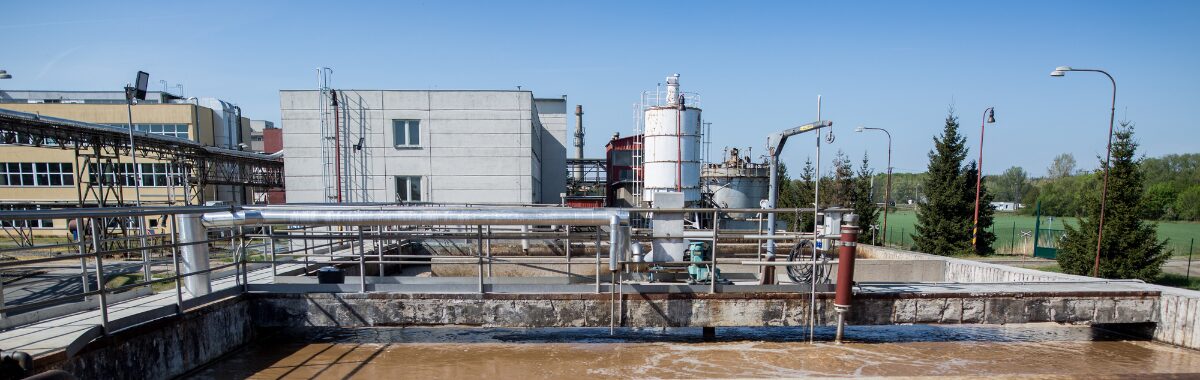
Biological and chemical treatment plants are typically designed for relatively stable effluent streams. On complex industrial sites, that stability is rarely guaranteed. In mining process water, oil and gas produced water, and food processing effluent, wastewater quality can shift quickly. High salinity can disrupt biological treatment, while elevated total dissolved solids (TDS) and variable pH can make chemical dosing harder to control. Membrane systems can also become more difficult to sustain when fouling and maintenance demands increase, particularly on remote sites with limited technical labour.
The challenge is not only treatment performance. Conventional systems can also create secondary waste streams that still need to be managed. Chemical treatment can generate sludge. Membrane systems can produce concentrated brine. Both add disposal, transport and compliance requirements, increasing the total cost and complexity of wastewater management.
When treatment cannot keep pace, sites often rely on ponds, dams or other storage infrastructure as a buffer. But storage capacity is finite, and discharge conditions are tightening. The result is a growing number of sites where treatment is difficult to sustain, storage is under pressure, and discharge is restricted. That can quickly become an operational and compliance issue, not just a treatment issue.
How do mechanical wastewater evaporation systems work?
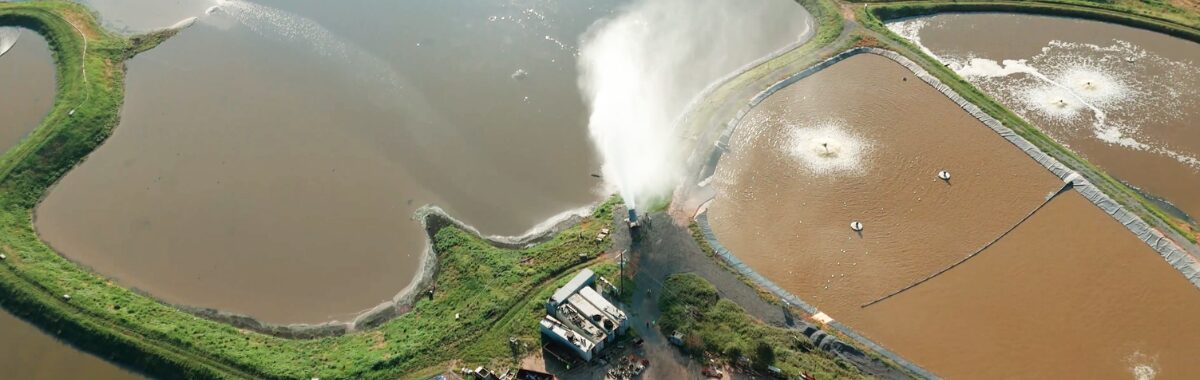
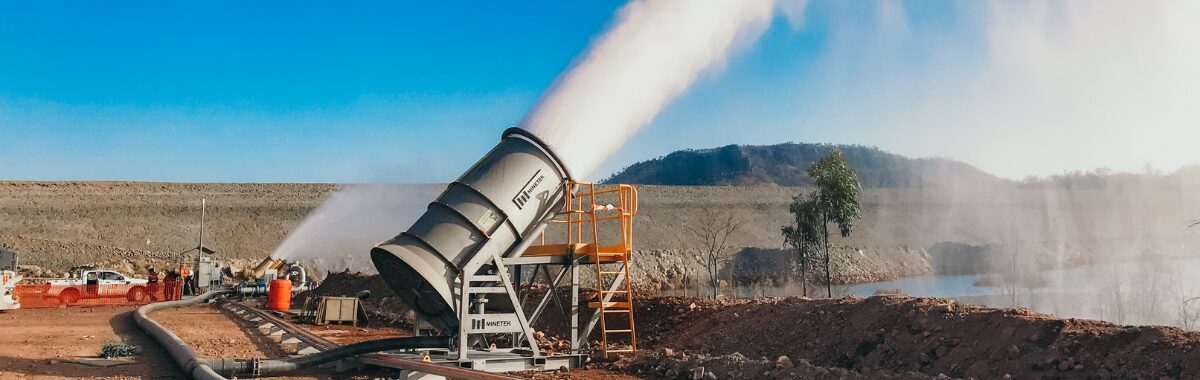
Mechanical wastewater evaporation systems use motorised atomisation to break wastewater into fine droplets and project them into the air. This increases the surface area exposed to atmospheric conditions, accelerating evaporation far beyond what passive storage alone can achieve.
Unlike conventional treatment systems, mechanical evaporation is designed to reduce water volume on-site rather than produce a treated discharge stream. There are no chemicals, membranes or biological processes in the evaporation step itself, which can reduce process complexity and avoid secondary waste such as sludge or concentrated brine.
For industrial sites, system performance depends on factors such as droplet size, projection, climate conditions, water chemistry and required throughput.
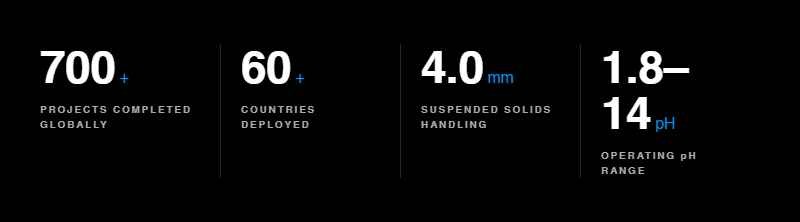
Minetek’s evaporation systems are built to process water with suspended solids up to 4.0mm and pH from 1.8 to 14 or above. That range covers most industrial and mining effluent streams that would foul or destroy conventional treatment plant. Units are constructed from hot-dipped galvanised steel, stainless steel, or epoxy-coated materials selected to match site chemistry. There are no consumables in the evaporation process itself: no chemicals, no filters, no membranes to replace.
Each system is modular. Units can be deployed individually to augment an existing evaporation pond, or staged in arrays to address higher volumes. Capacity scales with the number of units deployed, which means a site can start with what it needs now and add capacity as water balance requires it. Commissioning is handled turnkey, from site water balance assessment through to final installation and handover.
With over 700 projects completed globally, the deployment record spans mining tailings dams in Western Australia, process water management at oil and gas operations, and industrial effluent reduction at food production and manufacturing facilities across multiple continents.
How does wastewater evaporation compare with traditional treatment on cost, compliance and operations?
Mechanical evaporation and traditional treatment serve different purposes, but on sites with variable wastewater, restricted discharge and rising storage pressure, evaporation can offer a simpler and more practical pathway for long-term water volume reduction.
| Comparison area | Traditional treatment | Mechanical wastewater evaporation |
|---|---|---|
| Primary objective | Treat wastewater to meet discharge or reuse requirements | Reduce wastewater volume on-site through evaporation |
| Suitability for variable wastewater | Can become harder to sustain when chemistry, solids or flow conditions change | Better suited to difficult and variable wastewater streams in the right application |
| Process inputs | May require chemicals, membranes, biological control or multiple treatment stages | Uses mechanical atomisation without chemicals, membranes or biological treatment in the evaporation step |
| Secondary waste | Can generate sludge or concentrated brine requiring disposal | Does not create sludge or brine as part of the evaporation process |
| Compliance focus | Ongoing discharge quality, waste handling and disposal obligations | On-site volume reduction without a treated discharge stream |
| Operational complexity | Higher process oversight, maintenance and operator input may be required | Simpler operating pathway, particularly on remote or high-demand sites |
| Scalabilità | Expansion may require plant upgrades or added treatment infrastructure | Modular systems can scale with changing site demand |
| Cost profile | Capital cost plus chemicals, consumables, waste disposal, labour and maintenance | Capital cost plus energy, with fewer consumables and no secondary waste disposal in the evaporation step |
On compliance, the critical advantage of evaporation is that it produces no discharge. Water that evaporates leaves the site as vapour. There is no treated effluent stream to monitor against EPA limits, no PFAS pathway to a receiving waterway, and no ongoing discharge licence management. For sites operating under tightening discharge restrictions, or where a permit to discharge has been refused entirely, that is not a marginal advantage. It is the difference between a viable water management pathway and a regulatory impasse.
Operationally, mechanical evaporation is well-matched to remote and harsh environments. Units do not require resident chemical expertise or biological management protocols. Modular deployment means units can be added, relocated, or decommissioned as site water balance changes.
What should operators look for in a wastewater evaporation supplier?
Not all wastewater evaporation systems perform equally in industrial conditions. The differences become more noticeable when water chemistry is aggressive, ambient conditions are challenging, or the site requires sustained evaporation performance over time. When comparing suppliers, five criteria are worth assessing before making a decision.
1. Materials of construction
System durability starts with material selection. Wastewater chemistry can be highly corrosive, so metallurgy and coatings should be matched to site conditions rather than supplied as a single standard configuration. Minetek offers galvanised steel, stainless steel and epoxy-coated options, with materials selected through site-specific water assessment.
2. Solids-handling capability
Many industrial wastewater streams contain suspended solids that can affect system reliability and performance. Mining tailings water, produced water and food processing effluent all present this challenge. Systems with limited solids tolerance may block, wear faster or underperform against their rated capacity. Minetek systems can process solids up to 4.0 mm.
3. Proven field performance
Performance claims should be supported by real project experience, not only controlled test conditions or modelled outputs. Operators should ask for case studies in comparable applications, climates and water chemistries. Minetek has completed more than 700 projects across 60 countries, giving operations access to documented field performance across a wide range of industrial environments.
4. Turnkey delivery capability
Supplier capability matters beyond the equipment itself. Water balance assessment, system design, installation and commissioning all affect project outcomes. A turnkey delivery model reduces coordination complexity and gives operators a clearer line of accountability from assessment through to handover.
5. Modular scalability
Water management requirements rarely stay fixed. Production changes, storage constraints and regulatory conditions can all shift site demand over time. A modular system that can scale with changing water balance is often a lower-risk option than a fixed installation sized to a single operating assumption. Minetek’s modular deployment approach allows capacity to expand as site conditions change.
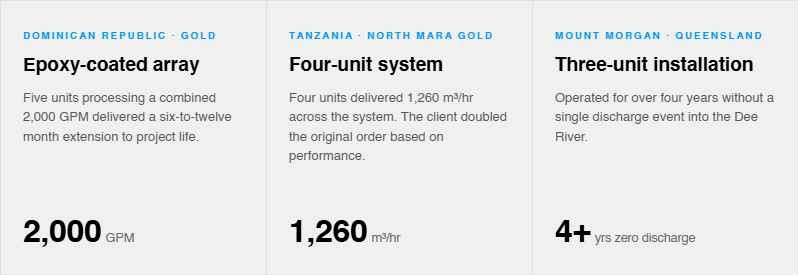
Field-proven across three continents.
Domande frequenti
What is a wastewater evaporation system?
A wastewater evaporation system uses mechanical atomisation, motorised nozzle arrays or high-volume fans, to break wastewater into fine droplets and project them into the air. The increased surface area exposed to the atmosphere accelerates evaporation far beyond what a passive pond can achieve. The water leaves the site as vapour, leaving no treated effluent, no sludge, and no brine concentrate to dispose of.
How does mechanical evaporation compare to traditional wastewater treatment on cost?
Conventional treatment carries capital cost plus ongoing chemical, consumable, sludge disposal, labour, and upgrade costs. Mechanical evaporation carries capital and energy cost only, no chemicals, no consumables, and no secondary waste to dispose of. On sites with high-salinity or chemically complex effluent, lifecycle cost comparisons consistently favour evaporation.
Is mechanical evaporation suitable for high-salinity or high-TDS wastewater?
Yes. Minetek’s evaporation systems operate across a pH range of 1.8 to 14 and handle suspended solids up to 4.0mm, chemistry conditions that foul membranes and stress biological treatment plants. Material specifications (galvanised, stainless, epoxy-coated) are matched to site chemistry.
Does mechanical evaporation require a discharge licence?
No. Because the process produces no liquid effluent stream, only water vapour, there is no discharge event to regulate. This is a fundamental compliance advantage at sites operating under tightening EPA discharge limits or where a discharge permit has been refused.
What kinds of facilities use mechanical wastewater evaporation?
Mining tailings dams, oil and gas produced-water management, food and beverage processing, industrial manufacturing, and power generation sites. Minetek has deployed more than 700 systems across 60+ countries spanning these applications.