 French
  English (United States)
  English
  Spanish
  Portuguese
  Indonesian
  Italian
 When does a mine water system stop being adequate for the operation it was built to support?
In many growing mining operations, it happens gradually. A system designed for an earlier stage of the mine starts managing more water, across longer distances, through a layout that no longer reflects how the site is operating today.
As pits deepen, throughput rises and working areas shift, water infrastructure can fall behind production growth. Drainage, pumping, storage and transfer capacity may still be functioning, but no longer at the level the operation requires.
That gap creates more than a water management challenge. It can restrict access, increase flooding exposure, raise operating costs and add pressure to environmental performance. What begins as a capacity mismatch can quickly become an operational constraint.
Flexible water solutions like mechanically enhanced evaporation are becoming increasingly important as sites adapt to changing demands.
Operational impacts of water infrastructure lag.
- Infrastructure lag is accelerating: AI and automation are lifting output by 5% to 10% at mature sites, while mine development cycles still average 15+ years, leaving core water infrastructure behind production growth.
- Water demand is rising with expansion: Mine water management demand is forecast to grow at a 7.5% CAGR, increasing pressure on drainage, storage, transfer and treatment systems.
- Deeper operations carry higher water risk: In pit-to-underground transitions, groundwater depletion and acid mine drainage recorded up to a 78% severity impact on site sustainability.
- Flexible infrastructure is becoming more important: Operators are increasingly looking to decentralised and redeployable systems that can scale with site demand instead of locking capital into fixed infrastructure too early.
- Mechanical evaporation offers scalable capacity: Demand for evaporator systems is rising, with the global market projected to reach US$32.3 billion by 2031, reflecting the need for engineered solutions that can help sites manage excess water as operations grow.
What happens when production grows faster than water infrastructure?
When production grows faster than water infrastructure, the mine’s water system can shift from a support function to an operational constraint.
Selon le Infosys’ Mining Industry Outlook 2024, AI and automation have lifted output by 5% to 10% at mature sites, while the discovery-to-production cycle still averages 15+ years, creating a mismatch between faster production gains and slower infrastructure development. In practice, that means water systems designed for an earlier stage of the operation can be left carrying more volume, across greater distances, through a site layout that no longer reflects current production demands.
As this gap widens, drainage, pumping, storage and transfer systems may still be operating, but no longer at the level the site requires. What was once adequate becomes harder to rely on as pits deepen, throughput increases and working areas shift.
Technavio’s Global Water and Wastewater Management Market for the Mining Sector (2025–2029) points to the scale of that pressure, forecasting mine water management demand to grow at a 7.5% CAGR as operations expand. That growth does not just increase water volumes. It puts more strain on whether existing infrastructure can still support access, productivity and safe site movement.
The risk becomes more pronounced as mines deepen or transition underground. In its 2025 study on sustainable hazards in open-pit to underground transitions, MDPI’s L'eau journal found that groundwater depletion and acid mine drainage reached severity impacts of up to 78% in the assessed transition context, showing how quickly water-related risks can intensify when infrastructure is not scaled with changing mine conditions.
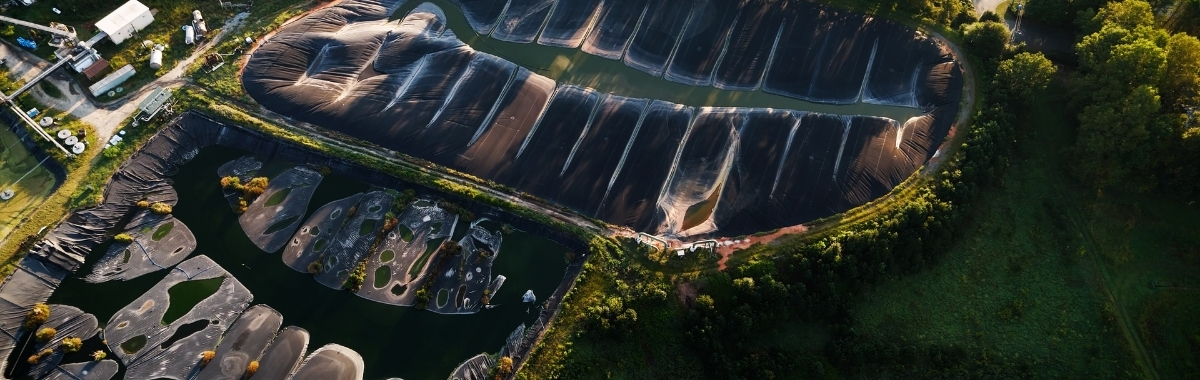
Why does water infrastructure fall out of step with the mine plan?
Water infrastructure falls out of step with the mine plan when site conditions change faster than core systems can be adapted.
As production increases, the mine footprint rarely stays fixed. Pits deepen, working areas shift, access routes change and water often must be managed across longer distances and more complex layouts. In Ausenco’s Mining’s New Water Reality, the company notes that aging drainage systems can become overwhelmed and access corridors that were once dependable can turn into vulnerable choke points as site conditions change.
The mismatch grows when drainage, pumping, storage and transfer systems are still based on an earlier operating footprint, even as the site is managing higher throughput, deeper pits and changing production conditions. The infrastructure may still be functioning, but no longer in a way that reflects how the operation is running today.
What once supported the mine can become progressively harder to rely on as production moves ahead of water management capacity.
What risks emerge when water infrastructure falls behind?
When water infrastructure falls behind, water starts affecting more than storage and transfer. It begins to interfere with access, movement and day-to-day operations across the site, putting more pressure on haul routes, ramps and active working areas.
As that pressure builds, sites can face:
- Restricted access to active mining areas
- Higher flooding exposure across critical parts of the site
- Rising pumping and transfer demands as water is moved around the operation
- Greater reliance on reactive workarounds instead of fit-for-purpose infrastructure
- Higher operating costs and lower flexibility as the mine continues to grow
What starts as a capacity gap can quickly become a broader operational constraint.
What flexible, scalable water solutions can help close the gap?
Closing the gap between production growth and water management capacity often requires more than expanding fixed infrastructure. Sites may need water solutions that can adjust as operating conditions change.
These solutions can include:
- Modular treatment capacity that can be added as water demands increase
- Decentralised systems that reduce reliance on a single fixed infrastructure path
- Redeployable units that can be repositioned as mine layouts change
- Real-time monitoring and control that improve visibility across changing site conditions
- Integrated water management strategies that help align capacity with current demand
In Seven Seas Water Group’s 2026 Water & Wastewater Infrastructure Trends, the company describes a shift toward decentralised treatment as a resilience strategy, with modular and redeployable systems helping operators align capacity more closely to real demand.
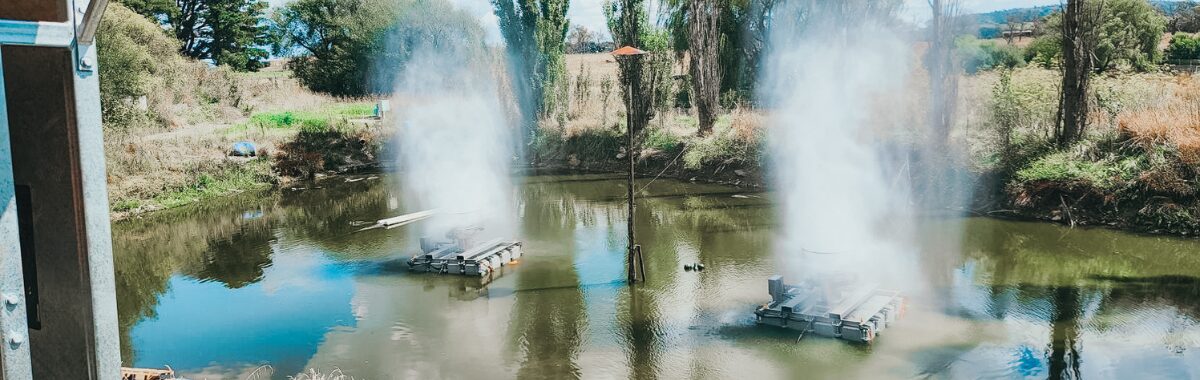
Where does mechanically enhanced evaporation fit?
Mechanically enhanced evaporation is one example of a flexible water solution that can help sites add capacity as demands change.
It is most relevant where operations need to:
- Manage excess stored water more efficiently
- Add water management capacity without relying only on permanent civil expansion
- Respond to changing water balances as production grows
- Reduce pressure on storage and transfer systems already under strain
- Support a broader site water strategy with a scalable response option
According to the Knowledge Sourcing Intelligence Evaporator Market – Forecast from 2026 to 2031, the global evaporator market is projected to reach USD 32.322 billion by 2031, reflecting demand for engineered systems that can operate reliably in demanding production environments. That makes mechanically enhanced evaporation a credible example of how mining operations can add scalable water management capacity without treating every infrastructure gap as a permanent civil works problem.
Minetek’s Mechanically Enhanced Evaporation (MEE) technology.
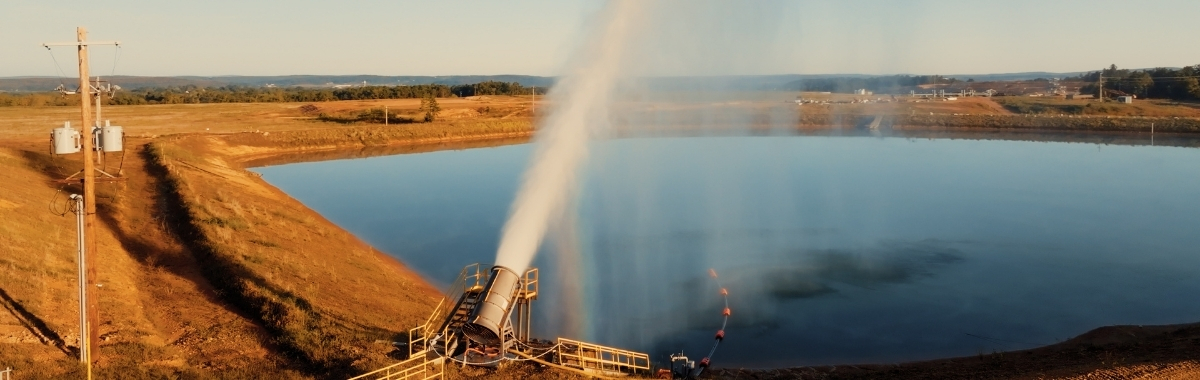
Minetek's mechanically enhanced evaporation (MEE) technology is engineered to reduce stored water volume quickly and reliably in demanding mining environments.
Our systems combine atomisation and optimised airflow, supported by fan engineering principles, to achieve rapid water volume reduction in demanding mining environments. That matters because mine water often contains elevated dissolved solids, suspended solids and variable chemistry, making it more difficult for conventional equipment to perform reliably.
Minetek water evaporators are designed to handle high-TDS and high-TSS waters, solids up to 4.0 mm, and pH ranges from 1.8 to 14+. Our evaporation systems can process in excess of 135 m³/hour per unit, with automated 24/7 operation and scalable deployment across different site requirements.
Minetek capability at a glance.
- Engineered for mine water: Designed for high-TDS, high-TSS, acidic, caustic, and contaminated water conditions.
- High-rate performance: More than 135 m³/hour per unit, with larger site configurations scaling significantly higher.
- Low-fouling design: Engineered nozzle performance helps support reliability in difficult water conditions.
- 24/7 automated operation: Continuous operation helps sites respond faster to changing water volumes.
- Rapid deployment: Systems can be mobilised quickly where excess water is already affecting operations.
Close the gap between water infrastructure and site demand.
When production growth starts to outpace water management capacity, short-term workarounds can quickly become an ongoing constraint. Minetek helps mining operations take a more proactive approach with evaporation solutions designed to reduce stored water volume and support changing site conditions.
Connect with our Minetek water management experts to discuss the right evaporation solution for your site conditions, water volumes, and operational requirements.
FAQ
What is the water infrastructure gap in mining?
- The water infrastructure gap is the point where drainage, pumping, storage, transfer or treatment capacity no longer matches the demands of the operation. It typically emerges as pits deepen, throughput rises and mine layouts change.
Why does water infrastructure fall behind production growth?
- Water infrastructure is often designed around an earlier stage of the mine. As production expands, site conditions can change faster than core water systems are upgraded, reconfigured or replaced.
What risks emerge when mine water infrastructure falls behind?
- The most common risks include restricted access, higher flooding exposure, rising pumping and transfer demands, greater reliance on reactive workarounds, and increasing pressure on operating cost and environmental performance.
Why are fixed water systems harder to rely on in growing mining operations?
- Fixed systems can be harder to adapt when mine layouts, water volumes and production conditions change. What was once fit for purpose may no longer provide the flexibility or capacity the operation requires.
What are flexible water solutions in mining?
- Flexible water solutions are systems or strategies that can be scaled, adjusted or deployed as site demands change. They can include modular treatment, decentralised capacity, improved monitoring and mechanically enhanced evaporation.
How do scalable water solutions help growing mine sites?
- Scalable water solutions help sites respond to changing conditions without relying only on permanent large-scale infrastructure upgrades. They can improve flexibility, add capacity where needed and reduce pressure on constrained systems.
Where does mechanically enhanced evaporation fit in a mine water strategy?
- Mechanically enhanced evaporation can support a broader site water strategy by helping reduce stored water volume and add water management capacity as site demands change.
When should a mine review whether its water infrastructure is still adequate?
- A review is worth considering when pits deepen, throughput increases, working areas shift, excess stored water builds, or existing drainage and transfer systems are coming under more pressure.