 French
  English (United States)
  English
  Spanish
  Portuguese
  Indonesian
  Italian
 Oil and gas wastewater management in 2026 requires wastewater management solutions that reduce produced water volumes, control disposal costs, and support environmental compliance across changing operating conditions. Oil and gas operations continue to generate large volumes of produced water, placing environmental and water management leaders under growing pressure to manage high total dissolved solids, shifting disposal constraints, and site-specific treatment requirements without adding unnecessary infrastructure or cost.
Wastewater treatment strategies now extend beyond conventional disposal and basic industrial water treatment pathways. Recycling, zero liquid discharge systems, and mechanical evaporation are being evaluated more frequently as part of broader sustainable water management strategies in oil and gas operations.
This article explains the main wastewater management solutions relevant to oil and gas operations in 2026, the compliance and operational factors shaping treatment decisions, and the role mechanical evaporation can play within that mix.
Key takeaways: Oil and gas wastewater management in 2026
- Produced water volumes continue to place pressure on wastewater storage, disposal, reuse, and compliance across oil and gas operations.
- Wastewater management solutions now extend beyond disposal alone and include recycling, conventional treatment, advanced treatment, and evaporation-based volume reduction.
- Compliance pathways, disposal access, and state-level regulatory conditions are playing a larger role in treatment selection.
- Mechanical evaporation reduces the volume of liquid wastewater requiring ongoing handling, transport, or disposal.
- Mobile treatment systems offer added flexibility where field conditions, water volumes, and infrastructure needs can change quickly.
What is produced water and why does it matter?
Produced water is the fluid that surfaces alongside oil and gas during extraction operations. It typically carries high concentrations of dissolved salts, minerals, hydrocarbons, and other contaminants accumulated from underground formations.
The scale of this challenge is substantial. Every barrel of oil produced in major basins brings with it three to five barrels of produced water. In some formations, particularly in the Delaware Basin, those ratios can reach ten to one. At current production levels, the Permian Basin alone generates more than 20 million barrels of produced water daily.
Managing this water volume creates significant operational and financial pressure. Storage capacity is limited, disposal costs are rising, and regulatory requirements are tightening across all major producing regions.

What makes wastewater management more challenging for oil and gas operations in 2026?
Wastewater management is becoming more difficult for oil and gas operations because produced water volumes remain high, water chemistry is variable, disposal pathways are under pressure, and compliance obligations continue to shape treatment decisions.
The scale alone is significant. In its 2026 industry analysis, Davis Graham’s “U.S. Produced Water: The Emerging Value Chain Reshaping Energy, Water & Critical Minerals” notes that the Permian Basin commonly generates roughly 3 to 5 barrels of produced water for every barrel of oil, while parts of the Delaware Basin can reach 10 to 1. The same analysis states that the Permian now produces more than 20 million barrels of produced water per day.
Produced water is also harder to manage than many conventional industrial wastewater streams because treatment requirements are not fixed across every site. Water quality can vary by basin, formation, well age, and production stage. Total dissolved solids, residual hydrocarbons, suspended solids, and other constituents can all influence how wastewater treatment systems perform and how practical reuse becomes.
Several pressures are now shaping wastewater management solutions more directly:
- High water volumes increase storage, transport, and disposal demands.
- Variable water chemistry complicates treatment design across multiple assets.
- Disposal constraints are narrowing in some producing regions as seismicity and formation pressure concerns receive greater regulatory attention.
- Environmental compliance remains central wherever discharges, storage, treatment, or reuse pathways are being assessed.
The compliance framework also matters early in the evaluation process. The U.S. Environmental Protection Agency’s Clean Water Act establishes the basic structure for regulating pollutant discharges into waters of the United States, and that the National Pollutant Discharge Elimination System (NPDES) permit program controls qualifying point-source discharges to surface waters. For environmental and water management leaders, wastewater treatment decisions need to align with both operational constraints and the applicable compliance pathway.
The result is a more demanding selection process for wastewater management solutions. Oil and gas operations need treatment strategies that can handle changing water quality, reduce disposal dependence, support environmental compliance, and respond to variable production volumes without creating unnecessary infrastructure burden.

What wastewater management solutions are used in oil and gas operations?
Oil and gas operations use several wastewater management solutions depending on produced water chemistry, disposal access, treatment objectives, and site conditions. The main categories include disposal, recycling for oilfield reuse, conventional wastewater treatment, advanced treatment for higher-value reuse, and evaporation-based volume reduction. In practice, many sites use more than one approach as part of a broader wastewater treatment strategy.
| Solution category | Primary purpose | Typical application in oil and gas operations | Key limitation or consideration |
|---|---|---|---|
| Deep well injection | Dispose of produced water off the operating surface | Used where permitted disposal formations and injection capacity are available | Disposal capacity, seismicity concerns, and regulatory pressure are increasing in some regions |
| Recycling for oilfield reuse | Treat water for reuse in hydraulic fracturing and related field activity | Common in active basins where ongoing drilling programs can absorb treated water volumes | Depends on reuse demand, water quality targets, and local infrastructure |
| Conventional wastewater treatment | Remove oil, suspended solids, and other contaminants before reuse, further treatment, or disposal | Used as a primary or intermediate treatment step in broader wastewater treatment systems | Performance depends on feedwater consistency and treatment objectives |
| Advanced treatment systems | Improve water quality for higher-value industrial reuse or emerging beneficial-use pathways | Applied where operations are targeting tighter water quality outcomes | Higher treatment cost can limit large-scale adoption outside specific use cases |
| Evaporation-based volume reduction | Reduce liquid wastewater volumes requiring storage, transport, or disposal | Relevant where disposal access is constrained, water chemistry is difficult, or modular deployment is needed | Performance and economics depend on site conditions, treatment goals, and system design |
Each category serves a different role in wastewater management. Deep well injection addresses immediate volume removal. Recycling supports reuse within oil and gas operations. Conventional and advanced wastewater treatment systems improve water quality for reuse, discharge pathways, or additional treatment stages. Evaporation-based systems reduce the amount of liquid wastewater that must be stored, moved, or disposed of.
The most suitable wastewater management solutions depend on several factors:
- Produced water volume
- Variability in water chemistry
- Disposal well access
- Reuse objectives
- Environmental compliance requirements
- Infrastructure availability
- Total cost of ownership
For environmental and water management leaders, the stronger approach is to match the treatment pathway to the operational objective, the regulatory setting, and the economics of the site. Wastewater treatment decisions in 2026 are increasingly shaped by disposal pressure, reuse potential, and the need for more sustainable water management across oil and gas operations.

How do compliance and disposal constraints affect wastewater treatment decisions?
Compliance and disposal constraints determine which wastewater treatment pathways are practical, approvable, and scalable. In oil and gas operations, the decision is not only about whether a system can treat produced water. It is about whether the selected pathway aligns with the intended discharge, reuse, storage, or disposal outcome under the relevant regulatory setting.
EPA states that the Clean Water Act provides the core framework for regulating pollutant discharges to waters of the United States, including through the NPDES permit program. That makes compliance a treatment-selection issue as early as the planning stage, particularly where discharge or reuse pathways are being considered.
Davis Graham reports that state-level regulation and disposal conditions are also influencing how produced water strategies are developed across major U.S. basins. The practical result is that a treatment pathway that is viable in one state or basin may not be as workable in another.
For environmental and water management leaders, the treatment decision usually comes down to five questions:
- Does the pathway align with the site’s regulatory and permitting conditions?
- Does it reduce reliance on constrained disposal infrastructure?
- Can it support the intended reuse or discharge objective?
- Is it commercially realistic at the required treatment volume?
- Can it adapt to regional and operational variability?
| Decision factor | What it changes |
|---|---|
| Compliance pathway | Determines whether discharge, reuse, storage, or disposal is legally and operationally viable |
| Disposal access | Influences how much reliance can be placed on injection as a long-term management option |
| State regulation | Affects the feasibility of reuse, surface management, and other treatment outcomes |
| End-use target | Determines how much treatment intensity is required |
| Site economics | Shapes whether the treatment pathway is sustainable at operating scale |
Wastewater treatment decisions in 2026 require a closer fit between regulatory conditions, disposal strategy, and treatment objective. The most effective wastewater management solutions are the ones that can be implemented credibly within the site’s actual compliance, infrastructure, and operating environment.
How does mechanical evaporation work for produced water?
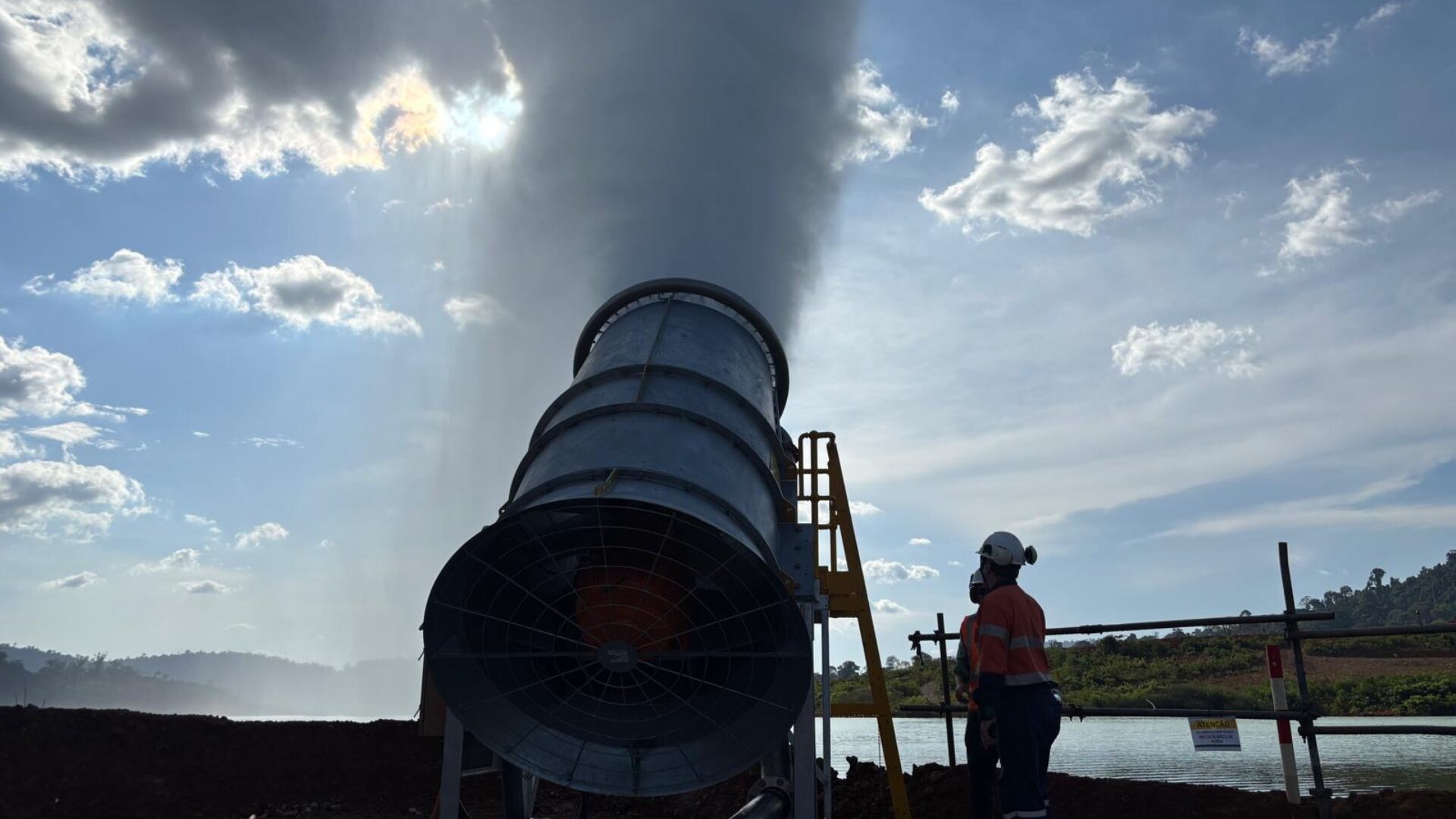
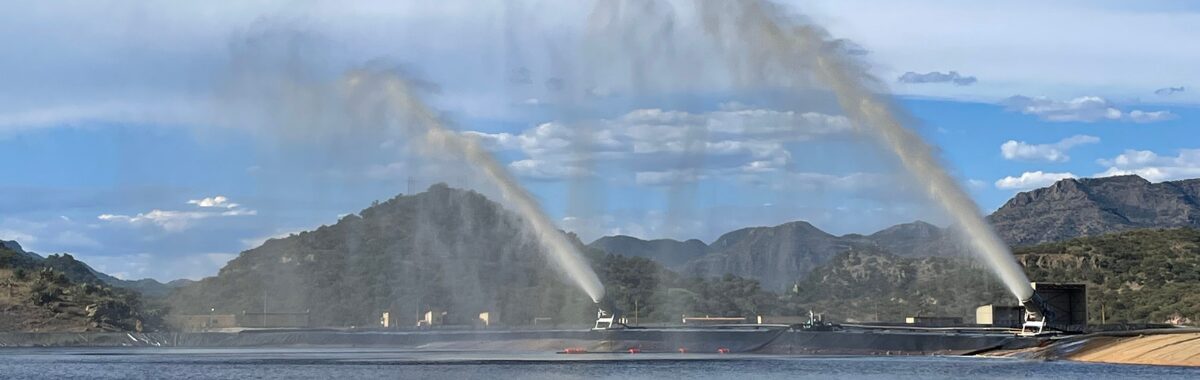
Mechanical evaporation reduces produced water volumes by accelerating the natural evaporation process through atomisation. Instead of relying on passive evaporation ponds or high-intensity thermal treatment, the system disperses wastewater into fine droplets to increase surface area and improve evaporation efficiency.
For oil and gas operations, the main value of this approach is volume reduction. Produced water with high salinity, variable chemistry, or limited disposal pathways can create ongoing storage, trucking, and injection demands. Mechanical evaporation addresses that challenge by reducing the amount of liquid wastewater that remains on site and requires further handling.
The process is generally used where operations need to:
- Reduce stored wastewater volumes
- Lower reliance on disposal infrastructure
- Manage difficult water chemistry
- Respond to changing water volumes across multiple locations
Mechanical evaporation does not replace every wastewater treatment pathway. It fits best where liquid volume is the main constraint and where reducing that volume improves operational flexibility, disposal planning, or broader wastewater management performance.
Compared with conventional wastewater treatment systems, evaporation-based volume reduction is less focused on producing a polished water stream for discharge or high-grade reuse. Its role is different. It is designed to reduce the liquid burden of produced water so operations can manage residuals more efficiently and limit dependence on constrained disposal pathways.
For environmental and water management leaders, mechanical evaporation is most relevant when the wastewater strategy prioritises volume reduction, site flexibility, and practical deployment in field conditions.
What is zero liquid discharge and when does it apply?
Zero liquid discharge, or ZLD, is a wastewater treatment approach designed to eliminate liquid waste discharge from a site. The objective is to recover as much usable water as possible while converting the remaining waste stream into concentrated brine or solids for further handling.
In oil and gas operations, ZLD is most relevant where liquid discharge is highly restricted, disposal pathways are limited, or water recovery has strategic value. According to the U.S. Environmental Protection Agency’s Final Report: Oil and Gas Extraction Wastewater Management, produced water management is closely shaped by how wastewater is treated, reused, and disposed of under the Clean Water Act framework
ZLD is not a single technology. It is typically a multi-stage treatment train that may include:
- solids removal
- chemical or physical pre-treatment
- membrane treatment where feedwater quality allows
- evaporation or crystallisation for further liquid reduction
Argonne National Laboratory’s Report on Produced Water describes produced water as a complex waste stream with characteristics that can vary significantly by source. That variability is one reason ZLD systems are usually configured in multiple stages rather than applied as a single standard process.
For oil and gas operations, ZLD is generally considered when wastewater management objectives extend beyond basic disposal or oilfield recycling. Common drivers include:
- tight discharge constraints
- limited disposal access
- water recovery goals
- site conditions that favour a more closed-loop treatment approach
EPA’s Water Reuse and Recycling program states that water reuse applications are expanding across the United States, but reuse pathways still depend on treatment requirements, regulatory fit, and end-use suitability. In practice, full ZLD is usually considered for specific operating conditions rather than as a default wastewater treatment solution across every oil and gas site.
Mechanical evaporation can support zero liquid discharge objectives by reducing the liquid volume that remains for downstream treatment or residual handling. In oil and gas applications, Minetek’s closed-loop Zero Liquid Discharge approach and mechanical evaporation systems are positioned to reduce large water volumes on site as part of a broader water management strategy.

What role does mobile treatment play in field operations?
Mobile treatment improves wastewater management flexibility in oil and gas field operations where produced water volumes, well performance, and site priorities can shift quickly. Fixed treatment infrastructure can be effective in stable operating environments, but it is not always the most practical option when water volumes vary across well pads, disposal access changes, or temporary treatment capacity is needed in remote locations.
In those conditions, mobile systems give operations a way to place treatment capacity where it is needed without committing to permanent infrastructure at every site. That can help reduce trucking demand, shorten response time when water volumes increase, and support more efficient wastewater treatment across distributed assets.
Mobile treatment is most relevant when operations need to:
- respond to variable produced water volumes
- manage wastewater across multiple well pads or production sites
- deploy treatment in remote areas with limited infrastructure
- reduce delays associated with permanent installation
- add short-term or supplemental treatment capacity
For wastewater management leaders, the main advantage is operational agility. Treatment capacity can be deployed closer to the source of the wastewater, adjusted as site conditions change, and integrated into a broader management strategy that includes disposal, recycling, or volume reduction.
Minetek's mechanical evaporation units align well with this type of field requirement because they are designed for portable, mobile, and fast-deployed operation. In practical terms, that supports oil and gas operations that need evaporation-based volume reduction without building out large fixed treatment infrastructure at every location. Minetek mobile evaporation is useful where the wastewater management objective is to reduce liquid volumes on site, lower reliance on disposal pathways, and maintain flexibility across changing field conditions. In that role, portability is not only a logistical benefit but part of the treatment strategy itself.

How should oil and gas operations evaluate wastewater treatment solutions?
Oil and gas operations should evaluate wastewater treatment solutions against the site’s actual water profile, disposal constraints, compliance requirements, and long-term operating economics. The strongest option is not always the most complex treatment system. It is the one that can perform reliably under field conditions and remain practical at operating scale.
A structured evaluation process usually starts with five questions:
- What volumes of produced water need to be managed now and over time?
- How variable is the water chemistry across wells, pads, or production stages?
- What disposal, reuse, or discharge pathways are realistically available?
- What level of treatment is required to meet the end-use objective?
- What infrastructure, energy, and operating support are available on site?
| Evaluation factor | What to assess |
|---|---|
| Water volume | Current flow, peak flow, seasonal variation, and future production changes |
| Water quality | Salinity, suspended solids, hydrocarbons, and overall chemistry variability |
| End-use objective | Disposal, oilfield reuse, discharge, volume reduction, or a staged treatment pathway |
| Compliance pathway | Permitting conditions, discharge restrictions, and state-specific regulatory requirements |
| Site conditions | Available footprint, power, access, mobility needs, and support infrastructure |
| Total cost of ownership | Capital cost, operating cost, transport, maintenance, labour, and residuals handling |
Deployment model also matters. Fixed infrastructure may suit long-life, stable operations, while modular or mobile systems can be more practical where water volumes shift across multiple locations. Minetek evaporation systems are mobile and scalable for oil and gas operations, with application across process water, produced water, and saline water management.
For environmental and water management leaders, the evaluation should focus on operational fit as much as treatment performance. A wastewater treatment solution needs to align with the site’s compliance pathway, field conditions, and water management objective while remaining flexible enough to support changing production demands.
What are the environmental benefits of effective wastewater management?
Responsible produced water management protects groundwater resources, surface water quality, and surrounding ecosystems. Effective treatment reduces the environmental footprint of oil and gas operations and supports long-term community relationships.
Reducing disposal well injection volumes addresses induced seismicity concerns that affect communities near producing regions. Operators who minimise their disposal footprint demonstrate environmental stewardship and reduce their exposure to future regulatory restrictions.
Water recycling and reuse conserve freshwater resources in regions already facing water scarcity. This benefit extends beyond the oil and gas sector to support agricultural, municipal, and industrial water users who share the same water supply.
How does produced water management support ESG objectives?
Environmental, social, and governance (ESG) performance increasingly influences investor decisions, regulatory relationships, and stakeholder perceptions. Water management practices are a key component of the environmental dimension.
Operators can demonstrate ESG leadership by reducing freshwater consumption, minimising wastewater discharge, and implementing technologies that lower their environmental impact. Transparent reporting on water metrics supports stakeholder confidence and positions operators favourably in ESG assessments.
Minetek helps operators improve ESG performance and demonstrate environmental stewardship through reliable, low-maintenance water evaporation technology. The systems enable real-time monitoring and adaptive control of evaporation operations, supporting accurate reporting and optimised performance.
What implementation steps should operators follow?
Successful wastewater management implementation follows a structured approach that begins with baseline assessment and extends through commissioning and ongoing operations.
Step 1: Characterise your produced water
Collect representative samples from multiple wells and production stages. Analyse for TDS, suspended solids, oil and grease, heavy metals, and other relevant parameters. Document how water quality varies across your operations.
Step 2: Define treatment objectives
Clarify whether your goal is volume reduction, water recovery for reuse, zero liquid discharge, or regulatory compliance. Different objectives may point toward different technology solutions.
Step 3: Evaluate technology options
Compare treatment technologies against your water chemistry, volume requirements, site constraints, and cost targets. Consider both proven technologies and emerging solutions that may offer advantages for your specific situation.
Step 4: Develop an implementation plan
Plan for equipment procurement, site preparation, installation, commissioning, and operator training. Establish performance metrics and monitoring protocols to track system effectiveness.
Step 5: Execute and optimise
Commission the treatment system and verify performance against design specifications. Collect operating data to identify optimisation opportunities and ensure ongoing compliance with regulatory requirements.
Looking for a more practical way to manage produced water across changing field conditions?
Talk to our Minetek Water experts about scalable wastewater management solutions that reduce liquid volumes, support operational flexibility, and align with site-specific treatment objectives.
Frequently Asked Questions (FAQs)
Produced water is naturally occurring formation water that surfaces with oil and gas during extraction. Flowback water returns to the surface after hydraulic fracturing operations and contains injected fluids mixed with formation water. Both require treatment, but flowback water typically contains higher concentrations of fracturing chemicals and proppant fines. Minetek’s evaporation technology handles both water types effectively.
Yes, produced water can be treated to agricultural, industrial, or even potable water quality standards. However, the treatment cost increases significantly with higher water quality requirements. Beneficial reuse beyond oilfield recycling currently remains in the pilot and early-commercial phase due to the cost gap between disposal and advanced treatment.
Deep well injection has been the primary disposal method for produced water, but capacity constraints and seismicity concerns are limiting this option in some regions. Mechanical evaporation takes a different approach by reducing the volume of liquid wastewater that remains on site and requires further handling, which can help lower reliance on disposal infrastructure. Minetek provides evaporation systems designed for remote field conditions with mobile, scalable deployment.
Mechanical evaporation systems can process water with very high TDS concentrations that would foul or damage membrane-based treatment systems. Minetek’s patented technology handles produced water with high TDS and TSS, including brine and challenging wastewater streams that other technologies cannot treat effectively.
Mobile evaporation systems can typically be deployed within days to weeks, depending on site preparation requirements and logistics. Minetek’s skid-mounted and containerised designs enable rapid deployment across well pads and production facilities. The mobile configuration allows operators to relocate capacity as production patterns change.
Evaporation concentrates dissolved solids into a minimal residue that can be disposed of as solid waste or processed for byproduct recovery. The solid residue is typically easier and less expensive to transport and dispose of than liquid wastewater. Some operators recover valuable minerals from the concentrated residue, creating an additional revenue stream.
Natural evaporation rates vary with temperature, humidity, and wind conditions. However, mechanical evaporation systems are engineered to operate effectively across a range of weather conditions. Minetek’s Environmental Management System monitors and responds to environmental changes in real time, optimising evaporation performance according to humidity, wind speed and direction, and temperature.