 English
  English (United States)
  Spanish
  Portuguese
  French
  Indonesian
  Italian
 Wastewater management in food production means matching each stream to the right combination of solids removal, volume reduction and discharge control. High TDS and high TSS streams from cleaning, cooking and processing often exceed what conventional treatment handles on its own, so many plants combine pre-treatment, biological treatment and mechanical evaporation to reach compliance and, where required, zero liquid discharge.
Wastewater management in food production at a glance.
- Food processing wastewater carries high BOD, COD, FOG, suspended solids and dissolved solids, and the load varies with production cycles.
- No single system does everything: DAF removes solids and grease, biological and membrane systems reduce organic and dissolved load, and evaporation reduces volume.
- High TDS inhibits biological treatment and high TSS fouls membranes, which is where mechanical evaporation holds an advantage.
- Mechanical evaporation reduces wastewater volume without chemicals across a wide pH range, supporting zero liquid discharge and site water balance.
Compliance depends on mapping the stream first, then building a treatment train that meets effluent limits and provides monitoring data for reporting.
Why high TDS and TSS food streams are hard to manage.
Food processing generates large volumes of water through washing, blanching, cooling and sanitation. The resulting effluent commonly contains high biochemical oxygen demand (BOD), chemical oxygen demand (COD), fats, oils and grease (FOG), total suspended solids (TSS) and dissolved solids (TDS), with nutrient loads on top. Volumes and composition shift with seasonal production, so a system sized for average flow can be overwhelmed at peak.
Two properties cause most of the difficulty. High TSS clogs pipes, fouls membranes and overloads filtration, driving up maintenance and chemical use. High TDS makes biological treatment harder to sustain and encourages scaling as calcium and magnesium salts precipitate. Together they narrow the set of technologies that can treat the stream reliably, and they push disposal costs up when ponds near capacity and haulage becomes the fallback.
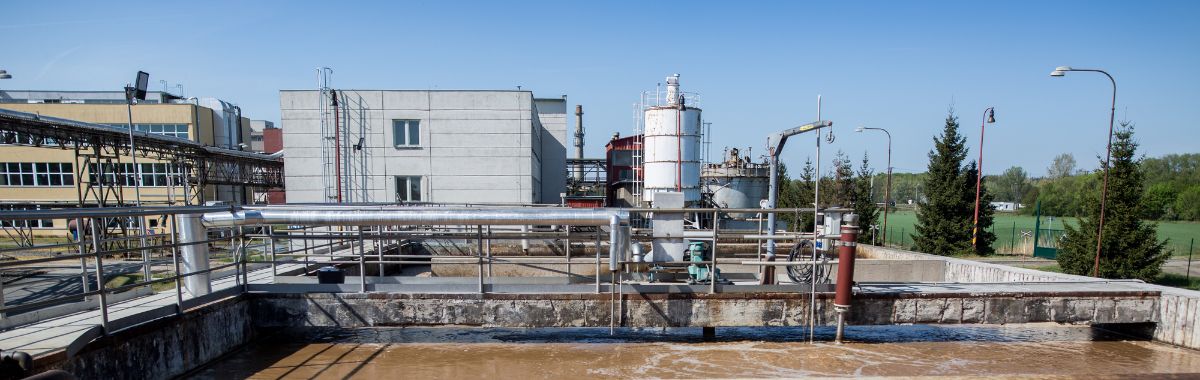
Food processing wastewater treatment pathways compared.
Most food plants run a treatment train rather than a single unit. Each pathway targets a different part of the problem, and the right mix depends on the stream, the discharge limits and the site’s storage position.
| Pathway | What it targets | Strengths | Limits with high TDS or TSS |
|---|---|---|---|
| Dissolved air flotation (DAF) | FOG and suspended solids | Fast front-end removal of grease and solids, lowers load on downstream steps | Does not reduce dissolved solids or total water volume |
| Biological treatment and MBR | BOD and COD | Reduces organic load, produces cleaner effluent | High TDS inhibits microbial activity; high TSS fouls membranes |
| Membrane filtration and RO | Dissolved salts, water recovery | Produces high-quality permeate for reuse | High TSS and scaling foul membranes; brine concentrate still needs disposal |
| Anaerobic digestion | High-strength organic load | Recovers biogas as on-site energy | Handles organics, not volume or dissolved solids |
| Mechanical evaporation | Excess water volume | Chemical-free volume reduction across variable chemistry and wide pH | Reduces volume rather than producing reusable water; residual solids remain for handling |
DAF, biological treatment and membranes concentrate on removing contaminants. Mechanical evaporation works on the volume itself, which is why it fits alongside the others rather than replacing them. A plant might use DAF to strip FOG and solids, then apply evaporation to reduce the remaining volume in holding ponds when discharge is restricted or capacity is tight.
TDS and TSS reduction where conventional treatment struggles
When TDS is high and water quality fluctuates, conventional plants lose efficiency because they need relatively consistent influent to work well. Membrane systems that recover clean water are vulnerable to fouling from suspended solids and scaling from dissolved salts, and they leave a brine that still has to go somewhere.
Mechanical evaporation takes a different route. Wastewater is pumped at high pressure through low-fouling stainless steel nozzles that atomise it into fine droplets, in the order of 50 to 200 microns. That multiplies the surface area available for evaporation, so water leaves as vapour while dissolved and suspended solids stay behind and concentrate. Three properties make it suited to high TDS and TSS streams:
- Tolerates variable chemistry: it handles high TDS, high TSS and pH from 1.8 to over 14 without the fouling that degrades membranes and other equipment.
- No chemical or membrane dependency: because the process relies on atomisation rather than dosing or membrane surfaces, there is nothing to scale, foul or replace as feed quality shifts.
- Reduces volume, not just contaminants: the output is a smaller residual volume of concentrated solids for disposal or recovery, rather than a treated effluent.
TDS and TSS reduction where conventional treatment struggles.
When TDS is high and water quality fluctuates, conventional plants lose efficiency because they need relatively consistent influent to work well. Membrane systems that recover clean water are vulnerable to fouling from suspended solids and scaling from dissolved salts, and they leave a brine that still has to go somewhere.
Mechanical evaporation takes a different route. Wastewater is pumped at high pressure through low-fouling stainless steel nozzles that atomise it into fine droplets, in the order of 50 to 200 microns. That multiplies the surface area available for evaporation, so water leaves as vapour while dissolved and suspended solids stay behind and concentrate.
Three properties make it suited to high TDS and TSS streams:
- Tolerates variable chemistry: it handles high TDS, high TSS and pH from 1.8 to over 14 without the fouling that degrades membranes and other equipment.
- No chemical or membrane dependency: because the process relies on atomisation rather than dosing or membrane surfaces, there is nothing to scale, foul or replace as feed quality shifts.
- Reduces volume, not just contaminants: the output is a smaller residual volume of concentrated solids for disposal or recovery, rather than a treated effluent.
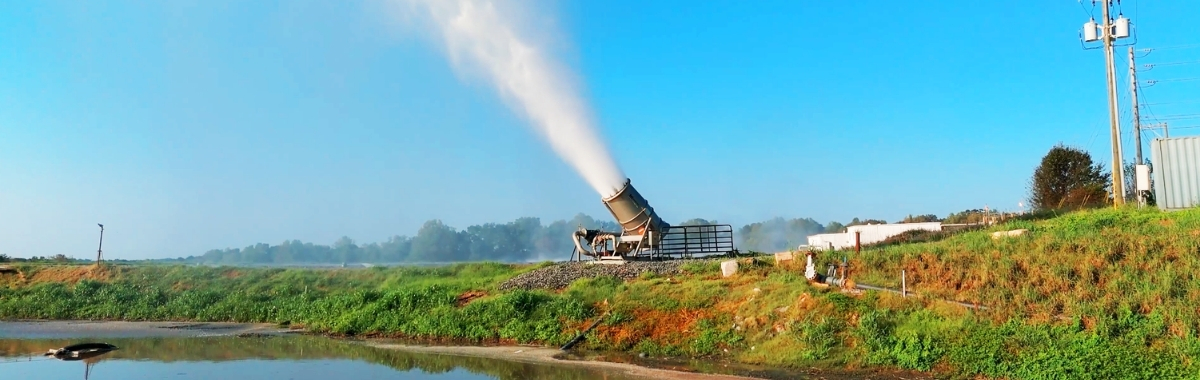
Zero liquid discharge pathways for food plants.
Zero liquid discharge (ZLD) means a facility sends no liquid effluent off site. For food plants facing tighter permits, limited pond capacity or rising haulage costs, ZLD moves from an aspiration to an operating requirement.
Evaporation provides a direct path towards it. By accelerating evaporation in holding ponds, a plant reduces stored wastewater to minimal residual solids that can be contained or recovered, which removes the need for offsite liquid disposal. It usually sits as the final stage in a treatment train:
- Solids and grease first: DAF strips FOG and suspended solids at the front end.
- Organic load next: biological or membrane treatment reduces BOD and COD.
- Residual volume last: evaporation handles the remaining volume so the site can hold or close the loop.
Where full water recovery is not the goal, or where the feed is too variable for membranes, volume reduction is often the more practical priority than producing reusable water.
Wastewater compliance for food processing facilities.
Compliance starts with knowing the stream. A water audit that maps usage and contaminant profiles lets a facility build a treatment train sized to meet effluent limits for BOD, COD, pH and nutrients under frameworks such as the U.S. National Pollutant Discharge Elimination System (NPDES) or the European Union’s effluent guidelines.
From there, three things keep a facility compliant:
- Right-sized treatment: a train that matches the actual load at peak flow, not just average conditions, so limits are met when production spikes.
- Monitoring and reporting: real-time measurement of the parameters that permits track, with data logging that supports audits. Minetek evaporators run on an integrated Environmental Management System (EMS) that monitors humidity, temperature, wind speed and wind direction and adjusts operation to site conditions.
- A margin beyond the baseline: certifications such as ISO 14001 and, where feasible, a move toward zero liquid discharge give a facility room above the minimum requirement.
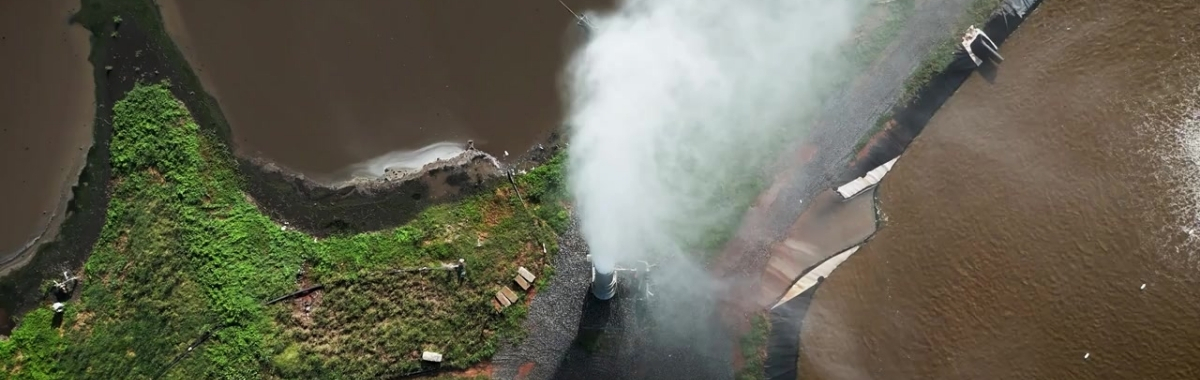
Mechanical evaporation and controlled water management.
Minetek approaches food plant wastewater as a controlled water management problem: reduce the excess volume reliably, keep the site within its water balance, and hold compliance while doing it. The mechanical evaporation range is engineered for exactly the streams food plants struggle with, handling high TDS, high TSS and variable chemistry without chemical additives, in land-based and floating configurations that can be relocated as site needs change.
- Proven at scale: patented technology deployed across more than 600 evaporation systems in over 30 countries.
- High throughput: capacities reach up to 135 m³/hour (600 GPM) per unit, enough to draw down pond levels fast enough to stay ahead of inflows.
- Strong evaporation rates: up to 50% depending on climate and stream.
- Built for harsh feed: low-fouling nozzles handle high TDS, high TSS and pH from 1.8 to over 14 without chemical dosing.
Georgia food facility, USA. Minetek helped a food facility whose onsite holding pond was nearing capacity. A turn-key land-based evaporator was deployed at 135 m³/hour (600 GPM) with an integrated EMS for real-time optimisation. The result:
- Target met: at an estimated evaporation efficiency of 34% in that site’s conditions, the system reached its target of 350,000 gallons per day.
- Target exceeded: it frequently surpassed that by a further 125,000 gallons.
- Operation protected: the pond level was maintained, keeping the facility compliant and running.
Take the next step.
Evaporation performance depends on your climate, your stream and your storage position, so the useful next step is a site-specific assessment rather than a generic estimate. Request an evaporation efficiency analysis and Minetek’s team will model your site data, project outcomes and show how the technology would perform under your conditions.
Frequently Asked Questions (FAQs)
Food production facilities reduce wastewater by combining solids and grease removal, such as dissolved air flotation, with volume reduction through mechanical evaporation. Evaporation accelerates the natural process in holding ponds, cutting stored volume without chemicals, which lowers haulage, treatment and storage costs while keeping the site within its water balance.
The most effective approach is a treatment train, not a single system. DAF removes FOG and suspended solids, biological or membrane systems reduce organic and dissolved load, and mechanical evaporation reduces the remaining volume. The right mix depends on the stream, discharge limits and available storage, with evaporation handling variable, high-strength streams well.
Facilities support zero liquid discharge by removing solids and organics first, then applying mechanical evaporation to reduce the residual volume to minimal concentrated solids. This removes the need for offsite liquid disposal. Minetek evaporators reduce pond volumes quickly across variable chemistry, which makes ZLD practical where capacity or permits are tight.
For high TDS or TSS streams, mechanical evaporation often works where conventional treatment struggles. High TDS inhibits biological treatment and high TSS fouls membranes, while evaporation tolerates both and a pH range from 1.8 to over 14. It reduces volume without chemical dosing, leaving concentrated solids for disposal or recovery.
Compliance depends on mapping the stream, building a treatment train that meets effluent limits for BOD, COD, pH and nutrients, and monitoring the parameters permits track. Minetek evaporators include an integrated Environmental Management System that monitors site conditions, adjusts operation and logs data to support audits under frameworks such as NPDES.