 Portuguese
  English (United States)
  English
  Spanish
  French
  Indonesian
  Italian
 Mining equipment exceeds regulatory noise limits because the machines are intrinsically high-power sources that run close to continuously, and because two separate sets of limits apply at the same time: worker exposure limits at the cab and environmental limits at the site boundary. A haul truck or excavator can sit inside one and breach the other. Diesel engines, cooling fans, exhausts, and hydraulics radiate high sound power, several machines add together across a site, and weather and terrain carry that noise further at night, when limits are lowest. Standard equipment is not built for low noise, and attenuation that chokes airflow tends to be stripped off, so the noise goes uncontrolled.
Key takeaways: Equipment noise and compliance on continuous mining sites.
- Inherently loud, always running: Mining machines radiate high sound power and operate around the clock, so noise accumulates faster than it disperses.
- Two limits, not one: Worker exposure limits apply at the cab and environmental limits apply at the boundary, and a machine can meet one while breaching the other.
- Compliance is judged at the boundary: Equipment is rated for sound power under ISO 6393/6395, but limits are measured at nearby residences, so distance, terrain, and weather decide the result.
- Night is the hardest test: Limits tighten and background noise falls after dark, and cool, still air carries machine noise further, which is when most exceedances happen.
- Source control comes first: Regulators expect all feasible engineering controls before hearing protection, and treating noise on the machine lowers operator exposure and boundary emission at the same time.
- Airflow decides what lasts: Attenuation that restricts airflow causes overheating and lost payload, so only lightweight, airflow-preserving packages survive continuous duty.
- Minetek sound attenuation: Engineered, per-asset source attenuation fitted across mining fleets, built to meet both worker and boundary limits without sacrificing machine performance.

6 Factors driving mining equipment noise above the limit.
No single fault pushes a mine over its noise limit. Exceedances come from several causes acting together, from inherently loud machines and round-the-clock operation to the way sound carries across a site to the boundary where it is measured. Because these factors compound rather than appear in isolation, breaches show up even on well-run operations that meet their equipment ratings on paper.
1. High-power sources.
Diesel engines, cooling fans, exhausts, hydraulics, and rock handling all radiate high sound power. Haul trucks, excavators, dozers, drills, and loaders are among the loudest mobile plant in any industry, and blasting is louder still.
2. Continuous operation.
Mines run around the clock, and the limits are cumulative: a time-weighted average for workers and an averaged level across day, evening, and night for the community. Night limits are the lowest and the background is quietest, so a machine that passes by day can breach after dark.
3. Cumulative site noise.
Several machines working at once raise the total level at the boundary even when each unit is within its own rating.
4. Propagation and weather.
Distance, terrain, temperature inversions, wind, and cold air all carry noise further. These effects are strongest at night, which is also when limits tighten, so receptor breaches appear that machine specifications alone would not predict.
5. Frequency and tonal penalties.
Low-frequency engine and fan noise travels a long way and is hard to attenuate, and tonal sounds such as fan whine or reversing alarms attract added penalties under most licences.
6. Equipment is not built for low noise.
Factory machines prioritise output, standard mufflers only address part of the problem, and crude attenuation restricts airflow and causes overheating. Because operators will not accept overheating or lost payload, that attenuation is removed and the noise stays uncontrolled.
How is mining noise measured against regulatory limits?
Compliance is not decided by one number. Three things are measured, and they answer different questions:
- Operator exposure: an A-weighted level averaged over the shift, with a separate ceiling on peak pressure, used to judge worker safety at the cab.
- Equipment sound power: rated under ISO 6393 and ISO 6395, the standards for earthmoving machinery, which lets one machine be compared with another.
- Boundary or receptor level: the equipment sound power modelled out to the nearest residences, where the licence sets a limit for each period of the day, with the night limit lowest and penalties added for tonal or low-frequency character.
The catch is that these do not line up. A fleet can meet its sound-power ratings and still breach at a receptor once distance, terrain, weather, and the number of machines are accounted for. That gap between the rated machine and the measured boundary is where most exceedances sit, which is why compliance has to be verified in the field rather than assumed from a data sheet.
How can operators reduce mining equipment noise?
The order of controls matters, and regulators expect it to be followed. The hierarchy runs from most to least effective:
- Quieter equipment: choose lower-noise machines at the point of purchase where the option exists.
- Engineered source control: treat the engine, exhaust, and cooling system on each machine so noise is reduced where it is generated.
- Barriers and enclosures: contain noise on its path, mainly for fixed plant such as generators and pumps.
- Administrative controls: manage exposure time, distance, and scheduling around the noise.
- Hearing protection: the last resort, protecting the operator only.
Occupational mining rules require operators to apply all feasible engineering and administrative controls before relying on protective equipment, so source control is the expected first response, not optional good practice. It is also the only measure that reduces operator exposure and community emission at the same time: hearing protection guards the cab but does nothing at the boundary, and administrative limits move the problem around rather than removing it. Cutting the noise where it is generated addresses both regulatory limits at once, and it does not depend on a worker wearing equipment correctly every shift.
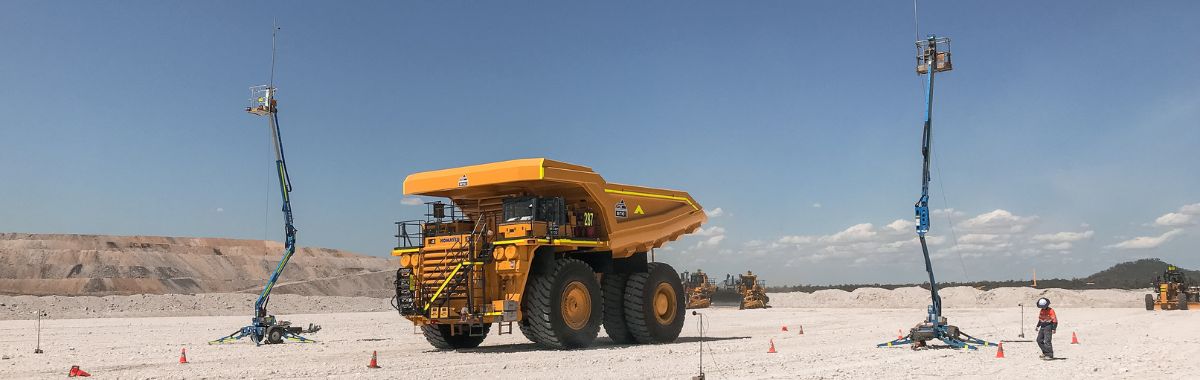
Which sound attenuation solutions do mining operations use?
For mobile fleets, the practical answer is an engineered attenuation package fitted per asset. These target the dominant sources on the machine, using dual-skin exhausts, radiator and fan attenuators, engine panels, and tuned sound media matched to the frequency bands that travel to nearby receptors. Packages are developed for specific assets, including haul trucks, excavators, drills, dozers, loaders, graders, and water carts, and are designed to keep the original airflow and backpressure so the machine does not overheat or lose payload.
For fixed infrastructure, acoustic enclosures and barriers contain high-output stationary equipment such as generators, pumps, and plant. Alongside the hardware, operations rely on testing to find and verify noise: ISO 6393/6395 compliance testing, sound intensity measurement, acoustic imaging that maps sound sources visually, and fleet screening that checks machines under real operating conditions.
| Control | What it targets | Role for continuous operations |
|---|---|---|
| Quieter equipment selection | The source, at the point of purchase | Helps over time but is limited by the available fleet and slow to roll out |
| Engineered source attenuation | Engine, exhaust, and cooling-fan noise on each machine | Most effective; cuts operator exposure and boundary emission together when airflow is preserved |
| Acoustic enclosures and barriers | Fixed plant and the noise path | Strong for generators, pumps, and stationary assets; limited use on a mobile fleet |
| Administrative controls | Exposure time, distance, scheduling | A useful supplement that does not lower the noise itself |
| Hearing protection | The operator only | Last resort; protects the cab, not the community, and depends on correct use |
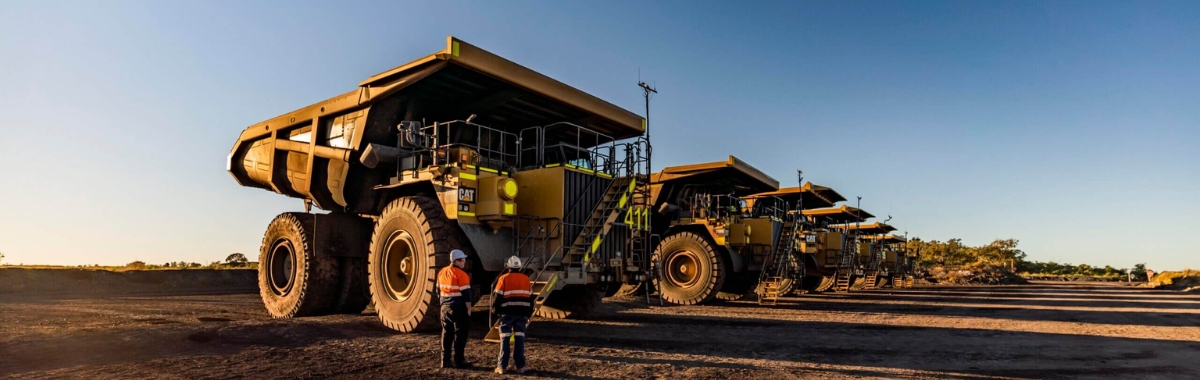
What noise reduction solution works best for continuous mining operations?
For continuous mining, the best control is engineered source attenuation, which can run 24/7 without penalty. The deciding factor is not how much noise a control removes in a test, but whether it survives continuous duty: attenuation that restricts airflow or raises backpressure causes overheating, reduced payload, or higher fuel use, so it gets removed and the noise returns.
An effective control for continuous duty has four traits:
- Preserves airflow and backpressure: the machine does not overheat or lose payload over a full duty cycle.
- Cuts noise at the source: it lowers operator exposure and boundary emission with a single measure.
- Holds up fleet-wide: results are verified by testing rather than assumed from one machine.
- Runs without relying on PPE or scheduling: compliance does not hinge on hearing protection or capped operating hours.
That points to engineered source control, rather than enclosing everything or capping hours, as the practical answer for continuous mining.
Minetek sound attenuation solutions.
Minetek has worked in mining noise control since 1984 and specialises in engineered source attenuation. Our M-STEALTH™ packages are modular and fitted per asset across haul trucks, excavators, drills, dozers, loaders, and fixed plant, using dual-skin exhausts, radiator attenuators, engine panels, and tuned sound media to cut noise at the source while holding the original backpressure and airflow. Keeping airflow intact holds exhaust surface temperatures down and avoids the overheating that otherwise sees attenuation stripped off a machine.
The track record:
- Packages engineered for more than 115 OEM models, with more than 3,000 machines fitted.
- Site noise reductions of up to 50%.
Verification runs alongside the hardware:
- ISO 6393/6395 compliance testing and sound intensity measurement.
- Acoustic imaging to locate noise sources on the machine.
- Fleet screening that simulates real duty, such as full power on an incline.
Best fit: continuous mining and heavy-industry operations that need to meet both worker exposure and boundary limits without giving up machine performance.
Not sure your fleet can meet both the worker exposure and boundary limits across a full shift?
Talk to one of our sound solutions experts about where your exceedances are coming from and how to engineer them out without costing machine performance.
Frequently Asked Questions (FAQs)
Because the equipment is inherently loud, runs almost continuously, and sends noise to the boundary where it is judged against the lowest limits, often at night. Two limits apply at once, one for the operator and one for the community, and a machine can meet its own rating yet still breach at a nearby receptor once distance, terrain, weather, and the number of machines are taken into account.
By following the hierarchy of controls and prioritising engineered control at the source. Treating the engine, exhaust, and cooling system on each machine reduces both operator exposure and community emission at once, which is more effective and more durable than relying on scheduling or hearing protection. Barriers and enclosures handle fixed plant, and monitoring confirms the result.
Engineered attenuation packages fitted per machine, using dual-skin exhausts, radiator and fan attenuators, engine panels, and tuned sound media, plus acoustic enclosures for generators, pumps, and fixed plant. These are paired with compliance testing and acoustic imaging to locate sources and verify reductions.
Lightweight source attenuation that preserves the original airflow and backpressure, so it can run 24/7 without causing overheating, lost payload, or higher fuel use. Controls that restrict airflow tend to be removed, which is why airflow-preserving, per-asset attenuation is the practical choice for continuous operations.
Reduce the noise at the source. Hearing protection only guards the operator and administrative limits only move the problem around, but cutting noise on the machine itself lowers the level at the cab and at the boundary together, which is the only approach that addresses both regulatory limits with a single measure.