 Portuguese
  English (United States)
  English
  Spanish
  French
  Indonesian
  Italian
 The right mine water infrastructure approach depends on the type of water challenge the site is trying to solve, how long that challenge is expected to last, and how much fixed system the operation is prepared to commit to. Some conditions justify a permanent mine water system built into the site’s long-term operating model. Others are better addressed with flexible, lower-infrastructure systems that can be deployed quickly, positioned where needed, and adjusted as site conditions change.
That distinction matters because mine water decisions are rarely only about capacity. They are also shaped by mine life, site timing, footprint, mobility, and capital commitment. A long-life operation with a stable water management requirement may be able to justify permanent infrastructure that becomes part of the broader site plan. A site facing an urgent water issue, changing mine plans, or uncertainty around long-term demand may need a more flexible response that avoids locking in a larger fixed build too early.
This article compares both approaches in a practical way. It looks at what should guide mine water infrastructure decisions, when permanent infrastructure is more appropriate, when flexible, lower-infrastructure systems make more sense, and where Minetek evaporation systems fit within that decision.
Choosing the right mine water infrastructure approach.
- Decision fit: The best mine water system choice depends on how long the water challenge will last and how it fits the site’s operating plan.
- Permanent build: Permanent mine water infrastructure is better suited to long-term water management requirements that justify fixed, integrated infrastructure.
- Flexible response: Flexible, lower-infrastructure mine water systems are better suited to urgent, changing, or location-specific water challenges.
- Site constraints: Mine life, deployment timing, footprint, mobility, and capital commitment are the key factors that shape the right infrastructure decision.
- Minetek fit: Minetek evaporation systems support flexible water management where sites need faster deployment, portability, and less fixed infrastructure.
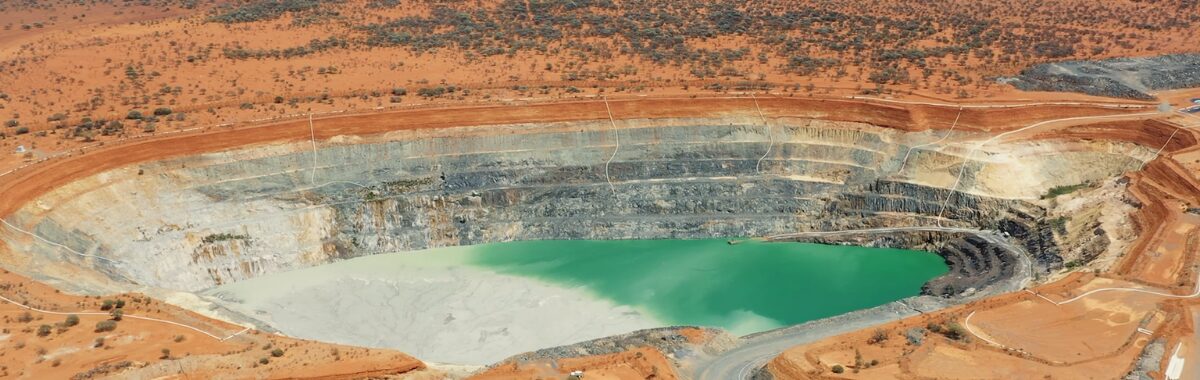
What should guide mine water infrastructure decisions?
The right mine water infrastructure decision usually comes down to four factors: how long the water challenge is expected to last, how quickly the site needs a response, how much fixed footprint the operation can support, and how much capital the business is ready to commit.
A practical way to assess that decision is to ask:
- How long will this water challenge last?
According to the International Council on Mining and Metals (ICMM) Water Stewardship guidance, water decisions in mining should be considered across planning, operations, and closure, which makes mine life one of the clearest indicators of whether a site may need a permanent build or a more flexible response.
- How quickly does the site need to respond?
In its Water Stewardship handbook, Australia’s Leading Practice Sustainable Development Program for the Mining Industry explains that mine water management spans all phases of mineral extraction, from exploration and construction through to operation and closure, which reinforces that timing matters as much as treatment need when selecting infrastructure.
- How much fixed footprint can the site support?
O Padrão global do setor para gerenciamento de rejeitos states that operators should develop and maintain a water balance model and associated water management plans that take account of the mine site, mine planning, and overall operations, which makes infrastructure footprint and site integration practical decision factors rather than secondary considerations.
- How much capital should be committed now?
Taken together, ICMM, the Australian Leading Practice handbook, and the Global Industry Standard on Tailings Management all point to the same principle: mine water infrastructure should match the operating context, not just the immediate water issue.
The better option depends on whether the site’s water challenge is best addressed through long-term fixed infrastructure or a more flexible, lower-infrastructure response.
When is permanent mine water infrastructure the right long-term choice?
Permanent mine water infrastructure is the right long-term choice when the site is dealing with a sustained water management requirement that justifies fixed infrastructure as part of the broader operating model.
| Indicator | Why it points to a permanent build |
| Long mine life | Water management is more likely to remain part of the operation for years rather than a short-term or transitional phase. |
| Stable site planning | A fixed build makes more sense when the site layout, operating model, and water management requirements are unlikely to shift materially. |
| Ongoing water demand | Permanent infrastructure is better suited to sites where water management is a continuing operational requirement rather than an intermittent issue. |
| Integrated site infrastructure | Some water challenges need to be managed as part of the broader site system rather than through a faster, more flexible response. |
| Justified capital commitment | A permanent build is easier to justify when the duration and scale of the issue support longer-term infrastructure investment. |
In those conditions, a permanent build can strengthen long-term water control by making it part of the site’s established infrastructure rather than a temporary response.
When do flexible, lower-infrastructure mine water systems make sense?
Flexible, lower-infrastructure mine water systems make the most sense when the site needs water management that can be deployed quickly, moved where needed, and used without committing too early to a larger fixed build.
They are often the better fit when:
- Timing is critical
A faster-deployment option can help operations respond to emerging water pressure without waiting for a full permanent build.
- Site conditions are still changing
A more flexible system is better suited to operations where water volumes, priorities, or affected areas may shift over time.
- A smaller fixed footprint is preferred
Lower-infrastructure systems can help manage water without expanding the site’s permanent infrastructure footprint more than necessary.
- Mobility matters
Some water challenges are better addressed with systems that can be positioned where they are needed most and relocated as site demands change.
- Capital needs to stay staged
A flexible approach can help operations manage water while preserving optionality around larger long-term infrastructure decisions.
According to the U.S. Environmental Protection Agency’s Reference guide to treatment technologies for mining-influenced water, treatment selection should reflect site-specific conditions, including operational requirements, maintenance needs, performance, and cost, which supports a more flexible pathway where the water challenge does not yet justify a permanent build.
Where speed, mobility, and flexibility matter most, a lower-infrastructure approach can provide a more practical path to water management.
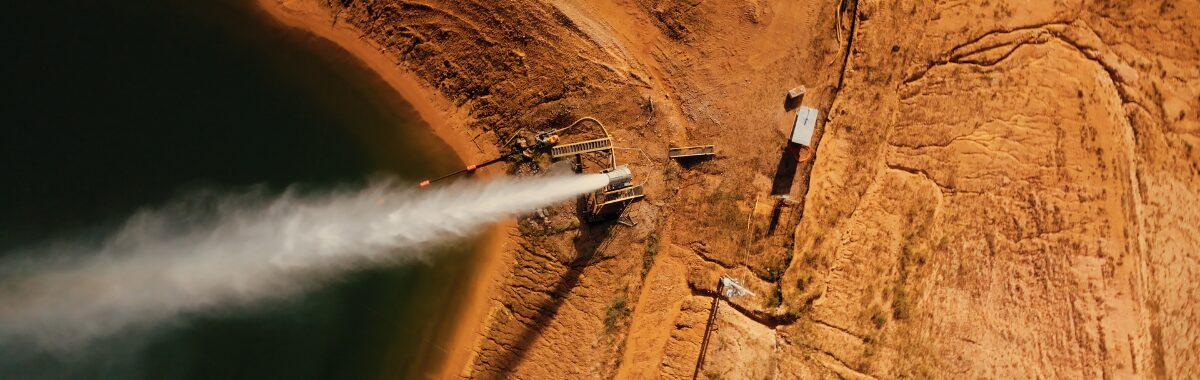
Mine water infrastructure comparison.
The right mine water infrastructure approach depends on how the site’s water challenge aligns with mine life, timing, footprint, capital commitment, and the need for flexibility.
| Decision factor | Permanent mine water infrastructure | Flexible, lower-infrastructure mine water systems |
| Mine life | Better suited to longer-life operations where water management will remain a sustained requirement | Better suited to shorter horizons, transitional phases, or changing site plans |
| Site timing | More appropriate when the operation has time for planning, approvals, construction, and integration | More appropriate when the site needs a faster response to emerging water pressures |
| Footprint | Typically involves a larger fixed site footprint and more embedded infrastructure | Typically requires less fixed infrastructure and a smaller permanent site footprint |
| Capital commitment | Higher upfront capital commitment, usually justified when long-term demand is clear | Lower upfront capital commitment, useful when preserving flexibility matters |
| Flexibility | Less flexible once built, but can provide stable long-term capacity | More flexible where mine plans, water volumes, or site priorities may shift |
| Mobility and relocation | Typically fixed in place as part of broader site infrastructure | Better suited to deployment where needed and relocation as site conditions change |
| Deployment approach | Usually planned as part of broader site infrastructure development | Often deployed as a faster, more adaptable response |
| Best fit | Long-life operations with predictable ongoing water management requirements | Sites needing speed, portability, flexibility, or less fixed infrastructure |
Where operations need a more flexible response with less fixed infrastructure, evaporation systems can help reduce stored water volumes while supporting faster deployment and relocation across the site.
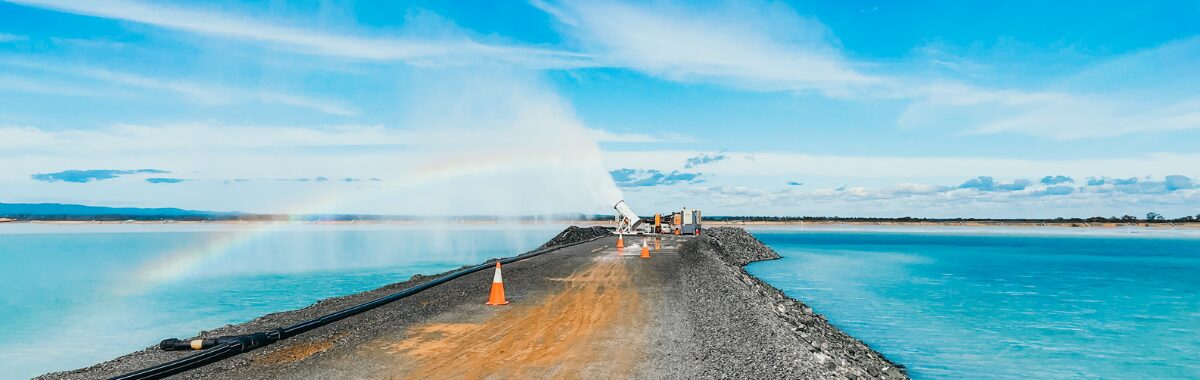
Minetek evaporation systems support flexible water management.
For sites that need a faster response with less fixed infrastructure, Minetek evaporation systems can support water management that aligns with changing operational demands.
Unlike permanent infrastructure designed into the long-term site build, Minetek evaporation systems can be deployed where the water challenge is most immediate, relocated as priorities shift, and used without requiring the same level of fixed infrastructure commitment. That makes them particularly relevant where the site needs a practical response to excess water while preserving flexibility around future infrastructure decisions.
This approach can be valuable in situations where:
- excess water needs to be addressed quickly
- flooding or emergency water accumulation creates immediate operational pressure
- site conditions are still evolving
- a smaller fixed footprint is preferred
- multiple ponds or water locations need to be managed across the site
- equipment may need to be relocated as operational priorities shift
- the business wants to avoid locking into a larger permanent build too early
Minetek evaporation systems support flexible water management where speed, portability, and lower fixed infrastructure are central to the site’s decision.
Need a more flexible way to manage excess water across your site?
Speak to Minetek water experts about flexible evaporation systems designed to help operations manage excess water with speed, portability, and a smaller infrastructure footprint.
Perguntas frequentes
What is the difference between permanent mine water infrastructure and a flexible, lower-infrastructure system?
Permanent mine water infrastructure is built into the long-term site plan and is better suited to sustained water management requirements. A flexible, lower-infrastructure system is better suited to faster response, changing site conditions, and situations where portability or staged deployment matters.
When should a mine invest in permanent water infrastructure?
A mine should consider permanent water infrastructure when water management is expected to remain a long-term operational requirement and the site has enough planning certainty to justify a fixed build.
When do flexible, lower-infrastructure mine water systems make more sense?
They make more sense when the site needs a faster response, wants to limit fixed infrastructure, or expects water management needs to shift across different areas of the operation.
Why does portability matter in mine water management?
Portability matters when excess water needs to be managed across multiple ponds, changing work areas, or different locations on site. Minetek water evaporation units can be relocated can give operations more flexibility.
Can a flexible mine water system be used before a permanent build is developed?
Yes. A flexible system like Minetek water evaporators can help operations respond to immediate water pressures while preserving optionality around longer-term infrastructure decisions.