 Portuguese
  English (United States)
  English
  Spanish
  French
  Indonesian
  Italian
 Mine water management systems must operate across conditions that do not stay in one place. As pits develop, production areas shift, and localised inflows emerge, water pressures can move quickly across different parts of a site.
Fixed systems often struggle to respond to these changes, creating delays, inefficiencies, and increased operational complexity. Mobile water management systems address this by enabling equipment to be deployed, relocated, and scaled as conditions change. This supports more targeted water removal, faster response, and improved control across dynamic mining environments.
Mobile water management systems in modern mining operations
- Shifting water pressures: Water challenges move as pits develop and site conditions change
- Limitations of fixed systems: Centralised infrastructure cannot always respond to localised demands
- Need for faster response: Delays in redeployment can impact operational control and efficiency
- Value of mobility: Systems can be deployed and relocated to areas of highest demand
- Improved resource allocation: Equipment is used where it delivers the most operational value
- Reduced operational delays: Faster response supports more consistent water management
- Minetek capability: Mobile, low-footprint evaporation systems can be rapidly deployed and repositioned across the site
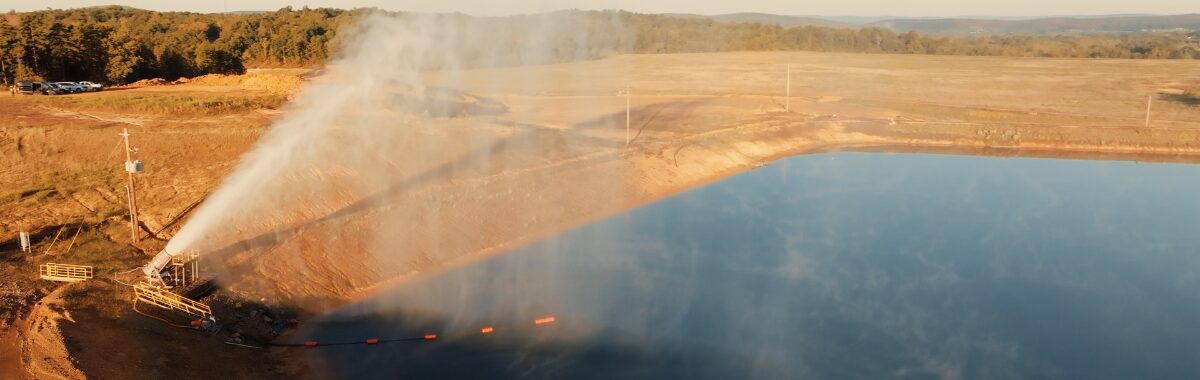
Changing site conditions and shifting water pressures
Mine water management does not operate in a fixed environment. As mining progresses, the location and intensity of water challenges can change across different areas of the site, often requiring rapid adjustment in how water is managed.
These shifts are driven by several operational factors:
- Moving pit locations: Water accumulation points change as mining advances into new areas
- Evolving mine plans: Dewatering priorities shift with production schedules and development sequencing
- Localised inflows: Rainfall and groundwater impacts vary across different parts of the site
- Temporary high-pressure zones: Certain areas require short-term, high-capacity water removal
- Changing access conditions: Some areas become harder or easier to reach as operations progress
These conditions mean water management requirements are rarely static. Systems must be able to respond to where water is accumulating, not just where infrastructure is located.
The limitations of fixed water management systems
Fixed water management systems are designed around defined locations and operating conditions. While effective in stable environments, they can struggle to keep pace with shifting water pressures across an active mine site.
This creates several operational constraints:
- Limited reach: Fixed systems are tied to specific locations, meaning water issues that emerge elsewhere cannot be addressed without moving water back to those points
- Delayed response: Extending pipelines, pumps, or infrastructure takes time, delaying action when rapid response is required
- Centralised dependency: Water often needs to be transferred across the site to a central facility before it can be treated or removed, increasing handling time and complexity
- Underutilised capacity: Infrastructure may remain idle in one area while other parts of the site experience increasing water pressure
- Inflexible deployment: Equipment and systems cannot be easily relocated, limiting the ability to respond to short-term or emerging water challenges
These limitations create a disconnect between where water accumulates and where systems are able to respond, reducing overall efficiency and increasing operational pressure on site teams.
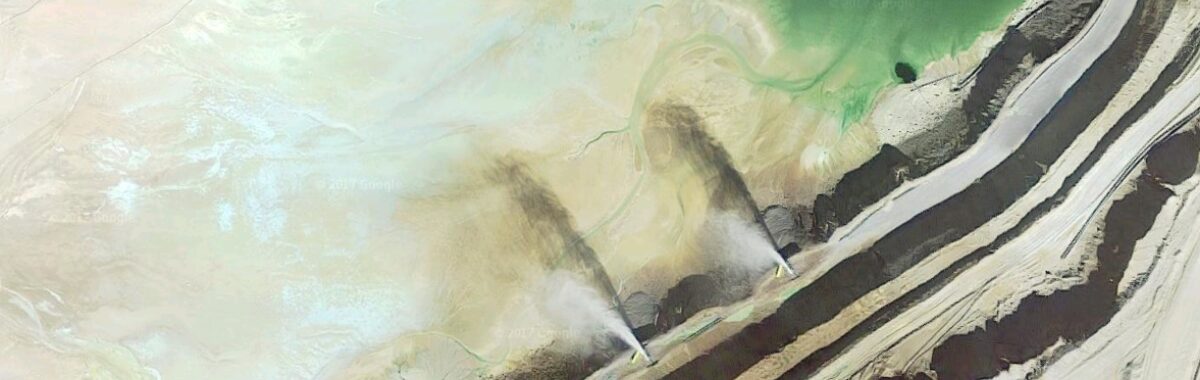
Minetek mobile mine water management systems
Minetek mobile water management systems are designed to respond to where water challenges occur, not where infrastructure is fixed. By enabling flexible deployment and relocation, Minetek Water evaporators support more targeted and efficient water management across changing site conditions.
Minetek mobile water management systems deliver this through:
Deployment and mobility
- Mobile and portable design: Units can be moved easily between locations across the site as water pressures shift
- Implementação rápida: Systems can be installed and operational quickly, allowing sites to respond faster to excess water challenges
- Flexible operation: Suitable for temporary, seasonal, or long-term water management requirements
Performance capability
- High-capacity evaporation: Units deliver evaporation rates of up to 135 cubic meters per hour (m³/h) per system, supporting large-scale water removal
Automation and control
- Automated weather response: Systems adjust operation based on real-time environmental conditions
- Sistema de gerenciamento ambiental (EMS): Integrated controls optimise performance using wind speed, temperature, and humidity data
- Optimised efficiency: The EMS supports consistent evaporation performance while maintaining environmental compliance
By combining mobility, rapid deployment, and automated control, Minetek systems enable more responsive and efficient water management across dynamic mining environments.
Improving water management across changing site conditions
Mine water management systems must operate in environments where conditions do not remain fixed. As water pressures shift across a site, systems that rely on static infrastructure can struggle to respond efficiently.
Mobile water management systems address this by enabling equipment to be deployed where it is needed most, reducing delays and improving operational control. By supporting faster response, better resource allocation, and more targeted water removal, mobility becomes a key factor in maintaining effective water management across modern mining operations.
Minetek mobile evaporation systems extend this capability through high-capacity performance, rapid deployment, and automated environmental control. This allows operations to manage excess water more consistently while reducing the need for manual intervention and fixed infrastructure constraints.
Looking to improve how your site manages shifting water demands?
Speak with Minetek about mobile evaporation systems designed for rapid deployment, scalable performance, and responsive water management.
Perguntas frequentes
Mobile water management systems are portable solutions that can be deployed and relocated across a mine site. They allow operations to manage water where it accumulates, rather than relying on fixed infrastructure.
Water pressures shift as mining progresses, with different areas requiring attention at different times. Mobile systems allow operations to respond to these changes without delays or infrastructure constraints.
Mobile systems improve responsiveness by enabling faster deployment, targeted water removal, and better resource allocation. This reduces delays and improves overall system efficiency.
Fixed systems are tied to specific locations and can be slow to adapt when water challenges shift. This can lead to delayed response, increased handling, and underutilised infrastructure.
Minetek systems provide high-capacity evaporation, mobile deployment, and automated control through EMS. This allows sites to manage excess water efficiently while adapting to changing conditions.
Minetek mobile evaporation systems can be deployed and operational within a short timeframe, depending on site conditions. This allows mining operations to respond quickly to emerging water challenges within weeks without the need for civil expansion.