Pular para o conteúdo principal
Entre em contato conosco
Voltar para notícias e percepções

Uma solução de ventilação subterrânea sustentável para a mina de ouro Agnew

Data de publicação: 5 de julho de 2024

Located just 30km from Leinster, Western Australia is the Northern Norseman-Wiluna Greenstone Belt. This mining region is home to the Agnew Gold Mine, owned by the international mining corporation Gold Fields. Agnew mine houses the Waroonga and New Holland underground deposits, the last two remaining gold mines in the Goldfields-Esperance region. Both Agnew mines have been operational since the 1880s, with a resurgence in production over the past decade. Between 2021 and 2022 Agnew Mine produced between 232,000oz -240,000oz of gold [1].
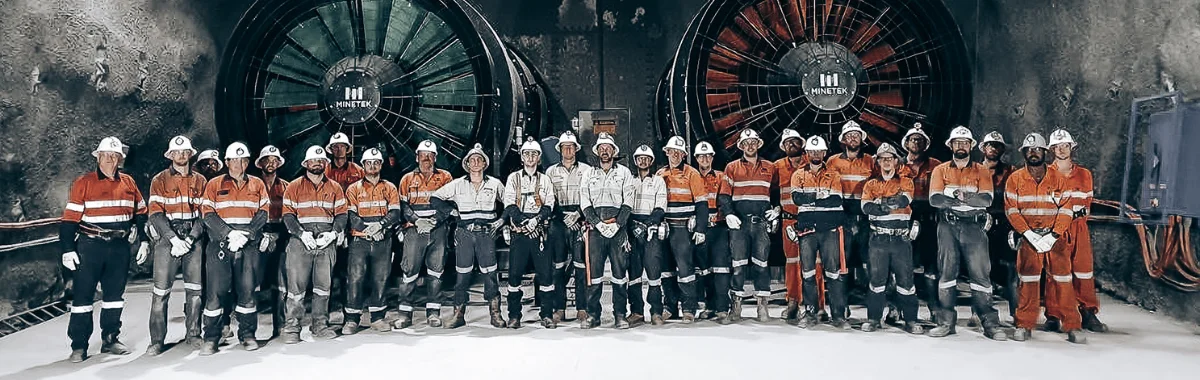
agnew-1

Net-zero Underground Ventilation.

The Agnew Gold Mine required a complete ventilation upgrade to meet Life Of Mine (LOM) requirements. This solution involved future-proofing for continuing production, mine extensions and brownfield exploration throughout under-explored sections of the tenements. This Gold Mine was experiencing challenges with the existing primary ventilation circuit. The air volume flow rate was not achieving the required free air volume or pressure. Therefore, debottlenecking was required to achieve their goal of increased production and expanded exploration.

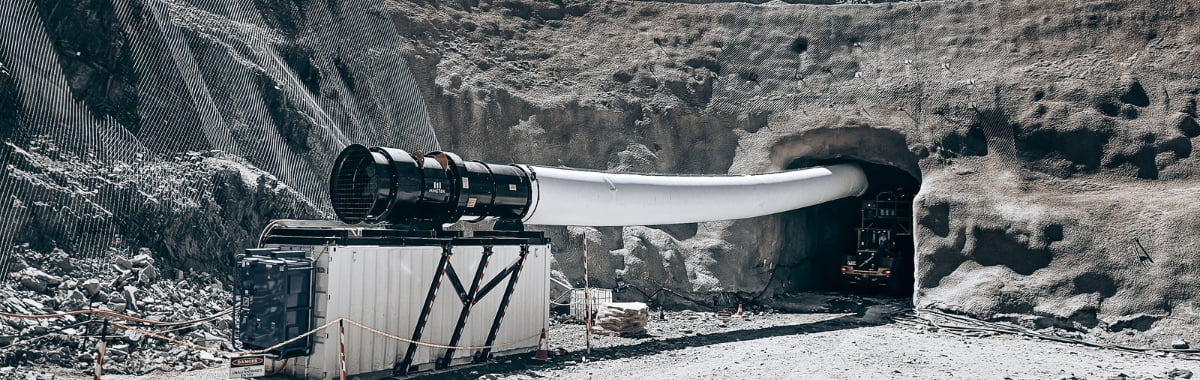
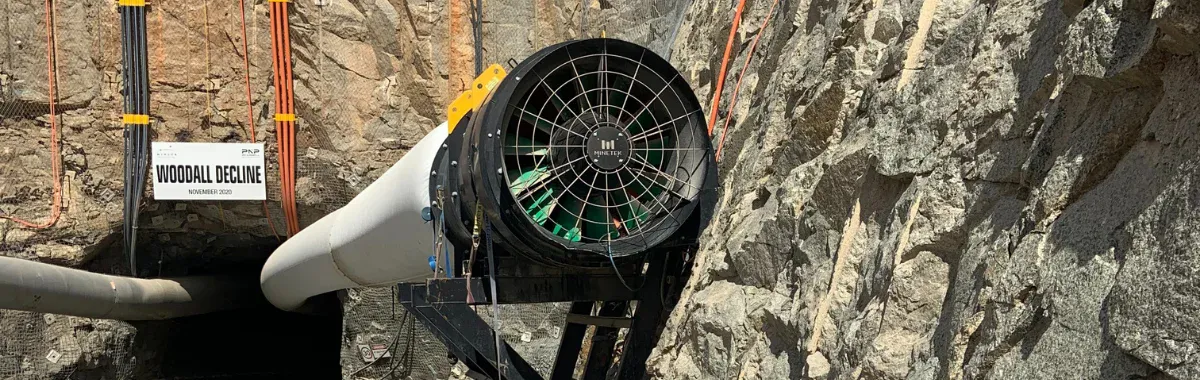
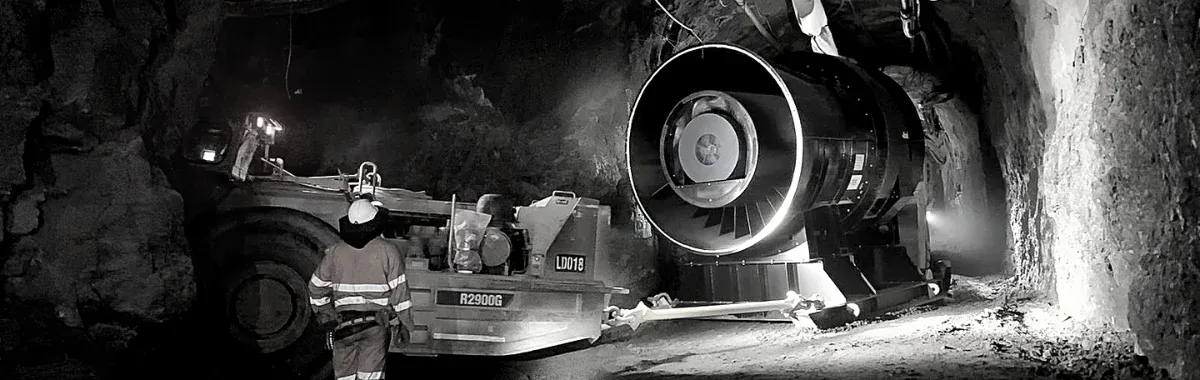
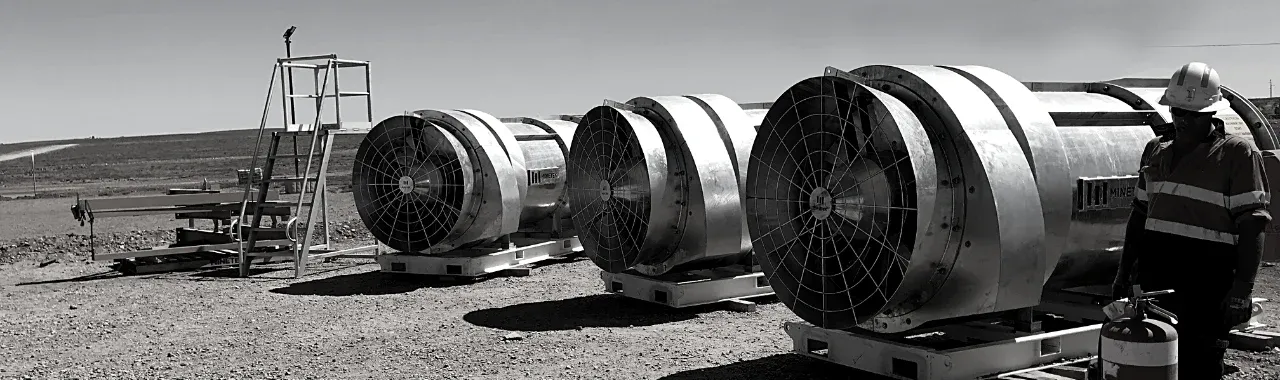
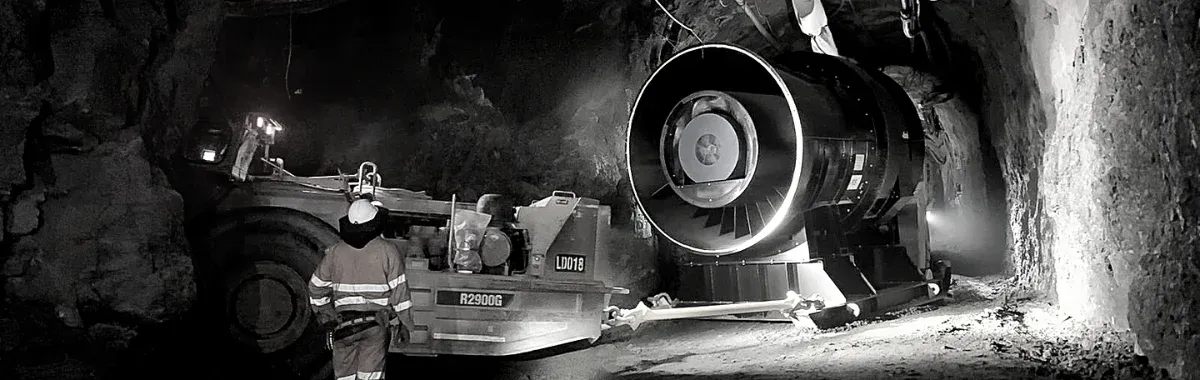
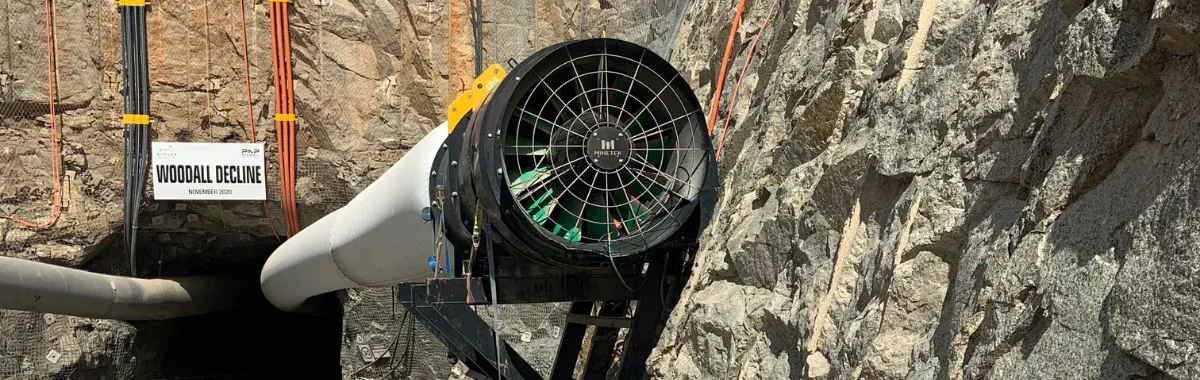
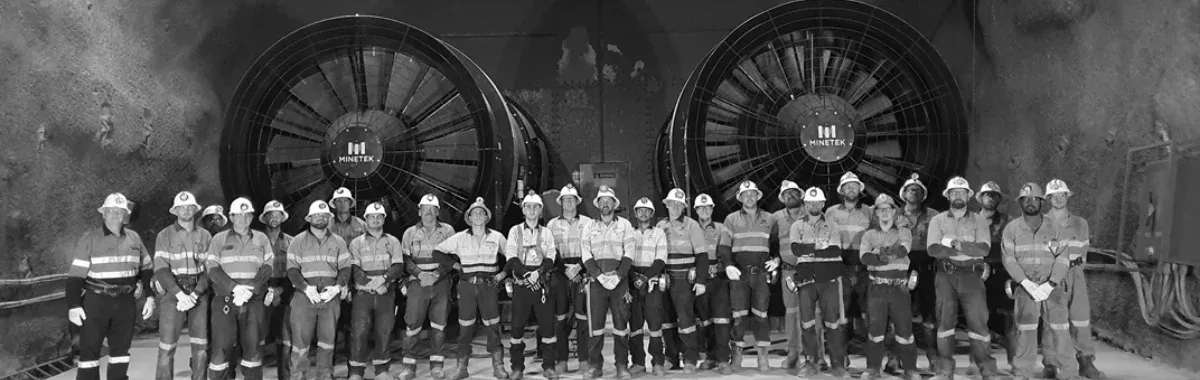
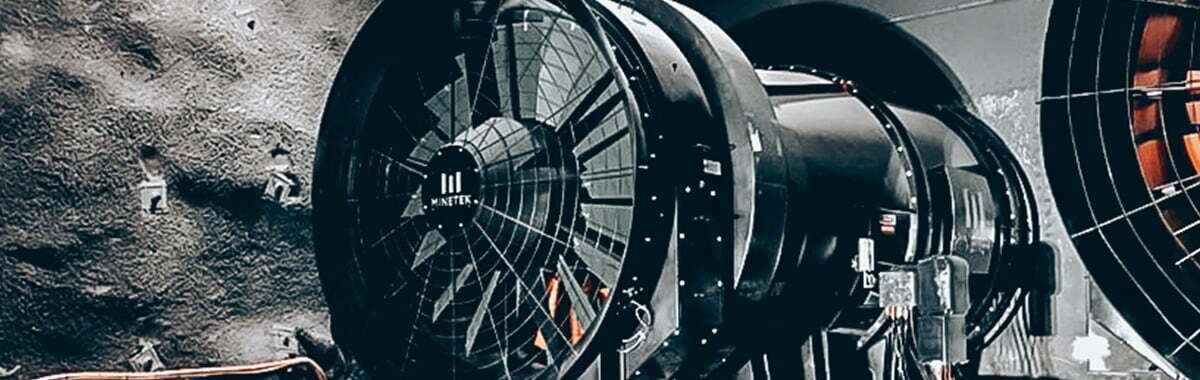
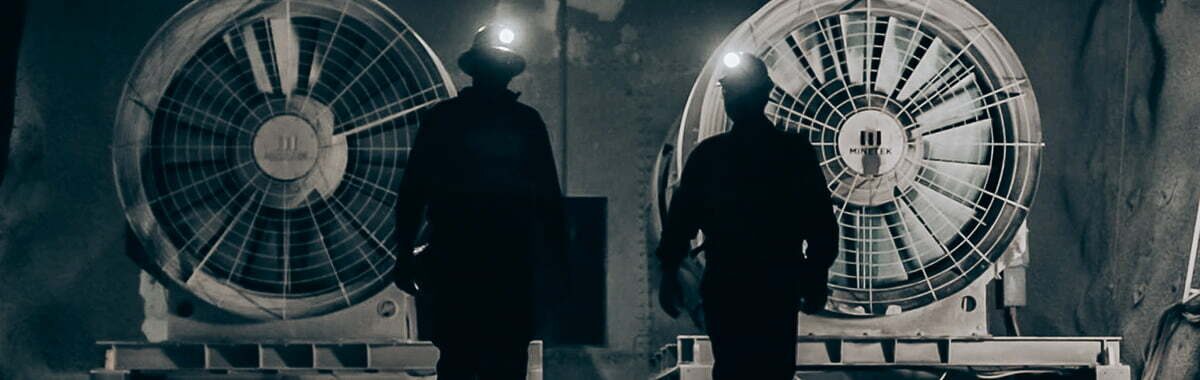
Agnew Gold Mine commissioned Minetek to help achieve their long-term vision and demands by developing a customised underground ventilation solution. Minetek’s solution was a Primary Booster Fan which included the removal of redundant equipment and installing the new fans. This unique solution was an Australian first for a fan of this combined size and technology, powered by Agnew’s renewable grid network. Discover the full case study by requesting a free PDF copy.
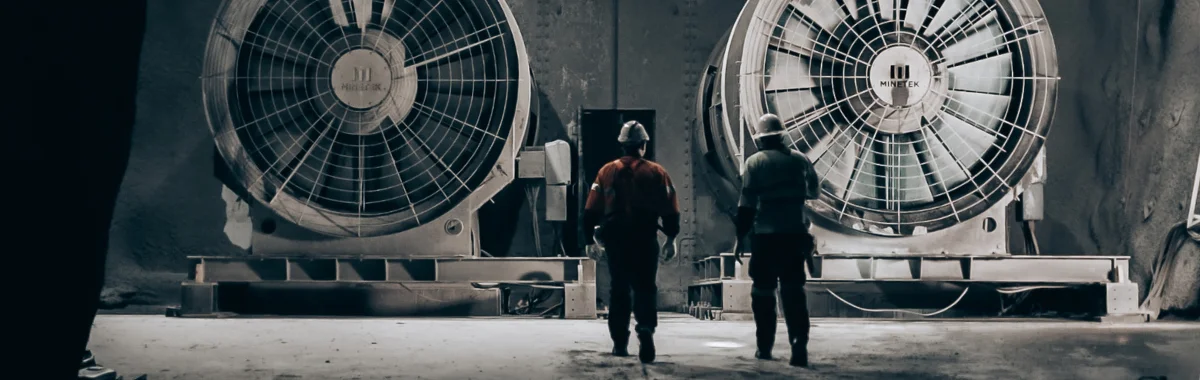
agnew-2

Sustainable Ventilation Solution.

Agnew Gold Mine favoured a low energy, high volume ventilation solution with low energy consumption. Minetek’s Primary Fans required energy output of 1,100kW / 1,000 V and a flow rate of 280 m³/sec – 350 m³/sec at a pressure of 3,700 Pa – 4,200 Pa meeting both current and future production and development needs.

Minetek’s Performance On Demand (POD) technology enabled a seamless operation with the ability to adapt pressure and power consumption without using Variable Speed Drive (VSD) controls. Our impulse bladed impeller controls the POD system with anti-stall technology installed to capture turbulent air flow and unstable pre-swirls, to ensure optimal fan performance.
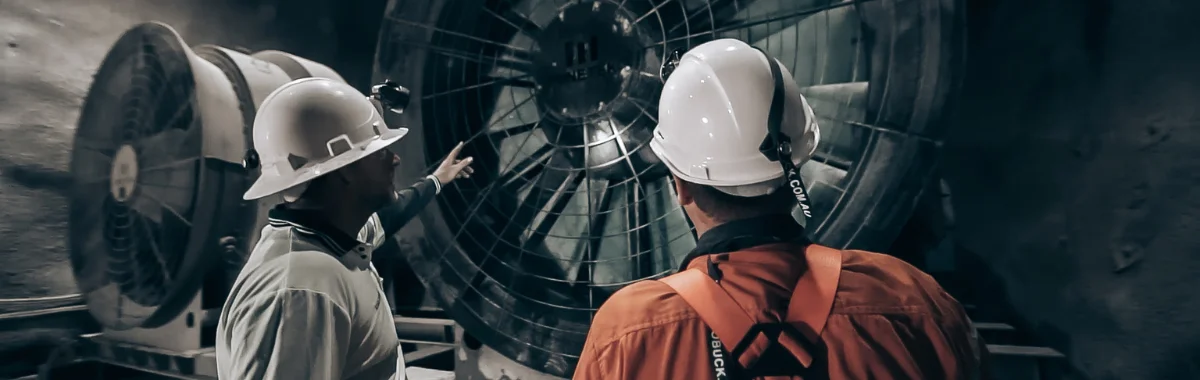
agnew-3

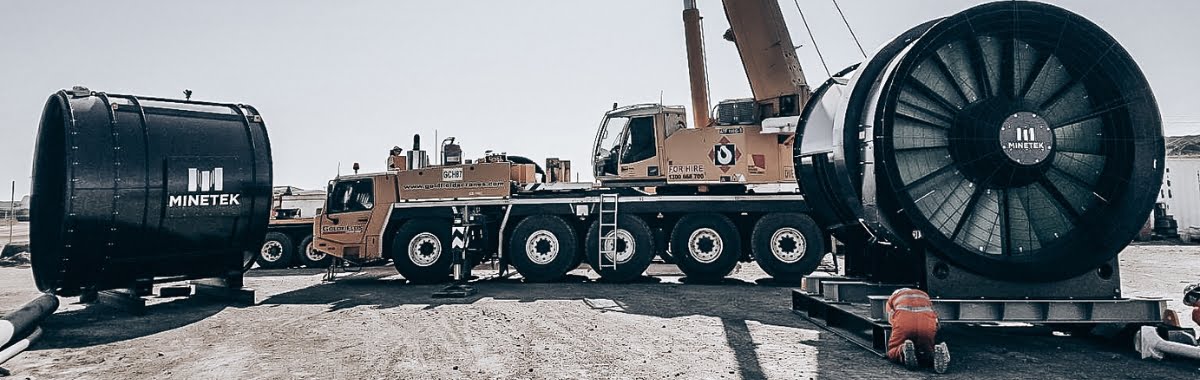
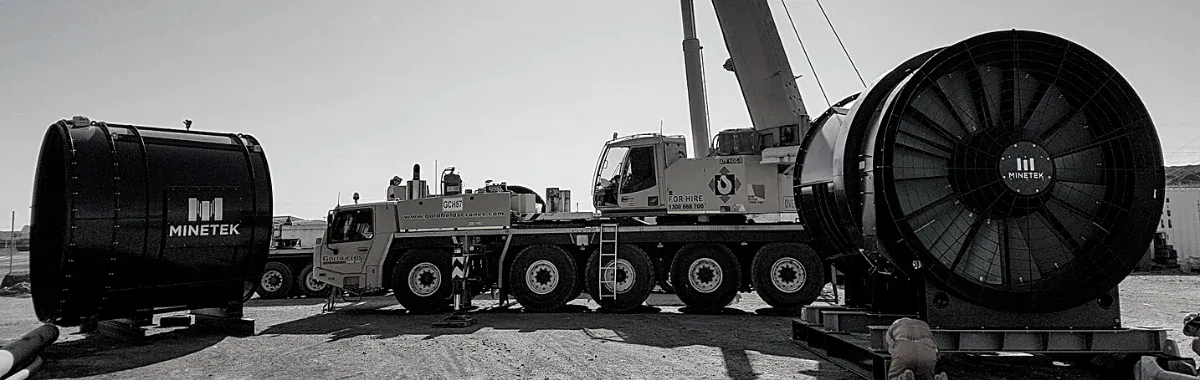
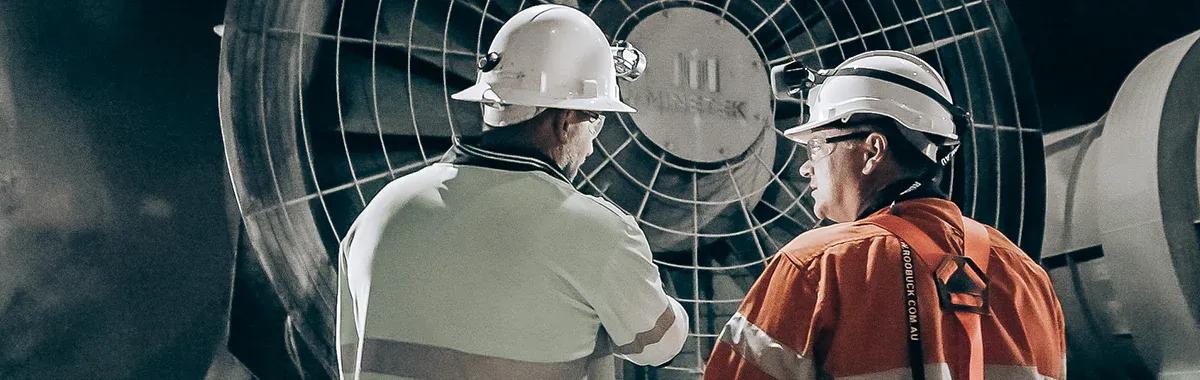
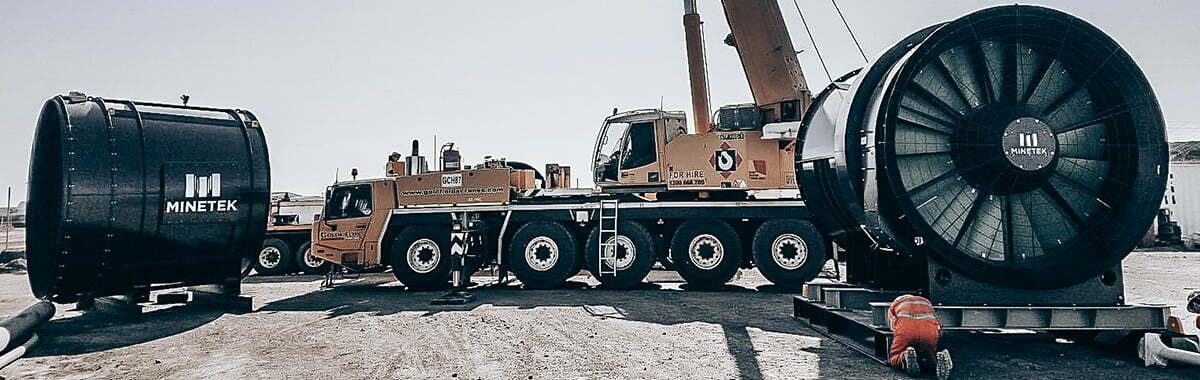
Due to their sheer size, Minetek’s Primary Fans had to be tested prior to shipping. We gained approvals from the Power Supply Authorities, and all other facilities within the Minetek complex had to be shut down to provide enough power for testing. The performance of the Primary Booster fans was pilot tested in Minetek’s testing chamber which happens to be the largest fan test chamber in the southern hemisphere. This unique environment was built to conform with AMCA standards and can simulate the most challenging conditions in any underground mining scenario.

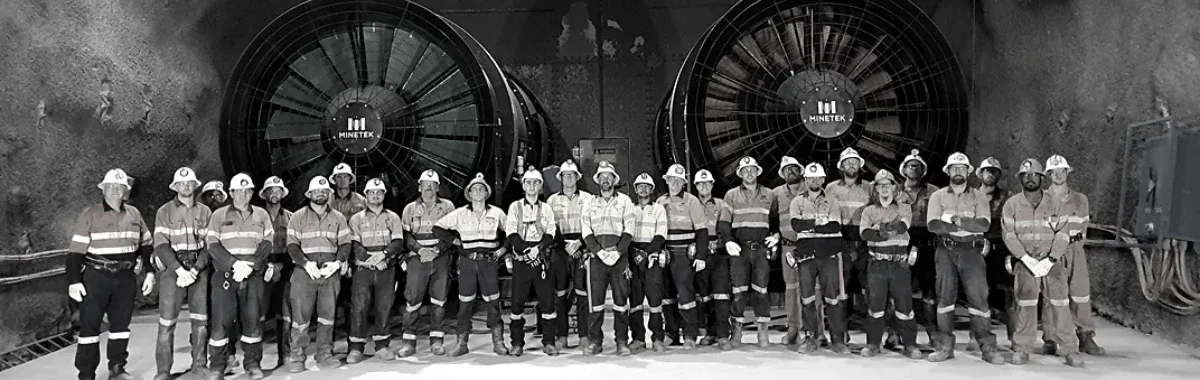
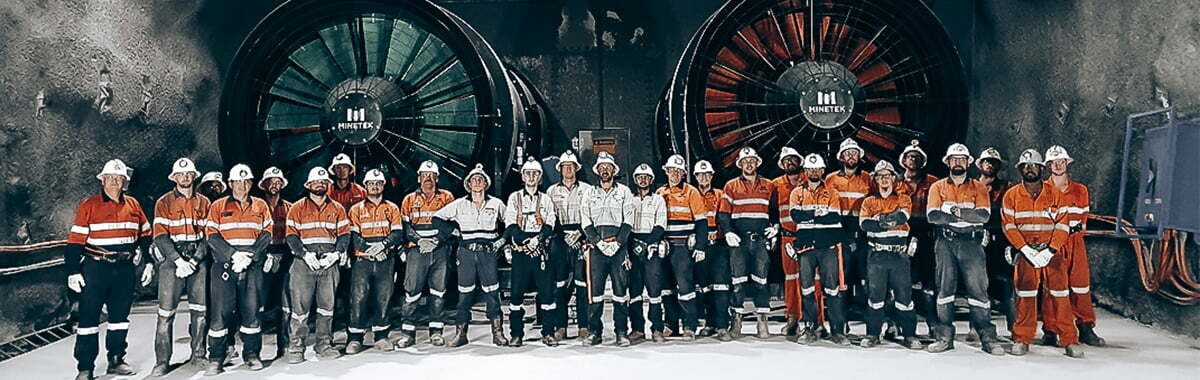
Minetek engineers and key personnel kept all project goals on track, achieving the installation within a short timeframe. The previous fans were removed and replaced with new fans in just four days of commissioning. Originally, we anticipated this project to be completed within 10 shifts however our seamless project management enabled a turn-key installation in only 7 shifts.
agnew-4

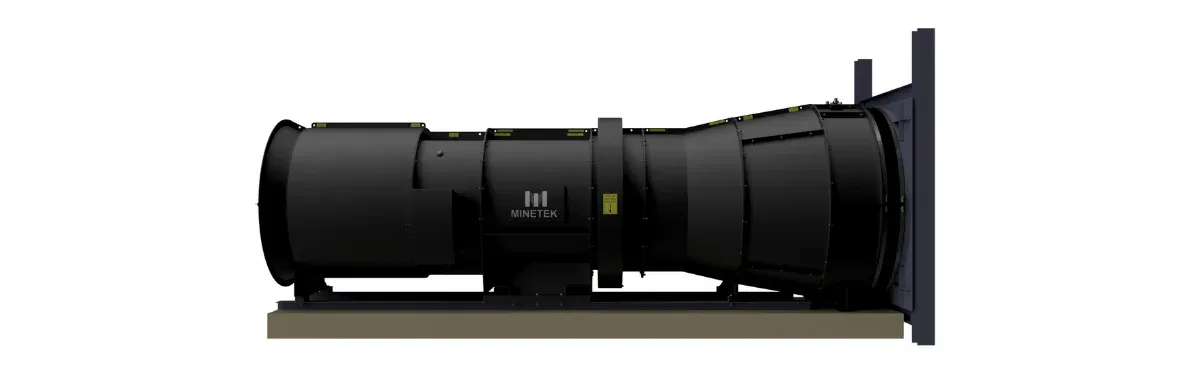
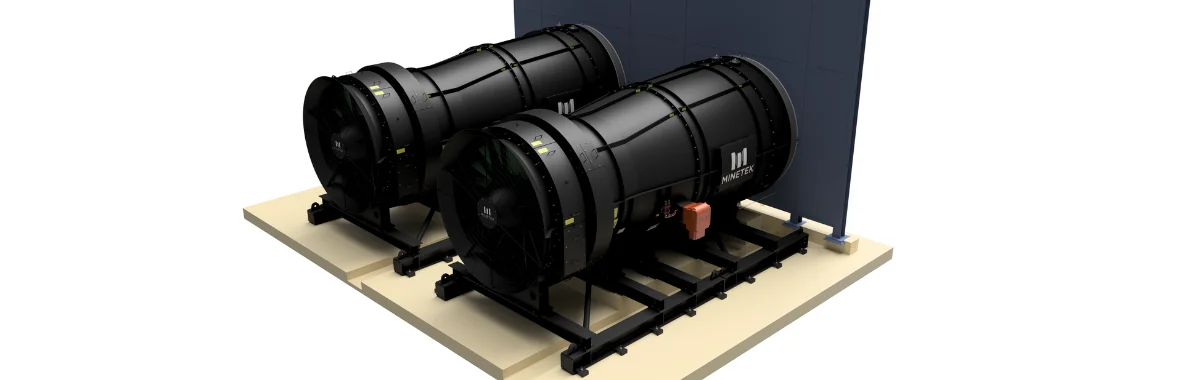
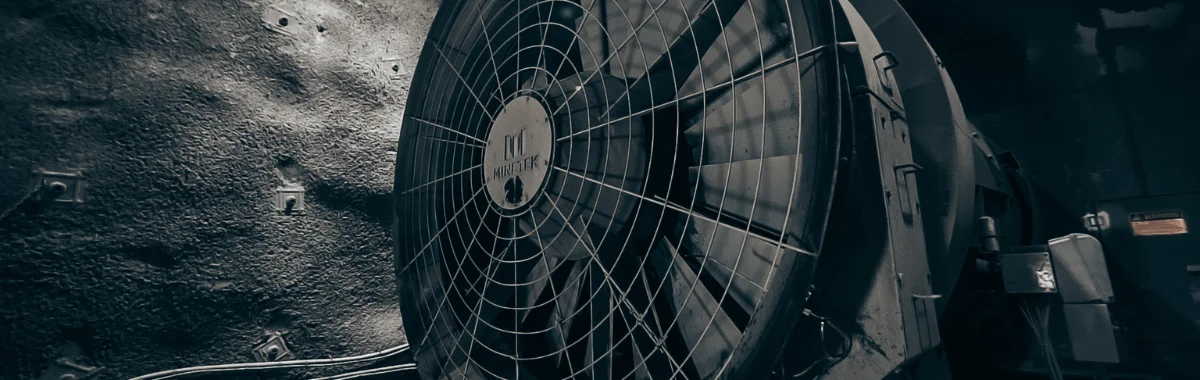
1100Kw Primary Booster Fan

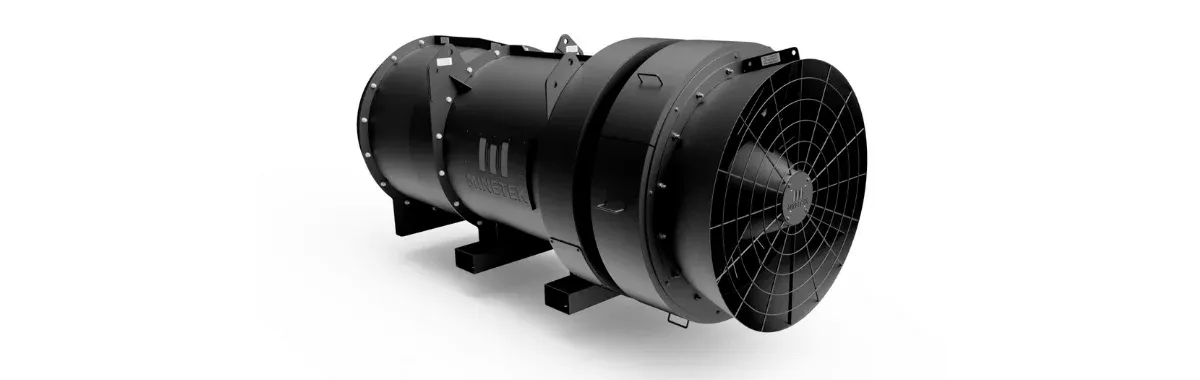
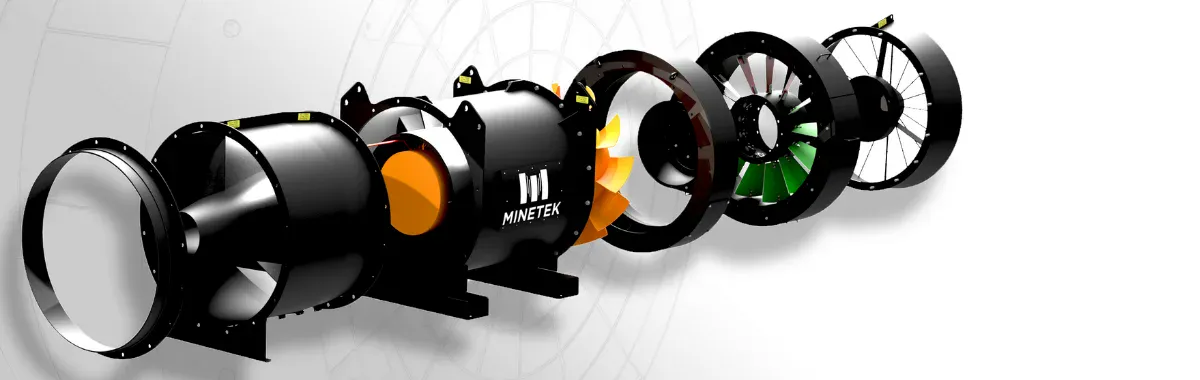
Engineered with the mining industry at the forefront, Minetek’s High Output Axial Primary Booster Fans are a robust and reliable ventilation solution with a broad operating range. Our unique steel impeller allows for operation at high pressures with prolonged life, in even the harshest of underground mining environments.

Primary Booster Fan Specifications

  • Power range – 1100 kW (kilowatts) / 1,000 V (volts)
  • Volume flowrate – 350 m³/sec (cubic metres per second) / 742,000 CFM (Cubic Feet Per Minute) (cubic feet per minute)
  • Pressure – 4,200 Pa (pascals) / 16.9 in.wg (inch of water)
agnew-5

primary fans, have been proven to reduce power consumption costs by up to 50%, by regulating flow rates from the integrated POD system. Our fans have the capability to outperform larger alternatives and then be re-deployed quickly and easily to other locations as the mine workings evolve. Underground mines can reduce on ventilation capital costs with less fans required to meet underground flow rates and pressure requirements. Achieve safe, reliable operations while delivering guaranteed reductions in power consumption and increased profitability, assisting green mines achieve net-zero emission targets.

Minetek has expanded with a new operations hub located in Perth, servicing the Western Australian Mining regions. Our world-class service has expanded to meet the demand and responsiveness needed to support our clients’ requirements. Our technical team is now close by and readily available to help with your site. The team at Minetek are confident and ready to provide solutions that match your requirements. Contact us to find out more about our primary and secondary ventilation solutions.
Voltar para notícias e percepções

U.S. mining trends and innovations: Minetek Air’s solutions for sustainable mining

Data de publicação: 21 junho 2024

The U.S. mining industry is at a pivotal moment, facing a blend of challenges and opportunities amidst significant reforms across the country.

A key development is the creation of an interagency working group by the Department of the Interior. This group is focused on overhauling hardrock mining laws, regulations, and permitting policies to support President Biden’s goals for better environmental protection, sustainable resource management, and responsible mining practices.

Made up of experts in mine permitting and environmental law, this group will review current laws and processes to suggest improvements that prioritise environmental, community, and Tribal engagement standards at every stage of mine development.

air-2

The newly released Fundamental Principles for Domestic Mining Reform by the Biden-Harris Administration is central to this effort. These principles prioritise environmental protection, community involvement, and fiscal responsibility, aiming to strike a balance between economic growth and environmental conservation.

These initiatives represent a watershed moment for the U.S. mining industry, which is confronting the need for modernisation and adaptation.

In today’s article, we will discuss the emerging trends in the mining industry and examine their implications for companies operating in America.


The impact of regulatory changes on the U.S. mining industry

We are seeing a significant shift towards sustainability worldwide, with more than 140 countries setting net-zero targets and covering about 88% of global emissions. Among them, the United States, historically one of the largest contributors to global emissions, is taking bold strides towards sustainability.

In line with the “Investing in America” agenda, the U.S. Department of Energy (DOE) has allocated up to $475 million to fund five projects across Arizona, Kentucky, Nevada, Pennsylvania, and West Virginia. These projects, situated on both current and former mine lands, represent a radical effort to accelerate the deployment of clean energy technologies in regions historically reliant on fossil fuel extraction. This substantial funding injection underscores the federal government’s commitment to promoting clean energy innovation and revitalising communities grappling with the decline of traditional mining industries.

The United States is taking a leading role in the clean energy revolution, striving for a future that’s more sustainable and resilient for generations to come. Yet, amidst these proactive steps, American mining operations are facing a changing regulatory environment, both locally and globally. As governments worldwide step up efforts to address climate change and promote environmental sustainability, mining companies are grappling with a complex array of regulations aimed at minimising their environmental footprint.

air-3

Within the U.S., initiatives like the Clean Air Act, Clean Water Acte National Environmental Policy Act enforce strict environmental standards on mining activities. These standards require companies to implement pollution control measures, conduct thorough environmental assessments, and engage in transparent consultation processes with stakeholders. There is growing support for updating the 1872 Mining Law to promote clean energy initiatives.

In light of these trends, American mining firms are urged to embrace sustainable practices and embrace clean technologies. Moving ahead, it’s crucial to uphold regulatory compliance while fostering responsible resource management. By addressing environmental issues and embracing sustainability, mining companies can manage regulatory risks and foster long-term value in an increasingly environmentally conscious world.


Innovations in ventilation systems

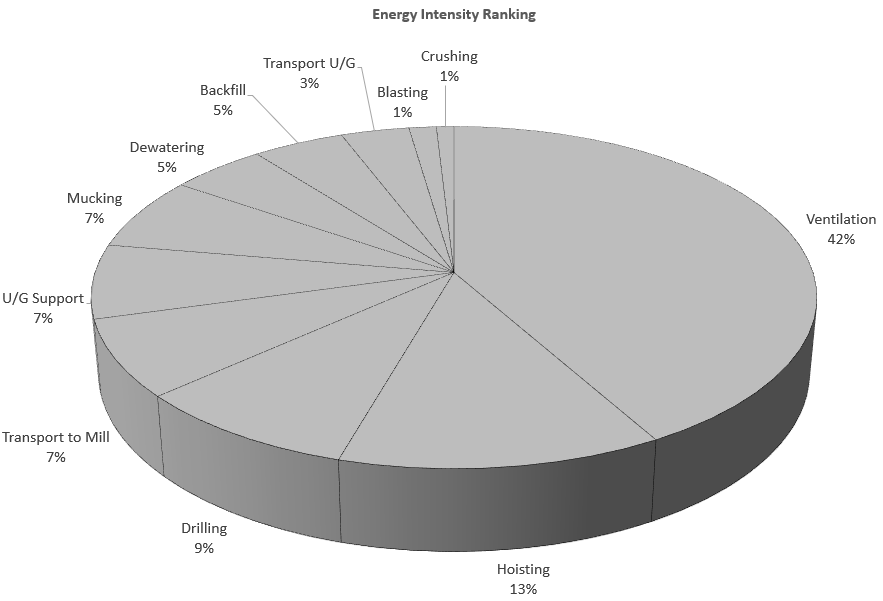
Ventilation systems are critical to maintaining safe working conditions for miners, providing fresh cool air to underground miners, and diluting flammable and machine exhaust gas. Yet their energy consumption accounts for a significant portion—often 40% or more—of a mine’s total energy usage. This places a substantial financial burden on mining operations and underscores the imperative to minimise energy consumption while maximising efficiency.

To tackle this challenge, mines are increasingly focusing on adopting energy-efficient ventilation techniques. This means embracing advanced technologies like automated airflow controls, and optimised ventilation designs. The aim is to reduce energy consumption while ensuring safety and maintaining air quality standards.

air-4

The role of automation and digitisation in mining operations

Automation and digitisation have become integral components of modernising industries, and the mining sector stands to benefit significantly from their implementation. The adoption of automation and digitisation technologies in mining operations offers a wide range of advantages, including:

1. Increased Productivity: Automation streamlines processes, reduces downtime, and enables continuous operations, ultimately leading to higher productivity levels.

2. Enhanced Safety: Automated systems can perform tasks in hazardous environments, reducing the risk of accidents and injuries to human workers.

3. Reduced Operational Costs: Automation minimises the need for manual labour, leading to lower labour costs, and optimises resource utilisation, resulting in overall cost savings.

4. Improved Environmental Sustainability: By optimising processes and reducing resource wastage, automation helps minimise the environmental footprint of mining activities, contributing to sustainability efforts.

air-5

The integration of automation and digitisation technologies presents a pivotal opportunity for the mining industry. These advancements allow mining operations to attain greater productivity, enhanced safety, reduced costs, and improved environmental sustainability, ultimately positioning them for long-term success.


Minetek’s solutions for sustainable mining

Minetek is an innovative and solution-driven company specialising in engineering, designing, manufacturing, and implementing advanced equipment for the industrial and mining sectors. With decades of experience helping mining and industry leaders achieve environmentally sustainable air management outcomes, Minetek has built a solid reputation for developing safe, reliable, and profitable operations.

Minetek’s High Output Axial Fan exemplifies the benefits of technological innovation in the mining industry. This advanced fan system offers unprecedented power savings and control capabilities, setting a new standard for underground mining operations. With its high-pressured fabricated steel impeller, Minetek’s fan technology represents cutting-edge mining innovation, allowing operation at pressures previously thought unachievable with traditional axial fans.

air-6

The inclusion of Minetek’s patented Mine Air Control (MAC) system further enhances the efficiency and performance of the High Output Axial Fan. Furthermore, by utilising Minetek’s Performance on Demand (POD) technology, operators can optimise air pressure and power consumption without the need for Variable Speed Drive (VSD) control. This innovative technology ensures a seamless, responsive solution that maximises performance while significantly reducing power consumption—up to 50% in some cases—resulting in increased operational efficiency and cost savings.

What’s more, operators can remotely control the ventilation system from the surface to ensure optimal performance. Providing real-time access to crucial data, enabling adjustments without requiring on-site presence. This remote control feature not only boosts operational flexibility but also enhances efficiency, enabling mining companies to optimise ventilation resources with ease.


Conclusão

The U.S. mining industry is currently facing a period of change, with new regulations and technological advancements on the horizon. Emerging trends in the mining industry such as stricter regulations, technological advancements, and the integration of automation and digitisation are poised to significantly impact the American mining landscape. These developments underscore the need for mining companies to adapt and innovate in order to thrive in an evolving environment.

Innovative solutions like Minetek’s High Output Axial Fan and Mine Air Control (MAC) system demonstrate how technology can boost efficiency, safety, and sustainability in mining. It’s essential for mining companies to stay updated on these advancements, embracing sustainable practices and technologies. This ensures not only regulatory adherence but also contributes to a more sustainable future for the industry and the communities it serves.

air-7
Voltar para notícias e percepções

3 key trends driving underground ventilation

Data de publicação: 21 junho 2024

From the moment mankind began the pursuit of mining the earth for valuable commodities, there has been one unchanged constant. The need for a safe, reliable and efficient supply of air to those underground. This can be achieved through adequate underground ventilation & air solutions.

Since the beginning of civilisation, man has toiled to extract stone, ceramics and later precious minerals to subsist, to improve his way of life and in time, to prosper. Following the onset of the industrial age, this pursuit has expanded on a vast scale and the need to supply air sustainably and in volume to underground operations has grown.

Today, however, while the pace at which mining is undertaken throughout the world has increased, the imperatives are changing. While the core responsibility of global miners is to provide sustainable operations, the need to constantly adapt and generate new efficiencies is ever-present. On top of the need for quality air supply, the industrial narrative is expanding with miners now charged with the mandate of achieving increased safety, profitability and environmental outcomes.

As the pace and scale at which mining continues into the future, there are three key enablers that are guiding this new era of mining & underground ventilation;

  1. Flexibility
  2. Technology
  3. Agility

1. Ventilation flexibility

The ability to adapt to change is vital in any industry and being able to tailor processes to meet operating conditions is key. In underground mining, the ability to target air supply in line with production requirements is one of the main challenges for operators. To meet this challenge, the concept of underground Ventilation On Demand (VOD) has been prevalent in recent years with systems designed to deliver airflow to workings based on scheduling and people movements.

However, the contemporary approach to delivering on-demand air supply in recent times has been to regulate airflow through complex and expensive infrastructure. The solution has been the application of Variable Speed Drives (VSD), Variable Frequency Drives (VFD) or Variable Voltage Variable Frequency Drives (VVCFD) – which control power to the underground ventilation system enabling airflow to be ramped up or down based on demand.

It is a given that high air velocities require high-pressure gradients and maintaining this pressure across a mining network comes at a high cost. In the post-2007 Global Financial Crisis (GFC) era and the subsequent mining downturn of 2013, the use of VSDs was seen as the logical way to tailor the supply of airflow based on demand, with the primary benefit being a reduction in power consumption costs. For an underground mine, has been estimated that ventilation systems can contribute to as much as 50% of power consumption needs. While there has been a heightened focus on driving down costs to enable economically sustainable operations, VSDs still present somewhat of a conundrum.

By nature, VSDs are a costly solution in themselves, with infrastructure and supporting control software ranging in the tens to hundreds of thousands of dollars. As expensive as they are, they are equally fragile, requiring dedicated, air-conditioned rooms and custom cabling for operation. While the benefits of Ventilation On Demand via the use of VSDs seem apparent, their use now almost seems illogical in the harshest of underground environments.

If only there was another way…

key-1

Enter Australian business Minetek, with a new approach to optimising airflow underground called Performance On Demand (POD). Minetek has developed an innovative approach to optimising air circuits enabling a shift away from requiring costly VSDs. This is certainly a watershed moment in underground ventilation. Able to be manually or autonomously controlled, the mechanically driven solution delivers the required flexibility for operators by tuning the dynamics of the airflow over the system’s innovative impellers.

By mechanically controlling the flow of air over the impellers – not the supply of power to the fan – power consumption is optimised and can be maintained at a significantly lower level. Minetek has been able to deliver up to a 50% reduction in power consumption costs, all while enabling operators to maintain flexibility in line with production and scheduling requirements. From a broader perspective, POD considers the new imperatives faced by miners – by actually driving down operational costs and in turn yielding improvements in environmental outcomes.

This new underground ventilation approach delivers true flexibility whilst improving profitability and the long-term viability of underground operations.

key-2

2. Underground ventilation technology

They say necessity is the mother of all invention and underground mining has a rich history of reflecting this expression. Driven by necessity, the mining sector has been constantly innovating to deliver safe, reliable and efficient operations underground.

Technology in mining has evolved with mankind. From the ancient use of tools to extract precious metals, to the use of black powder explosives to break apart large rocks in the late middle ages, mining has been a proving ground for new technologies for millennia.

Given the severity of underground conditions, the appetite for the development of enabling technology has maintained pace if not exceeded that of life above ground. Driven by the need to ensure safety, improve operational efficiencies and focus on reducing environmental impacts, mining has been an eager, albeit cautious adopter of new technologies.

Over the past two decades, in particular, the shape of technology in mining has moved towards new underground ventilation themes. Automation, optimisation, digitisation and even electrification are the new focus for underground miners, as organisations explore new and integrated ways to meet their safety, profitability and environmental objectives.

key-3

Underground ventilation is a tremendous lever in achieving progress against all three objectives and the application of new technologies can have a significant impact. Now, the key drivers in underground ventilation are very much about the interoperability of disparate systems within the operating layer and automating processes to maximise performance.

For years the requirement for ventilation has fundamentally been to meet a minimum volume and pressure requirement; however, the evolved mine now recognises the need to optimise assets and processes – like every other aspect of production – to extract maximum efficiency, drive down operating costs and increase profitability.

Minetek has at its core a focus on innovation and is relishing the opportunity to challenge the status quo in the design, implementation and operation of an underground ventilation system. Outside of MINETEK’s radical approach to the design of fan systems, the focus is squarely on integrating with mine systems to enable autonomous operation. Performance On-Demand is an excellent example of applied technology and Minetek are moving beyond the focus on reducing power consumption to explore truly responsive operation. While Radio Frequency Identification (RFID) technology has been around since the mid-1940s, its application in the industrial world is now connecting opportunities to improve processes in mining.

Minetek has developed an innovative new approach to optimising air circuits by integrating RFID technology to trigger its Performance On-Demand ventilation system and target air delivery based on vehicle movements. The approach is a game-changer in enabling operators to effectively reduce airflow to parts of the mine with no scheduled activity, maintaining airbag inflation levels at a minimum and reducing power consumption costs exponentially.

By automating triggered airflow and removing the need for human intervention, both safety and operating performance can be optimised. Connecting modern ventilation technologies to leverage data and driving predictive processes is the path forward to achieving true operational efficiency.

key-4

3. Ventilation agility

Agility is defined as being able to move quickly and easily. Being nimble, lithe and spry. In recent years the term agile has been adopted in the project management field, characterising the approach to dividing tasks into short phases with a frequent reassessment of plans and priorities.

Although coined within software development circles, where the pace of change is rapid, this definition of agility is certainly apt for the continuously changing environment in which underground mining occurs. By definition, a mine is constantly changing. It is required to undergo a systematic change in its shape and size as ore body is extracted from the earth.

While the initial design of an underground mine provides operators with a road map of how their infrastructure will evolve, it is an agile project management and the understanding of how to apply resources over time that is required to continually adapt and optimise.

Agility requires a combination of technology and flexibility.

At Minetek, we have recognised the need to be agile and have partnered with leading mines the world over to apply the latest thinking in mine ventilation, which is enabling miners to meet and exceed their objectives. For example, Minetek’s innovative fan technology is giving operators flexibility through Performance On Demand. POD enables operators to quickly ramp up or down air delivery by directing the flow of air through innovative control vane design.

This approach removes the need for VSD intervention which offers a distinct performance improvement. By removing the need for VSD, mines can use all available power without the risk of fan stalling or creating harmonic imbalance. This flexibility in control and application offers true agility, by lowering power consumption and costs and also allows faster re-entries following blasting activity.

key-5

To be agile requires a lean approach.

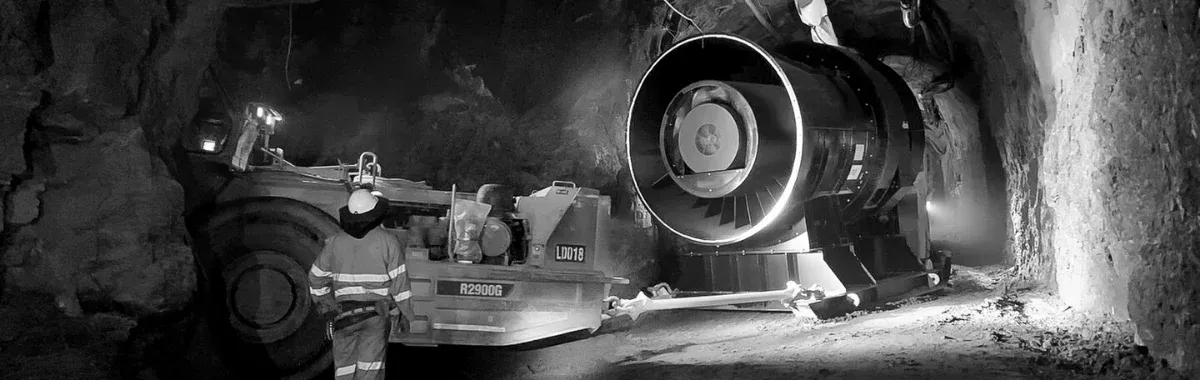
Minetek’s robust designed single-speed fans, with blades virtually impervious to wear, have been proven to reduce power consumption costs by up to 50%. Also, by stripping away bulk, the compact fan design is enabling miners to achieve agility by enabling them to be safely and efficiently deployed across the network with ease.

Compared to traditional larger fans, Minetek’s compact units have the capability to outperform larger alternatives and then be redeployed quickly and easily to other locations as the mine workings evolve. By virtue of their smaller size, Minetek fans can be easily installed in a range of orientations and tight underground locations. This agility and responsiveness enable operators to adapt to changing conditions while reducing the potential for manual handling safety impacts.

To be truly agile requires confidence.

Minetek has built deep domain experience in the design, manufacturing, testing and installation of the most advanced fan systems in the world and is backed by a large team of aeronautical, mechanical and electrical engineers. From initial decline modelling and consultancy through to post-implementation support, our team has the combined capability to help deliver an agile approach to your next ventilation project.

Voltar para notícias e percepções

Diggers & Dealers Mining Forum

Data de publicação: 21 junho 2024

Diggers & Dealers Mining Forum is an annual event held in Kalgoorlie, Western Australia. This forum is a platform for mining industry deals, with a strong focus on networking and business opportunities. It is one of the largest mining events in Australia and attracts a large number of international delegates.

The Diggers & Dealers Mining Forum will be held from 1-3 August 2022 & 7-9 August 2023. Minetek will be in attendance and readily available to discuss strategies to reduce underground ventilation costs, enabling operational efficiency in challenging environments.

Minetek has recently opened a new operations hub located in Perth, Western Australia, providing convenient access to WA’s mining regions. Our world-class service has expanded to meet the demand & responsiveness needed to support our clients.

Minetek Underground Ventilation

Since 1984 Minetek has been delivering innovative, modular air management solutions to industry leaders around the world. We understand the need to reduce downtime and maintain operation efficiency by having the flexibility to control the delivery of air when and where it’s needed.

Services include scheduled fan servicing and ongoing support to help with the following;

  • Proactively identifying issues on time
  • Prevenção de reparos dispendiosos
  • Minimização do tempo de inatividade
  • Aumentar a longevidade do equipamento
  • Produção otimizada
  • Assegura uma programação eficaz

This includes executing, reporting, communicating and interpreting maintenance activity results. Reports include a summary report including photos, follow-up actions and priorities.

Voltar para notícias e percepções

Australian Mine Ventilation Conference

Data de publicação: 21 junho 2024

Australian Mine Ventilation Conference provides an opportunity to promote safe ventilation practices in mines. By sharing and disseminating knowledge gained from operations across the industry, we can help meet the demand for raw materials right here in Australia.

Australian Mine Ventilation Conference is organised by AusIMM, the Australasian Institute of Mining and Metallurgy and has been running since 2011. The AusIMM committee calls on the knowledge and expertise within the mining industry, including academia, regulators and researchers. Each year, the Australian Mine Ventilation Conference showcases new and exciting innovations across various aspects of mine ventilation.

conf-1

Underground ventilation in mining

Underground ventilation systems are a key component in the management of mine risks. These measures effectively control various activities, such as monitoring air quality to ensure a healthy working environment. Statutory ventilation offers in Australia’s coal and metalliferous mines are now required by law. The statutory function of the ventilation officer is to control and manage the ventilation activities and standards forming a part of the mining operations at the mine.

The re-emergence of pneumoconiosis in miners is one way that dust can cause damage to your lungs. It’s an occupational lung disease, meaning you are likely going to encounter these particles only while at work and not outside on walks or other activities where they may be present naturally. Over the past few years, significant developments in practice and research have helped ensure we maintain safety levels within our underground mines. These and other factors should provide an incentive for underground operators to contribute strongly to the Australian Mine Ventilation Conference.

conf-2

Australian Mine Ventilation Conference

The 2024 Australian Mine Ventilation Conference will be held in Sydney from August 11th – 15th. This event brings together operators, equipment manufacturers and suppliers, consultants, government regulators and mining personnel to discuss strategies & technologies to improve mine ventilation. This event aims to promote safe ventilation practices to help improve the overall productivity and safety of mines in Australia and around the world.

Minetek is an exhibitor at the upcoming Australian Mine Ventilation Conference, showcasing our sophisticated and innovative underground ventilation technology. We’ve provided modular air management solutions to industry leaders around the world since 1984. Our deep domain engineering expertise enables mining operators to achieve safe, reliable operations while delivering guaranteed reductions in costs and increased profitability. Visit us at the Australian Mine Ventilation Conference to learn more about Minetek’s ventilation technology and innovative advancements.

conf-3

Underground ventilation fan technology

Minetek’s ventilation fans have an innovative anti-still chamber, controlling the flow of air, capturing turbulent airflow and unstable pre-swirls. This technology eliminates critical stalls and has been proven to extend the operating range and overall performance of the fan across the entire curve.

Coupled with our Mine Air Control (MAC) system, you can seamlessly integrate with the operating layer of the underground mine to optimise airflow across the entire circuit. This enables operators to ramp up or down airflow, based on scheduling and vehicle movements, providing performance on-demand ventilation. Tailor pressure and power consumption without the need for VSD control, helping to reduce ventilation power costs and increase overall efficiency.

At Minetek we understand that unique scenarios require unique solutions. We manage all aspects of the project from end to end. Including the initial consultation, design and engineering, development, removal of old equipment, installation, commission, training, maintenance and ongoing servicing.
Voltar para notícias e percepções

Underground mining ventilation fan requirements

Data de publicação: 20 junho 2024

Metals and minerals power our world, from the cement beneath our feet to the steel in our homes and the screens we use daily. Mining makes this possible, but underground operations face serious risks: cave-ins, explosions, and extreme temperatures. Adequate underground mining ventilation is the cornerstone of safety, ensuring clean air and stable conditions for miners. Minetek’s advanced ventilation solutions drive compliance and performance, safeguarding lives and operations.

The role of underground ventilation

Subterrâneo mining ventilation ensures a safe, controlled environment by delivering sufficient airflow to dilute and remove hazardous contaminants like dust, diesel fumes, and toxic gases. Minetek’s advanced ventilation systems, tailored to the scale of any operation, prioritize miner safety and compliance with stringent government and OSHA regulations.

Poor air quality poses serious risks, including pneumoconiosis, a lung disease caused by prolonged exposure to respirable dust, which can lead to disability or premature death. Confined spaces and vehicle emissions further degrade air quality, while gas build-up, like methane, risks explosions without proper monitoring and ventilation. Minetek’s Performance On Demand (POD) system dynamically adjusts airflow to mitigate these hazards, ensuring safe contaminant levels.

Ventilation also regulates extreme temperatures, from freezing cold to dehydrating heat, protecting miners, machinery, and mine structures from damage or collapse. A well-designed ventilation plan, powered by Minetek’s POD maps hazards and optimizes airflow, driving safety, efficiency, and regulatory compliance across underground operations

vent-1

Primary fan ventilation

Primary ventilation is the backbone of mine safety, channeling fresh air through large surface fans to dilute dust, gases, and heat across underground circuits. Minetek’s primary ventilation fans stand out with power-efficient designs, robust construction, and adaptable airflow, ensuring compliance with governing body regulations like the US Federal Mine Safety and Health Act. Unlike conventional systems, Minetek guarantees a measurable return on investment (ROI) by optimizing energy use and enhancing system longevity, making it the preferred choice for large-scale mining operations.

Secondary fan ventilation

Secondary ventilation targets specific underground zones, circulating air in dead-end headings and service areas where primary airflow is limited. Minetek’s High Output (HO) Axial Fans and Raptor Fan Series, available in impulse-bladed and vane axial models, are 40% shorter, 10% lighter, and over twice as powerful as comparable traditional fans. Their compact design and low-profile ducting reduce the need for multiple fans, cutting power consumption. With PLC surface controls and the ability to surge past critical duty points to clear gases quickly, Minetek’s secondary fans enable faster re-entry and superior performance for long duct runs.

vent-3

Underground ventilation requirements for compliance

The site’s mine manager is responsible for ensuring that a plan of the mine’s ventilation system is kept at the mine. This helps to communicate the direction, course, and volume of air currents and the position of all air doors, stoppings, fans, regulators, and ventilating devices in the mine. Managers must understand the impact the following factors have in determining the effectiveness of the ventilation planning process:

  • Underground mine plan and schedule
  • Mine design and method
  • Airflow modelling
  • Development of ventilation plans and schedules
  • Diesel equipment
  • Naturally occurring and man-made contaminants

The mine manager must also ensure that the following ventilation requirements are met.

  • The air supply for any ventilating equipment used underground is obtained from the purest source available.
  • The recirculation of air within any secondary ventilation circuit is maintained at the minimum level that is practicable.
  • Where practicable, contaminated return air from any secondary ventilation circuit is exhausted directly to the primary return air exhaust system.

Underground fans are controlled by an approved system that will ensure the mechanical integrity of the fan and its associated ducting. All mine workings, plants, and equipment located within any ventilation circuit are certified as explosion-proof. All air doors are constructed and installed in accordance with the requirements specified in the door schedule.

vent-4

Implementing effective ventilation plans

Translating regulatory requirements into actionable ventilation plans demands precision and adaptability. Minetek’s advanced systems, powered by the Performance On Demand (POD)  technology, streamline this process by providing real-time airflow adjustments and centralized surface controls. These solutions enable managers to monitor and respond to changing conditions, such as gas build-up or equipment demands, ensuring continuous compliance with safety standards. By reducing energy consumption and minimizing maintenance downtime, Minetek’s ventilation systems not only meet regulatory mandates but also enhance productivity, delivering a measurable return on investment for mining operations worldwide.

The critical role of underground ventilation in mining

Robust underground ventilation is non-negotiable for miner health, equipment reliability, and structural integrity. It mitigates risks like pneumoconiosis, methane explosions, and temperature extremes that threaten lives and operations. Minetek’s comprehensive range of primary, secondary, booster,  and crusher ventilation fans addresses these challenges with compact, durable, and energy-efficient designs. Backed by the POD and MAC systems, Minetek ensures regulatory compliance, reduces energy costs, and delivers a strong ROI, redefining safety and performance in underground mining. Contact Minetek today to explore tailored ventilation solutions for your operation.

Voltar para notícias e percepções

Projeto de ventilação secundária da mina

Data de publicação: 20 junho 2024

Secundário ventilação de minas tem sido prejudicada pela disponibilidade de ventiladores que satisfazem muitos fatores operacionais concorrentes. O requisito, às vezes legislado, de volume adequado para a face de trabalho, a minimização da escavação necessária para encaixar o ventilador secundário selecionado e os requisitos de energia de várias fases operacionais não foram, no passado, satisfeitos com apenas um sistema. O novo sistema que está sendo introduzido supera todos esses requisitos concorrentes em uma unidade simples, com o bônus adicional de ser muito durável, sem perda de desempenho quando ocorre desgaste no rotor.

Situação operacional existente

Vários estudos descobriram que entre 42% e 49% dos custos de energia da mineração estão associados a ventilação de minasdependendo do tipo de mina e do equipamento utilizado. Se observarmos o detalhamento geral da potência instalada do ventilador secundário em relação aos ventiladores de ventilação primária, a proporção é de cerca de 2:1. Assim, os custos totais de energia da ventilação secundária representam cerca de 25% dos custos gerais de energia da mineração. É interessante observar que o custo de operação de um ventilador axial típico de dois estágios versus o custo de compra e o custo geral de manutenção do mesmo ventilador em um período de 10 anos, a divisão será, de forma conservadora, da ordem de 40:1.


smv-1

O ventilador axial de ventilação secundária atualmente disponível tem uma curva de serviço em um determinado momento. Em geral, isso pode ser alterado manualmente dentro dos parâmetros de potência do motor, mas requer uma pequena interrupção e a remoção do ventilador para fazer os ajustes de inclinação.

À medida que os dutos de ventilação da bolsa ficam mais longos, o ar fornecido diminui até o ponto em que o ar inadequado é fornecido à superfície de trabalho. Isso é exacerbado por equipamentos subterrâneos que colocam resistência adicional na direção e reduzem ainda mais o ar fornecido na face de trabalho. Normalmente, esse déficit é corrigido com a instalação de um ventilador adicional no sistema para superar as perdas no sistema de mangas, mas isso tem um custo de produção, pois o cabeçote precisa ser desligado para instalar o segundo ventilador. Isso também significa que o cabeçote é abastecido com ar excessivo nos trechos mais curtos, com desperdício de energia do ventilador.

Os acionamentos de velocidade variável, em suas várias formas, aumentam a gama de funções, mas isso é limitado e o excesso de velocidade geralmente não é possível para um impulsor axial padrão. Há muitas desvantagens na instalação de um ventilador com um acionamento de velocidade variável, como foi destacado em um artigo3 que mostra grandes problemas de fadiga com a variação de velocidade dos ventiladores. Outros problemas incluem o fato de que os VSDs geralmente não são considerados confiáveis em ambientes subterrâneos e precisam de resfriamento para manter a classificação IP do gabinete. A carga de calor do acionamento de velocidade variável também deve ser levada em conta. A outra principal desvantagem é que a alteração da velocidade de um impulsor pode levar à excitação de uma frequência natural do impulsor ou da pá, o que resultará em uma falha muito prematura do ventilador.

Impacto nos custos e na conformidade da ventilação secundária

Comumente, os caminhões subterrâneos têm uma potência nominal do volante superior a 560 kW (751 hp). Isso, combinado com uma potência de carregadeira de 350 kW (470 hp), aumentou o requisito de ventilação secundária. Usando a regra comum de 0,05 m3/s de ar por quilowatt de potência nominal do motor para fins de conformidade4 , isso equivale a 45 m3/s (95.000 cfm) de ar necessário em uma área onde um caminhão está sendo carregado. Para conseguir isso com um ventilador axial de palhetas tradicional de 1400 mm (55"), são necessários dois estágios e uma pressão de saída inferior a 2500 Pa. Isso é equivalente a ter menos de 150 m de duto padrão de 1400 mm (55") instalado em um ventilador duplo de 110 kW (147 hp). Isso também pressupõe que não haja furos no duto. No entanto, na maioria das minas, não é possível instalar um duto de 1400 mm em uma unidade de minério e, portanto, ele é reduzido para 1220 mm (48"). Isso, combinado com o vazamento, provou ser um problema constante para o setor.

A maioria dos ventiladores secundários está funcionando com pressões de saída bem acima de 3500 Pa (0,5 psi). Um ventilador duplo de 110 kW funcionando a 3500 Pa consome 190 kW e produz cerca de 42 m3/s na saída do ventilador e 40 m3/s na face. Isso está a 5 m3/s de distância de estar em conformidade. Um ventilador duplo de 90 kW funcionando a 3500 Pa consome 165 kW e produz cerca de 38 m3/s na saída do ventilador e 35 m3/s na face. Isso está a 10 m3/s de distância de estar em conformidade. Um ventilador que consome 190 kW com um preço de eletricidade de 15 c/kWh custará $249.660 por ano para funcionar. Isso é muito dinheiro para pagar e ainda assim estar a mais de 11-30% de distância da conformidade. Uma mina média tem cerca de 15 ventiladores secundários. Isso representa um consumo total de $3.744.900 por ano e ainda não está em conformidade com mais de 10%.

Solução de ventilação secundária

O Ventilador axial de alto rendimento foi projetado com o setor de mineração em mente. Seu impulsor fabricado em aço de alta pressão está na vanguarda da tecnologia e permite a operação em pressões anteriormente consideradas impraticáveis para um ventilador axial. Além disso, é possível prolongar a vida útil do impulsor, mesmo nos ambientes mais adversos, em comparação com os ventiladores axiais tradicionais.

smv-2

O ventilador é fornecido com um sistema Performance On Demand (POD) instalado na entrada do ventilador. Ele permite que o ventilador seja regulado desde requisitos de vazão muito baixa até mais do que o dobro do ponto de funcionamento de um ventilador axial de palhetas tradicional.

O dispositivo POD oferece um novo nível de controle sobre os ventiladores de ventilação secundários que antes só estava parcialmente disponível com acionamentos de velocidade variável caros e de alta manutenção. O sistema Performance On-Demand permite que a operação do ventilador seja alterada se a resistência for modificada por qualquer motivo. Isso garantirá que todas as áreas de trabalho continuem recebendo o fluxo de ar necessário. Além disso, o POD pode ser aberto para jateamento e pode aumentar o fluxo de ar em até 30 m3/s adicionais, o que pode resultar em uma grande redução dos tempos de reentrada, proporcionando um impacto econômico direto. O controlador Performance On-Demand é regulado na partida para a inflação da bolsa de ventilação, portanto, nem sempre são necessárias partidas suaves. Também não são necessários acionadores de partida.

Depois de projetar o novo ventilador axial de alto rendimento patenteado pela Minetek, percebeu-se rapidamente que benefícios adicionais significativos poderiam ser obtidos com um nível de automação. A ideia de que um operador de carregadeira pararia e alteraria as configurações do ventilador, bem como abriria e fecharia válvulas, era falha. Portanto, o sistema Mine Air Control (MAC) foi projetado para unir o sistema de ventiladores com automação completa.

Sistema de controle de ar de mina (MAC) da Minetek

O sistema MAC consiste em um controlador inteligente em cada painel de partida do ventilador que controla a saída em cada cabeçalho. Para isso, ele recebe sinais dos medidores de fluxo e usa reguladores para alterar o fluxo na face. Todo o sistema MAC foi projetado para ter como padrão um fluxo predefinido em qualquer direção.

O sistema MAC recebe um sinal de um sistema de rastreamento para alertar sobre qualquer maquinário que esteja entrando em um cabeçalho. No entanto, o padrão para qualquer direção ativa é ter um pequeno fluxo nominal acima da quantidade necessária para que o pessoal entre na direção. Isso garante sua segurança e permite que o maquinário entre diretamente no rumo. Sem esse fluxo nominal, o maquinário precisaria esperar na entrada para evacuar qualquer fumaça ou gás. Um sistema simples de rastreamento por RFID pode ser usado ou integrado a um sistema pré-existente.

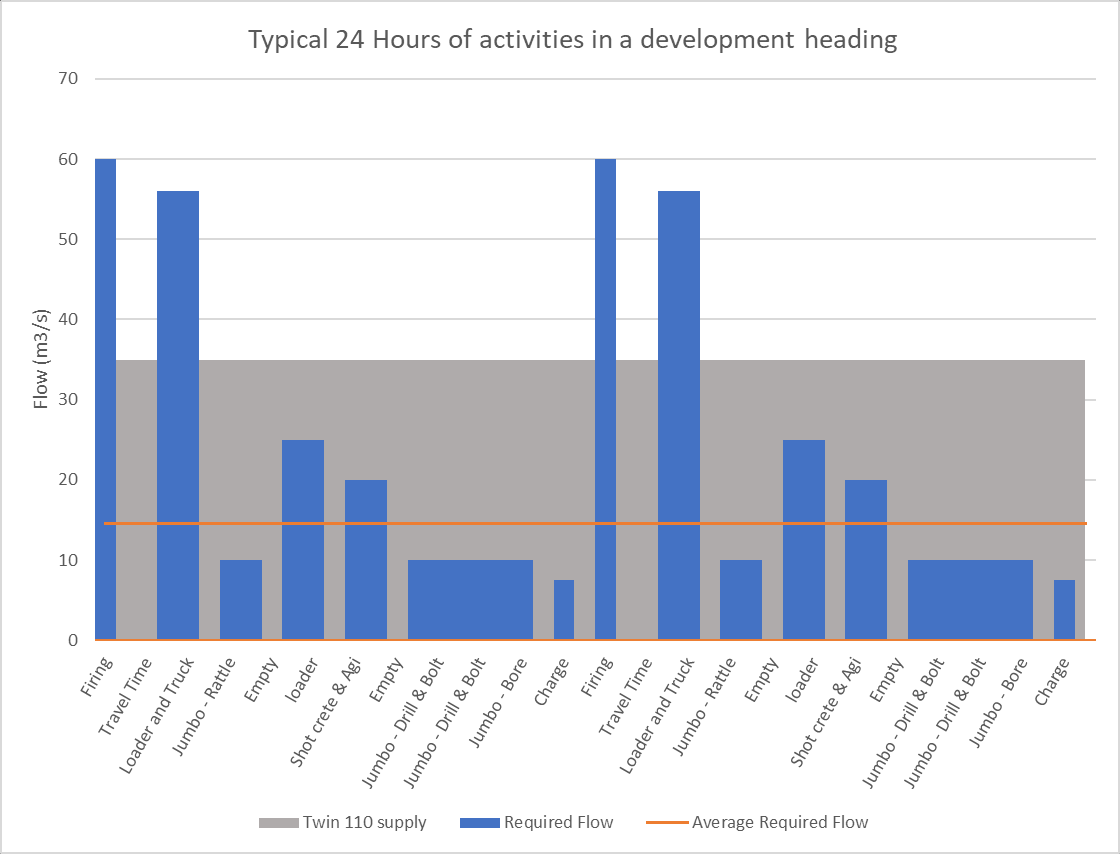
Analisando os custos anteriores e introduzindo um cronograma típico para as atividades em um título de desenvolvimento, o sistema High Output Mine Air Ventilation fornecerá mais de 50 m3/s a 400 m quando necessário, mas consumirá apenas um total de cerca de $118.493 em energia por ano para as atividades típicas de um título de desenvolvimento. Considerando o total médio da mina de 15 ventiladores gêmeos secundários de 110 kW, a economia de energia seria de $1.967.505 por ano.

smv-3

O sistema é simples quando usado em declives ou cabeçalhos únicos. Tudo o que é necessário é um medidor de vazão próximo à face e o controle do POD para garantir que a quantidade correta de ar seja fornecida para o equipamento no cabeçote.

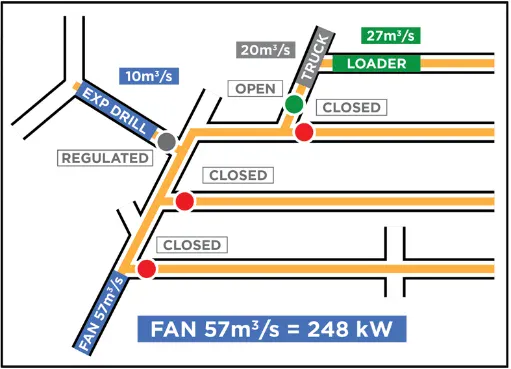
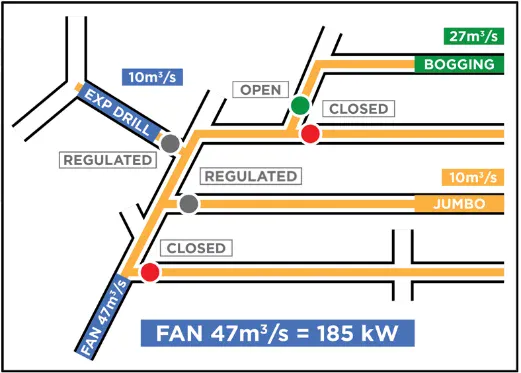
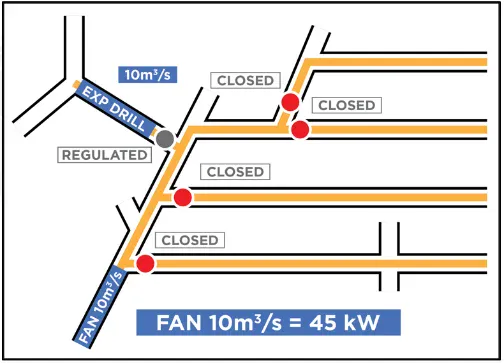
Quando introduzimos mais cabeçalhos, as coisas começam a ficar mais complexas, com diferentes equipamentos em diferentes cabeçalhos e a pressão do sistema aumentando e diminuindo à medida que o equipamento regula diferentes cabeçalhos. Com o uso de um sistema RFID, o sistema de regulagem patenteado de todos os cabeçalhos torna-se fácil de gerenciar, pois cada equipamento tem um valor atribuído a ele e, assim, a demanda é controlada e o ventilador aumenta e reduz a carga com base na demanda em tempo real na mina.

Abaixo estão vários cenários de vários títulos possíveis com Minetek Air fãs.

smv-4-1
smv-4-2
smv-4-3

Ventilador axial de alta potência para ventilação secundária

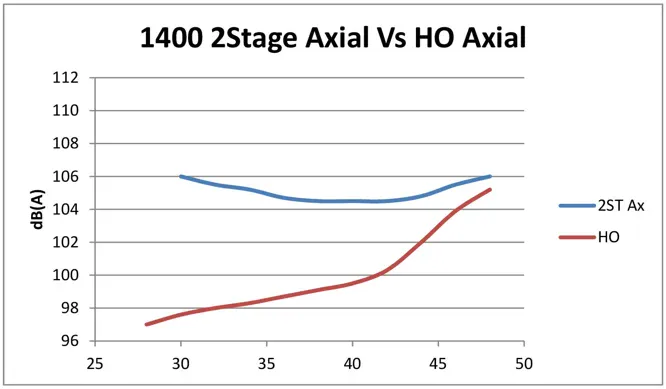
O ventilador axial de alta potência da Minetek tem outras vantagens em comparação com os ventiladores axiais gêmeos de Ø1400 mm (55") padrão do mercado. O ventilador Minetek gera até 11 dB menos ruído do que um ventilador gêmeo de Ø1400 110kW para o mesmo fluxo de volume. O diâmetro total do ventilador Minetek é ligeiramente menor do que o de um axial de estágio duplo de Ø1400, mas é 40% mais curto em comprimento e 10% mais leve. Ele também é instalado da mesma forma que todos os ventiladores secundários de ventilação da mina.

Os ventiladores axiais convencionais podem sofrer muito com o desgaste das pás. Uma redução de apenas 1 mm na ponta da pá devido ao desgaste pode ter um efeito significativo na parte de alta pressão da curva do ventilador. Isso se traduz em um ponto de estol reduzido e, portanto, a chance de falha devido ao estol aumenta à medida que o comprimento do duto fica maior. O Minetek High Output Axial não é afetado pelo desgaste das pás e funcionará de acordo com os pontos de serviço originais sem ajustes.

smv-5

O ventilador axial de alta potência da Minetek economizará dinheiro na operação e garantirá a conformidade com todos os requisitos regulamentares. O ventilador Minetek High Output tem uma faixa operacional muito grande em comparação com um ventilador axial padrão e, portanto, é muito versátil para operações em minas subterrâneas.

Referências

    • 1. Benchmarking the Energy Consumption of Canadian Underground Bulk Mines, Canadian Industry Program for Energy Conservation (CIPEC). ISBN 0-662-39539-5, Cat. No. M144-71/2005E, 2005.
    • 2. Investigation of Current Research Related to the Reduction of Energy Usage in Mines Through Recycling, Reuse and Other Means, LCG Energy Management Group, maio de 2009.
    • 3. Fatigue Implications for fans with Variable Speed Drives, K.J. Lownie & R. Bourcier, 13th United States/North American Mine Ventilation Symposium, 2010 - Hardcastle & McKinnon (Eds.), © 2010, MIRARCO
    • 4. Ventilation requirements for diesel equipment in underground mines - Are we using the correct values?, Adrian Halim, 16th North American Mine Ventilation Symposium, June 2017, ed Jurgen F. Brune
Voltar para notícias e percepções

Entendendo as curvas de desempenho do ventilador

Data de publicação: 20 junho 2024

O papel dos ventiladores na manutenção da qualidade do ar e da segurança das minas subterrâneas não pode ser subestimado. Esses sistemas de ventilação são indispensáveis para fornecer um fluxo constante de ar fresco, evitar o acúmulo de gases tóxicos e proteger os trabalhadores contra doenças respiratórias. Além de sua função crítica na manutenção da qualidade do ar, os ventiladores também desempenham um papel fundamental para manter os equipamentos de mineração refrigerados e operacionais. Qualquer tempo de inatividade na produção pode resultar em perdas financeiras significativas, o que torna essencial o desempenho ideal dos ventiladores. 

A seleção do ventilador certo é uma decisão crucial que exige uma análise cuidadosa. Entretanto, nem todos os ventiladores são iguais e seu desempenho pode variar muito, dependendo de vários fatores, como diâmetro, velocidade e ângulo de inclinação da pá. É aí que entra o conceito de curva do ventilador, que fornece uma representação gráfica inestimável do desempenho de um ventilador e das relações entre seus principais parâmetros. Ao aproveitar essas informações, os operadores de mineração podem selecionar com confiança o ventilador certo, protegendo a segurança do trabalhador e a produtividade da mina.


ventilador-1

O que são curvas de desempenho do ventilador?

As curvas de desempenho dos ventiladores são uma ferramenta poderosa que representa visualmente a capacidade de um ventilador de movimentar o ar em diferentes vazões e pressões. Compreender essas curvas é fundamental para selecionar o ventilador mais adequado para uma aplicação específica e operá-lo com eficiência máxima.

As curvas de desempenho dos ventiladores são normalmente plotadas em um gráfico com a vazão volumétrica e a pressão como os dois eixos. As famílias de curvas de ventiladores têm várias curvas representadas em um único gráfico, mostrando como o fluxo de ar e a pressão do ventilador mudam em resposta a várias condições de operação. Cada curva representará como o fluxo de ar e a pressão do ventilador mudam em resposta a várias condições de operação, incluindo diferentes diâmetros, velocidades de operação, densidades e configurações do rotor.

Ao selecionar um ventilador, é fundamental considerar os requisitos de taxa de fluxo e pressão para determinar o ponto de operação apropriado onde a resistência do fluxo de ar do sistema e as capacidades de pressão do ventilador se cruzam. Esse ponto indica a taxa de fluxo real que o ventilador produzirá em uma determinada pressão.

Além disso, as curvas de desempenho do ventilador também ajudam na solução de problemas e no diagnóstico de problemas com o desempenho do ventilador. O rastreamento do ponto de operação permite identificar problemas como filtros entupidos, amortecedores fechados ou pressão, levando a um estado de estagnação por exceder a capacidade projetada do ventilador. A correção desses problemas garante a operação eficiente do ventilador, evita possíveis danos ao motor ou o tempo de inatividade do ventilador.

As curvas de desempenho de ventiladores são um recurso valioso para selecionar o ventilador mais adequado para uma determinada aplicação, otimizar seu desempenho e diagnosticar problemas que possam surgir durante a operação. Os engenheiros e técnicos podem garantir que os ventiladores operem da melhor forma possível, aproveitando o poder das curvas de desempenho dos ventiladores, mantendo o fluxo de ar e a pressão eficientes para obter o desempenho ideal do sistema.

ventilador-2

Terminologia importante a ser conhecida ao ler uma curva de desempenho do ventilador

Ler a curva de desempenho de um ventilador pode ser um desafio, mas é uma habilidade essencial para selecionar e operar um ventilador com eficiência. Compreender os três parâmetros principais, ou seja, pressão estática (Pa ou in.wg), vazão volumétrica (m3/s ou CFM) e potência (Kw ou BHP), e suas relações são essenciais para interpretar as curvas de desempenho do ventilador.

Vazão volumétrica

A vazão volumétrica é uma métrica que mede a capacidade do ventilador de gerar movimento de ar em diferentes níveis de pressão estática, que normalmente é exibida no eixo x da curva de desempenho do ventilador. Nos Estados Unidos, isso é normalmente quantificado em pés cúbicos por minuto (CFM), enquanto a unidade de medida internacionalmente reconhecida para a taxa de fluxo de volume de ar é m³/s. O valor de um ventilador é profundamente influenciado pela velocidade em que ele opera e pelo tamanho de suas imponentes pás do rotor, que desempenham papéis cruciais em seu desempenho excepcional.

Pressão estática

A pressão estática refere-se à resistência que o ar encontra ao fluir por um sistema, como um duto ou um filtro. Essa pressão é exercida nas paredes do sistema e é quantificada em polegadas de água (in.wg). No contexto do desempenho de um ventilador, o valor da pressão estática (SP) é normalmente ilustrado no eixo y da curva de desempenho. Valores mais altos de SP correspondem a uma maior resistência no sistema, resultando em valores mais baixos de m³/s.

Potência

A potência do ventilador é uma métrica crucial que quantifica a saída de potência necessária para impulsionar um ventilador ao seu potencial máximo. Nos Estados Unidos, essa métrica é convencionalmente medida em cavalos de potência de freio (BHP ou HP), enquanto os quilowatts (kW) são a unidade de medida padrão na maioria das outras regiões, como Canadá e Austrália. O valor de HP ou Kw reflete a quantidade ideal de potência que o ventilador requer para atingir a velocidade e o nível de desempenho designados.

Ponto de operação e aplicação

O ponto de operação representa a interseção dos valores de vazão volumétrica e SP na curva de desempenho, correspondendo às condições sob as quais o ventilador opera. A aplicação do ventilador, como ventilação, resfriamento ou extração, determina o ponto de operação necessário. Para selecionar o ventilador apropriado para uma aplicação, é necessário identificar o ponto de operação e combiná-lo com a curva de desempenho do ventilador.

ventilador-3

O que é um estol e por que ele ocorre?

A medição desses diferentes componentes, como a vazão volumétrica (CFM), a pressão estática (SP) e a potência do freio (BHP), pode fornecer informações essenciais para manter o sistema funcionando de forma eficiente e evitar paradas dispendiosas do ventilador.

A paralisação do ventilador ocorre quando o fluxo de ar através de um ventilador é interrompido ou reduzido a ponto de as pás do ventilador não terem mais ar suficiente para trabalhar. Isso pode ser causado por vários fatores, inclusive alterações na resistência do sistema devido a filtros de ar ou dutos sujos, configurações incorretas da velocidade do ventilador ou manutenção inadequada.

As consequências do travamento do ventilador podem ser graves, tanto em termos de eficiência energética quanto de desempenho geral do sistema. Quando um ventilador trava, o estado de desempenho é reduzido e pode disparar devido à vibração, à temperatura excessiva ou a outros fatores de segurança, o que faz com que o ventilador pare, causando uma perda total de ventilação ou resfriamento, o que pode ser prejudicial à saúde e ao conforto dos ocupantes nas proximidades. Além disso, quando um ventilador para, ele pode causar danos ao motor do ventilador, ao impulsor e aos rolamentos, reduzindo a vida útil do equipamento e levando a reparos ou substituições dispendiosas.

Medir o CFM, o SP e o BHP de um sistema de ventilação pode ajudar a identificar possíveis problemas antes que eles levem à paralisação dos ventiladores. O monitoramento regular desses componentes permite detectar alterações no desempenho do sistema e tomar medidas corretivas antes que elas aumentem. Por exemplo, se o valor de CFM cair abaixo do nível esperado, isso pode indicar um bloqueio ou obstrução no duto que precisa ser desobstruído.

ventilador-4

Traçando uma curva de desempenho do ventilador

Em MinetekNa Mineração, nos orgulhamos de nossa capacidade de fornecer soluções excepcionais em ventiladores para nossos clientes de mineração. Conseguimos isso criando uma curva de desempenho do ventilador personalizada para o ponto de serviço específico exigido pela mina. Isso envolve um processo de seleção meticuloso, no qual consideramos cuidadosamente as necessidades do cliente e selecionamos um ventilador que atenda a essas necessidades e ofereça excelente valor.

Oferecemos uma ampla variedade de ventiladores primários e secundários, cada um com especificações e recursos exclusivos, garantindo que nossos clientes possam encontrar um ventilador perfeitamente adequado às suas necessidades. Nossas opções de ventiladores variam de 90kw a 1.110kw, oferecendo uma ampla seleção de soluções.

ventilador-5
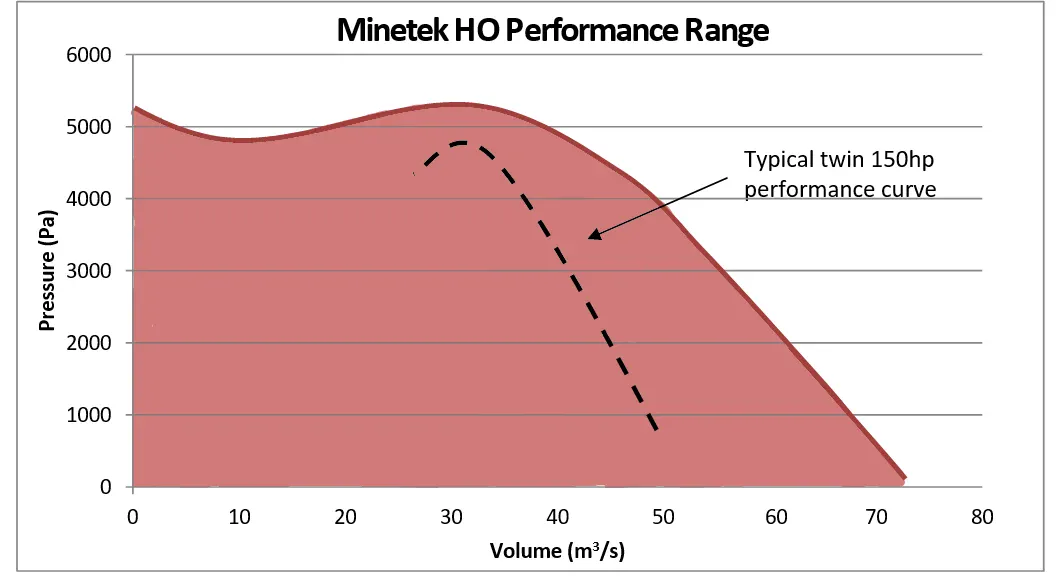
Este é um exemplo de curva de desempenho de um ventilador. A Minetek, com sua tecnologia pioneira POD, possui uma ampla faixa de operação que se estende até os confins da área vermelha. Os ventiladores da concorrência, no entanto, são limitados por uma faixa de operação reduzida. Os ventiladores da Minetek, por outro lado, apresentam uma versatilidade sem precedentes e podem operar em níveis de desempenho máximo em uma ampla faixa de pressões estáticas e fluxos de ar.
ventilador-6

Desempenho dos ventiladores da Minetek

Faixa do ventilador primário/booster

O Primário / Reforço A Fan Range possui uma extraordinária linha de ventiladores de desempenho excepcionalmente alto, meticulosamente projetados para atender às necessidades altamente especializadas dos locais de mineração subterrânea.

    • Faixa de potência 200 - 2.700 HP / 150 - 2.000 kW
    • Volume 106.000 - 2.119.000 CFM 50 - 1000 m3/s
    • Pressão 200 - 27 pol.wg / 200 - 8000 Pa
    • Eficiência > 85%
ventilador-7

Faixa do ventilador secundário/auxiliar

O Secundário/Auxiliar A linha de ventiladores apresenta uma ampla gama de ventiladores projetados com precisão para atender às demandas exclusivas e específicas das minas subterrâneas.

    • Faixa de potência 120 - 500 HP / 90 - 375 kW
    • Volume 22.120 - 211.900 CFM / 10 - 100 m3/s
    • Pressão 0,80 - 27 pol.wg / 200 - 6500 Pa
    • Eficiência > 85

Os benefícios do ventilador axial de alto rendimento da Minetek

Na Minetek, nós nos esforçamos para oferecer tecnologia de ventilação de ponta por meio de engenharia de classe mundial, pesquisa e desenvolvimento intensivos e tecnologia inovadora. Nossa tecnologia de ventilação subterrânea é o auge da inovação, proporcionando benefícios econômicos, operacionais e de segurança inigualáveis, sem comparação em nenhum outro lugar do mundo.

O sistema de ventilação de minas da Minetek apresenta ventiladores subterrâneos que aumentam o fluxo de ar e eliminam o desperdício de energia em aplicações de mineração subterrânea. Esse sistema notável utiliza a tecnologia patenteada Mine Air Control (MAC), que permite que as unidades Performance on Demand (POD) detectem o fluxo de ar necessário em qualquer posição e a qualquer momento, maximizando seu desempenho. A tecnologia de alta pressão do sistema, com rotor fabricado em aço, permite a operação em temperaturas e condições antes consideradas impossíveis para um ventilador axial.

O principal recurso do ventilador axial é o sistema POD, que compreende um controlador eletrônico que permite que o ventilador seja regulado a partir de requisitos de baixo fluxo para mais do que o dobro do ponto de funcionamento de um ventilador axial de palhetas convencional, resultando em economias de custo significativas. Os rastreadores RFID do sistema MAC desempenham um papel fundamental em sua eficiência de custo, monitorando continuamente o movimento do equipamento de mineração subterrânea e ajustando automaticamente o fluxo volumétrico de ar para fornecer ventilação suficiente para a área e dispersar os gases.

A revolucionária câmara anti-stall da Minetek é uma façanha da engenharia, regulando habilmente o movimento do ar ao capturar o fluxo de ar turbulento e os pré-rodos instáveis. Essa tecnologia engenhosa elimina os estancamentos críticos e melhora a faixa de operação e o desempenho geral do ventilador, proporcionando resultados inigualáveis para locais de mineração subterrânea.

Esse sistema modular é projetado e fabricado de forma personalizada na Austrália para atender às necessidades específicas do usuário final, o que o torna uma solução altamente confiável e adaptável para várias aplicações de mineração subterrânea.

Entre em contato conosco hoje mesmo para saber mais sobre nossas soluções de ventilação subterrânea e como podemos ajudá-lo a obter o desempenho ideal.

Voltar para notícias e percepções

Segurança nas minas e os perigos da má ventilação

Data de publicação: 20 junho 2024
Mineração é uma profissão notoriamente perigosa, e as minas subterrâneas são ambientes particularmente perigosos. Todos os anos, os mineiros são feridos e mortos em acidentes que poderiam ter sido evitados com medidas de segurança aprimoradas ou cumpridas. Para garantir a segurança dos trabalhadores, os operadores de minas devem seguir os regulamentos de segurança e inspeção de minas para fornecer ventilação adequada. Um elemento fundamental da ventilação subterrânea é o ventilador ou ventilação subterrânea O sistema de ventilação subterrânea, que ajuda a circular o ar fresco por toda a mina. Este artigo discute a importância da segurança na mineração e os perigos da má ventilação na mineração subterrânea.
segurança de minas-1

Os sistemas de ventilação subterrânea precisam ser monitorados de perto, de acordo com as normas de segurança e inspeção de minas, pois ventiladores quebrados podem ser uma fonte de perigo se não receberem manutenção adequada. Ventiladores quebrados ou sistemas de ventilação inadequados podem criar bolsões de ar estagnado que podem levar a um acúmulo mortal de gás metano.

Um dos maiores perigos de um sistema de ventilação subterrânea ineficiente é o risco de acúmulo de gás metano. O metano é um gás incolor, inodoro e altamente inflamável. O acúmulo de metano pode criar um ambiente explosivo e levar a acidentes fatais.

Além do risco de explosão, o metano também pode causar asfixia. Quando o gás metano se acumula em um espaço fechado, ele desloca o oxigênio e pode causar asfixia nas pessoas. Portanto, é essencial que os operadores de minas tenham o cuidado de fornecer ventilação adequada em suas minas, pois um ventilador quebrado ou um sistema de ventilação ineficiente pode ter consequências fatais para os mineiros.

Além dos perigos da ventilação inadequada, os trabalhadores também podem ser expostos a níveis excessivos de ruído dos ventiladores, o que pode causar danos permanentes à audição ao longo do tempo. Pesquisas sugerem que podem ocorrer danos permanentes à audição se você for exposto a níveis de som de 85 dB ou mais por períodos prolongados. Quanto mais alto for o som do ventilador ou do sistema de ventilação subterrânea, mais rapidamente ele poderá causar danos.

segurança de minas-2

Medidas de segurança na mina

Minas normas de segurança e inspeção Existem medidas para ajudar a mitigar os riscos de acúmulo de gás metano e evitar acidentes fatais nas minas. Os operadores devem fornecer equipamentos de segurança adequados, como detectores de gás, capacetes e máscaras contra poeira. O treinamento dos trabalhadores sobre como identificar bolsões de ar estagnado e acúmulos de gás metano também pode ajudar a atender aos KPIs de segurança da mina.

Os trabalhadores da mina devem ser treinados para identificar e reagir a sinais de acúmulo de gás metano. Se os trabalhadores detectarem um nível perigoso de gás metano no ar, eles devem evacuar a mina imediatamente. Os operadores da mina devem ter um plano de evacuação e os trabalhadores devem saber o que fazer em caso de emergência.

Existem medidas de segurança adicionais que os mineiros podem adotar para garantir que o sistema de ventilação esteja funcionando corretamente;

    • Monitorar o sistema de ventilação regularmente para garantir que ele esteja funcionando corretamente
    • Comunicar imediatamente qualquer problema com o sistema de ventilação a um supervisor
    • Usar equipamentos de segurança adequados, como detectores de gás, capacetes e máscaras contra poeira
    • Treinamento de trabalhadores sobre como identificar e reagir a sinais de acúmulo de gás metano
segurança de minas-3

Os ventiladores subterrâneos da Minetek são projetados com o setor de mineração em mente. Temos sistemas de ventilação instalados em todo o mundo, com projetos bem-sucedidos no Alasca nevado e no deserto da Austrália Ocidental.

Nossa tecnologia de ventiladores subterrâneos tem uma ampla faixa de operação para um único ventilador, que é regulada pelo sistema POD (desempenho sob demanda) integrado. O impulsor de aço fabricado sob alta pressão está na vanguarda da tecnologia de ventilação e permite a operação em pressões anteriormente consideradas impossíveis para um ventilador axial. Os recursos de eficiência energética sob demanda reduzem pela metade o consumo de energia, economizando 50% em custos operacionais. Você tem a capacidade de fornecer a quantidade correta de ar quando e onde for necessário.

O design robusto garante que os impulsores de aço não sejam afetados pelo desgaste das pás, ajudando a prolongar a vida útil do ventilador, mesmo nos ambientes mais adversos. Nossos ventiladores também são projetados para serem silenciosos, de modo que não causam danos à audição, como alguns outros ventiladores podem causar.

A mineração pode ser uma profissão perigosa, portanto, é essencial que os operadores de minas forneçam EPI, sigam as normas de segurança e inspeção e tenham ventilação adequada em suas minas. As soluções da Minetek ajudam a melhorar a segurança da mina e a garantir operações seguras.

Interessado em saber mais sobre os recursos de ventilação subterrânea da Minetek? Entre em contato conosco.

Ventiladores e ventilação subterrâneos da Minetek

Os ventiladores subterrâneos da Minetek são projetados com o setor de mineração em mente. Temos sistemas de ventilação instalados em todo o mundo, com projetos bem-sucedidos no Alasca nevado e no deserto da Austrália Ocidental.

Nossa tecnologia de ventiladores subterrâneos tem uma ampla faixa de operação para um único ventilador, que é regulada pelo sistema POD (desempenho sob demanda) integrado. O impulsor de aço fabricado sob alta pressão está na vanguarda da tecnologia de ventilação e permite a operação em pressões anteriormente consideradas impossíveis para um ventilador axial. Os recursos de eficiência energética sob demanda reduzem pela metade o consumo de energia, economizando 50% em custos operacionais. Você tem a capacidade de fornecer a quantidade correta de ar quando e onde for necessário.

O design robusto garante que os impulsores de aço não sejam afetados pelo desgaste das pás, ajudando a prolongar a vida útil do ventilador, mesmo nos ambientes mais adversos. Nossos ventiladores também são projetados para serem silenciosos, de modo que não causam danos à audição, como alguns outros ventiladores podem causar.

A mineração pode ser uma profissão perigosa, portanto, é essencial que os operadores de minas forneçam EPI, sigam as normas de segurança e inspeção e tenham ventilação adequada em suas minas. As soluções da Minetek ajudam a melhorar a segurança da mina e a garantir operações seguras.

Interessado em saber mais sobre os recursos de ventilação subterrânea da Minetek? Entre em contato conosco.

Ventiladores e ventilação subterrâneos da Minetek

Os ventiladores subterrâneos da Minetek são projetados com o setor de mineração em mente. Temos sistemas de ventilação instalados em todo o mundo, com projetos bem-sucedidos no Alasca nevado e no deserto da Austrália Ocidental.

Nossa tecnologia de ventiladores subterrâneos tem uma ampla faixa de operação para um único ventilador, que é regulada pelo sistema POD (desempenho sob demanda) integrado. O impulsor de aço fabricado sob alta pressão está na vanguarda da tecnologia de ventilação e permite a operação em pressões anteriormente consideradas impossíveis para um ventilador axial. Os recursos de eficiência energética sob demanda reduzem pela metade o consumo de energia, economizando 50% em custos operacionais. Você tem a capacidade de fornecer a quantidade correta de ar quando e onde for necessário.

O design robusto garante que os impulsores de aço não sejam afetados pelo desgaste das pás, ajudando a prolongar a vida útil do ventilador, mesmo nos ambientes mais adversos. Nossos ventiladores também são projetados para serem silenciosos, de modo que não causam danos à audição, como alguns outros ventiladores podem causar.

A mineração pode ser uma profissão perigosa, portanto, é essencial que os operadores de minas forneçam EPI, sigam as normas de segurança e inspeção e tenham ventilação adequada em suas minas. As soluções da Minetek ajudam a melhorar a segurança da mina e a garantir operações seguras.

Interessado em saber mais sobre os recursos de ventilação subterrânea da Minetek? Entre em contato conosco.

Voltar para notícias e percepções

Mine ventilation insights and innovations

Data de publicação: 21 maio 2024
After years of COVID-19, online seminars and virtual conferences, the in-person Mine Ventilation Conference organised by AusIMM came as a welcome change and demonstrated an engaged and growing market. There was an above-average turn-out of Mining managers, underground ventilation specialists, engineers, consultants, and ventilation solution providers at this Australian Mine Ventilation Conference. Key personnel from twelve countries, met for five days to discuss the latest in ventilação subterrânea innovation and safety.

Covering both coal and metalliferous underground operations, speakers covered many topics with a focus on innovation and technology, examining the past, and looking to the future. Key themes explored technology with discussions around how it can be implemented in underground mining for safer and more efficient ventilation. Ideas like Minetek’s POD (Power on Demand) system were examined, as POD automated systems have been shown to drastically reduce operating costs for ventilation fans, by decreasing or increasing output to meet the needs of the mine site.

Mine-ventilation-conference.png
These themes demonstrate that a characteristically risk-adverse industry is growing, evolving, and adapting to utilise innovative technology, as the need for operational savings, safety, and for efficient, automation processes increase. The market has identified a growing need for quality airflow and optimisation of technology to deliver reliable air. This adaption to technology is encouraged by changes in Government Legislation like the recent changes in Western Australia. On 31 March 2022, the Work Health and Safety (WHS) laws replaced the health and safety elements of the Mines Safety and Inspection laws.

“Minetek has been excited to meet with industry experts and highlight our fans. We pride ourselves on not only performance and innovative technology, but our ability to understand unique project needs. We deliver a premium service, customised solutions, and responsive delivery that only a small, passionate, and incredibly hardworking team can deliver.”

– Matt Ryan, Minetek Air

Mine Ventilation Solutions

Minetek is internationally recognised as an innovative mining solutions provider. Facilitating commercially and environmentally sustainable outcomes for mining companies, whilst enabling safe, compliant, and profitable operations.

  • Word class engineering capabilities
  • Leaders in automation, technology, and customised solutions
  • Servicing underground mines world-wide
  • Control targeted air supply with no VSD (Variable Speed Drive) required
  • Power, performance and pressure on demand
  • Fan power range from zero load to full load
  • Savings in ventilation power consumption, up to 60%
  • Automated or manual ventilation configuration

Minetek’s POD device offers a new level of control over primary & secondary vent fans that has only previously been partially available with expensive and high maintenance variable speed drives. The POD system allows the fan operation to be altered as the demand or resistance is changed within the underground mine. This ensures all working areas receive the required air flow, at the lowest cost.

underground-mine-ventilation.png

The future of underground ventilation

With projections estimating the global mine ventilation market is set to reach USD $401 million by 2024, combined with the recent announcement of Sydney hosting the International Mining Ventilation Conference in 2024, the ventilation community of Australia is in a prime position for future growth and innovation [1].

Industry surveys suggest that Australia has the highest penetration of innovative technologies across mine sites; with drones, mine management software, autonomous and remotely controlled vehicles at the forefront [2]. More than 77% of jobs within Australia’s mining sector will be improved by innovative technological advancements, increasing productivity by up to 23% [3]. Our adoption and innovation of smart technology assists with mine planning, collision avoidance and predictive maintenance for equipment and technology.

Mine site technologies at the forefront of investment;

  • Mine planning software
  • Mine communication systems
  • Predictive maintenance for mobile equipment
  • Battery / electric vehicles
  • Fatigue detection
  • Drones
  • Predictive maintenance for plants
  • Fully autonomous vehicles
  • Wearable technology
  • 3D printing
  • Automation
  • Robotics

This positions Australia as the leading adopter of modern technology aiding future growth and innovation within the mining industry.

underground-mine-ventilation-innovation.png
At Minetek we understand that unique scenarios require customised solutions. We manage your project from end to end, including the initial consultation, design and engineering, development, removal of old equipment, installation, commission, training, maintenance, and ongoing servicing.