 Italian
  English (United States)
  English
  Spanish
  Portuguese
  French
  Indonesian
 On 1 July 2026, Australia’s first independent federal environmental regulator commenced operations. The National Environmental Protection Agency (NEPA) can audit any approval granted under the EPBC Act, including approvals issued years before the reforms passed, and it does not need to give notice before it does.
For operators across mining and heavy industry, that changes what a marginal water balance means. Under the old regime, excess water on site was an operational problem to be managed. Under the reformed Environment Protection and Biodiversity Conservation Act, it is potential audit exposure with a new penalty regime attached.
A federal regulator with real enforcement powers.
The reform package passed Federal Parliament in November 2025, more than five years after Professor Graeme Samuel’s independent review found the EPBC Act was not delivering for the environment, for business or for the community. Implementation is staged, but the provisions with the most immediate consequences for operating sites are already live.
From 1 July 2026:
- NEPA is established as an independent regulator with compliance and enforcement functions under the EPBC Act, including the power to approve, change or cancel environmental permits and licences.
- The Act’s audit powers are expanded. This includes a new category of compliance audit with no threshold grounds and no prior notice, applying to all approvals, exemptions and permissions under the Act, including those granted before the reforms commenced.
- NEPA’s chief executive can issue environment protection orders in urgent situations to prevent or respond to major breaches of the Act or of approval conditions.
- Higher penalties apply for the most serious breaches. Under the new civil penalty formula, penalties can be calculated at up to three times the financial benefit gained from a breach, replacing the previous maximum of $16.5 million for body corporates. A company that saved $20 million by proceeding outside its conditions could face a penalty of $60 million.
By 1 December 2026, further provisions commence, including a net gain offset and restoration framework, an unacceptable impacts threshold for protected matters, and the requirement for approvals to be consistent with the new National Environmental Standards.

Water is where the new regime bites first.
Water sits behind many of the approval conditions most likely to be tested under audit:
- dam levels after a wet season
- storage capacity against forecast inflows
- discharge volumes and quality
- seepage
- the gap between what a site’s water management plan says and what is happening on the ground.
These were always licence obligations. What has changed is the enforcement behind them:
- Who is checking. An independent federal regulator with compliance as its core function, not a department fitting audits around assessments.
- How they can check. Unannounced audits against original approval conditions, plus environment protection orders that can stop work.
- What a breach costs. Penalties that scale with the benefit gained, not a fixed cap.
Together, these make the site water balance a question of demonstrable control, not periodic reporting.
That cuts both ways. Operators who can show a controlled, measured water balance are in a defensible position. Operators relying on storage capacity and favourable weather are carrying risk that has become considerably more expensive.
Faster approvals reward projects that arrive with answers.
The reforms are not only about enforcement. A new streamlined assessment pathway replaces two of the most heavily used existing pathways and requires assessment decisions within 30 business days. The conditions attached to that speed:
- Frontloaded studies. The pathway is only realistic for proponents who complete their environmental studies early and arrive at referral with a resolved plan.
- Standards consistency. Approvals cannot be granted for proposals inconsistent with the National Environmental Standards.
- No offsetting the worst impacts. Impacts that meet the unacceptable impacts threshold cannot be offset away. They must be avoided or reduced below the threshold.
An unresolved water question at referral, whether that is excess water disposal, discharge risk or long-term storage, is exactly the kind of open item that pushes a project out of the fast lane and into a longer assessment. For new projects and expansions, water management strategy is now part of the approvals timeline, and the timeline is worth real money.
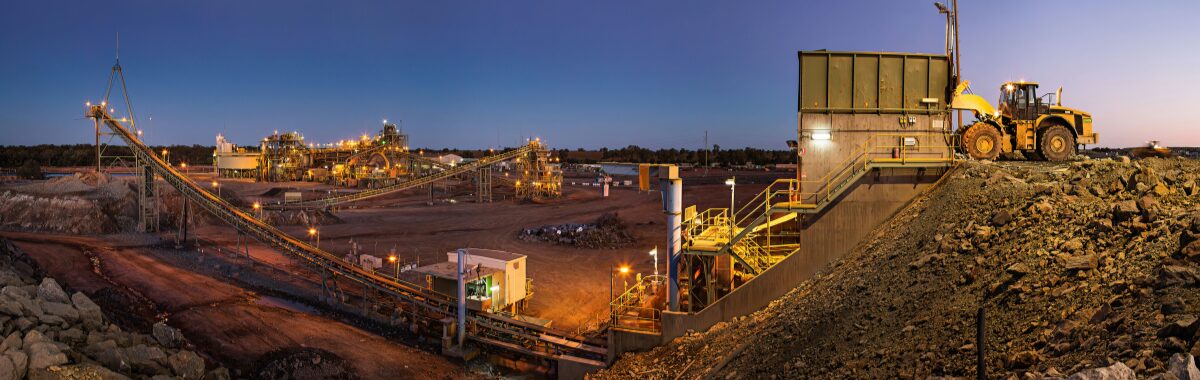
Closure obligations are hardening into statute.
Il restoration provisions commencing by December 2026 give closure planning a sharper statutory edge. The net gain framework, restoration contribution charges and a new Restoration Contributions Advisory Committee all point the same direction: rehabilitation obligations that were once negotiated are becoming codified, with a federal regulator responsible for enforcement.
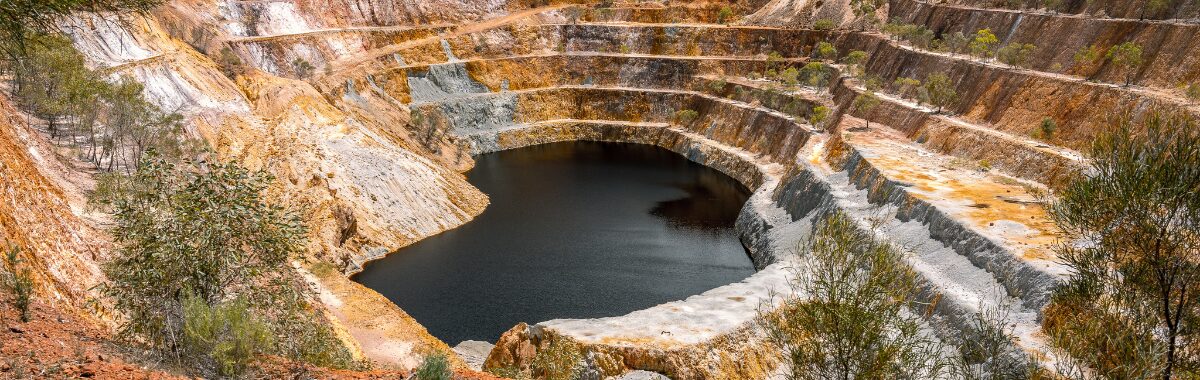
Legacy water is the long tail of that liability. Pit lakes, stored process water and tailings water hold sites in a compliance posture years after production ends. Every year that water remains on site is a year of exposure to a regime that now includes unannounced audits. Reducing stored volumes shortens the window.
The questions every site should be able to answer.
The practical test of the new regime is simple: if an auditor arrived tomorrow, could the site demonstrate control of its water balance against the original approval conditions? Working through that question surfaces the ones beneath it.
- Does current storage capacity hold against forecast inflows, including wet season variability, or does the plan depend on conditions staying favourable?
- How reliant is the site on discharge windows, and what happens to the water balance if those windows narrow or close?
- Is the gap between the approved water management plan and current site practice documented, explained and closing?
- For projects in planning: is the excess water question resolved before referral, or is it being deferred into the assessment?
- For sites approaching closure: is there a defined drawdown pathway for legacy water, with a timeline that shortens exposure rather than extending it?
Sites that can answer these hold a defensible position under audit and a faster path through assessment. Sites that cannot are carrying a gap the reformed Act now prices, in penalties, in approval delays, or in years of extended closure liability.
Where mechanical evaporation fits.
NEPA is not regulating evaporators specifically. It scrutinises environmental outcomes, including how operators manage:
- excess mine water
- contaminated water
- tailings water
- process-affected water
- the risk of spills, overflows or unauthorised discharges.
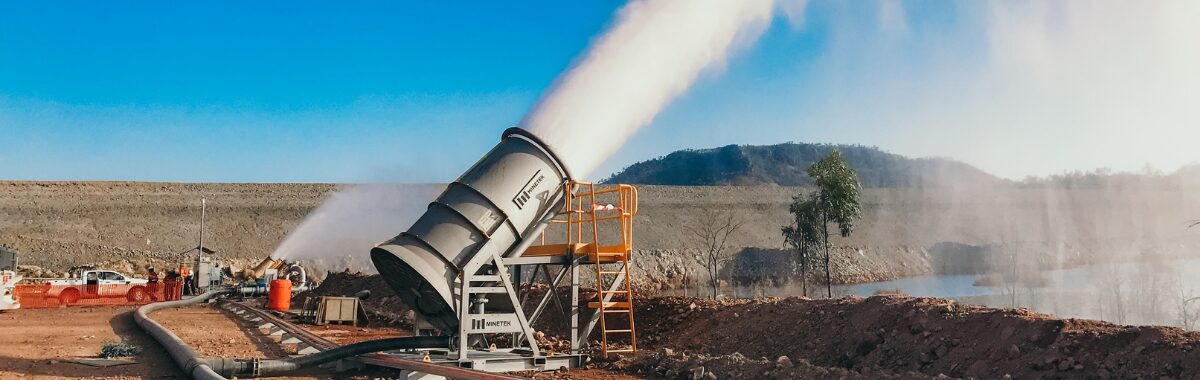
Minetek’s mechanical evaporation systems answer that scrutiny directly. They reduce stored water volumes, minimise reliance on discharge, and support a site’s broader environmental management strategy. Under a regime that audits outcomes, evaporation delivers a demonstrable one: water drawn down on a schedule the operator sets, independent of weather, discharge windows or downstream capacity.
Mechanical evaporation reduces volume. It does not treat water, and the distinction is deliberate: for sites where the core problem is too much water in storage, volume reduction is the direct answer, not a compromise.
System capability include:
- Minetek’s evaporation systems operate and process in excess of 135 m³/hour, with 24/7 automated operation governed by a real-time Environmental Management System.
- The evaporators are engineered to achieve up to 50% evaporation efficiency in a single pass, with non-evaporated water returning to the feed pond.
- On combined capital and operating costs, Minetek’s mechanical evaporation is 10 times more cost effective than traditional water management approaches including water treatment, sprinkler irrigators, new dam construction, water haulage and pumping.
- Evaporation efficiency is modelled site by site before deployment, using humidity, rainfall, elevation, pan evaporation, TDS and temperature data to forecast achievable rates over 12 months in the specific operating climate.
Across the asset lifecycle:
- At planning, an engineered evaporation strategy resolves the excess water question before referral and protects the pathway through assessment.
- In operations, it gives the water balance a controllable, measurable mechanism, a materially stronger position under audit than storage capacity and contingency plans.
- At closure, it draws down legacy water and shortens the period a site remains exposed to enforcement risk.
The operators who benefit are the ones who move early.
The reforms were sold as better for the environment and better for business, and for water management both halves apply to the same decision. A resolved water balance protects approval timelines on the way in, stands up to audit during operations, and reduces liability on the way out. The reformed EPBC Act rewards operators who can prove control of their site water balance, and penalises those who cannot.
The enforcement provisions are already in force. The restoration framework arrives within months. Sites reviewing their water position now are doing so on their own schedule rather than a regulator’s.
Book a site assessment with Minetek Water to review your site’s water balance against the new compliance environment.
Frequently Asked Questions (FAQs)
The reforms passed Federal Parliament in November 2025 and are commencing in stages. The first tranche commenced on 20 February 2026, the National EPA was established on 1 July 2026, and all remaining reforms, including the net gain restoration framework, commence on or before 1 December 2026.
The National Environmental Protection Agency (NEPA) is Australia’s first independent federal environmental regulator. It handles compliance and enforcement under the EPBC Act, including compliance audits that require no prior notice, environment protection orders that can stop work, and the power to approve, change or cancel environmental permits and licences.
Yes. NEPA’s audit powers apply to all approvals, exemptions and permissions granted under the EPBC Act, including those issued before the reforms commenced. Operating sites with older approvals are within scope.
Penalties for serious breaches can be calculated at up to three times the financial benefit gained from the breach, replacing the previous maximum of $16.5 million for body corporates. NEPA can also issue environment protection orders and conduct unannounced compliance audits.
Mechanical evaporation reduces stored water volumes and minimises reliance on discharge, giving operators a controllable, measurable mechanism for managing the site water balance. Under a regime that audits environmental outcomes, that supports a demonstrable compliance position at planning, during operations and through closure.