 Italian
  English (United States)
  English
  Spanish
  Portuguese
  French
  Indonesian
 Why ammonia management is a growing challenge in industrial wastewater
Ammonia is a common contaminant in industrial wastewater, particularly across mining operations, landfill facilities, and resource processing sites. Elevated ammonia concentrations can threaten aquatic ecosystems, create regulatory compliance risks, and increase the complexity of water management.
At many industrial sites, ammonia management is closely linked to another challenge. Rainfall, runoff, and process water can accumulate in storage ponds and containment dams, allowing contaminants such as ammonia to concentrate over time.
Mechanical evaporation technologies offer a practical approach to managing these conditions. By atomising wastewater into fine droplets and exposing them to airflow, evaporation systems reduce stored water volumes while increasing air–water interaction. These conditions can also support ammonia volatilisation processes.
Minetek’s mechanically enhanced evaporation systems apply this principle to industrial water management, enabling sites to reduce water inventories while supporting ammonia management strategies.
What causes ammonia in industrial wastewater
Ammonia enters industrial wastewater through several common sources.
- Mining operations frequently generate ammonia with ammonium nitrate explosives during blasting activities. Residual nitrogen compounds dissolve into pit water, runoff, and site drainage systems.
- Landfills produce ammonia through the biological decomposition of nitrogen-containing organic waste. These reactions generate ammonia that accumulates within leachate storage systems.
- Industrial process water may also contain ammonia from chemical reactions or mineral processing activities.
In water, ammonia exists in two chemical forms.
- Unionised ammonia (NH₃)
- Ammonium ion (NH₄⁺)
The balance between these forms depends on pH and temperature conditions. Higher pH and warmer temperatures favour the unionised ammonia form, which is significantly more toxic to aquatic organisms.
Il U.S. Environmental Protection Agency (EPA) highlights the importance of pH and temperature when assessing ammonia toxicity in freshwater ecosystems. Because of this behaviour, ammonia concentrations are closely monitored in wastewater discharge permits.
Why ammonia is difficult to manage
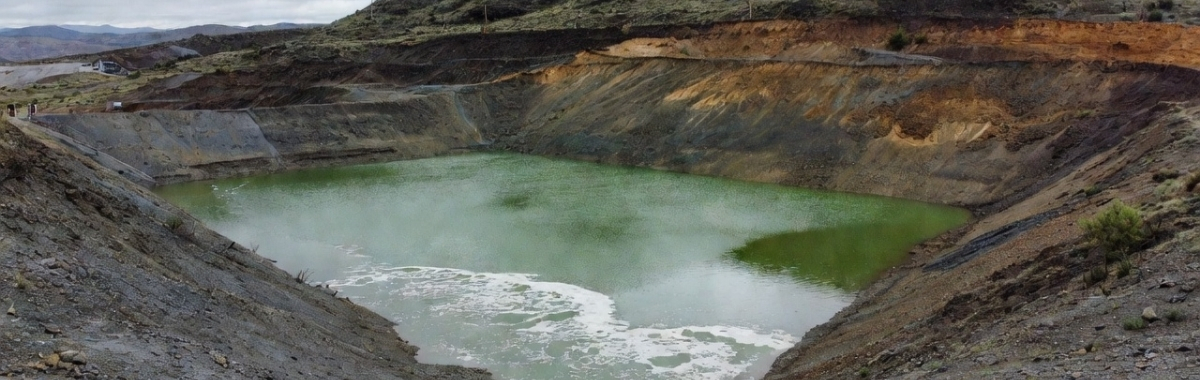
Ammonia can be difficult to manage in industrial wastewater systems because it can originate from multiple sources, accumulate in stored water inventories, and pose risks to aquatic ecosystems if discharged without control. The U.S. EPA also identifies ammonia as a common contaminant in waters affected by industrial activities, wastewater discharges, and organic waste decomposition. Several factors contribute to the complexity of ammonia management in industrial water systems:
Multiple ammonia sources
Ammonia may enter industrial wastewater through nitrogen-containing materials, including explosives residues, organic waste breakdown, and industrial process streams.
Accumulation in stored water inventories
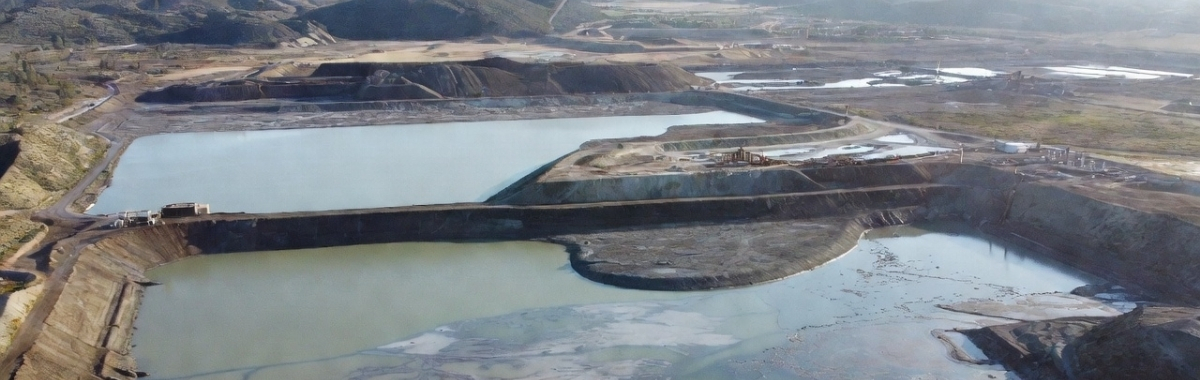
Wastewater stored in ponds, dams, or containment basins can allow ammonia concentrations to increase over time as water volumes fluctuate.
Treatment complexity
Removing ammonia typically requires specialised treatment processes such as biological nitrification–denitrification or physicochemical treatment methods.
Environmental and regulatory risk
Ammonia is toxic to aquatic organisms and therefore regulated in wastewater discharge permits to protect freshwater ecosystems.
Ammonia discharge regulations in North America and Australia
Ammonia concentrations in wastewater are regulated in many jurisdictions because of their potential toxicity to aquatic ecosystems.
In the United States, the U.S. EPA Aquatic Life Ambient Water Quality Criteria for Ammonia – Freshwater has established national recommended ambient water quality criteria for ammonia in freshwater under the Clean Water Act. These criteria provide guidance to states when setting water quality standards to protect aquatic life from the toxic effects of ammonia.
Similarly, in Australia and New Zealand, ammonia concentrations are assessed using guideline values provided in the Australian and New Zealand Guidelines for Fresh and Marine Water Quality. These guidelines establish default toxicant values that help regulators and environmental managers assess risks to aquatic ecosystems.
These regulatory frameworks highlight the importance of managing ammonia concentrations in industrial and mining wastewater systems to protect receiving water bodies.
Limitations of traditional ammonia treatment methods
Several conventional technologies are used to remove ammonia from wastewater. However, these methods can present operational and economic limitations when applied to large industrial water systems. Reviews of wastewater nitrogen removal technologies explain that biological, physical, and chemical treatment methods each have advantages and limitations depending on wastewater conditions.
Biological treatment sensitivity
Biological nitrogen removal processes such as nitrification–denitrification depend on microbial activity that requires stable environmental conditions. According to the U.S. EPA’s Biological Nutrient Removal Processes and Costs report, nitrifying bacteria responsible for ammonia conversion have stringent growth requirements and are sensitive to environmental conditions such as dissolved oxygen, temperature, and pH.
Operational complexity
Nitrogen removal processes often require precise control of treatment conditions to maintain performance. According to research published in Chemical Engineering Journal’s “Separation and Purification Technology”, these operational parameters strongly influence microbial activity and treatment effectiveness. Process parameters such as aeration, dissolved oxygen levels, pH, and temperature significantly affect nitrification efficiency and overall ammonia removal performance.
Because of these limitations, industrial sites often combine treatment technologies with broader water management strategies to control ammonia concentrations effectively
How ammonia volatilisation works
Ammonia volatilisation occurs when dissolved ammonia transitions from the liquid phase into the atmosphere. This transfer process depends on several environmental factors. Key drivers include:
- air–water contact area
- air-to-water ratio
- temperature
- pH
Experimental studies investigating ammonia stripping processes have reported removal efficiencies between 91% and 98% under optimised conditions.
The Internation Journal of Chemical Engineering’s “Recent Development in Ammonia Stripping Process for Industrial Wastewater Treatment” article also highlights droplet surface area and airflow exposure as critical factors influencing ammonia volatilisation rates.
Hence, increasing air-water interaction therefore plays a central role in accelerating ammonia transfer from water to air.
How Minetek evaporation systems support ammonia management
Minetek evaporation technology for industrial water management
Minetek designs and manufactures mechanically enhanced evaporation systems used by mining and industrial operations to manage excess water inventories.
These systems are deployed on large water storage facilities such as mine water dams, tailings storage facilities, containment ponds, and landfill leachate basins. In these environments, water accumulation can create operational challenges and increase the concentration of dissolved contaminants such as ammonia.
Minetek evaporation systems enable sites to actively reduce stored water volumes while increasing air-water interaction within the water management system. This combination allows operators to control water inventories while supporting contaminant management strategies, including ammonia control.
The science behind Minetek technology
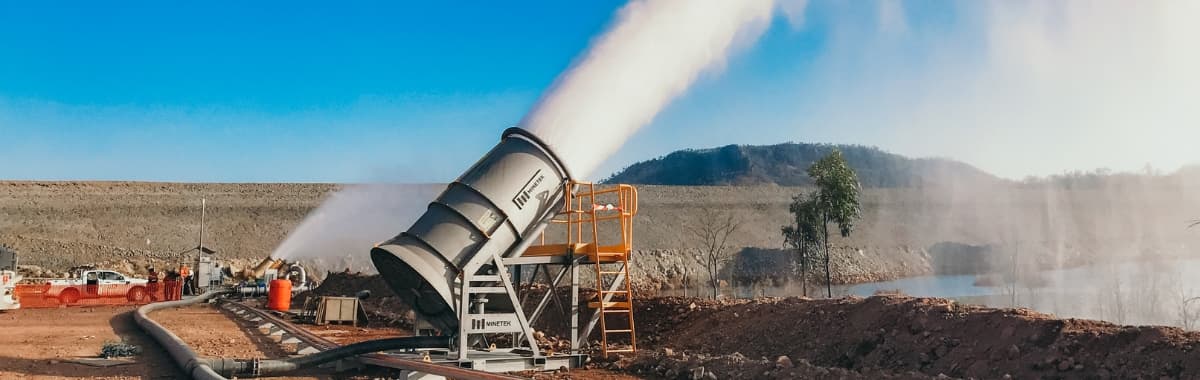
Minetek Evaporators use a process called Mechanically-Enhanced Evaporation (MEE). The technology accelerates natural evaporation by increasing both water surface area and airflow across the water. This is achieved through two key mechanisms.
Droplet atomisation
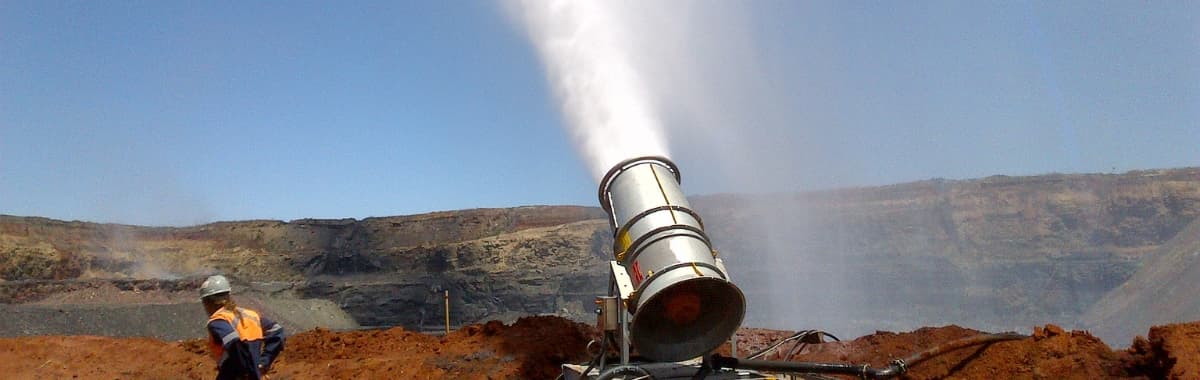
Feed water is pumped at high pressure through a series of specialised fracturing nozzles. These nozzles break the water into millions of droplets every second. This dramatically increases the total surface area of the water exposed to the air.
In conventional evaporation ponds, evaporation only occurs across the surface of the water. By comparison, atomising the water into droplets creates far more surface area, allowing evaporation to occur much more rapidly.
High-velocity airflow
Minetek evaporators also use powerful industrial fans to generate airflow exceeding 150 km/h. This high-velocity airflow moves across the atomised droplets and accelerates the transfer of moisture into the atmosphere.
As a result, evaporation occurs at a rate significantly higher than the ambient Pan Evaporation Rate (PER) that limits traditional evaporation ponds.
Spray plume evaporation process
Together, atomisation and airflow create a spray plume consisting of millions of droplets of the water being treated.
As these droplets travel through the airflow:
- a portion of the water evaporates into the atmosphere
- the remaining droplets fall back into the storage pond
Minetek evaporators are engineered to achieve approximately 50% evaporation efficiency in a single pass.
For example:
If 1,000 litres of water are dispersed into the spray plume, approximately 500 litres may evaporate while the remaining water returns to the feed pond.
This continuous process allows sites to actively reduce stored water inventories while maintaining circulation within the water storage system.
Designed for challenging industrial water chemistry
Industrial water storage systems often contain highly variable water chemistry.
Common water conditions encountered on mine and industrial sites include:
- elevated salinity and dissolved solids
- suspended solids from sediment or tailings
- dissolved contaminants such as ammonia
- fluctuating water chemistry during rainfall events
Minetek evaporation systems are designed to operate across a wide range of these conditions. Units currently operating around the world are evaporating water ranging from pH 1.0 to above 14, including water with high Total Dissolved Solids (TDS) and high Total Suspended Solids (TSS).
Unlike conventional treatment technologies that target specific contaminants, evaporation converts liquid water into vapour. As a result, the process is largely unaffected by many dissolved constituents within the water.
During operation, wastewater is atomised into droplets and dispersed into the air where evaporation occurs as the droplets interact with airflow. Because this process occurs outside the equipment, increasing concentrations of salts, solids, or ammonia do not significantly affect evaporator operation.
In practice, the main requirement is that the water can be pumped through the evaporator system. Once atomised and exposed to airflow, evaporation proceeds regardless of many dissolved constituents in the water.
Supporting ammonia management through water volume control
Ammonia is commonly present in mining and industrial wastewater systems. It can originate from blasting activities, process chemicals, landfill leachate, or biological breakdown of nitrogen compounds.
Managing ammonia becomes more difficult when water accumulates in pits, ponds, and containment dams. Larger water inventories can increase contaminant concentrations and reduce operational flexibility. Reducing stored water volumes is therefore an important part of many site water management strategies.
Minetek evaporation systems provide operators with a practical way to actively manage excess water inventories. By accelerating natural evaporation through mechanically enhanced evaporation, the systems reduce stored water volumes while increasing air–water interaction within the water system.
For sites managing ammonia-affected water, this increased air–water interaction can also influence ammonia behaviour through natural volatilisation processes.
When integrated into broader site water management strategies, mechanically enhanced evaporation helps operators maintain storage capacity while supporting water quality management across complex industrial water systems.
Need help managing ammonia and excess water on your site?
Speak with a Minetek water management expert to explore evaporation solutions for complex wastewater conditions.
FAQ
What causes ammonia in mining wastewater?
Ammonia in mining wastewater commonly originates from ammonium nitrate explosives used in blasting operations. Residual nitrogen compounds dissolve into pit water and runoff systems where ammonia concentrations can accumulate.
Why is ammonia harmful in wastewater?
Ammonia can damage aquatic ecosystems and reduce dissolved oxygen levels in receiving waters. Toxicity increases when ammonia shifts into its unionised form at higher pH and temperature conditions.
Can evaporation systems reduce ammonia levels?
Evaporation systems increase air–water interaction and can encourage ammonia volatilisation while reducing stored wastewater volumes.
How do Minetek evaporation systems help manage ammonia?
Minetek systems atomise wastewater into fine droplets and expose them to strong airflow. This increases evaporation rates while promoting ammonia volatilisation.
Can Minetek evaporators handle difficult water chemistry?
Yes. Minetek evaporation systems have been successfully deployed in waters ranging from highly acidic to highly caustic conditions, including water with high dissolved and suspended solids.