 French
  English (United States)
  English
  Spanish
  Portuguese
  Indonesian
  Italian
 Industrial wastewater evaporators work by applying heat and atomisation to wastewater so the water component converts into vapour, leaving behind a more manageable concentrated waste stream. In 2026, this process remains a practical solution for industrial operations managing high total dissolved solids (TDS), inconsistent water quality, restricted discharge pathways, and increasing pressure to reduce stored wastewater volumes.
Industrial wastewater is pumped into an evaporation unit and discharged through atomisation nozzles that break the liquid into fine droplets. Controlled heat and airflow accelerate evaporation, reducing the volume of liquid that requires further treatment or disposal. Modern systems also include automated controls, environmental management features, and monitoring capabilities that support stable operation and broader site water management.
Conventional treatment can be inefficient, chemical-intensive, or difficult to scale in mining, produced water, and industrial processing operations. These sites often manage wastewater with variable chemistry and high dissolved solids, making rapid volume reduction a more practical priority than full water recovery. Mechanical evaporation provides a direct, scalable wastewater management solution.
Minetek wastewater evaporators are engineered for exactly these operating environments. With patented mechanical evaporation technology proven across harsh industrial applications in more than 30 countries, Minetek helps operations reduce wastewater volumes quickly, simplify site water management, and maintain performance under demanding field conditions.
Key summary: Considerations for industrial wastewater evaporation systems
- Evaporation process: Industrial wastewater evaporators use heat and atomisation to convert wastewater into vapour and significantly reduce liquid volume.
- System components: Core components include heat sources, atomisation nozzles, evaporation chambers, and control systems that support automated operation.
- Mechanical evaporation advantage: Mechanical evaporation provides rapid wastewater volume reduction without relying on chemical additives or complex treatment infrastructure.
- Best-fit applications: Mining, food processing, and produced water operations benefit most where wastewater quality is variable and total dissolved solids are high.
- Proven industrial performance: Minetek’s patented mechanical evaporation technology is proven across harsh industrial environments in more than 30 countries.
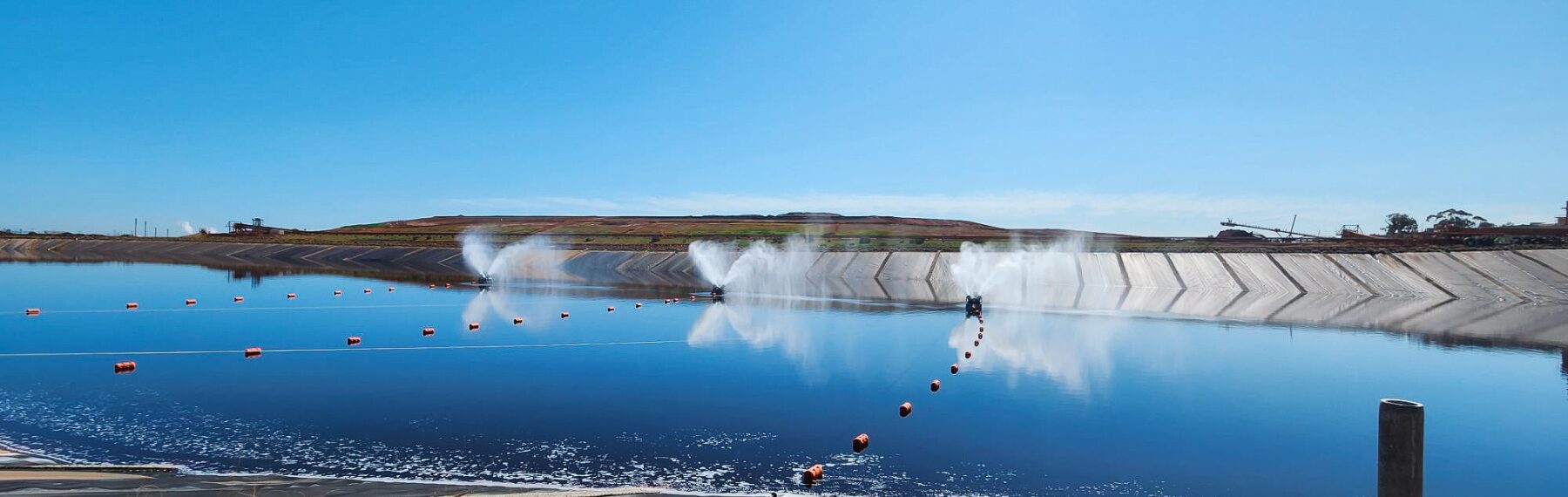
What is an industrial wastewater evaporator?
An industrial wastewater evaporator is a mechanical system designed to reduce liquid waste volumes by converting water into vapour. The process removes water from the waste stream while concentrating dissolved solids for easier disposal or recovery.
These systems are engineered for industrial-scale operations where traditional treatment methods fall short. They operate across mining sites, food processing facilities, and oil and gas operations where wastewater quality varies significantly.
Unlike passive evaporation ponds that rely on natural sunlight and wind, mechanical evaporators accelerate the process through controlled atomisation and heat application. This allows higher evaporation rates regardless of weather conditions.
How does a wastewater evaporation system work?
A wastewater evaporation system operates through a straightforward principle: increase the surface area of water droplets to accelerate natural evaporation. The system draws wastewater from storage and forces it through specialised nozzles at high pressure.
These nozzles atomise the water into ultra-fine droplets, creating millions of tiny particles with enormous combined surface area. As the droplets disperse, ambient air and applied heat cause rapid evaporation. The water vapour dissipates into the atmosphere while dissolved solids remain behind. These concentrated residuals can then be collected for proper disposal or resource recovery, depending on their composition.
The role of atomisation technology.
Atomisation is the heart of any mechanical evaporation system. By breaking water into droplets as small as 50-200 microns in diameter, you multiply the surface area available for evaporation by thousands of times compared to a static pond.
Increased surface area enables high-volume evaporation at industrial scale. Smaller droplets evaporate more quickly, allowing the system to reduce wastewater volumes faster and operate more efficiently.
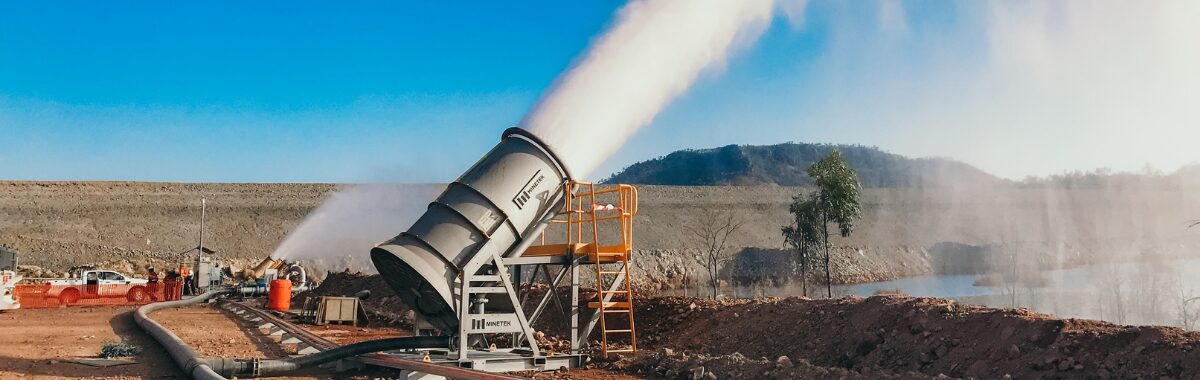
What are the core components of industrial evaporation systems?
Every industrial evaporation system contains several essential components that work together. Understanding these components helps determine whether a system is suited to site conditions, wastewater characteristics, and operational requirements.
Water intake and pumping system
An evaporator requires a reliable method to draw wastewater from storage. Submersible pumps or skid-mounted pump assemblies handle this task, delivering water at the pressure required for atomisation.
For floating applications, the pump operates directly in the water body. Land-based units typically connect to existing pipework or temporary water transfer lines.
Atomisation nozzles
Low-fouling stainless steel nozzles are critical for reliable operation. They must withstand high total dissolved solids (TDS) and total suspended solids (TSS) without clogging or degrading.
Minetek equips its évaporateurs with specialised nozzles engineered for harsh conditions. These nozzles resist mineral build-up and maintain consistent spray patterns even when wastewater chemistry is highly variable.
Environmental management system (EMS)
An Environmental Management System (EMS) automates evaporator performance based on real-time site conditions. Weather stations monitor humidity, temperature, wind speed, and wind direction, allowing the system to adjust operating parameters in response to changing environmental conditions.
This level of automation supports continuous operation during favourable conditions and protects system performance when conditions become less suitable for evaporation. Minetek’s Environmental Management System is designed to maximise evaporation efficiency, maintain environmental control, and reduce the need for constant manual intervention across remote and demanding industrial sites.
Heavy-duty construction
Industrial evaporators must withstand corrosive water, extreme temperatures, abrasive conditions, and continuous operation. Heavy-duty steel construction and protective coatings help maintain durability and long-term performance in harsh industrial environments.
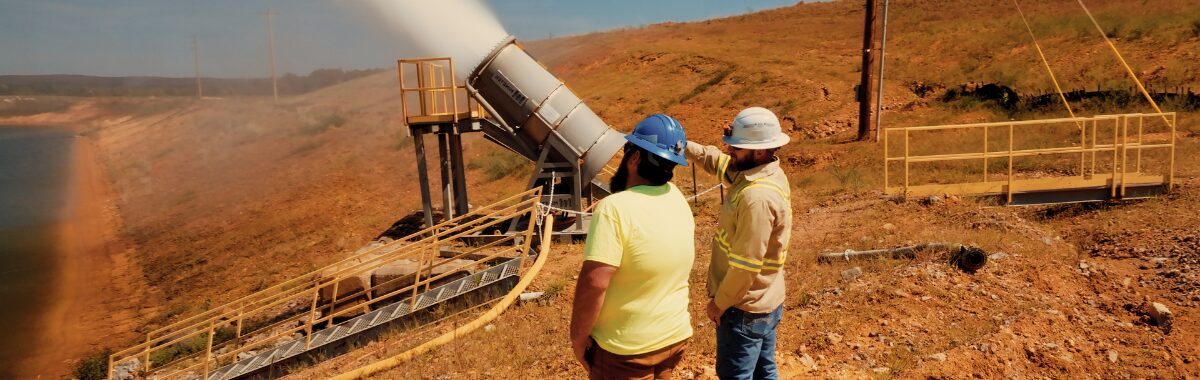
Minetek evaporation systems are engineered for these operating conditions, with robust skid-mounted and floating configurations designed for deployment across tailings dams, ponds, and storage facilities. Skid mobility allows land-based units to be relocated as site requirements change, while floating platforms support direct in-pond deployment where rapid wastewater reduction is needed most.
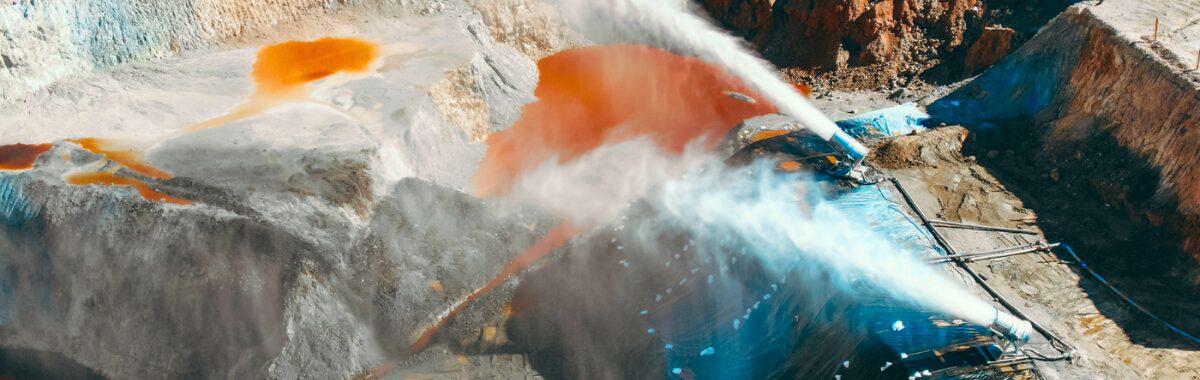
When does mechanical evaporation outperform traditional treatment?
Mechanical evaporation is not the right solution for every wastewater challenge. However, it often outperforms traditional treatment methods in specific scenarios that many industrial operations face.
High TDS and variable water quality
Traditional treatment plants require relatively consistent influent quality to operate efficiently. When your wastewater contains high TDS levels or fluctuates significantly in composition, treatment becomes complex and costly.
Mechanical evaporators handle variable water quality without additional chemical treatment. The water simply evaporates, leaving solids behind regardless of what those solids contain.
Zero Liquid Discharge (ZLD) requirements
If your operation must achieve zero liquid discharge, evaporation offers a direct path. You reduce wastewater volumes to minimal residual solids while eliminating the need for offsite disposal.
Minetek’s evaporator technology supports ZLD objectives across diverse industries. The systems concentrate wastewater to the point where remaining solids can be safely contained or recovered.
Remote locations and limited infrastructure
Building a traditional treatment plant at a remote mine site requires significant capital investment and ongoing operational expertise. Mobile evaporation systems offer an alternative with lower infrastructure demands. Minetek can deploy mechanical evaporators rapidly without permanent construction. This flexibility proves valuable during mine closure, emergency response, or operations in areas lacking existing water treatment infrastructure.
Which industries benefit most from wastewater evaporators?
Industrial evaporation systems serve multiple sectors, but three industries consistently realise the greatest value from this technology.
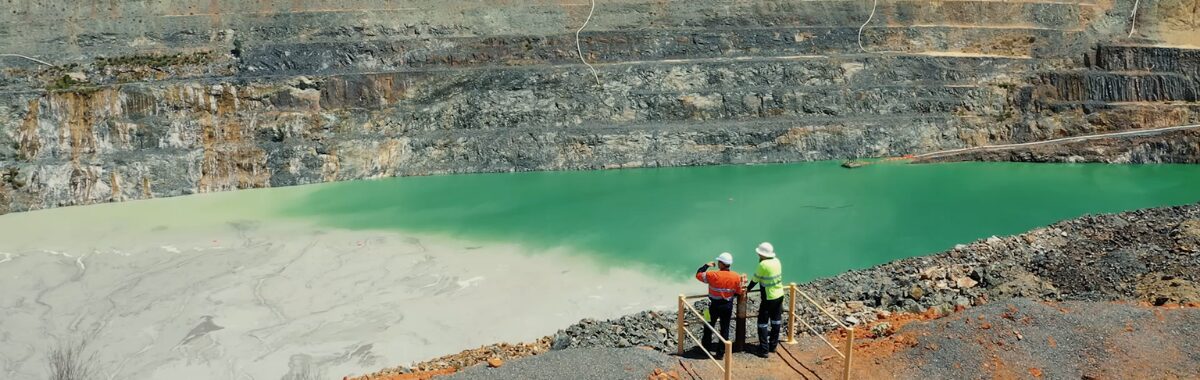
Mining operations
Mining generates large volumes of process water, tailings water, and pit dewatering discharge. These streams often contain elevated TDS, heavy metals, and other constituents that complicate traditional treatment.
Evaporation helps you manage dam risks, maintain permit compliance, and accelerate closure timelines. Minetek has deployed over 600 evaporation systems in more than 30 countries, with extensive experience in mining applications ranging from copper to gold to coal operations.
Food processing facilities
Food processors generate nutrient-rich wastewater with variable flows and high biological oxygen demand. Managing this discharge while meeting environmental permits requires careful planning. Mechanical evaporation reduces volumes efficiently without chemical additives. This helps operators minimise environmental footprint while managing wastewater disposal costs effectively.
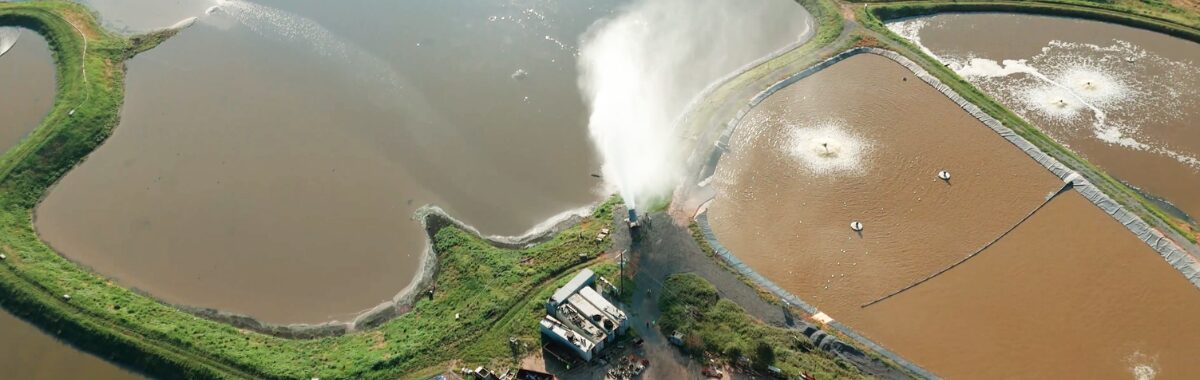
Minetek recently helped a major food processing facility in Georgia, USA mitigate its excess wastewater challenge for their onsite holding pond. A land-based evaporator system was deployed and operated at 135 m³/hour (600 GPM), consistently delivering high performance in challenging site conditions. With an estimated evaporation efficiency of 34%, the system reliably met the target of 350,000 gallons per day and frequently surpassed it by an additional 125,000 gallons.
Produced water and oil and gas
Produced water from oil and gas extraction contains hydrocarbons, salts, and other compounds that require specialised handling. Disposal options are often limited and expensive.
Evaporation concentrates produced water volumes significantly. This reduces trucking requirements, disposal fees, and the overall logistical complexity of managing your waste streams.
How should wastewater evaporation equipment be evaluated?
When assessing evaporation systems for an operation, several factors determine whether a particular solution meets operational requirements.
Throughput and evaporation rate
Match the system’s capacity to actual water volumes. Consider peak flow periods and seasonal variations that might affect how much water needs to be processed. Ask suppliers about guaranteed evaporation rates under various weather conditions. A reputable provider will offer performance data based on real-world deployments, not just laboratory testing.
Water quality tolerance
Wastewater chemistry determines which equipment can handle the application. Systems must tolerate specific TDS, TSS, and any corrosive or scaling compounds present. Minetek engineers systems to process water with challenging characteristics. The patented atomisation technology handles high solids content while resisting fouling that would degrade other equipment.
Deployment flexibility
Consider whether land-based, floating, or mobile configurations are required. Site layout, water body access, and operational timeline all influence this decisiom. A supplier offering multiple deployment options provides flexibility as conditions change. Operations may begin with floating units on a tailings dam, then relocate to land-based positions during later operational phases.
Automation and monitoring
Modern evaporation systems should operate with minimal intervention. Look for integrated environmental monitoring, automated controls, and remote access capabilities. These features reduce staffing requirements while maximising system performance. They also provide real-time visibility into evaporation rates, equipment status, and operating conditions.
Mechanical evaporation for industrial wastewater management.
Industrial wastewater evaporators offer a direct solution for reducing water volumes when traditional treatment proves impractical or cost-prohibitive. The technology works by atomising wastewater into ultra-fine droplets that evaporate rapidly, leaving concentrated solids behind.
For mining operations, food processors, and oil and gas facilities managing high TDS water or variable waste streams, mechanical evaporation delivers results. Minetek’s proven track record across challenging industrial environments demonstrates what modern evaporation technology can achieve.
When evaluating systems for an operation, focus on throughput capacity, water quality tolerance, deployment flexibility, and automation capabilities. The right evaporation solution supports environmental compliance objectives while helping manage operational costs effectively.
FAQs about how industrial wastewater evaporators work in 2026.
Mechanical evaporation uses atomisation and controlled heat to accelerate the evaporation process, achieving rates far higher than passive ponds. It delivers faster volume reduction without requiring large land areas for pond construction.
Evaporation ponds depend entirely on natural sunlight and wind conditions. Mechanical systems like Minetek’s evaporators operate effectively across diverse weather conditions with automated environmental management.
Yes. Mechanical evaporators are specifically engineered for challenging water quality. Minetek’s systems process wastewater with high TDS and TSS levels through low-fouling stainless steel nozzles that resist mineral buildup.
The atomisation technology disperses water regardless of dissolved content. Solids concentrate as water evaporates, allowing collection for disposal or resource recovery.
Processing capacity varies based on system size, configuration, and environmental conditions. Larger systems can evaporate hundreds of thousands of litres per day under optimal conditions.
Minetek offers customisable evaporator configurations scaled to specific volume requirements. Single or multiple evaporator setups allow operations to match capacity to operational needs precisely.
When properly specified and permitted, evaporation systems support environmental compliance objectives. They eliminate liquid discharge while reducing storage pond requirements and associated dam risks.
Minetek designs systems to help operations meet regulatory requirements under frameworks like the Clean Water Act and NPDES permits. The technology reduces chemical usage compared to traditional treatment approaches.
Mechanical evaporators are designed for low-maintenance operation. Regular tasks include nozzle inspection, pump servicing, and periodic equipment checks based on operating hours.
Minetek’s heavy-duty construction and automated EMS reduce maintenance demands. The systems operate 24/7 with minimal intervention, allowing site teams to focus on core operational priorities.