 Spanish
  English (United States)
  English
  Portuguese
  French
  Indonesian
  Italian
 Landfill leachate and excess water from sewage treatment plants (STPs) can quickly become a management challenge for councils, landfill operators and waste management sites. Storage capacity is finite, discharge pathways are constrained, and rising volumes can create compliance pressure, odour risks and operational disruption across ponds, cells and treatment infrastructure.
As these pressures increase, sites need to do more than contain the problem. They need a practical way to manage rising water volumes, maintain compliance and keep operations moving when storage and treatment pathways are already under strain.
Landfill leachate and STP excess water under pressure.
Landfill leachate and excess water from sewage treatment plants can place councils, landfill operators and waste management sites under pressure when storage, treatment and discharge pathways are already constrained. According to EPA Victoria’s Landfill licensing guidance, landfill operators are expected to manage leachate in a way that minimises the potential for contamination of waters and avoids discharge of contaminated waters from the premises.
As leachate ponds rise and landfill cells hold more water than planned, the issue extends beyond storage alone. EPA Victoria notes that operating landfills can create risks including leachate and offensive odours, while its odour guidance requires sites to maintain ongoing risk management to reduce odour impacts so far as reasonably practicable.
STP excess water can add to that pressure, particularly during wet weather or periods of high inflow. In its Managing Wet Weather Overflows report, Water Services Association of Australia (WSAA) sets out a framework for utilities managing overflow risk, while Urban Utilities states that extreme wet weather can flood wastewater networks and cause wet weather overflows in low-lying areas.
The limits of haulage, discharge and water treatment plants
When leachate ponds rise or STP excess water starts building, the usual responses are haulage, discharge or treatment. Each can work in the right context. The issue is that each also brings constraints that can make fast, practical volume reduction harder when storage is already under pressure.
Haulage adds ongoing cost and complexity
Haulage can reduce pressure in the short term, but it also brings transport costs, scheduling challenges and reliance on third-party availability. For sites dealing with repeated or seasonal inflows, it can become an expensive way to manage a persistent issue.
Discharge is often restricted
Discharge is not always available as a practical option. Approval pathways, site obligations and water quality requirements can all limit when and how excess water can leave site. For landfill operators managing leachate, the priority is often to keep it on-site and maintain control over water balances.
Water treatment plants are not always the right fit
Water treatment plants can play a role in some applications, but they are not always the best fit for landfill leachate or STP excess water. Capital cost, lead times, supporting infrastructure and pre-treatment requirements can make treatment-based approaches slower and more complex than sites need, especially when the immediate priority is reducing stored volumes quickly.
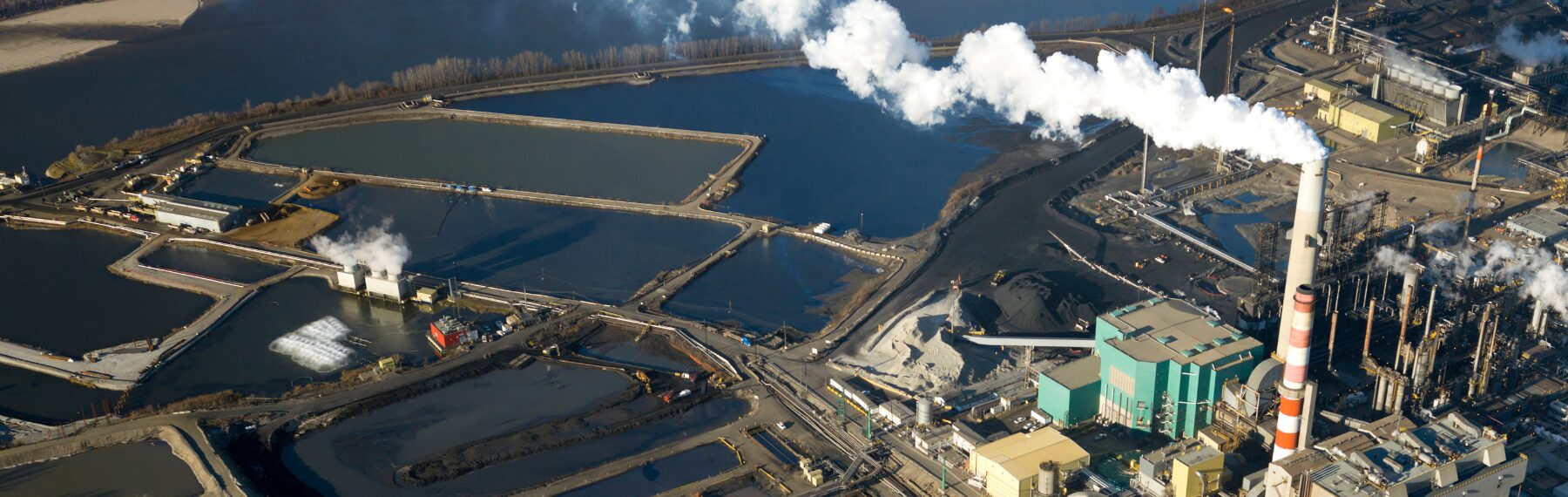
Mechanical evaporation for landfill leachate management
Mechanical evaporation offers a practical way to reduce landfill leachate and STP excess water without relying on a water treatment plant as the primary response. For councils, landfill operators and waste management sites, Minetek’s approach is designed around the conditions that make these volumes difficult to manage in the first place: variable water chemistry, storage pressure, discharge constraints and the need for faster volume reduction.
No pre-treatment before evaporation
Landfill leachate and STP excess water can present variable chemistry, including high total dissolved solids, high total suspended solids and fluctuating pH. Minetek mechanical evaporation systems are suited to these conditions without pre-treatment, helping sites respond faster when excess water is already building.
Faster volume reduction when storage is under pressure
When ponds, cells or treatment infrastructure are approaching capacity, speed matters. Minetek positions mechanical evaporation as a fast-response option that can be deployed and operating within days, helping sites reduce stored volumes sooner rather than waiting on slower treatment or disposal pathways.
Support for on-site containment and compliance
For sites aiming to keep leachate on-site and avoid discharge, mechanical evaporation supports a zero liquid discharge approach. This gives operators a practical way to reduce stored volumes, manage odour-related risk and maintain control over leachate without adding further discharge pressure.
A more practical alternative to treatment-heavy pathways
Mechanical evaporation is not positioned as a replacement for every treatment system. Its value is in giving councils, landfill operators and waste management sites a more practical way to manage excess water when haulage, discharge or capital-intensive treatment infrastructure are slower, more complex or less cost-effective.
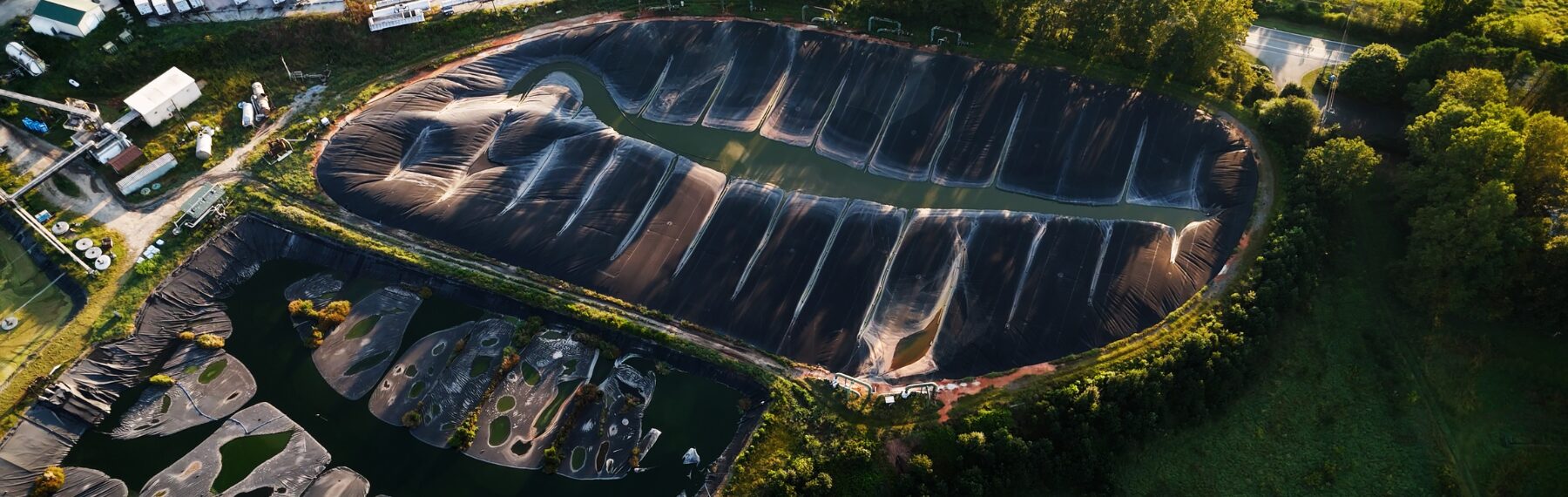
Mechanical evaporation systems for different leachate and excess water volumes.
Not every site manages the same water volume, storage footprint, or operating pressure. The right evaporation system depends on how much leachate or STP excess water needs to be removed, how quickly volumes are building, and whether the application is a smaller pond, an active landfill cell or a larger multi-pond setup. Minetek’s 40E, 200E, and 200/100 evaporation systems are designed for different operating conditions, allowing sites to match evaporation capacity to the scale and urgency of the problem.
40E for smaller-scale volume reduction
The 40E is suited to smaller leachate ponds, sewage treatment plant overflow and portable single-cell deployment. It is a practical fit where sites need a flexible response for lower-volume applications or targeted drawdown in specific areas, rather than a larger permanent setup. For councils and operators dealing with isolated overflow events, smaller active cells or contained storage pressure, this type of system offers a more measured way to reduce water volumes without overcommitting infrastructure.
200E for ongoing pond and cell management
The 200E is positioned for mid-volume pond and cell management, as well as ongoing STP excess water. It suits sites where excess water is not a one-off event, but a recurring operational issue that needs more consistent volume reduction. This makes it relevant for landfill and waste management sites balancing regular inflows, changing storage levels and the need to keep water inventories under control over time.
200/100 for high-volume and multi-pond applications
The 200/100 is designed for larger landfill cells, multi-pond zero liquid discharge applications and emergency drawdown. It is the stronger fit where stored water volumes are higher, containment pressure is greater or the site requires a more robust response across demanding operating conditions. For operators managing larger inventories, multiple water bodies or urgent volume reduction requirements, this system is positioned as the high-capacity option within the range.
System fit matters as much as evaporation capacity
The objective is not only to remove water. It is to match the system to the site’s operating reality, including volume, storage constraints, deployment speed and containment requirements. That is why system selection should be based on application fit, not just throughput alone. Throughput, flow rate and pricing can strengthen the comparison once confirmed, but the starting point should always be the operational challenge the site is trying to solve.
System guide at a glance
| System | Best fit application | Typical use case |
|---|---|---|
| 40E | Smaller-scale volume reduction | Smaller leachate ponds, STP overflow, portable single-cell deployment |
| 200E | Mid-volume water management | Ongoing pond and cell management, recurring STP excess water |
| 200/100 | High-volume and multi-pond applications | Large landfill cells, multi-pond ZLD, emergency drawdown |
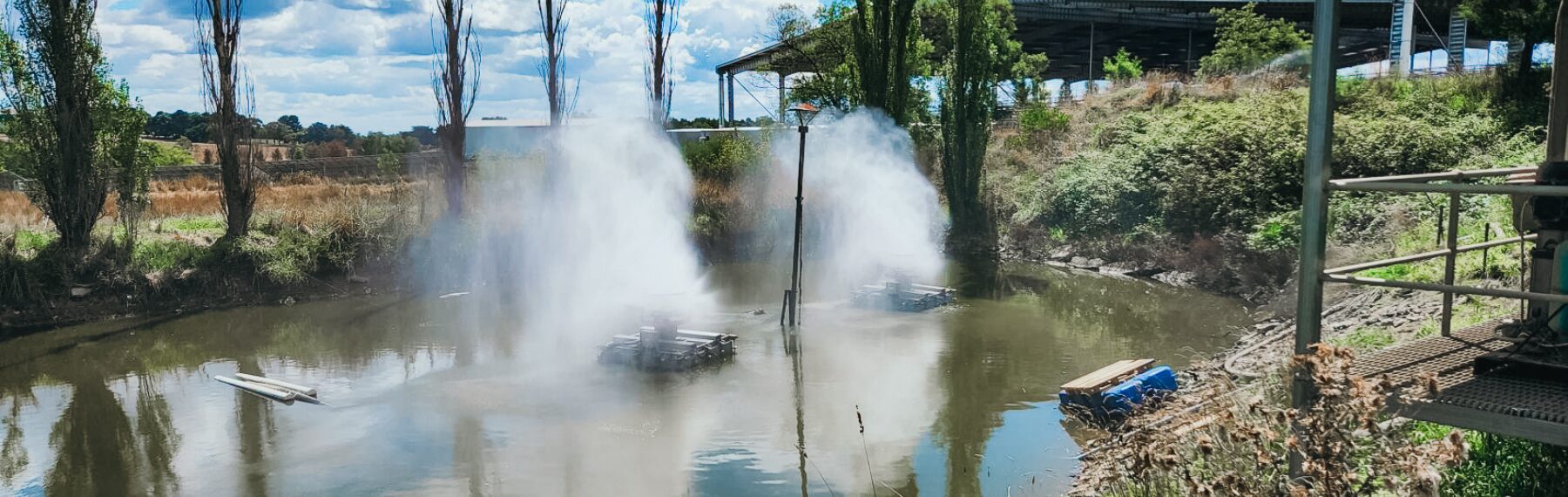
Mechanical evaporation across council, landfill and waste processing operations.
Our work across Australian municipal, landfill and waste processing sites shows that excess water challenges do not present in one fixed way. Some sites need targeted landfill leachate reduction at a municipal scale. Others need much larger capacity across landfill storage areas. In more complex waste processing environments, the challenge can extend beyond leachate to broader water balance mitigation under site-specific compliance requirements.
A municipal landfill application in New South Wales
At a municipal site in New South Wales, we deployed 2 × 40E Evaporation System Packages to manage landfill leachate. The site required a solution designed around its specific evaporation requirements, with a combined throughput of 14.5 m³/hour (64 GPM). The result was efficient leachate volume reduction that helped mitigate potential environmental impacts and support compliance with regulatory standards.
A higher-volume landfill application in New South Wales
At a waste management facility in New South Wales, ongoing waste processing was driving leachate accumulation across storage areas. The challenge was not only excess volume, but the risk that uncontrolled leachate levels could lead to environmental contamination, regulatory non-compliance and operational disruption. We responded with 19 Floating Water Evaporator System Packages delivering a combined throughput of 605 m³/hour (2,662 GPM). The system was deployed across the site’s leachate storage areas to reduce volumes, minimise environmental risk and help maintain safe, compliant operation.
A waste processing facility in Queensland working to DETSI requirements
At the Maranoa Waste Processing Facility in Queensland, the challenge was broader water balance management in a waste processing, resource recovery and treatment environment. Rising wastewater from processing and recovery activities, including leachate, was becoming difficult to manage using off-site disposal or basic treatment alone, particularly given variable water qualities and the need for lower capital and operating cost. In close partnership with the Queensland Government and the Department of Environment, Tourism, Science and Innovation (DETSI), we supplied and commissioned a turn-key floating evaporation system with an environmental management system. The system processes up to 43.2 m³/hour (190 GPM) and was deployed to mitigate water balance issues, reduce excess water volume and minimise environmental impacts through more sustainable leachate management.
Proven performance across municipal, landfill and waste processing applications.
Taken together, these projects show that mechanical evaporation can be applied across smaller municipal landfill settings, larger landfill operations and regulated waste processing environments. The common factor is not the site label. It is the need to reduce stored water volumes, maintain control of leachate and respond with a solution that fits the site’s operating conditions, compliance obligations and water profile.
Choosing the right approach for landfill leachate and STP excess water
The right approach depends on more than water volume alone. Sites need to assess the operating conditions around the water, the constraints on existing infrastructure and the urgency of the response required. In many cases, the issue is not simply treatment. It is finding a practical way to reduce stored volumes without adding further cost, delay or complexity.
Key factors to consider include:
- the volume of leachate or STP excess water that needs to be removed
- how quickly water levels are rising
- remaining storage capacity across ponds, cells or treatment infrastructure
- discharge constraints and containment requirements
- water quality variability, including TDS, TSS and pH
- the time and cost involved in deploying a workable solution
Mechanical evaporation provides a practical fit when faster volume reduction, no pre-treatment and on-site containment are priorities. For councils, landfill operators and waste management sites, it offers a way to manage excess water without relying on a water treatment plant as the primary response. It can help restore control over water balances and reduce pressure on ponds, cells and treatment infrastructure when existing pathways are too slow, too complex or too costly.
The most effective solution is the one that matches the site’s operating conditions, compliance obligations and response timeframe. For some sites, that may mean a smaller packaged system for municipal landfill leachate. For others, it may require a higher-capacity floating system to manage larger stored volumes or broader waste processing water balances.
Need a faster, more cost-effective way to manage landfill leachate or STP excess water?
Speak with one of our Minetek Water experts about the right evaporation solution for your site.