 Spanish
  English (United States)
  English
  Portuguese
  French
  Indonesian
  Italian
 What happens when excess water starts taking up space your operation needs to use?
At many Australian mine sites, excess water is treated as a storage issue first. In practice, it becomes an operational constraint much earlier. Rising stored volumes can restrict access to active areas, reduce flexibility in mine planning, increase pumping and monitoring demands, and place more pressure on compliance.
Reducing stored water early is often the most effective way to restore working capacity and regain control of site water balance.
Excess stored water impacts at mine sites.
- Operational restriction: Excess water can force storage into sacrificial pits, reducing access to productive mining areas and limiting operational flexibility.
- Production losses: In 2022, flooding and severe weather contributed to more than 20 million tonnes of lost ROM coal production, worth about AU$5 billion in potential sales.
- Regulatory exposure: Poor mine water management has led to major penalties, including fines and court-ordered payments exceeding AU$800,000.
- Mechanical evaporation advantage: High-rate mechanical evaporation uses atomisation and optimised airflow to reduce stored water volumes quickly, even in high-TDS, high-TSS, and extreme pH conditions.
- Proactive risk reduction: Removing excess water early helps reduce operational disruption, ease pressure on pumping and monitoring systems, and lower environmental and compliance risk before stored volume becomes a larger constraint.
- Minetek capability: Minetek systems process more than 135 m³/hour per unit and can scale beyond 2,160 m³/hour in larger configurations, with automated 24/7 operation and engineered performance for demanding mine water conditions.
Why stored water starts affecting mine performance.
The impact of excess water is usually felt in operations before it appears in reporting.
As available storage tightens, sites may need to use sacrificial pits or other operational areas to hold water temporarily. That can reduce access to productive ground, interrupt normal mine sequencing, and leave less flexibility across the site.
According to the Institute for Energy Economics and Financial Analysis (IEEFA) in "The hidden costs of coalmines’ unquenchable thirst” report, when mine water storage dams reach capacity, excess water may need to be stored in sacrificial pits, directly inhibiting mining operations and limiting extraction from those areas.
That makes excess stored water a broader business issue, not simply a water management issue. It can reduce operating flexibility, increase reliance on active water handling, and create pressure across production, environmental performance, and compliance at the same time.
Why this matters on site.
- Less access to productive ground: Water stored in operational areas can reduce access to pits and delay mining activities.
- More reactive planning: Mine sequencing and short-term decisions become shaped by water constraints rather than operational priorities.
- Higher management burden: Pumping, monitoring, transfers, inspections, and contingency planning all increase as stored volume grows.
- Lower resilience to rainfall: With less available capacity, even smaller rainfall events can create added pressure across the site.
How excess stored water affects day-to-day operations.
The cost of stored water is often felt first in the daily running of the site.
As storage margins tighten, pumping hours increase, monitoring becomes more frequent, and water transfers can start competing with production priorities. Teams may need to adjust haul access, mine sequencing, and short-term schedules around where water is sitting and how quickly it can be moved.
This reduces operating flexibility across the site. Instead of using available capacity for production, the operation spends more time managing constraints created by stored water. The IEEFA report further states that coal miners incur costs associated with managing excess water because it can cause flooding, disrupt production and transport, and increase the risk of contaminated water discharges.
The production impact is not theoretical. As reported by the Australian Bureau of Statistics in its analysis of the December quarter 2022 floods, excess water at open-cut coal mines on the New South Wales north coast and in the Hunter contributed to a 1.4% decline in coal production for the quarter.
For mine managers, that is the real cost. Stored water does not just occupy space. It can reduce output, increase operational workload, and leave the site with less room to respond when conditions change.
What does excess stored water cost a mine site?
The cost of excess stored water extends well beyond storage infrastructure. It can reduce output, slow recovery after rainfall events, and increase compliance exposure. For mine operators, the impact is often felt through lost production, operational disruption, regulatory penalties, and reputational risk.
- Production losses: IEEFA data indicated that Australian coalminers lost more than 20 million tonnes of run-of-mine coal production across the 2022 calendar and financial years, representing around AU$5 billion in potential coal sales, largely due to flooding and severe weather.
- Extended recovery: UNEP Finance Initiative “Climate Risks in the Metals and Mining Sector” states that 1.5 gigalitres of rainfall at Capricorn Copper in Queensland in March 2023 halted operations across all five underground deposits, with two deposits remaining out of service until September 2023 and one until 2024.
- Compliance penalties: As reported by the Queensland Department of the Environment, Tourism, Science and Innovation, a south-west Queensland mine operator was fined $85,000 and ordered to pay more than $5,000 in costs after failing to manage contaminated water ahead of the wet season. The NSW EPA also states that Clarence Colliery Pty Ltd was ordered to pay $815,000 in fines and penalties after untreated mine water discharges into the Wollangambe River.
- Operational disruption: The IEEFA report highlights that excess water can disrupt production and transport and increase the risk of contaminated water discharges.
Mechanical evaporation for reducing stored water volumes.
Once excess water starts constraining access, flexibility, and compliance margins, the priority shifts from storing water to removing it.
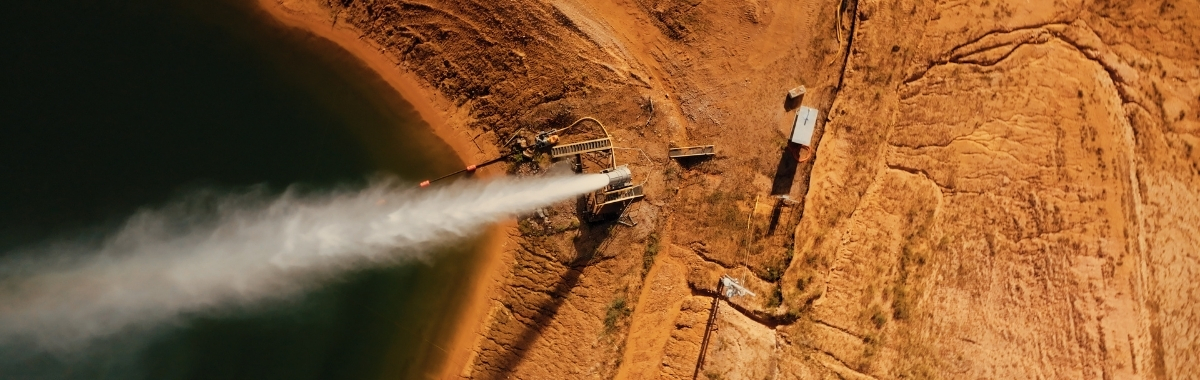
Passive storage can buy time, but it does not reduce volume quickly enough when sites are under pressure from rainfall, groundwater ingress, or rising tailings storage inventories. Mechanical evaporation provides an active way to lower stored water volumes, recover working capacity, and create more room in the site water balance.
The value is not evaporation for its own sake. The value is what reduced water volume makes possible: more operating space, lower pumping pressure, better freeboard control, and less reliance on temporary storage decisions.
How mechanical evaporation helps mine sites.
- Reduces stored volume: Mechanical evaporation actively lowers the amount of water sitting on site.
- Restores working capacity: Less stored water can free up pits, storage margins, and operational space.
- Eases water handling pressure: Lower volumes can reduce the burden on pumping, transfers, and monitoring.
- Supports compliance: Removing water earlier can help sites maintain stronger control over freeboard, discharge risk, and water balance.
Minetek’s engineered approach to high-rate water evaporation.
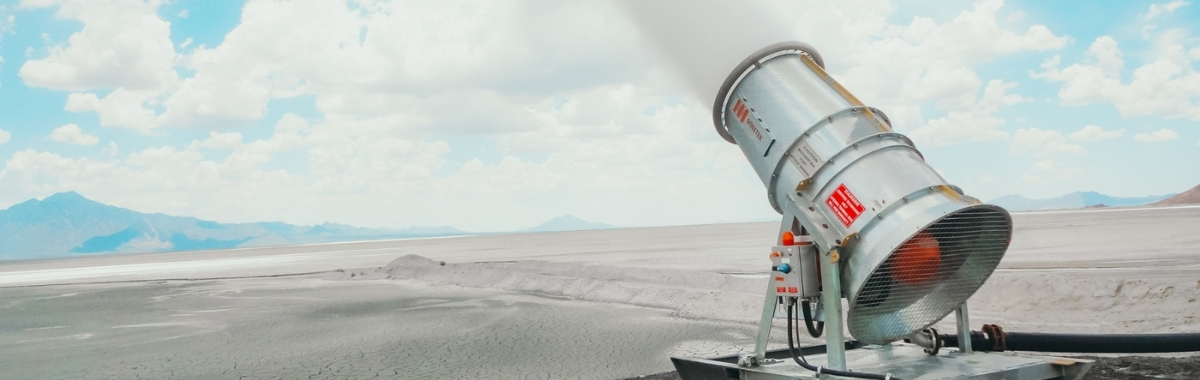
Minetek applies high-rate mechanical evaporation through engineered system design built for mining conditions.
Our systems use atomisation and optimised airflow, supported by fan engineering principles, to deliver rapid water volume reduction in demanding environments. This matters because mine water often contains high levels of dissolved solids, suspended solids, and variable chemistry that can challenge conventional equipment.
Minetek water evaporators are designed to handle high-TDS and high-TSS waters, solids up to 4.0 mm, and pH ranges from 1.8 to 14+. Our evaporation systems can process in excess of 135 m³/hour per unit, with automated 24/7 operation and scalable deployment across different site requirements.
Minetek capability at a glance.
- Engineered for mine water: Designed for high-TDS, high-TSS, acidic, caustic, and contaminated water conditions.
- High-rate performance: More than 135 m³/hour per unit, with larger site configurations scaling significantly higher.
- Low-fouling design: Engineered nozzle performance helps support reliability in difficult water conditions.
- 24/7 automated operation: Continuous operation helps sites respond faster to changing water volumes.
- Rapid deployment: Systems can be mobilised quickly where excess water is already affecting operations.
Real-world water reduction at a Queensland gold mine.
A Queensland gold mine shows how quickly excess stored water can shift from a site management issue to an operational risk.
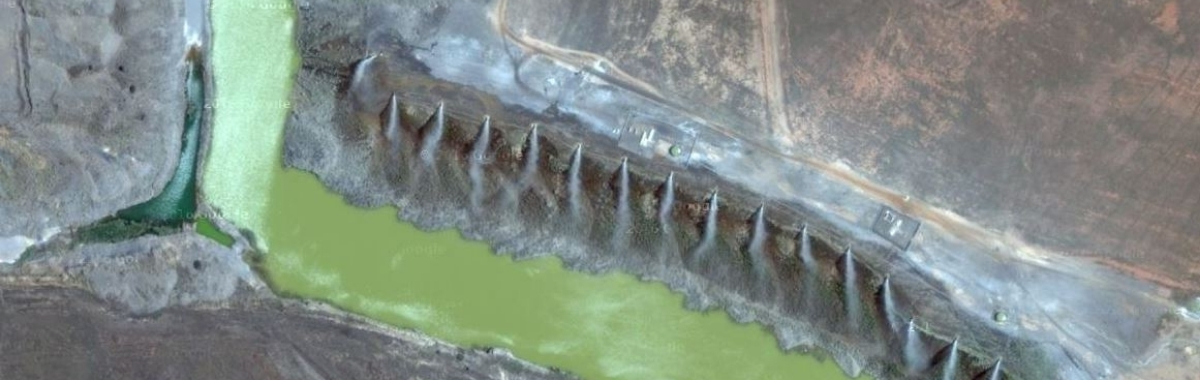
Following repeated rainfall events, excess water volumes increased in both the pit and tailings storage facility, creating pressure on site capacity and continuity. To respond, we deployed a 19-unit emergency dewatering package made up of 15 land-based water evaporators and 4 floating water evaporators.
The combined system delivered 1,477 m³/hour of throughput, equivalent to 6,560 gallons per minute. This significantly reduced onsite water volume, helping minimise disruption to production and support environmental compliance.
This example shows how high-rate mechanical evaporation can be applied as a rapid-response solution when excess stored water begins affecting capacity, continuity, and risk across the site.
How Minetek helps reduce the cost of excess stored water.
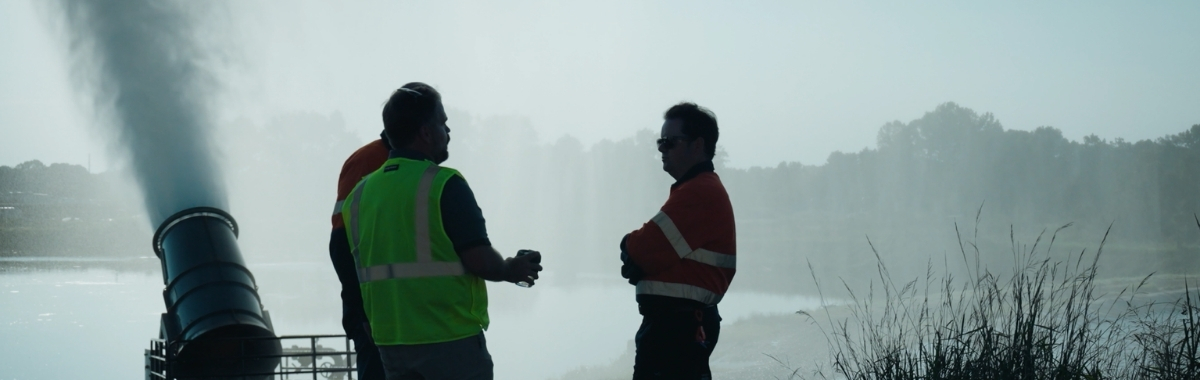
Excess stored water becomes costly when it starts limiting access, reducing flexibility, increasing water handling demands, and narrowing compliance margins. The longer those volumes remain on site, the more pressure they place on production, planning, and environmental performance.
Minetek helps mining operations address that challenge through engineered high-rate mechanical evaporation systems designed to remove excess water quickly and reliably.
By actively reducing stored volume, we help sites restore working capacity, ease pressure on pumping and monitoring systems, support stronger water balance control, and reduce the risk of larger operational or compliance issues developing.
Our systems are built for demanding mine water conditions, with high-rate performance, automated 24/7 operation, and configurations tailored to site requirements. Whether the priority is pit dewatering, tailings water reduction, emergency response, or broader site water balance management, the objective is the same: reduce excess water before it becomes a larger constraint on the operation.
For sites carrying too much water, the question is not only how to store it. It is how to remove it in a way that protects continuity, capacity, and compliance.
Connect with our Minetek water management experts for a site-specific water balance assessment.
Preguntas frecuentes
- What leads to excess stored water at Australian mine sites? Rainfall, groundwater ingress, and process water exceed dam capacity, necessitating diversion to sacrificial pits and active areas.
- How does mechanical evaporation surpass passive pond methods? It employs atomisation and fan-driven airflow to achieve evaporation rates far exceeding natural pond processes, unaffected by surface area or ambient limitations.
- What water characteristics do Minetek systems manage? Systems process high-TDS and high-TSS waters, solids up to 4 mm, and function effectively across pH 1.8 to 14+.
- What compliance benefits does evaporation deliver? It upholds freeboard margins, averts uncontrolled discharges, and fulfills proactive requirements under Queensland and New South Wales regulations.
- How rapidly can Minetek systems be deployed? Modular construction supports quick installation, with units operational in days and providing immediate volume reduction.
- Does Minetek offer predictive performance modelling? Yes, site-specific analysis of climate, water chemistry, and operational factors forecasts evaporation rates over 12 months for precise planning.