 Spanish
  English (United States)
  English
  Portuguese
  French
  Indonesian
  Italian
 Industrial noise reduction at large sites relies on selecting the right sound attenuation systems for the actual noise source. Common noise control solutions include source-based attenuation, acoustic enclosures, barriers, silencers, vibration isolation, and other forms of acoustic insulation. The most effective option depends on whether the noise comes from mobile equipment, fixed plant, exhaust systems, or temporary work areas.
For environmental and operations managers, this is a practical site issue with direct compliance and performance implications. Poor noise control can increase regulatory pressure, affect manufacturing plant safety, create construction site noise control challenges, and strain relationships with nearby communities. Large sites often deal with multiple noise sources at once, which means the right solution must reduce sound without affecting equipment reliability or operational efficiency.
This guide reviews 7 industrial noise reduction systems used across large industrial environments and outlines where each one is most effective.
Quick guide: 7 industrial noise control systems for large sites.
- Minetek M-STEALTH™: The most advanced engineered sound attenuation for heavy mobile equipment at mining and construction sites
- Acoustic enclosures: Fixed housing for stationary machinery and generators
- Sound barriers and walls: Perimeter control for facilities with defined boundaries
- Acoustic curtains and blankets: Portable options for temporary work zones
- Silencers and mufflers: Exhaust-focused reduction for engines and ventilation
- Vibration isolation mounts: Address structure-borne noise at the source
- Active noise cancellation systems: Electronic approach for specific frequency ranges
What factors matter most when choosing an industrial noise control system?
Selecting the right noise control approach depends on site conditions, equipment types, and the relevant regulatory environment. These systems were assessed against the factors that matter most to environmental and operations managers at large industrial sites.
- Noise reduction performance: Measured decibel (dBA) reduction across relevant frequency ranges to support permit and compliance requirements
- Equipment compatibility: Whether the system is suited to mobile machinery, stationary plant, or both, while maintaining operational continuity
- Installation footprint: Physical space requirements and integration with existing site layouts to minimise disruption
- Maintenance requirements: Ongoing service needs that affect total cost of ownership and uptime
- Regulatory compliance: Alignment with environmental noise standards and occupational health requirements across Australia, North America, and other operating regions
- Operational impact: Effect on machine performance, payload capacity, airflow, and fuel efficiency

The 7 industrial noise control systems for large sites.
Large industrial sites use different noise control systems depending on where the noise is generated, whether the source is mobile or stationary, and what level of compliance the site needs to achieve. Some solutions are designed for heavy mobile equipment, while others are better suited to fixed plant, temporary work zones, or boundary-level noise management.
1. Minetek M-STEALTH™: Engineered sound attenuation for heavy mobile equipment
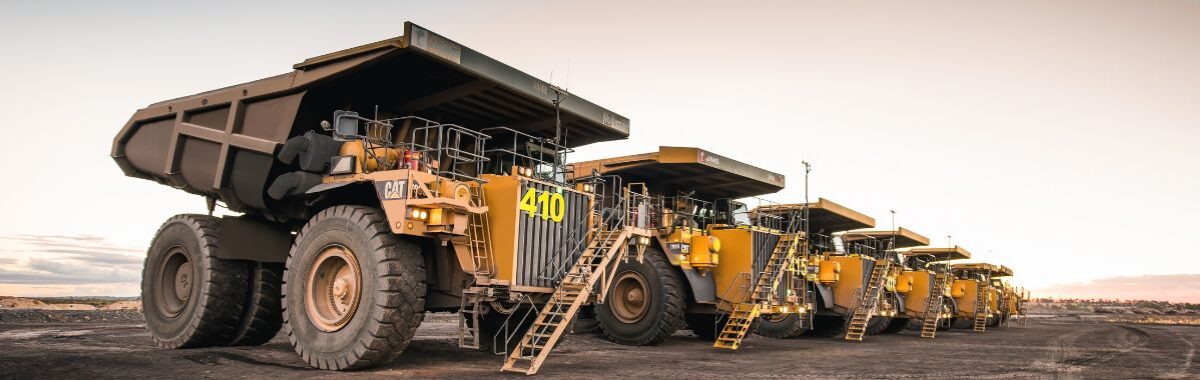
Minetek’s M-STEALTH™ system represents a purpose-built approach to industrial noise management. Unlike generic solutions, M-STEALTH™ targets specific noise sources on heavy machinery, including haul trucks, excavators, dozers, drills, and loaders, using acoustic visualisation and sound intensity testing.
What sets this system apart is how it addresses noise at the source without compromising machine performance. Minetek’s in-house acoustic engineers design each system to site-specific requirements, helping operations reduce noise while minimising payload impact.
The dual-skin exhaust construction maintains OEM backpressure levels while keeping surface temperatures below 150°C. This removes the need for thermal blankets and can reduce maintenance downtime compared to traditional sound-suppressed exhaust systems.
With more than 3,000 mining machines fitted globally since 1984, Minetek brings proven expertise to projects across 60+ countries. The M-STEALTH™ system integrates with equipment from Caterpillar, Komatsu, Hitachi, Liebherr, and other major OEMs.
Características principales
- Acoustic visualisation and sound intensity testing to identify exact noise sources
- Dual-skin exhaust system for durability and reduced heat stress
- OEM-compliant design to maintain factory backpressure and airflow specifications
- Weight-optimised construction to minimise payload impact
- AS-5062-2022 protección contra incendios
- Multi-OEM compatibility across major equipment manufacturers
What to consider
M-STEALTH™ is best suited to heavy mobile equipment where source-based attenuation is needed across a large site. Its main advantage is that it reduces noise without compromising OEM performance, payload capacity, or machine reliability. Because it is engineered to suit each machine and site condition, it requires acoustic assessment and machine-specific design.
2. Acoustic enclosures: Housing for stationary machinery
Acoustic enclosures are purpose-built structures that surround noisy stationary equipment such as generators, compressors, and pumps. These enclosures use sound-absorbing materials in walls, ceilings, and doors to contain noise at the source.
For fixed plant applications, enclosures can achieve significant dBA reductions. However, they require careful ventilation design to prevent equipment overheating, which adds complexity and cost to larger installations.
Características principales
- Modular panel construction sized to suit equipment dimensions
- Ventilated designs for safe operating temperatures
- Access doors and panels for maintenance access
What to consider
Acoustic enclosures are effective for stationary equipment in defined locations. They can provide strong containment and weather protection, but they are not suitable for mobile equipment and can require significant floor space and ongoing ventilation management.
3. Sound barriers and walls: Perimeter noise management
Sound barriers are vertical structures positioned between noise sources and receivers, typically site boundaries or nearby communities. They work by blocking the direct path of sound waves and creating an acoustic shadow zone behind the barrier.
These systems are commonly used around industrial facilities, along highways, and at construction site perimeters. Their effectiveness depends heavily on barrier height, length, and positioning relative to both the noise source and the area requiring protection.
Características principales
- Absorptive or reflective panels depending on the acoustic objective
- Modular sections for irregular site boundaries and terrain
- Weather-resistant materials for long-term outdoor use
What to consider
Sound barriers can help reduce off-site noise where boundaries are clearly defined. They are relatively straightforward to install, but they do not treat noise at the source and are less effective for elevated or moving noise sources. They may also require substantial foundation work and site preparation.
4. Acoustic curtains and blankets: Portable industrial solutions
Acoustic curtains and blankets offer a flexible approach to temporary noise control. Made from dense, sound-absorbing materials, these systems can be hung, draped, or positioned around equipment and work areas.
Construction sites often use acoustic blankets during demolition or concrete cutting operations. Manufacturing facilities also use curtains to create temporary sound barriers between noisy processes and quieter work zones.
Características principales
- Portable installation for changing work areas
- Multiple hanging systems, including track-mounted and freestanding options
- Fire-rated materials for industrial applications
What to consider
Acoustic curtains and blankets are useful where flexibility and speed of deployment matter most. They are generally lower cost and reusable, but they offer less attenuation than engineered systems or enclosures and may wear more quickly in exposed site conditions.
5. Silencers and mufflers: Exhaust-focused noise reduction
Silencers and mufflers target noise from engine exhausts, ventilation systems, and pneumatic equipment. These devices use baffles, chambers, and absorptive materials to reduce sound energy before it exits the exhaust stream.
Industrial silencers range from compact inline units to large duct-mounted systems for HVAC applications. Performance varies depending on the design, size, and frequency characteristics of the noise source.
Características principales
- Reactive or absorptive designs for different frequency ranges
- Inline installation within existing ductwork or exhaust systems
- Custom sizing to suit airflow and backpressure requirements
What to consider
Silencers and mufflers are effective where exhaust noise is a primary contributor to the site noise profile. They can often be retrofitted to existing equipment, but they do not address other mechanical noise sources and may affect airflow or engine performance if poorly specified.
6. Vibration isolation mounts: Structure-borne noise control
Vibration isolation mounts address noise that travels through building structures and equipment frames. By decoupling machinery from its supporting surface, these systems prevent vibration energy from being transmitted and radiated as sound.
Common applications include mounting compressors, fans, pumps, and HVAC equipment. Proper isolation can reduce both airborne noise and perceptible vibration in adjacent work areas.
Características principales
- Elastomeric or spring mounts for different loads and frequencies
- Inertia bases to reduce transmission of low-frequency vibration
- Floating floor systems for sensitive installations
What to consider
Vibration isolation mounts are useful when structure-borne transmission is a major source of site noise. They can also help reduce equipment stress, but they do not directly control airborne noise from the equipment itself and need correct engineering specification to perform properly.
7. Active noise cancellation systems: Electronic sound management
Active noise cancellation (ANC) uses microphones and speakers to generate sound waves that interfere with and reduce specific noise frequencies. While common in consumer headphones, industrial applications remain limited to controlled environments and specific frequency ranges.
In industrial settings, ANC systems are generally used in enclosed spaces such as operator cabins, control rooms, and HVAC ducts. Large-scale outdoor applications remain challenging because of variable sound fields and the power required to generate effective cancellation.
Características principales
- Real-time processing of incoming sound
- Frequency targeting for predictable low-frequency tones
- Cabin integration for enclosed operator environments
What to consider
ANC can be effective for targeted low-frequency noise in controlled environments. It offers an electronic alternative where passive methods have limits, but it is not practical for broad outdoor site applications or multiple moving noise sources.
Summary table: industrial noise control systems at a glance.
| System | Typical application | Mobile equipment | Main advantage | Main limitation |
|---|---|---|---|---|
| Minetek M-STEALTH™ | Heavy mobile equipment | Yes | Source-based attenuation with OEM-aligned performance | Requires engineered assessment |
| Acoustic enclosures | Stationary machinery | No | Strong containment at the source | Large footprint and ventilation needs |
| Sound barriers and walls | Perimeter noise management | No | Helps reduce off-site noise transmission | Does not treat source noise |
| Acoustic curtains and blankets | Temporary work zones | Limited | Flexible and portable | Lower attenuation performance |
| Silencers and mufflers | Exhaust and duct systems | Sometimes | Targets exhaust noise directly | Does not address all noise sources |
| Vibration isolation mounts | Structure-borne noise control | No | Reduces vibration transmission | Does not directly reduce airborne noise |
| Active noise cancellation systems | Controlled enclosed spaces | Limited | Effective for specific frequencies | Not practical for broad outdoor use |
What regulations govern industrial noise at large sites?
Industrial noise regulations vary by jurisdiction, but the core requirements are broadly similar. In Australia, according to the NSW EPA Noise Policy for Industry, the policy sets assessment noise levels, consistent methods, and best-practice measures for managing industrial noise impacts, including for mines, quarries, and large industrial sites. For construction activity, the NSW EPA construction noise page states that the EPA sets noise limits in environment protection licences and uses guideline-based assessment to support approvals and licence conditions.
Occupational noise is regulated separately from environmental noise. Moreover, Safe Work Australia’s noise guidance states that workers must not be exposed to noise of 85 dB(A) or higher over an 8-hour day or 40-hour week. Safe Work Australia also states that workers must not be exposed to noise above 140 dB peak, and that risks should be eliminated or minimised under work health and safety duties. Additional guidance is also set out in the Model Code of Practice: Managing noise and preventing hearing loss at work.
Noise complaints can also trigger regulatory attention. According to the NSW EPA’s explainer on investigating noise issues, the regulator may investigate complaints through monitoring and enforcement tools such as noise abatement directions. For large sites operating under approvals or licence conditions, that means reliable noise control is not just an engineering issue. It is part of demonstrating ongoing compliance under real operating conditions.
How should operators calculate the true cost of industrial noise control?
Upfront purchase cost is only one part of the equation. A proper evaluation should also account for installation complexity, integration with existing equipment, maintenance requirements, and the operational life of the system. For environmental and operations managers, the real question is not just what a system costs to buy, but what it costs to run, maintain, and manage over time.
For mobile equipment, productivity impact is a major consideration. Systems that add significant weight can reduce payload capacity, which directly affects output per cycle. In high-utilisation environments, even small performance trade-offs can compound into material operating costs over the life of the asset.
Downtime also needs to be factored into the calculation. Systems that require frequent servicing, complex repairs, or difficult access can increase indirect costs and reduce uptime. In practice, engineered systems designed for harsh industrial environments often deliver better long-term value when they maintain equipment performance and reduce maintenance burden.
Why is Minetek M-STEALTH™ effective for industrial noise reduction on large sites?
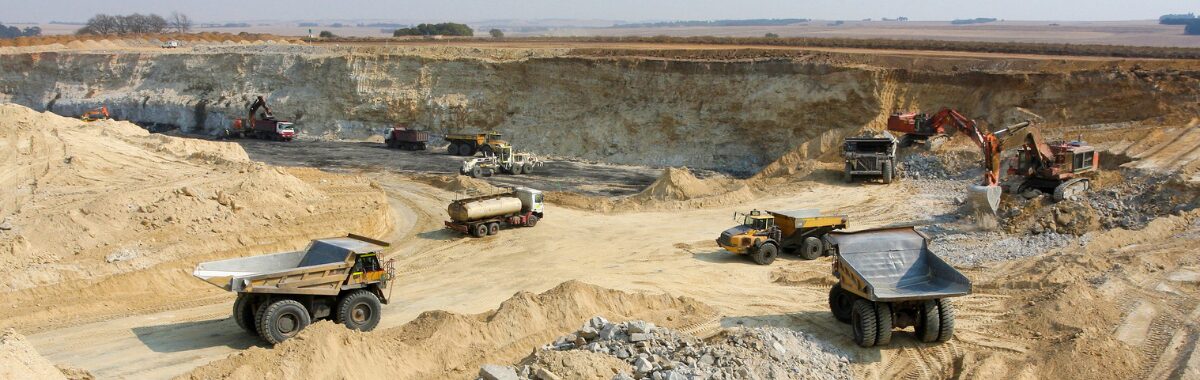
Minetek M-STEALTH™ is effective for industrial noise reduction on large sites because it reduces noise at the source on heavy mobile equipment without compromising machine performance. Unlike fixed barriers or enclosures, it is engineered for the machines themselves, allowing haul trucks, excavators, and dozers to operate across the site while supporting compliance and reducing impact on nearby communities.
The system is designed to suit the machine, the operating environment, and the site’s acoustic requirements. It maintains OEM specifications, preserves payload capacity, and helps sites manage noise without creating new operational constraints.
With more than 40 years of industrial noise expertise and over 3,000 machines fitted globally, Minetek brings proven capability to heavy industry applications. That makes M-STEALTH™ a strong fit for large sites where mobile equipment noise is a major operational and compliance challenge.
Frequently Asked Questions (FAQs)
For mobile equipment like haul trucks, excavators, and dozers, source-based attenuation delivers the most effective results. The Minetek M-STEALTH™ system targets specific noise emissions while preserving machine performance. Barriers and enclosures cannot move with your equipment across the site.
Noise reduction varies by system type and application. Engineered solutions like Minetek’s M-STEALTH™ can achieve measurable dBA reductions tailored to specific equipment. Generic barriers typically offer 5-15 dB reduction depending on positioning and frequency content.
Poorly designed systems can restrict airflow and increase backpressure, affecting engine performance. Minetek M-STEALTH™ maintains OEM specifications by design, preserving factory airflow requirements while reducing noise. The weight-optimised construction also minimises impact on payload capacity.
Maintenance needs vary significantly. Acoustic curtains require regular inspection and replacement. Silencers need periodic cleaning. The Minetek M-STEALTH™ dual-skin construction resists rust and heat stress, reducing maintenance intervals compared to traditional approaches.
Yes. Industrial sites operating under environmental licences must meet specific noise conditions. Minetek has helped mining and manufacturing operations across 60+ countries achieve compliance while maintaining productivity. Proper noise control protects your operating licence.
Consider where your noise originates. For stationary plant, enclosures and barriers can work well. For mobile equipment that operates across large sites, source-based systems like Minetek M-STEALTH™ are more practical since the noise control moves with the machine.