 Spanish
  English (United States)
  English
  Portuguese
  French
  Indonesian
  Italian
 Mine water management systems become more responsive by improving visibility, enabling faster operational adjustments, and reducing reliance on manual intervention.
As site conditions shift due to rainfall variability, production changes, and compliance requirements, systems that depend heavily on manual monitoring and stop-start control can struggle to keep pace. This often leads to delayed responses, increased workload for site teams, and reduced operational efficiency.
A more responsive approach focuses on integrating real-time monitoring, automated analytics, and adaptive controls to support continuous and controlled system performance. These strategies allow operations to respond more effectively to changing conditions while maintaining operator oversight and reducing repetitive tasks.
Building a more responsive mine water management system
- Real-time visibility: Continuous monitoring improves awareness of water levels, flows, and system performance across the site.
- Faster decision-making: Automated analytics convert operational data into actionable insights without delays.
- Reduced manual intervention: Responsive controls limit the need for routine stop-start adjustments.
- Weather adaptability: Systems can adjust operation based on rainfall and changing environmental conditions.
- Continuous operation: Water removal processes can run consistently with minimal oversight.
- Scalable infrastructure: Modular systems support changing water volumes and evolving site requirements.
- Minetek capability: Minetek water evaporation systems support responsive operation through automated 24/7 performance and EMS weather-adaptive control.
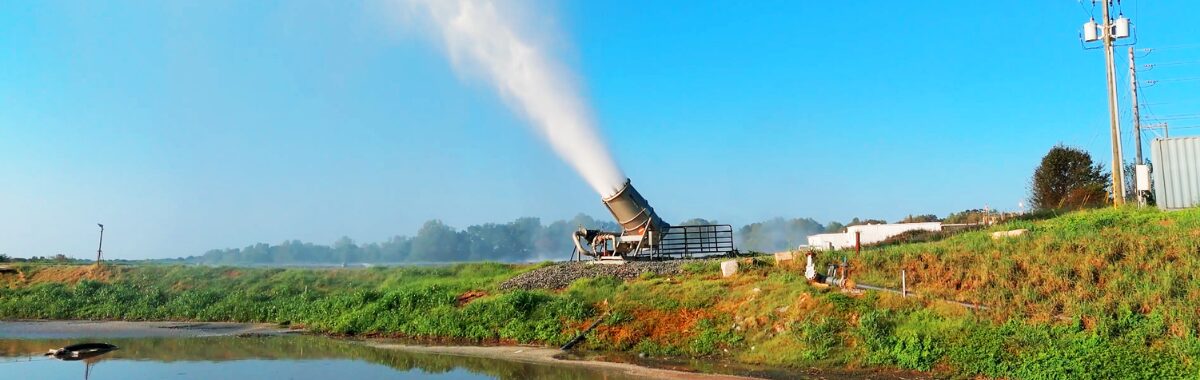
The shift toward more responsive mine water management systems
Mine water management systems are being pushed beyond static operating models. Increasing variability in rainfall, inflows, and compliance requirements means systems must respond faster and more consistently to changing conditions.
Several industry trends are driving this shift:
- More variable rainfall patterns: According to Discovery Alert’s Water engineering and mining climate change outlook (2025), climate variability is increasing the frequency of extreme rainfall events, placing greater pressure on water infrastructure to respond quickly.
- Unpredictable inflow behaviour: In its study on mine water inflow modelling, Springer Nature found that inflows are influenced by nonlinear processes and delayed rainfall responses, making sudden changes difficult to anticipate.
- Limits of periodic monitoring: Systems relying on scheduled checks can lag behind real-time conditions, increasing the need for reactive intervention
- Growing compliance pressure: The MDPI Mine water management and monitoring review highlights that continuous monitoring is critical for managing environmental risk and maintaining compliance.
These factors are driving a shift toward more responsive mine water management systems. Instead of reacting after thresholds are reached, systems are increasingly designed to adjust in real time, reduce manual intervention, and maintain more consistent operational control.
To build a more responsive mine water management system, operations are adopting a combination of monitoring, control, and infrastructure strategies. The following approaches highlight how sites can improve system responsiveness while reducing reliance on manual intervention.
1. IoT-enabled real-time monitoring
Responsive mine water management systems depend on continuous visibility across site conditions. Without real-time data, operators often rely on scheduled inspections or delayed reporting, which can slow response times and increase manual workload.
IoT-enabled monitoring improves system responsiveness by providing live insight into water movement and infrastructure performance:
- Continuous visibility: Sensors provide real-time data on water levels, flow rates, and storage capacity across the site
- Earlier issue detection: Changes in inflows or system performance can be identified before thresholds are reached
- Reduced manual checks: Fewer physical inspections are required when accurate data is continuously available
- Improved situational awareness: Operators can make decisions based on current conditions rather than historical data
En Norma Industrial Mundial sobre Gestión de Estériles (GISTM) emphasises the importance of ongoing monitoring to track water balance, facility performance, and risk conditions in real time. Hence, monitoring systems should provide timely data to support proactive management and reduce the risk of delayed response.
By improving visibility, IoT-enabled monitoring allows mine water management systems to respond earlier and more consistently, reducing reliance on reactive decision-making and routine oversight.
2. Automated data analytics and reporting
Real-time monitoring increases visibility, but responsiveness depends on how quickly that data can be interpreted and acted on. When analysis and reporting rely on manual processes, delays between data capture and decision-making can limit how effectively systems respond to changing conditions.
Automated data analytics improves this by converting operational data into timely, actionable insights:
- Faster data interpretation: System data is processed continuously, reducing delays between measurement and decision-making
- Consistent decision support: Automated analysis reduces variability in how data is interpreted across teams
- Early trend identification: Patterns in inflows, storage levels, or system performance can be identified before they escalate
- Reduced reporting burden: Automated reporting limits the need for manual data collection and compilation
Según Deloitte’s Tracking the trends in the mining industry, digital and analytics-driven systems are enabling mining operations to improve decision-making speed and operational visibility, supporting more responsive and efficient performance.
By improving how data is processed and used, automated analytics allows mine water management systems to respond more quickly and consistently, reducing reliance on manual interpretation and delayed reporting.
3. Responsive control systems
Monitoring and analytics improve visibility and decision-making, but system responsiveness ultimately depends on how quickly operational adjustments can be made. In many mine water management systems, these adjustments still rely on manual intervention, which can create delays between identifying an issue and responding to it.
Responsive control systems address this by enabling automated or semi-automated adjustments based on real-time conditions:
- Faster system response: Controls can adjust flow rates, pumping, or evaporation processes as conditions change
- Reduced manual intervention: Routine stop-start decisions are handled automatically based on defined parameters
- Consistent operation: Systems respond in a predictable way, reducing variability between operators or shifts
- Improved stability: Continuous adjustment helps maintain system balance under changing inflow or storage conditions
According to the International Finance Corporation (IFC) Environmental, Health, and Safety Guidelines for Mining (2007), effective water management systems should incorporate monitoring and control mechanisms that enable timely operational response and support environmental risk management.
By enabling systems to adjust as conditions change, responsive controls reduce reliance on manual intervention and support more stable, continuous mine water management.
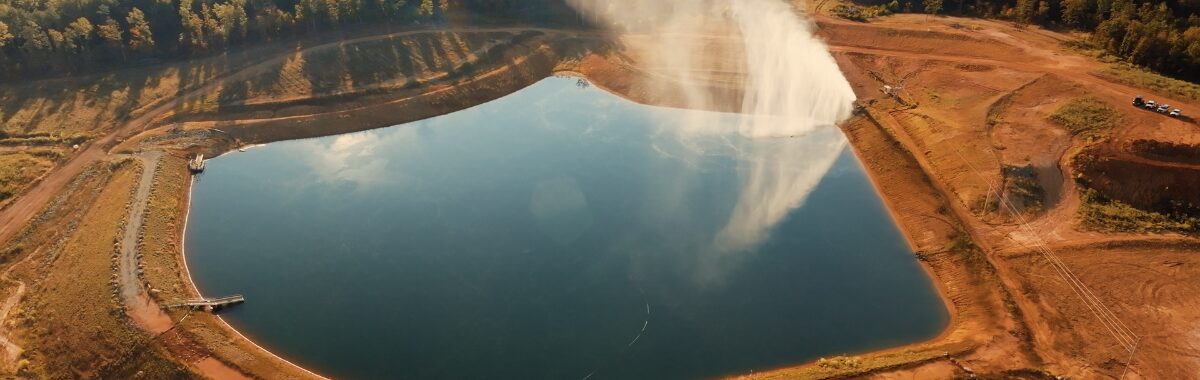
4. Modular and scalable water infrastructure
Mine water management systems need to adapt as site conditions change. Fixed infrastructure can limit how effectively operations respond to shifts in water volumes, storage capacity, or production demands.
Modular and scalable infrastructure improves flexibility and system responsiveness:
- Adaptable capacity: Systems can be expanded or redeployed as water volumes change
- Faster deployment: Additional capacity can be introduced without major infrastructure upgrades
- Reduced constraints: Less reliance on fixed storage or treatment limitations
- Improved long-term flexibility: Infrastructure can evolve alongside site requirements
According to the International Council on Mining and Metals (ICMM) Water stewardship maturity framework (2023), effective water management requires systems that can adapt to changing operational and environmental conditions over time (.
By enabling systems to scale with demand, modular infrastructure supports more responsive and resilient mine water management.
5. Weather-adaptive operating logic
Rainfall variability can quickly shift site water conditions, requiring systems to respond faster than manual processes allow.
Weather-adaptive operating logic enables systems to adjust automatically based on forecast and real-time conditions:
- Proactive adjustments: Systems prepare for rainfall events before inflows increase
- Reduced overflow risk: Water removal can be increased ahead of peak conditions
- Less manual intervention: Fewer reactive adjustments required during changing conditions
- Improved consistency: Operations remain stable despite environmental variability
The Global Industry Standard on Tailings Management (GISTM) highlights the need to account for extreme and variable weather conditions in system design and operation.
Technologies such as Minetek’s Environmental Management System (EMS) support this by enabling automated, weather-responsive control.
Minetek in building responsive mine water management systems
Building a more responsive mine water management system requires more than visibility and control. It depends on having water removal infrastructure that can operate continuously, adapt to changing conditions, and reduce the need for manual intervention. Minetek Water evaporators are designed to remove excess water at scale while supporting this more responsive operating model.
Minetek water evaporation systems are designed to support this through:
- Continuous 24/7 operation: Systems run consistently with minimal oversight, reducing reliance on manual start-stop control
- Responsive system control: Automated operation supports stable performance under changing inflow and storage conditions
- Weather-adaptive functionality: Minetek’s Environmental Management System (EMS) enables systems to adjust based on real-time and forecast weather conditions
- Mobile deployment: Units can be relocated across site as conditions change, supporting flexible water management
- Scalable infrastructure: Systems can be expanded or redeployed to match changing water volumes and operational requirements
By combining continuous operation with responsive, weather-adaptive, and scalable infrastructure, Minetek systems help operations manage water more consistently while reducing repetitive oversight.
Looking to reduce manual oversight in your water management system?
Connect with a Minetek Water expert to explore how responsive evaporation solutions can support your site.
Preguntas frecuentes
A responsive mine water management system is designed to adjust to changing site conditions in real time. It combines monitoring, analytics, and control systems to improve visibility, reduce manual intervention, and maintain consistent operational performance.
Operations improve responsiveness by integrating real-time monitoring, automated data analytics, responsive controls, and scalable infrastructure. These elements allow systems to respond faster to changes in inflow, storage, and environmental conditions.
Real-time monitoring provides continuous visibility of water levels, flows, and system performance. This allows operators to identify changes earlier and respond before issues escalate, reducing reliance on manual inspections.
Automated control systems adjust system performance based on predefined conditions and real-time data. This reduces the need for routine stop-start decisions and allows systems to operate more consistently without constant operator input.
Weather-adaptive systems use real-time and forecast data to adjust operation ahead of rainfall events or changing conditions. This helps reduce overflow risk and supports more controlled water management during variable weather.
Evaporation systems remove excess water from site, helping manage storage capacity and reduce discharge risk. Systems designed for continuous and responsive operation can also reduce manual oversight and improve overall system performance.
Minetek water evaporation systems support responsive operation through continuous 24/7 performance, automated controls, and weather-adaptive functionality. Their mobile and scalable design allows systems to adjust to changing site conditions while reducing operational workload.