 English
  English (United States)
  Spanish
  Portuguese
  French
  Indonesian
  Italian
 When rising water triggers regulatory exposure.
Mining operations are rarely penalised for having too much water on site. However, they can be penalised for allowing water to rise unchecked, unmanaged, or outside approved operating limits.
Across major mining jurisdictions, regulators do not define a single maximum water level for pits or tailings storage facilities. Instead, compliance is assessed through a risk-based lens that focuses on preventing unauthorised discharges, protecting water quality, maintaining structural stability, and safeguarding people and the environment.
Understanding how rising water triggers regulatory exposure is critical for mine operators navigating increasingly complex environmental, safety, and approval frameworks.
United States.
How rising water becomes a regulatory violation.
In the United States, mining regulations do not impose a universal maximum water level for mine sites or tailings storage facilities. Instead, compliance is assessed through a risk-based framework that focuses on outcomes rather than fixed thresholds. Water becomes a regulatory issue when it is no longer adequately controlled in line with permits, design assumptions, and safety requirements.
This approach reflects a core principle of US environmental law. A spill does not need to occur for a violation to exist. Regulators assess whether rising water levels cause, or are likely to cause, unauthorised discharges, water quality impacts, dam safety risks, permit non-compliance, or environmental endangerment.
As water accumulates across a site, it can progressively undermine compliance across several regulatory regimes. The most relevant include the Clean Water Act, National Pollutant Discharge Elimination System permits, stormwater controls, state dam safety requirements, and, in higher-risk scenarios, federal endangerment authorities.

Clean Water Act and NPDES permit exposure.
Under the Clean Water Act, mining operations are prohibited from discharging pollutants to waters of the United States unless authorised under a National Pollutant Discharge Elimination System (NPDES) permit. These permits define how mine-affected water must be managed, treated, and, where allowed, discharged.
As water levels rise, compliance risk increases. Approaching operating limits raises the likelihood of overtopping during storm events, seepage to surface water or groundwater, and treatment systems being overwhelmed. Each of these conditions can result in unauthorised discharges or exceedance of permitted limits.
Crucially, an actual discharge is not required for enforcement. Where rising water indicates that permit conditions, such as freeboard or discharge prevention requirements, are no longer being met, regulators may treat the situation as a violation based on imminent risk alone.
Permit conditions and operational controls.
NPDES permits establish discharge limits, operational controls, monitoring, and reporting requirements that are legally enforceable regardless of whether environmental harm has occurred.
When water levels rise, operators may rely on emergency pumping, diversions, or temporary bypasses that fall outside approved operating envelopes. Even where these actions prevent flooding or overtopping, they may still constitute permit breaches if they are not authorised.
This leaves little margin for error. A site can remain physically stable while still being legally non-compliant if permit conditions are not followed.
Stormwater management and runoff risk.
Stormwater discharges from mining operations are regulated as industrial activity under the NPDES program, requiring implementation of Stormwater Pollution Prevention Plans and appropriate control measures. Rising water levels can compromise these systems by reducing diversion capacity, saturating embankments, or overwhelming drainage infrastructure.
These conditions increase the risk of sediment-laden runoff leaving the site during rainfall events. Regulators may cite failures in stormwater control design, inadequate maintenance, or non-compliance with approved plans, even where no formal discharge point is activated.

State dam safety and tailings oversight.
In the United States, tailings storage facilities are typically regulated as dams under state law with requirements for minimum freeboard, spillway capacity, and defined trigger levels.
From a dam safety perspective, rising water is a primary risk indicator. Loss of freeboard alone is often sufficient to constitute non-compliance, even where no structural failure has occurred. As water approaches design limits, regulatory attention shifts from routine compliance to risk mitigation.
Imminent and substantial endangerment authority.
Under RCRA Section 7003, EPA may issue orders where conditions may present an imminent and substantial endangerment to human health or the environment, allowing enforcement based on credible risk rather than an actual release.
While mine tailings are generally exempt from hazardous waste classification, this exemption does not apply where rising water creates structural instability or a credible risk of uncontrolled release.
Under these provisions, agencies can issue emergency orders, mandate corrective actions, or require operational changes to reduce risk. The trigger for intervention is credible endangerment, not actual harm.
When American regulators typically intervene.
In practice, enforcement action is most likely when multiple warning signs converge. These commonly include freeboard falling below approved minimums, water levels approaching dam crests or spillway activation points, increasing seepage beyond baseline conditions, and monitoring data showing sustained upward trends without effective mitigation.
Failure to notify regulators of deteriorating conditions can itself constitute a violation. Sites that act early and communicate proactively are far more likely to avoid formal enforcement than those that delay action until limits are breached.
Australia.
How rising water breaches environmental, safety, and licence obligations.
Australia does not impose a single national limit on how much water a mine or tailings storage facility can hold. Instead, compliance is enforced through a combination of state-based environmental protection laws, site-specific licence conditions, dam safety requirements, and work health and safety obligations. Rising water becomes a compliance issue when it exceeds approved design limits, risks unauthorised discharge, compromises tailings dam stability, or creates unacceptable environmental or safety risk.
Like the United States, enforcement is outcome-based. A spill is not required for non-compliance to occur. Regulators assess whether water is being managed in accordance with approvals, operating envelopes, and risk controls, with particular focus on freeboard, discharge risk, and structural safety.
Because mining regulation in Australia is largely administered at the state and territory level, water-related compliance exposure often arises across multiple overlapping regulatory frameworks rather than a single statute.
State environmental protection laws and unauthorised discharge.
Each Australian state and territory regulates mine water under its own environmental protection legislation. Under state environmental protection legislation, mining operations must hold environmental protection licences issued by the NSW EPA under the Protection of the Environment Operations Act 1997, with conditions that regulate pollution and water discharge limits.
Rising water levels increase the likelihood of unauthorised discharge, particularly during wet weather events. As ponds or tailings facilities approach approved limits, the risk of overtopping, seepage, or uncontrolled release increases. Regulators may intervene where conditions indicate a material risk of pollution, even if no discharge has yet occurred.
Environmental Authority and licence conditions.
Mining operations in Queensland must hold an environmental authority (EA) issued under the Environmental Protection Act 1994 before undertaking activities with the potential to release contaminants into the environment, including water, and these authorities include conditions designed to manage those risks. A mining lease cannot be granted unless a valid EA has been issued, and EAs put conditions on operators to help reduce or avoid environmental impacts associated with mining activities.
Rising water can breach these conditions without any spill occurring. Exceeding approved operating envelopes, failing to maintain freeboard, or operating outside an approved water management plan may each constitute a licence offence.

Tailings storage facility and dam safety requirements.
Tailings storage facilities in Australia are regulated through mining legislation, environmental approvals, dam safety requirements, and regulator-endorsed guidelines.
Regulatory expectations for tailings facilities are increasingly informed by the ANCOLD Guidelines and Global Industry Standard on Tailings Management (GISTM).
Loss of freeboard, reduced flood capacity, or failure to act on defined trigger levels is commonly treated as non-compliance. Where a tailings facility is classified as a dam, dam safety legislation applies, including obligations to maintain approved operating levels and notify regulators of rising risk.
Water management and mine safety obligations.
Water storage, diversion, and release are also regulated under state water management frameworks. Rising water may breach water licences where storage exceeds approved limits or emergency releases occur without authorisation.
In parallel, under Australia’s model Work Health and Safety laws, operators have a duty to manage risks to workers and others, including hazards that may arise from water inundation or instability on site. Rising water that creates instability or inundation risk, particularly where known risks are not addressed, may trigger safety enforcement or stop-work directions.
When Australian regulators typically intervene.
Regulatory action most commonly occurs when freeboard drops below approved minimums, water exceeds design or approval limits, emergency discharges occur, or tailings facility risk classifications increase. Sustained upward trends in monitoring data without effective mitigation also attract scrutiny.
Failure to notify regulators of deteriorating conditions is itself often a breach. As with US regulators, early disclosure and proactive water management are critical to maintaining compliance.

Proactive water management in practice
The Missouri Cobalt mine in Clayton, Missouri, USA operates a growing cobalt production site that includes reopening legacy underground workings and managing an expanding tailings storage facility. The operation faced a significant hydrological challenge when sustained inflows from underground workings exceeded 300 gallons per minute, overwhelming the site’s existing water infrastructure and threatening regulatory compliance and operational timelines.
Although no unauthorised discharge had occurred, rising water levels reduced available freeboard and increased the risk of non-compliance with Clean Water Act and NPDES permit conditions, stormwater requirements, and dam safety triggers. This trajectory of increasing water volume, rather than a single incident, created regulatory exposure because uncontrolled accumulation risked overtopping, seepage, and breach of licence conditions if left unmanaged.
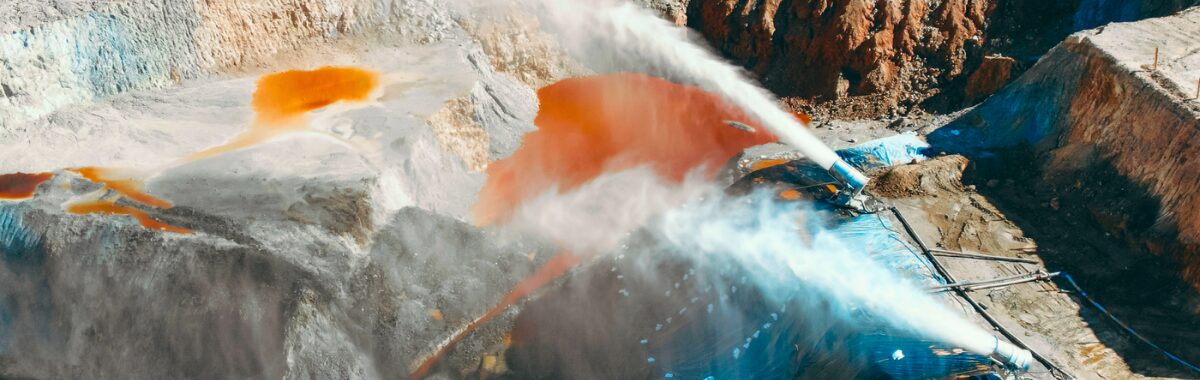
To mitigate this exposure, Minetek supplied and commissioned a stainless steel, land-based 400/200 water evaporation system with an integrated Environmental Management System (EMS).
Operating at approximately 40 m³/h (180 GPM) with about 45% efficiency, the system delivered measurable daily reductions in pond levels, restored freeboard capacity, and helped maintain a compliant water balance under peak inflow conditions.
The outcome demonstrates a regulatory reality. Rising water becomes a compliance problem long before any spill or failure occurs.
Proactive water management as a compliance strategy.
Across both the United States and Australia, mining regulations do not wait for failure before enforcement begins. Rising water levels create regulatory exposure when they move beyond approved operating limits, reduce freeboard, or signal increasing risk to water quality, structural stability, or safety. In this context, compliance is defined by anticipation and control, not reaction.
The Missouri Cobalt project demonstrates how proactive water management can stabilise risk before it escalates into non-compliance. By addressing rising water early and restoring balance within approved parameters, operators can maintain regulatory confidence, protect assets, and avoid disruption.
As regulatory scrutiny continues to increase, effective water management is no longer just an operational requirement. It is a core compliance strategy that underpins safe, resilient, and sustainable mining operations.