 English
  English (United States)
  Spanish
  Portuguese
  French
  Indonesian
  Italian
 Mechanical wastewater evaporation systems accelerate water loss from wastewater. They reduce the volume sites need to store, treat, or dispose of. Operations use them to manage excess wastewater, handle difficult streams, and relieve pressure on storage and compliance pathways.
Mechanical evaporation does not replace every form of conventional wastewater treatment. Instead, it reduces wastewater volume where sites face limited discharge options, high treatment costs, or wastewater inventories that rise faster than storage alone can manage.
For water-intensive operations, wastewater evaporation systems support broader water management by reducing stored water, improving control over difficult streams, and lowering overflow and compliance risk.
How wastewater evaporation reduces stored water risk.
- Volume reduction: Mechanical wastewater evaporation systems reduce stored wastewater by converting water into vapor and leaving a smaller residual stream to manage.
- Treatment fit: Mechanical evaporation works best when volume reduction is the priority, particularly where conventional treatment is costly, constrained, or not practical on its own.
- Operational value: Mining, industrial, and food production facilities use evaporation to reduce storage pressure, improve wastewater control, and lower overflow and compliance risk.
- System selection: The right evaporation approach depends on wastewater chemistry, site constraints, discharge limitations, and how the system fits within the broader water management strategy.
- Minetek capability: Minetek delivers engineered wastewater evaporation solutions that help sites reduce stored water, manage operational risk, and improve water management control.
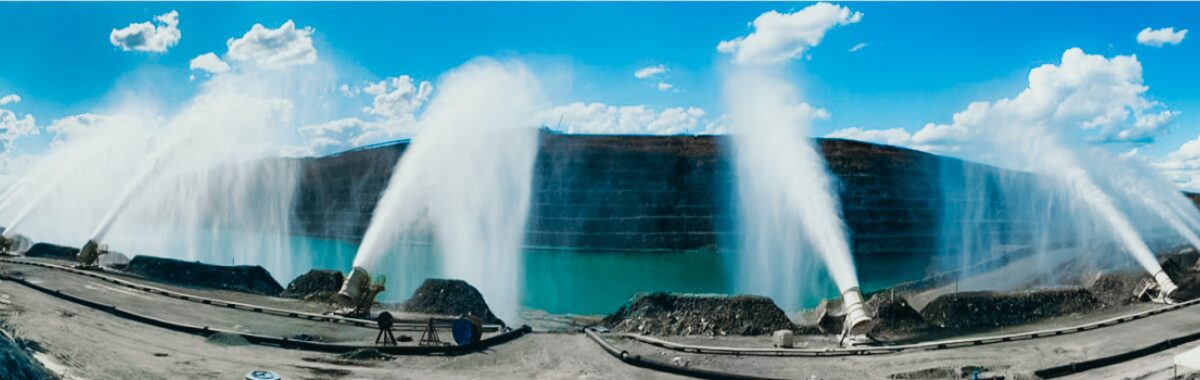
How do mechanical wastewater evaporation systems work?
Wastewater enters the system → Water is accelerated into vapor → Residual volume is reduced
Mechanical wastewater evaporation systems work by accelerating water loss from a wastewater stream, reducing the volume that must be stored, treated, or disposed of. For sites managing rising wastewater inventories, limited storage capacity, or difficult-to-manage streams, evaporation reduces stored water, relieves pressure on storage infrastructure, and improves control over site water balance.
- Wastewater enters the system
Wastewater is collected and directed into an engineered evaporation process. - Water is accelerated into vapor
Mechanical force, airflow, heat, or atomization increases the evaporation rate beyond passive storage. - Residual volume is reduced
Less liquid remains to store, manage, or move through downstream treatment or disposal pathways.
Key characteristics of mechanical wastewater evaporation.
- Volume reduction focused: The process is designed to reduce stored wastewater volume, not simply improve water quality.
- Engineered for difficult streams: It can support wastewater management where salinity, variability, or treatment cost make conventional pathways harder to rely on.
- Useful under storage pressure: It helps sites manage rising inventories when ponds, tanks, or other containment infrastructure are under strain.
- Applied within broader water management: Mechanical evaporation often supports a larger treatment or water balance strategy rather than replacing every other process.
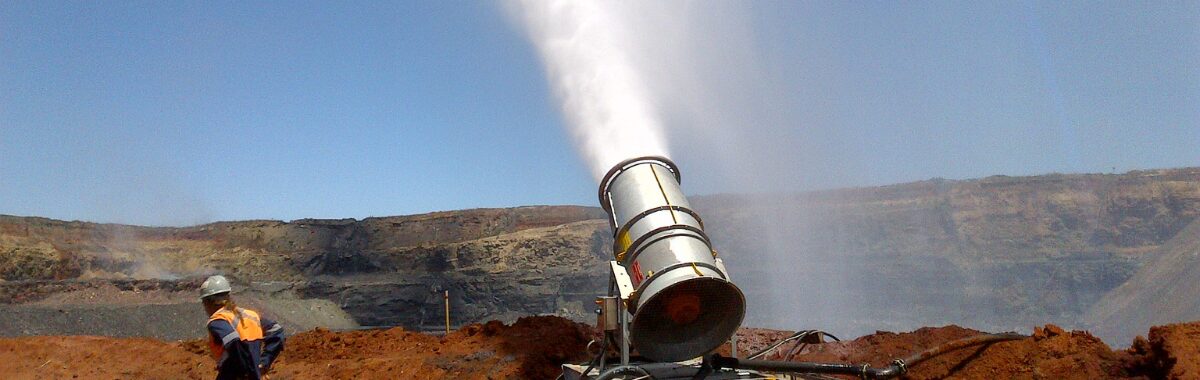
How does mechanical evaporation compare with traditional wastewater treatment?
Mechanical evaporation and traditional wastewater treatment solve different problems. Traditional treatment is designed to improve water quality so water can be discharged, reused, or sent to another treatment stage. Mechanical evaporation is designed to reduce wastewater volume, making it valuable when stored water, limited discharge pathways, or difficult-to-manage streams create operational pressure.
| Category | Traditional wastewater treatment | Mechanical evaporation |
| Primary purpose | Improves water quality by removing contaminants | Reduces wastewater volume by accelerating water loss |
| Best fit | Discharge, reuse, or compliance-driven treatment goals | Stored water reduction, water balance control, and difficult-to-manage streams |
| Typical application | Removes solids, organics, oils, nutrients, or other contaminants | Reduces liquid inventory where storage, hauling, or downstream treatment is under pressure |
| Operational outcome | Water moves closer to discharge or reuse quality | Less liquid remains to store, manage, or dispose of |
| Role in site strategy | Often forms the core treatment pathway | Often supports broader treatment, but can also operate as a standalone solution where volume reduction is the primary goal |
In many operations, mechanical evaporation supports traditional wastewater treatment rather than replacing it. It helps reduce stored wastewater volumes while other processes manage water quality requirements. In some applications, it can also operate as a standalone solution where the immediate priority is eliminating volume rather than producing discharge-quality water.
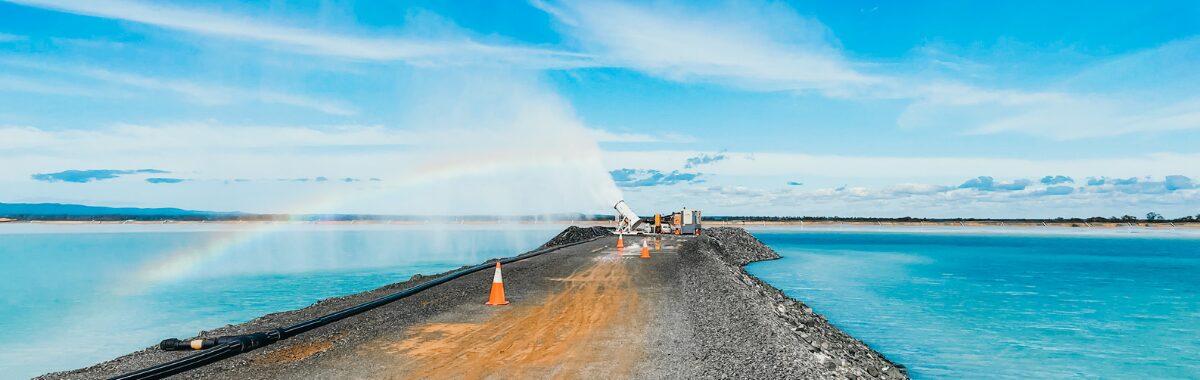
How does Minetek support wastewater volume reduction?
Minetek delivers engineered mechanical evaporation solutions that reduce stored water, relieve pressure on site infrastructure, and improve control over difficult water streams. Mechanical evaporation supports sites where volume reduction is the priority, whether as a complementary step within broader treatment or as a standalone solution for reducing liquid inventory.
System capability
- Flexible deployment: Land-based and floating evaporators for pits, ponds, dams, TSFs, and other storage facilities.
- High-capacity performance: Evaporation capacity up to 135 m³/h or 600 GPM per system.
- Difficult water handling: Operates across challenging water qualities, including high total dissolved solids (TDS) and total suspended solids (TSS) streams.
- Automated environmental control: Automated Environmental Management System (EMS) adjusts to real-time weather and wind conditions.
- Modular scalability: Modular, scalable deployment that can be relocated as site conditions change.
- Built for remote operation: Low-maintenance, heavy-duty construction for remote, all-weather operation.
Applications supported by Minetek Water.
- Tailings water management: Reduces stored water volumes and supports more controlled tailings water management.
- Pit dewatering: Helps remove excess water that can restrict access and affect operational continuity.
- Process water disposal: Reduces liquid inventory where process-affected water creates storage or handling pressure.
- Produced water management: Supports operations managing difficult residual water streams before further treatment, disposal, or reuse.
- Saline water management: Provides a practical option where high-salinity water is difficult or costly to manage conventionally.
- Acid water management: Supports sites managing acidic or contaminated water under tight environmental controls.
- Emergency water management: Helps operations respond when rainfall, overflow risk, or unexpected water accumulation threatens storage capacity.
- Food facility wastewater management: Supports facilities managing high wastewater volumes where storage and disposal pathways are under pressure.
- Legacy mine closure: Supports mine closure and post-operational water management by reducing stored water volumes, lowering wastewater liabilities, and improving control over legacy pit water levels.
- Total site water balance management: Supports operators managing water throughout the life of mine by reducing stored water, controlling site water levels, and improving site water balance.
- Municipal and industrial water management: Supports short- and long-term wastewater or leachate management where storage limits, seasonal impacts, discharge constraints, and compliance risk are increasing.
- Coal ash pond management: Supports coal ash pond dewatering and water level control where excess stored water creates environmental and operational pressure.
- Landfill water management: Helps landfill operators manage excess water volumes, reduce storage pressure, and improve control over site water risk.
- Leachate water management: Supports sites managing leachate and other hazardous liquid waste where compliance, storage, and environmental exposure must be tightly controlled.
- Chemical plant wastewater management: Supports chemical facilities managing difficult wastewater streams where storage, disposal, and compliance pathways are under pressure.
- Pulp and paper wastewater management: Supports pulp and paper operations managing wastewater volumes, storage pressure, and broader site water risk.
For operations under pressure to reduce stored wastewater volume, Minetek provides a practical way to improve water balance control while supporting broader treatment and compliance strategies through advanced mechanical evaporation.
Reduce stored wastewater with more control.
Download the Minetek Water capability brochure or connect with a Minetek Water expert to explore the right wastewater evaporation solution for your site.
Frequently Asked Questions (FAQ)
What are wastewater evaporation systems?
Wastewater evaporation systems reduce liquid wastewater volume by accelerating water loss from the stream.
How do mechanical wastewater evaporation systems work?
Mechanical wastewater evaporation systems accelerate water into vapor, leaving a smaller residual volume to manage.
How does mechanical evaporation compare with traditional wastewater treatment?
Traditional treatment improves water quality. Mechanical evaporation reduces wastewater volume and often supports broader treatment.
Where are wastewater evaporation systems used?
Wastewater evaporation systems are used in mining, industrial processing, coal ash ponds, landfill and leachate management, chemical plants, and pulp and paper operations.
When is mechanical evaporation the right fit?
Mechanical evaporation is the right fit when sites need to reduce stored wastewater, relieve storage pressure, or manage difficult-to-handle streams.