Contact Us
Return to news & insights

A sustainable underground ventilation solution for Agnew Gold Mine

Publish date: 5 July 2024

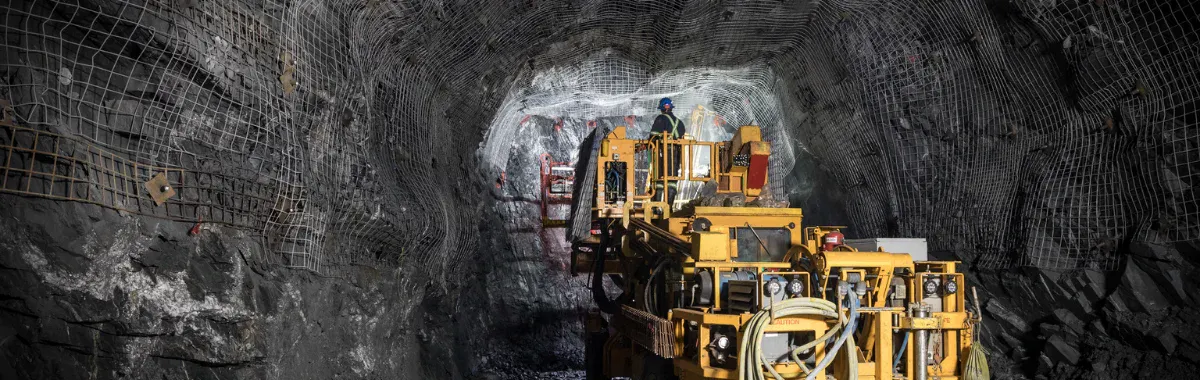
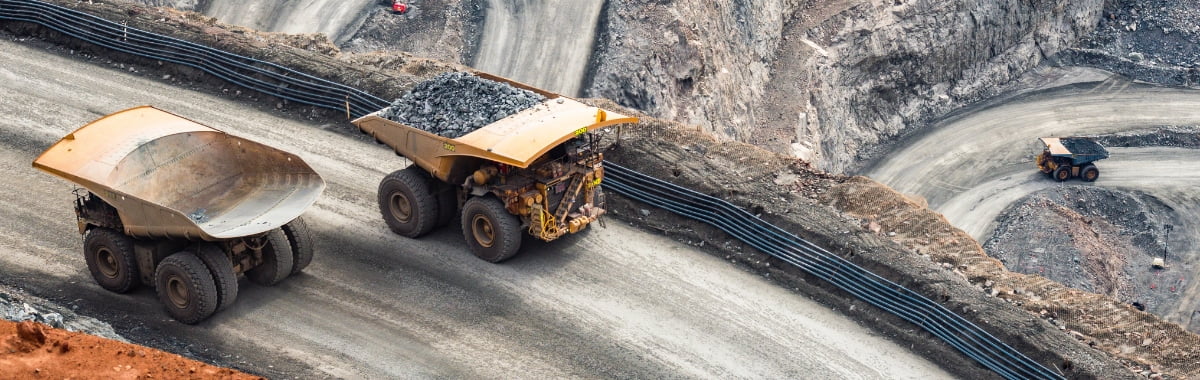
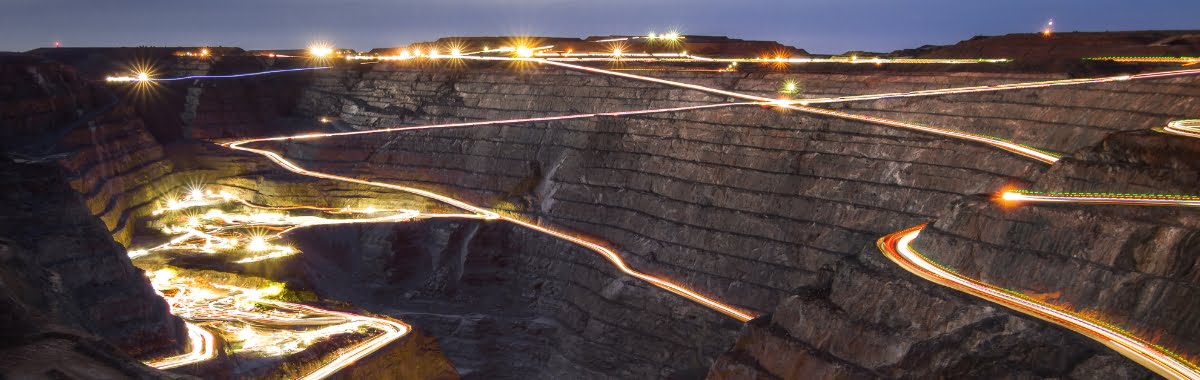
Located just 30km from Leinster, Western Australia is the Northern Norseman-Wiluna Greenstone Belt. This mining region is home to the Agnew Gold Mine, owned by the international mining corporation Gold Fields. Agnew mine houses the Waroonga and New Holland underground deposits, the last two remaining gold mines in the Goldfields-Esperance region. Both Agnew mines have been operational since the 1880s, with a resurgence in production over the past decade. Between 2021 and 2022 Agnew Mine produced between 232,000oz -240,000oz of gold [1].
agnew-1

Net-zero Underground Ventilation.

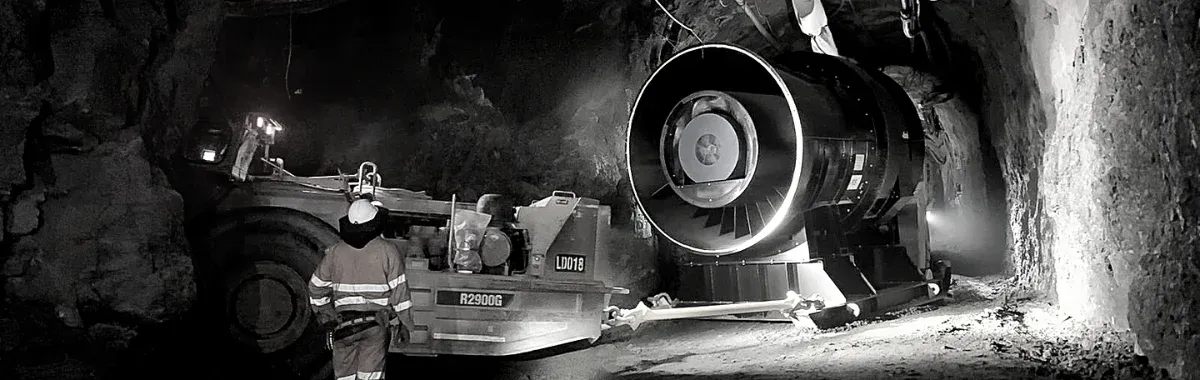
The Agnew Gold Mine required a complete ventilation upgrade to meet Life Of Mine (LOM) requirements. This solution involved future-proofing for continuing production, mine extensions and brownfield exploration throughout under-explored sections of the tenements. This Gold Mine was experiencing challenges with the existing primary ventilation circuit. The air volume flow rate was not achieving the required free air volume or pressure. Therefore, debottlenecking was required to achieve their goal of increased production and expanded exploration.

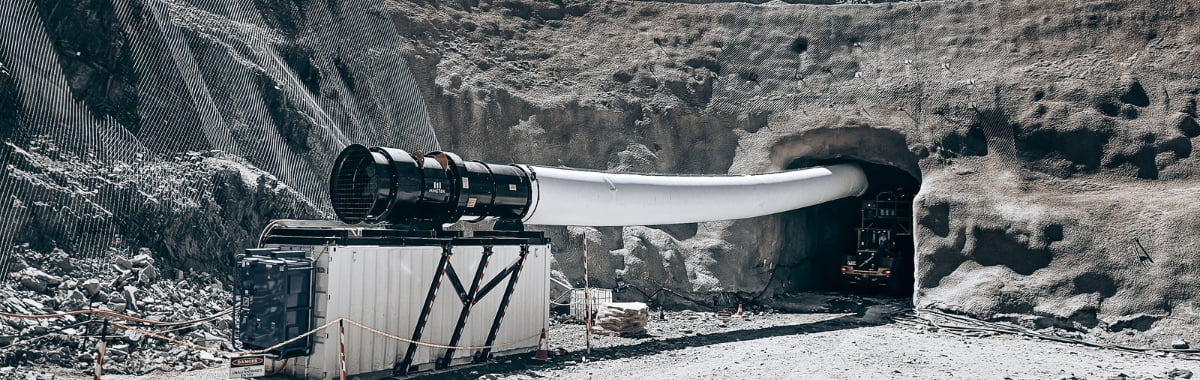
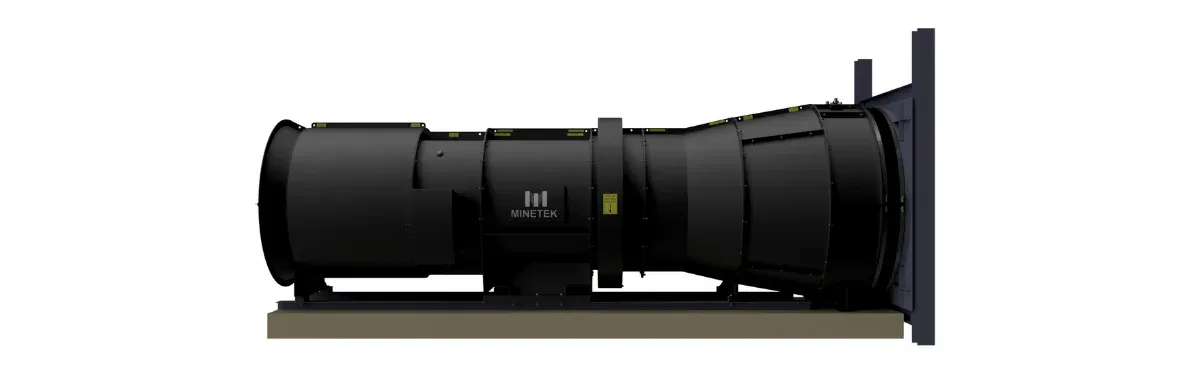
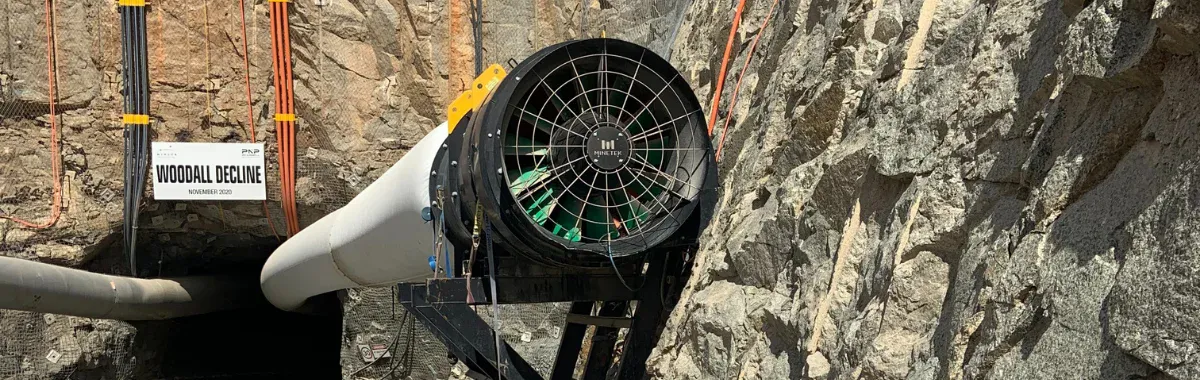
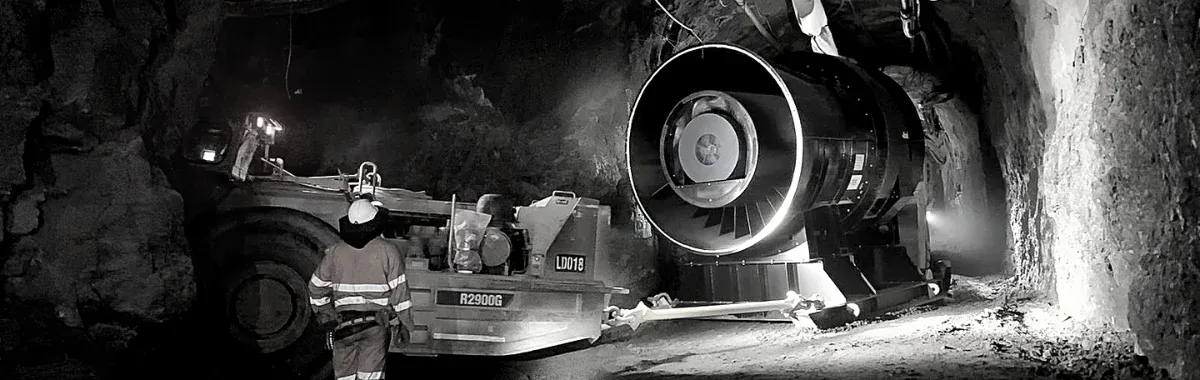
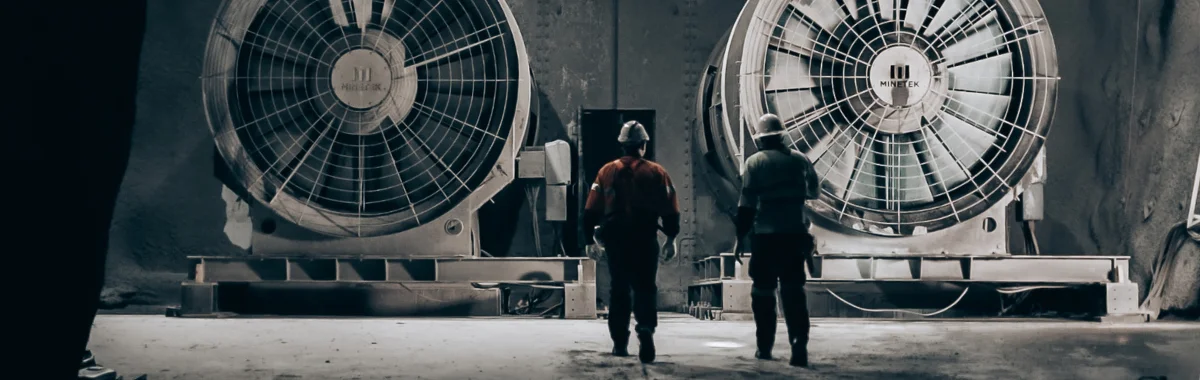
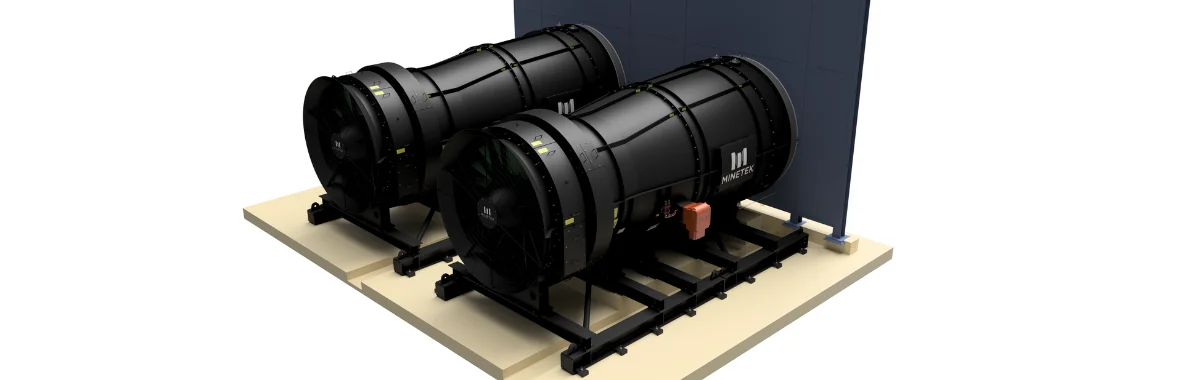
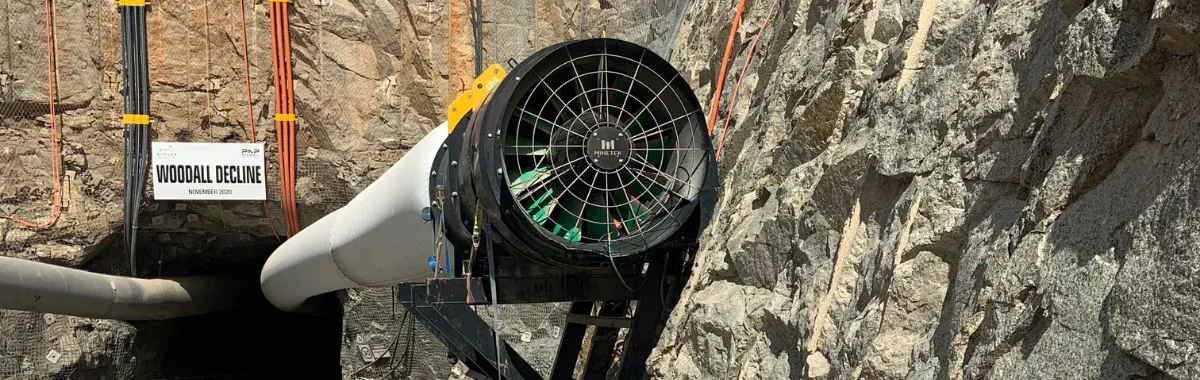
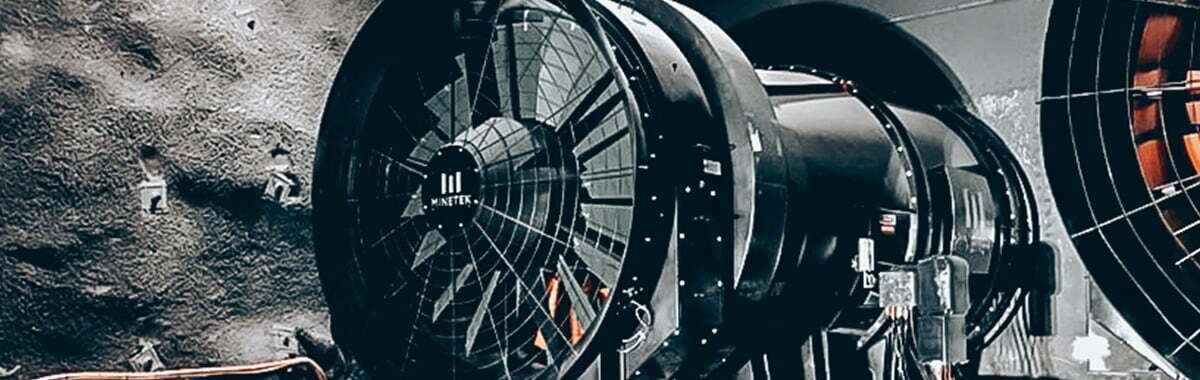
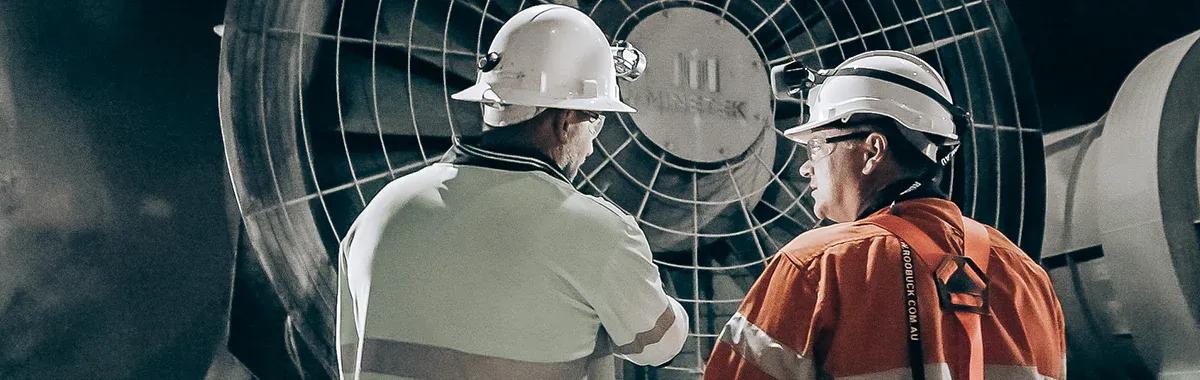
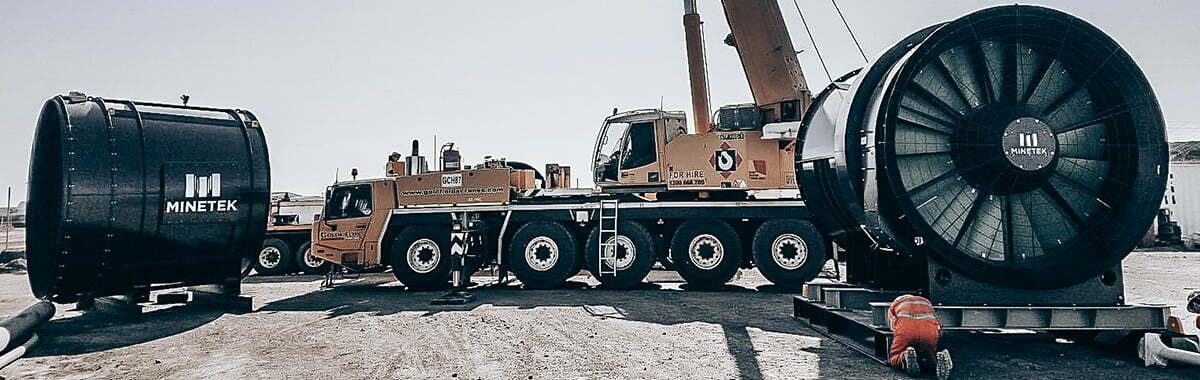
Agnew Gold Mine commissioned Minetek to help achieve their long-term vision and demands by developing a customised underground ventilation solution. Minetek’s solution was a Primary Booster Fan which included the removal of redundant equipment and installing the new fans. This unique solution was an Australian first for a fan of this combined size and technology, powered by Agnew’s renewable grid network. Discover the full case study by requesting a free PDF copy.
agnew-2

Sustainable Ventilation Solution.

Agnew Gold Mine favoured a low energy, high volume ventilation solution with low energy consumption. Minetek’s Primary Fans required energy output of 1,100kW / 1,000 V and a flow rate of 280 m³/sec – 350 m³/sec at a pressure of 3,700 Pa – 4,200 Pa meeting both current and future production and development needs.

Minetek’s Performance On Demand (POD) technology enabled a seamless operation with the ability to adapt pressure and power consumption without using Variable Speed Drive (VSD) controls. Our impulse bladed impeller controls the POD system with anti-stall technology installed to capture turbulent air flow and unstable pre-swirls, to ensure optimal fan performance.
agnew-3

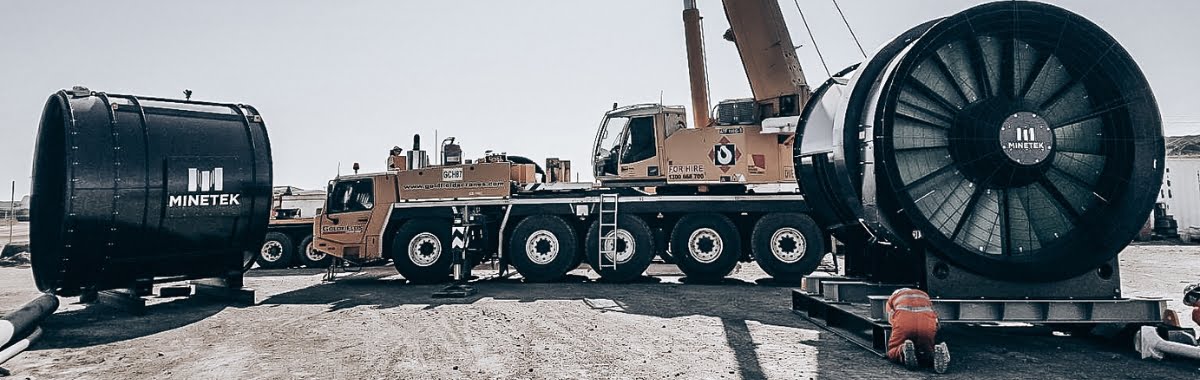
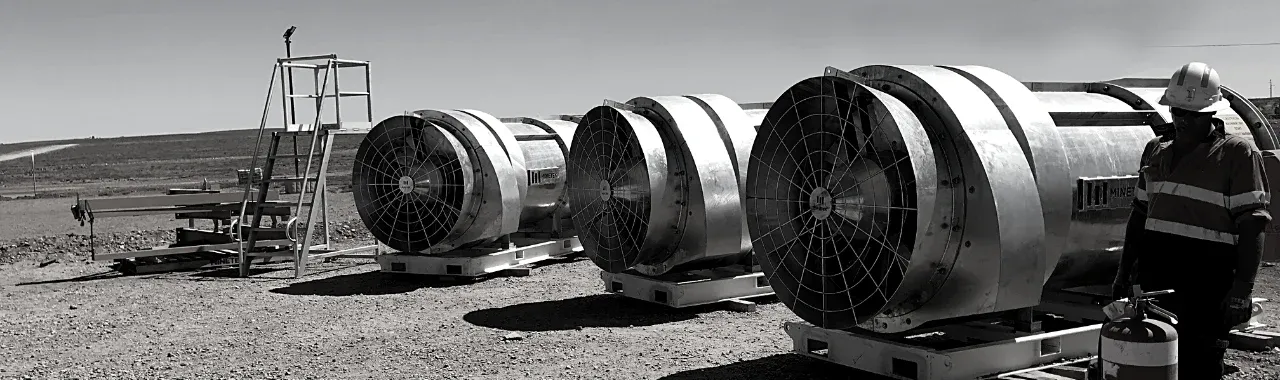
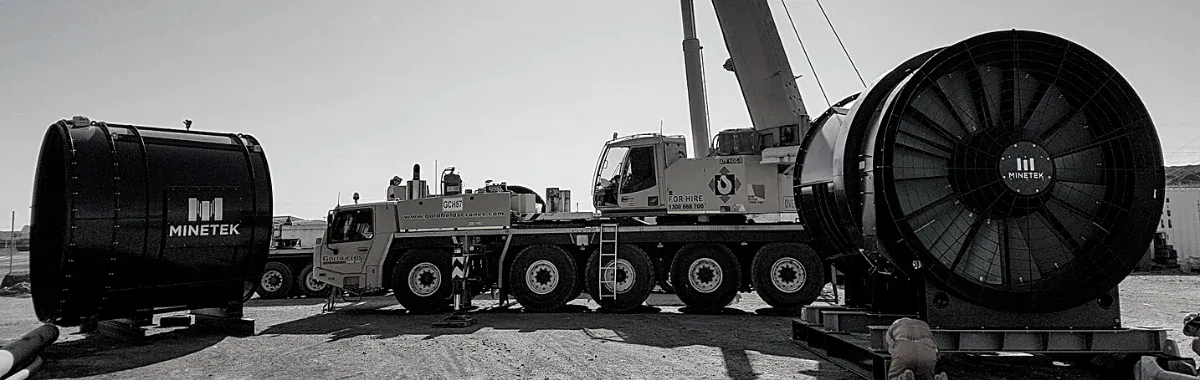
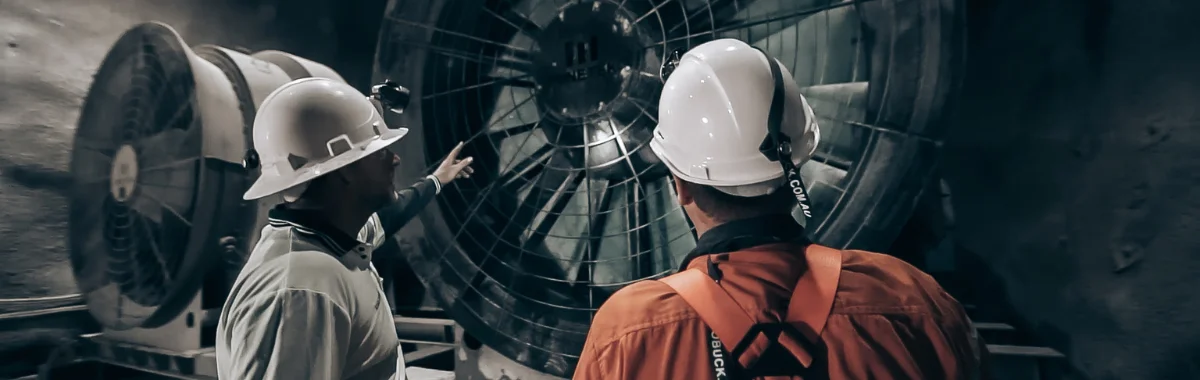
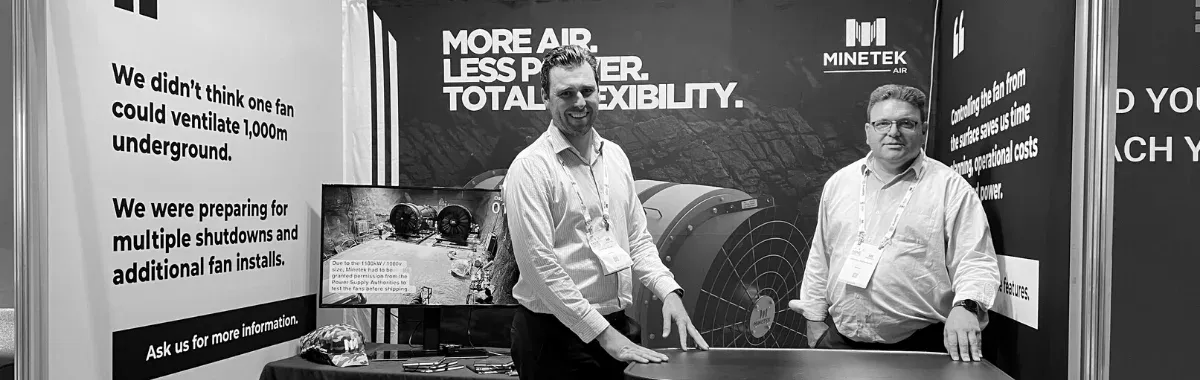
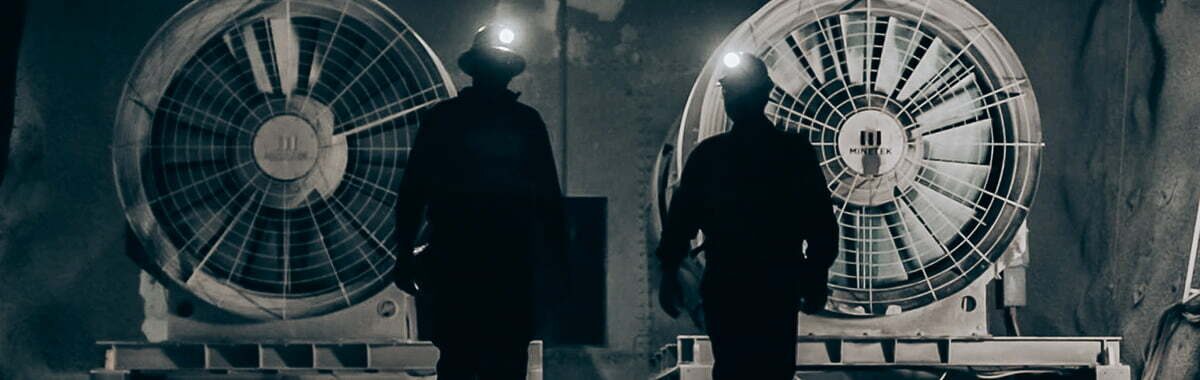
Due to their sheer size, Minetek’s Primary Fans had to be tested prior to shipping. We gained approvals from the Power Supply Authorities, and all other facilities within the Minetek complex had to be shut down to provide enough power for testing. The performance of the Primary Booster fans was pilot tested in Minetek’s testing chamber which happens to be the largest fan test chamber in the southern hemisphere. This unique environment was built to conform with AMCA standards and can simulate the most challenging conditions in any underground mining scenario.

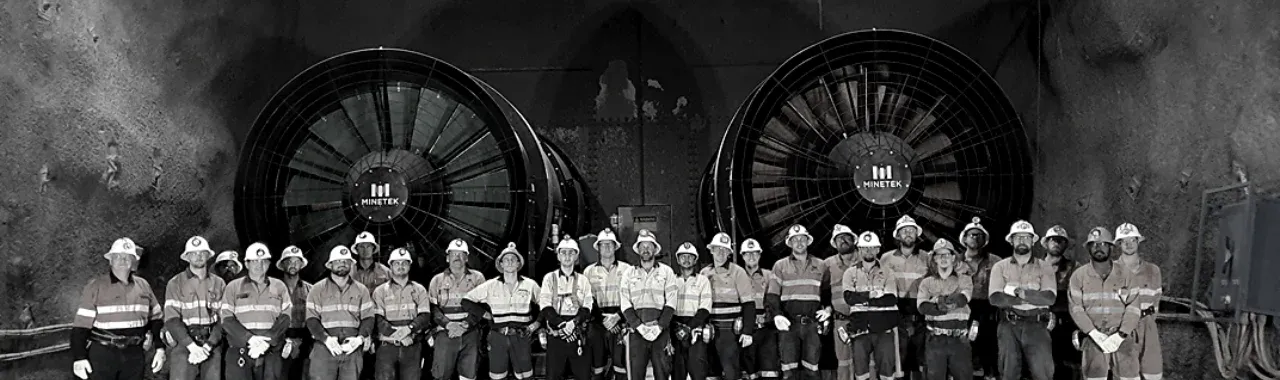
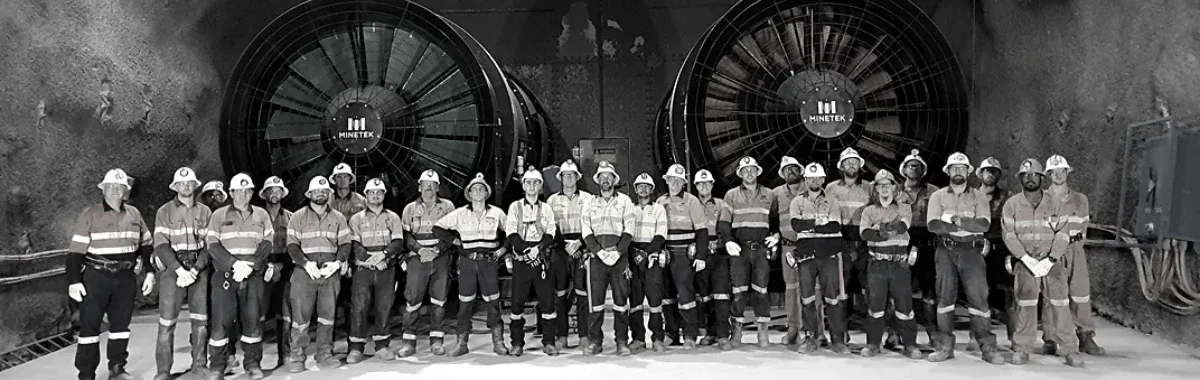
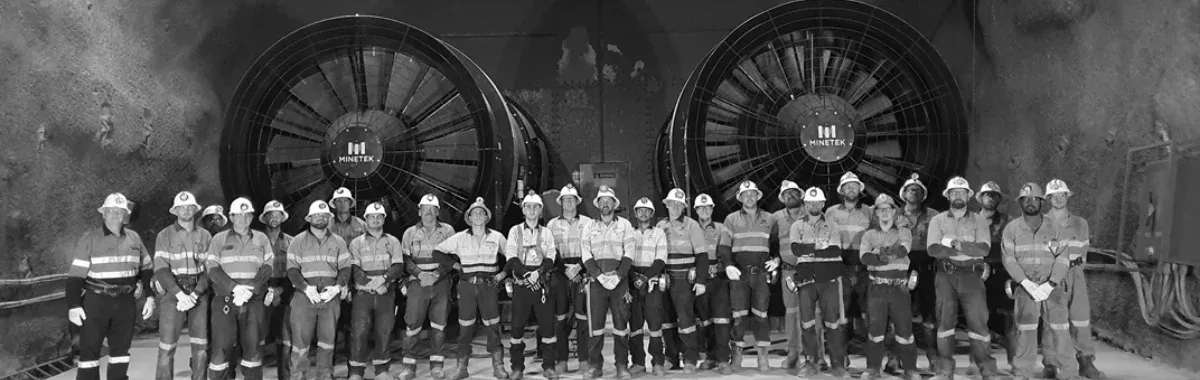
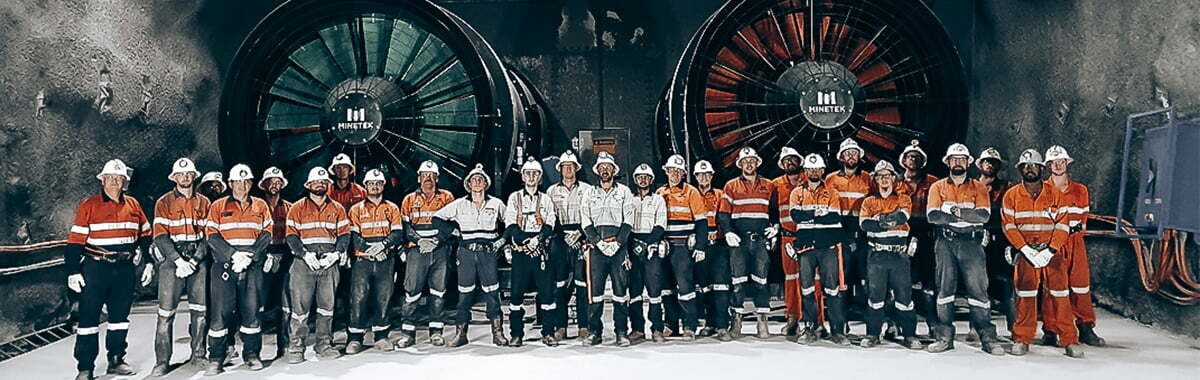
Minetek engineers and key personnel kept all project goals on track, achieving the installation within a short timeframe. The previous fans were removed and replaced with new fans in just four days of commissioning. Originally, we anticipated this project to be completed within 10 shifts however our seamless project management enabled a turn-key installation in only 7 shifts.
agnew-4

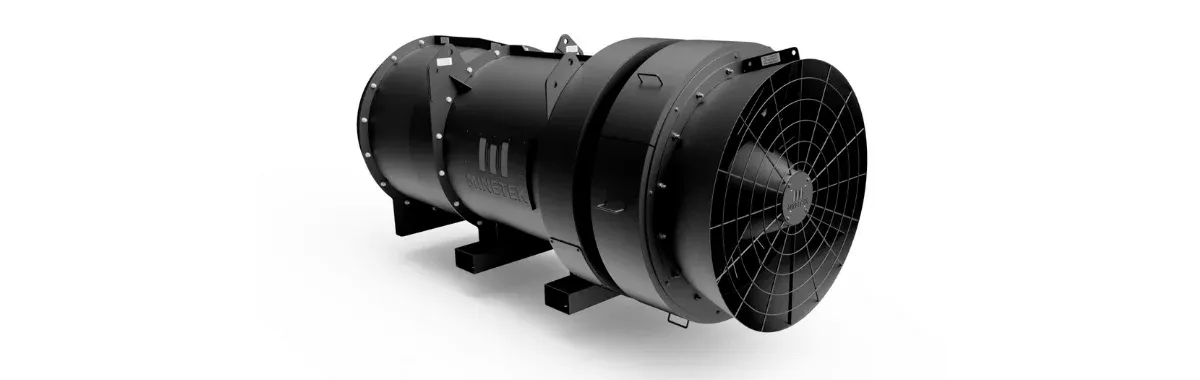
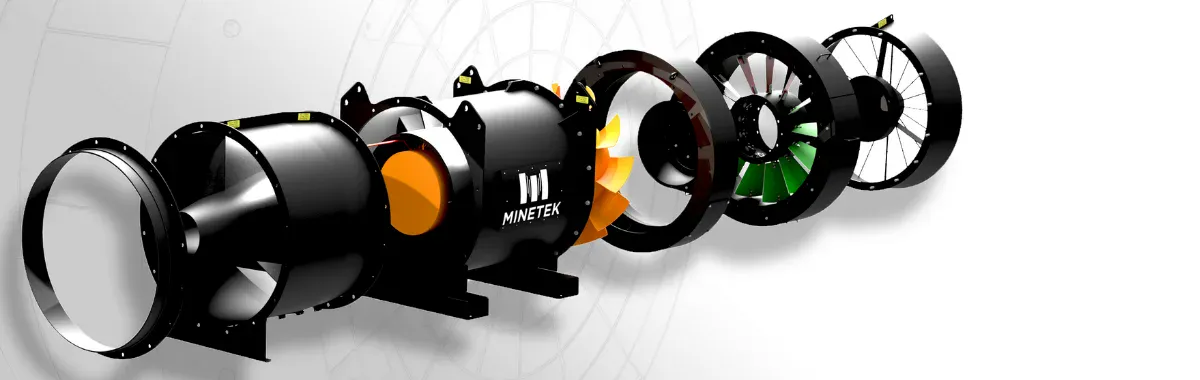
1100Kw Primary Booster Fan

Engineered with the mining industry at the forefront, Minetek’s High Output Axial Primary Booster Fans are a robust and reliable ventilation solution with a broad operating range. Our unique steel impeller allows for operation at high pressures with prolonged life, in even the harshest of underground mining environments.

Primary Booster Fan Specifications

  • Power range – 1100 kW (kilowatts) / 1,000 V (volts)
  • Volume flowrate – 350 m³/sec (cubic metres per second) / 742,000 CFM (Cubic Feet Per Minute) (cubic feet per minute)
  • Pressure – 4,200 Pa (pascals) / 16.9 in.wg (inch of water)
agnew-5

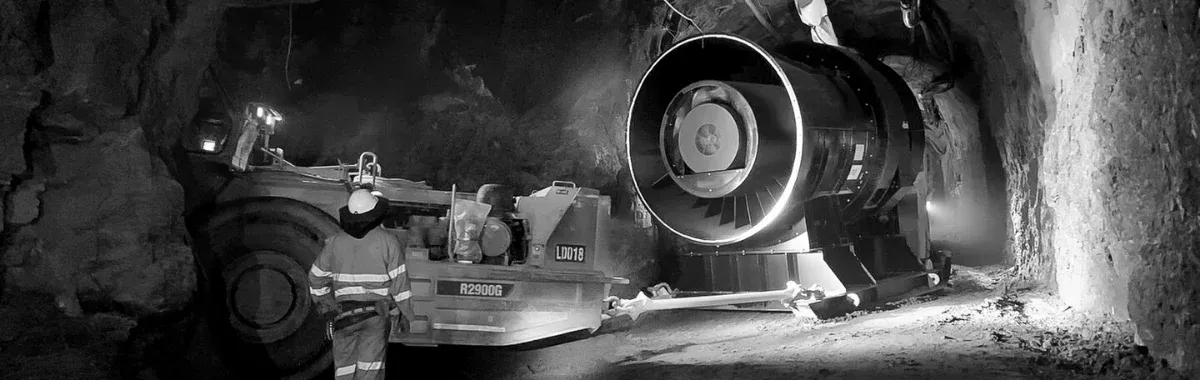
Minetek’s primary fans, have been proven to reduce power consumption costs by up to 50%, by regulating flow rates from the integrated POD system. Our fans have the capability to outperform larger alternatives and then be re-deployed quickly and easily to other locations as the mine workings evolve. Underground mines can reduce on ventilation capital costs with less fans required to meet underground flow rates and pressure requirements. Achieve safe, reliable operations while delivering guaranteed reductions in power consumption and increased profitability, assisting green mines achieve net-zero emission targets.

Minetek has expanded with a new operations hub located in Perth, servicing the Western Australian Mining regions. Our world-class service has expanded to meet the demand and responsiveness needed to support our clients’ requirements. Our technical team is now close by and readily available to help with your site. The team at Minetek are confident and ready to provide solutions that match your requirements. Contact us to find out more about our primary and secondary ventilation solutions.
Return to news & insights

U.S. mining trends and innovations: Minetek Air’s solutions for sustainable mining

Publish date: 21 June 2024

The U.S. mining industry is at a pivotal moment, facing a blend of challenges and opportunities amidst significant reforms across the country.

A key development is the creation of an interagency working group by the Department of the Interior. This group is focused on overhauling hardrock mining laws, regulations, and permitting policies to support President Biden’s goals for better environmental protection, sustainable resource management, and responsible mining practices.

Made up of experts in mine permitting and environmental law, this group will review current laws and processes to suggest improvements that prioritise environmental, community, and Tribal engagement standards at every stage of mine development.

air-2

The newly released Fundamental Principles for Domestic Mining Reform by the Biden-Harris Administration is central to this effort. These principles prioritise environmental protection, community involvement, and fiscal responsibility, aiming to strike a balance between economic growth and environmental conservation.

These initiatives represent a watershed moment for the U.S. mining industry, which is confronting the need for modernisation and adaptation.

In today’s article, we will discuss the emerging trends in the mining industry and examine their implications for companies operating in America.


The impact of regulatory changes on the U.S. mining industry

We are seeing a significant shift towards sustainability worldwide, with more than 140 countries setting net-zero targets and covering about 88% of global emissions. Among them, the United States, historically one of the largest contributors to global emissions, is taking bold strides towards sustainability.

In line with the “Investing in America” agenda, the U.S. Department of Energy (DOE) has allocated up to $475 million to fund five projects across Arizona, Kentucky, Nevada, Pennsylvania, and West Virginia. These projects, situated on both current and former mine lands, represent a radical effort to accelerate the deployment of clean energy technologies in regions historically reliant on fossil fuel extraction. This substantial funding injection underscores the federal government’s commitment to promoting clean energy innovation and revitalising communities grappling with the decline of traditional mining industries.

The United States is taking a leading role in the clean energy revolution, striving for a future that’s more sustainable and resilient for generations to come. Yet, amidst these proactive steps, American mining operations are facing a changing regulatory environment, both locally and globally. As governments worldwide step up efforts to address climate change and promote environmental sustainability, mining companies are grappling with a complex array of regulations aimed at minimising their environmental footprint.

air-3

Within the U.S., initiatives like the Clean Air Act, Clean Water Act, and National Environmental Policy Act enforce strict environmental standards on mining activities. These standards require companies to implement pollution control measures, conduct thorough environmental assessments, and engage in transparent consultation processes with stakeholders. There is growing support for updating the 1872 Mining Law to promote clean energy initiatives.

In light of these trends, American mining firms are urged to embrace sustainable practices and embrace clean technologies. Moving ahead, it’s crucial to uphold regulatory compliance while fostering responsible resource management. By addressing environmental issues and embracing sustainability, mining companies can manage regulatory risks and foster long-term value in an increasingly environmentally conscious world.


Innovations in ventilation systems

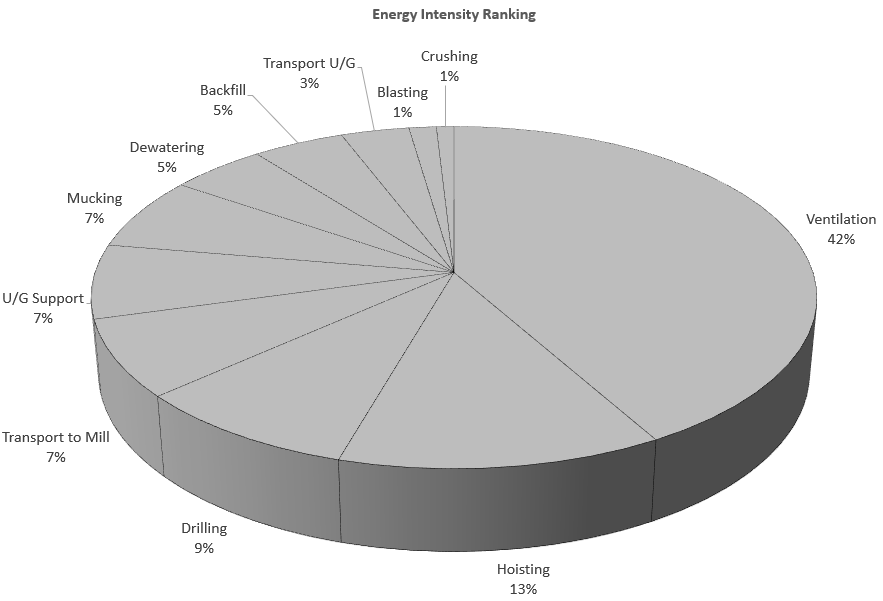
Ventilation systems are critical to maintaining safe working conditions for miners, providing fresh cool air to underground miners, and diluting flammable and machine exhaust gas. Yet their energy consumption accounts for a significant portion—often 40% or more—of a mine’s total energy usage. This places a substantial financial burden on mining operations and underscores the imperative to minimise energy consumption while maximising efficiency.

To tackle this challenge, mines are increasingly focusing on adopting energy-efficient ventilation techniques. This means embracing advanced technologies like automated airflow controls, and optimised ventilation designs. The aim is to reduce energy consumption while ensuring safety and maintaining air quality standards.

air-4

The role of automation and digitisation in mining operations

Automation and digitisation have become integral components of modernising industries, and the mining sector stands to benefit significantly from their implementation. The adoption of automation and digitisation technologies in mining operations offers a wide range of advantages, including:

1. Increased Productivity: Automation streamlines processes, reduces downtime, and enables continuous operations, ultimately leading to higher productivity levels.

2. Enhanced Safety: Automated systems can perform tasks in hazardous environments, reducing the risk of accidents and injuries to human workers.

3. Reduced Operational Costs: Automation minimises the need for manual labour, leading to lower labour costs, and optimises resource utilisation, resulting in overall cost savings.

4. Improved Environmental Sustainability: By optimising processes and reducing resource wastage, automation helps minimise the environmental footprint of mining activities, contributing to sustainability efforts.

air-5

The integration of automation and digitisation technologies presents a pivotal opportunity for the mining industry. These advancements allow mining operations to attain greater productivity, enhanced safety, reduced costs, and improved environmental sustainability, ultimately positioning them for long-term success.


Minetek’s solutions for sustainable mining

Minetek is an innovative and solution-driven company specialising in engineering, designing, manufacturing, and implementing advanced equipment for the industrial and mining sectors. With decades of experience helping mining and industry leaders achieve environmentally sustainable air management outcomes, Minetek has built a solid reputation for developing safe, reliable, and profitable operations.

Minetek’s High Output Axial Fan exemplifies the benefits of technological innovation in the mining industry. This advanced fan system offers unprecedented power savings and control capabilities, setting a new standard for underground mining operations. With its high-pressured fabricated steel impeller, Minetek’s fan technology represents cutting-edge mining innovation, allowing operation at pressures previously thought unachievable with traditional axial fans.

air-6

The inclusion of Minetek’s patented Mine Air Control (MAC) system further enhances the efficiency and performance of the High Output Axial Fan. Furthermore, by utilising Minetek’s Performance on Demand (POD) technology, operators can optimise air pressure and power consumption without the need for Variable Speed Drive (VSD) control. This innovative technology ensures a seamless, responsive solution that maximises performance while significantly reducing power consumption—up to 50% in some cases—resulting in increased operational efficiency and cost savings.

What’s more, operators can remotely control the ventilation system from the surface to ensure optimal performance. Providing real-time access to crucial data, enabling adjustments without requiring on-site presence. This remote control feature not only boosts operational flexibility but also enhances efficiency, enabling mining companies to optimise ventilation resources with ease.


Conclusion

The U.S. mining industry is currently facing a period of change, with new regulations and technological advancements on the horizon. Emerging trends in the mining industry such as stricter regulations, technological advancements, and the integration of automation and digitisation are poised to significantly impact the American mining landscape. These developments underscore the need for mining companies to adapt and innovate in order to thrive in an evolving environment.

Innovative solutions like Minetek’s High Output Axial Fan and Mine Air Control (MAC) system demonstrate how technology can boost efficiency, safety, and sustainability in mining. It’s essential for mining companies to stay updated on these advancements, embracing sustainable practices and technologies. This ensures not only regulatory adherence but also contributes to a more sustainable future for the industry and the communities it serves.

air-7
Return to news & insights

3 key trends driving underground ventilation

Publish date: 21 June 2024

From the moment mankind began the pursuit of mining the earth for valuable commodities, there has been one unchanged constant. The need for a safe, reliable and efficient supply of air to those underground. This can be achieved through adequate underground ventilation & air solutions.

Since the beginning of civilisation, man has toiled to extract stone, ceramics and later precious minerals to subsist, to improve his way of life and in time, to prosper. Following the onset of the industrial age, this pursuit has expanded on a vast scale and the need to supply air sustainably and in volume to underground operations has grown.

Today, however, while the pace at which mining is undertaken throughout the world has increased, the imperatives are changing. While the core responsibility of global miners is to provide sustainable operations, the need to constantly adapt and generate new efficiencies is ever-present. On top of the need for quality air supply, the industrial narrative is expanding with miners now charged with the mandate of achieving increased safety, profitability and environmental outcomes.

As the pace and scale at which mining continues into the future, there are three key enablers that are guiding this new era of mining & underground ventilation;

  1. Flexibility
  2. Technology
  3. Agility

1. Ventilation flexibility

The ability to adapt to change is vital in any industry and being able to tailor processes to meet operating conditions is key. In underground mining, the ability to target air supply in line with production requirements is one of the main challenges for operators. To meet this challenge, the concept of underground Ventilation On Demand (VOD) has been prevalent in recent years with systems designed to deliver airflow to workings based on scheduling and people movements.

However, the contemporary approach to delivering on-demand air supply in recent times has been to regulate airflow through complex and expensive infrastructure. The solution has been the application of Variable Speed Drives (VSD), Variable Frequency Drives (VFD) or Variable Voltage Variable Frequency Drives (VVCFD) – which control power to the underground ventilation system enabling airflow to be ramped up or down based on demand.

It is a given that high air velocities require high-pressure gradients and maintaining this pressure across a mining network comes at a high cost. In the post-2007 Global Financial Crisis (GFC) era and the subsequent mining downturn of 2013, the use of VSDs was seen as the logical way to tailor the supply of airflow based on demand, with the primary benefit being a reduction in power consumption costs. For an underground mine, has been estimated that ventilation systems can contribute to as much as 50% of power consumption needs. While there has been a heightened focus on driving down costs to enable economically sustainable operations, VSDs still present somewhat of a conundrum.

By nature, VSDs are a costly solution in themselves, with infrastructure and supporting control software ranging in the tens to hundreds of thousands of dollars. As expensive as they are, they are equally fragile, requiring dedicated, air-conditioned rooms and custom cabling for operation. While the benefits of Ventilation On Demand via the use of VSDs seem apparent, their use now almost seems illogical in the harshest of underground environments.

If only there was another way…

key-1

Enter Australian business Minetek, with a new approach to optimising airflow underground called Performance On Demand (POD). Minetek has developed an innovative approach to optimising air circuits enabling a shift away from requiring costly VSDs. This is certainly a watershed moment in underground ventilation. Able to be manually or autonomously controlled, the mechanically driven solution delivers the required flexibility for operators by tuning the dynamics of the airflow over the system’s innovative impellers.

By mechanically controlling the flow of air over the impellers – not the supply of power to the fan – power consumption is optimised and can be maintained at a significantly lower level. Minetek has been able to deliver up to a 50% reduction in power consumption costs, all while enabling operators to maintain flexibility in line with production and scheduling requirements. From a broader perspective, POD considers the new imperatives faced by miners – by actually driving down operational costs and in turn yielding improvements in environmental outcomes.

This new underground ventilation approach delivers true flexibility whilst improving profitability and the long-term viability of underground operations.

key-2

2. Underground ventilation technology

They say necessity is the mother of all invention and underground mining has a rich history of reflecting this expression. Driven by necessity, the mining sector has been constantly innovating to deliver safe, reliable and efficient operations underground.

Technology in mining has evolved with mankind. From the ancient use of tools to extract precious metals, to the use of black powder explosives to break apart large rocks in the late middle ages, mining has been a proving ground for new technologies for millennia.

Given the severity of underground conditions, the appetite for the development of enabling technology has maintained pace if not exceeded that of life above ground. Driven by the need to ensure safety, improve operational efficiencies and focus on reducing environmental impacts, mining has been an eager, albeit cautious adopter of new technologies.

Over the past two decades, in particular, the shape of technology in mining has moved towards new underground ventilation themes. Automation, optimisation, digitisation and even electrification are the new focus for underground miners, as organisations explore new and integrated ways to meet their safety, profitability and environmental objectives.

key-3

Underground ventilation is a tremendous lever in achieving progress against all three objectives and the application of new technologies can have a significant impact. Now, the key drivers in underground ventilation are very much about the interoperability of disparate systems within the operating layer and automating processes to maximise performance.

For years the requirement for ventilation has fundamentally been to meet a minimum volume and pressure requirement; however, the evolved mine now recognises the need to optimise assets and processes – like every other aspect of production – to extract maximum efficiency, drive down operating costs and increase profitability.

Minetek has at its core a focus on innovation and is relishing the opportunity to challenge the status quo in the design, implementation and operation of an underground ventilation system. Outside of MINETEK’s radical approach to the design of fan systems, the focus is squarely on integrating with mine systems to enable autonomous operation. Performance On-Demand is an excellent example of applied technology and Minetek are moving beyond the focus on reducing power consumption to explore truly responsive operation. While Radio Frequency Identification (RFID) technology has been around since the mid-1940s, its application in the industrial world is now connecting opportunities to improve processes in mining.

Minetek has developed an innovative new approach to optimising air circuits by integrating RFID technology to trigger its Performance On-Demand ventilation system and target air delivery based on vehicle movements. The approach is a game-changer in enabling operators to effectively reduce airflow to parts of the mine with no scheduled activity, maintaining airbag inflation levels at a minimum and reducing power consumption costs exponentially.

By automating triggered airflow and removing the need for human intervention, both safety and operating performance can be optimised. Connecting modern ventilation technologies to leverage data and driving predictive processes is the path forward to achieving true operational efficiency.

key-4

3. Ventilation agility

Agility is defined as being able to move quickly and easily. Being nimble, lithe and spry. In recent years the term agile has been adopted in the project management field, characterising the approach to dividing tasks into short phases with a frequent reassessment of plans and priorities.

Although coined within software development circles, where the pace of change is rapid, this definition of agility is certainly apt for the continuously changing environment in which underground mining occurs. By definition, a mine is constantly changing. It is required to undergo a systematic change in its shape and size as ore body is extracted from the earth.

While the initial design of an underground mine provides operators with a road map of how their infrastructure will evolve, it is an agile project management and the understanding of how to apply resources over time that is required to continually adapt and optimise.

Agility requires a combination of technology and flexibility.

At Minetek, we have recognised the need to be agile and have partnered with leading mines the world over to apply the latest thinking in mine ventilation, which is enabling miners to meet and exceed their objectives. For example, Minetek’s innovative fan technology is giving operators flexibility through Performance On Demand. POD enables operators to quickly ramp up or down air delivery by directing the flow of air through innovative control vane design.

This approach removes the need for VSD intervention which offers a distinct performance improvement. By removing the need for VSD, mines can use all available power without the risk of fan stalling or creating harmonic imbalance. This flexibility in control and application offers true agility, by lowering power consumption and costs and also allows faster re-entries following blasting activity.

key-5

To be agile requires a lean approach.

Minetek’s robust designed single-speed fans, with blades virtually impervious to wear, have been proven to reduce power consumption costs by up to 50%. Also, by stripping away bulk, the compact fan design is enabling miners to achieve agility by enabling them to be safely and efficiently deployed across the network with ease.

Compared to traditional larger fans, Minetek’s compact units have the capability to outperform larger alternatives and then be redeployed quickly and easily to other locations as the mine workings evolve. By virtue of their smaller size, Minetek fans can be easily installed in a range of orientations and tight underground locations. This agility and responsiveness enable operators to adapt to changing conditions while reducing the potential for manual handling safety impacts.

To be truly agile requires confidence.

Minetek has built deep domain experience in the design, manufacturing, testing and installation of the most advanced fan systems in the world and is backed by a large team of aeronautical, mechanical and electrical engineers. From initial decline modelling and consultancy through to post-implementation support, our team has the combined capability to help deliver an agile approach to your next ventilation project.

Return to news & insights

Diggers & Dealers Mining Forum

Publish date: 21 June 2024

The Diggers & Dealers Mining Forum is an annual event held in Kalgoorlie, Western Australia. This forum is a platform for mining industry deals, with a strong focus on networking and business opportunities. It is one of the largest mining events in Australia and attracts a large number of international delegates.

The Diggers & Dealers Mining Forum will be held from 1-3 August 2022 & 7-9 August 2023. Minetek will be in attendance and readily available to discuss strategies to reduce underground ventilation costs, enabling operational efficiency in challenging environments.

Minetek has recently opened a new operations hub located in Perth, Western Australia, providing convenient access to WA’s mining regions. Our world-class service has expanded to meet the demand & responsiveness needed to support our clients.

Minetek Underground Ventilation

Since 1984 Minetek has been delivering innovative, modular air management solutions to industry leaders around the world. We understand the need to reduce downtime and maintain operation efficiency by having the flexibility to control the delivery of air when and where it’s needed.

Services include scheduled fan servicing and ongoing support to help with the following;

  • Proactively identifying issues on time
  • Preventing costly repairs
  • Minimising downtime
  • Increasing equipment longevity
  • Optimised production
  • Ensures effective scheduling

This includes executing, reporting, communicating and interpreting maintenance activity results. Reports include a summary report including photos, follow-up actions and priorities.

Return to news & insights

Australian Mine Ventilation Conference

Publish date: 21 June 2024

The Australian Mine Ventilation Conference provides an opportunity to promote safe ventilation practices in mines. By sharing and disseminating knowledge gained from operations across the industry, we can help meet the demand for raw materials right here in Australia.

The Australian Mine Ventilation Conference is organised by AusIMM, the Australasian Institute of Mining and Metallurgy and has been running since 2011. The AusIMM committee calls on the knowledge and expertise within the mining industry, including academia, regulators and researchers. Each year, the Australian Mine Ventilation Conference showcases new and exciting innovations across various aspects of mine ventilation.

conf-1

Underground ventilation in mining

Underground ventilation systems are a key component in the management of mine risks. These measures effectively control various activities, such as monitoring air quality to ensure a healthy working environment. Statutory ventilation offers in Australia’s coal and metalliferous mines are now required by law. The statutory function of the ventilation officer is to control and manage the ventilation activities and standards forming a part of the mining operations at the mine.

The re-emergence of pneumoconiosis in miners is one way that dust can cause damage to your lungs. It’s an occupational lung disease, meaning you are likely going to encounter these particles only while at work and not outside on walks or other activities where they may be present naturally. Over the past few years, significant developments in practice and research have helped ensure we maintain safety levels within our underground mines. These and other factors should provide an incentive for underground operators to contribute strongly to the Australian Mine Ventilation Conference.

conf-2

Australian Mine Ventilation Conference

The 2024 Australian Mine Ventilation Conference will be held in Sydney from August 11th – 15th. This event brings together operators, equipment manufacturers and suppliers, consultants, government regulators and mining personnel to discuss strategies & technologies to improve mine ventilation. This event aims to promote safe ventilation practices to help improve the overall productivity and safety of mines in Australia and around the world.

Minetek is an exhibitor at the upcoming Australian Mine Ventilation Conference, showcasing our sophisticated and innovative underground ventilation technology. We’ve provided modular air management solutions to industry leaders around the world since 1984. Our deep domain engineering expertise enables mining operators to achieve safe, reliable operations while delivering guaranteed reductions in costs and increased profitability. Visit us at the Australian Mine Ventilation Conference to learn more about Minetek’s ventilation technology and innovative advancements.

conf-3

Underground ventilation fan technology

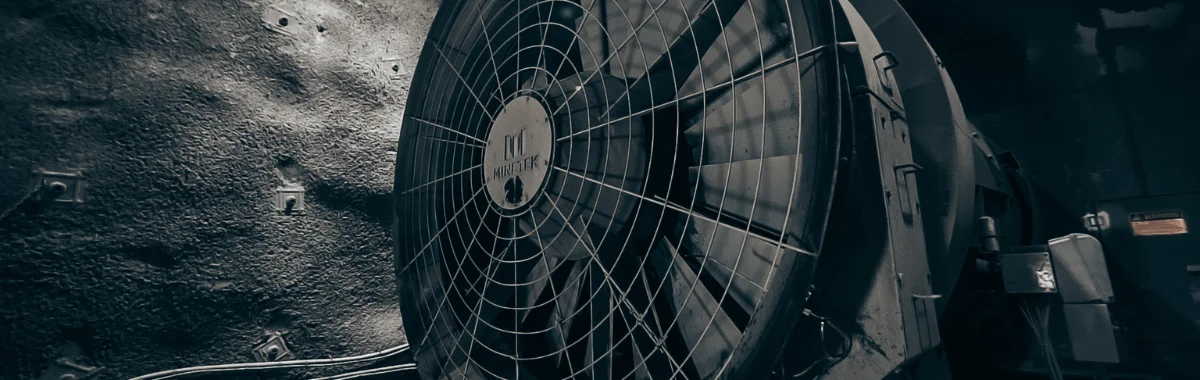
Minetek’s ventilation fans have an innovative anti-still chamber, controlling the flow of air, capturing turbulent airflow and unstable pre-swirls. This technology eliminates critical stalls and has been proven to extend the operating range and overall performance of the fan across the entire curve.

Coupled with our Mine Air Control (MAC) system, you can seamlessly integrate with the operating layer of the underground mine to optimise airflow across the entire circuit. This enables operators to ramp up or down airflow, based on scheduling and vehicle movements, providing performance on-demand ventilation. Tailor pressure and power consumption without the need for VSD control, helping to reduce ventilation power costs and increase overall efficiency.

At Minetek we understand that unique scenarios require unique solutions. We manage all aspects of the project from end to end. Including the initial consultation, design and engineering, development, removal of old equipment, installation, commission, training, maintenance and ongoing servicing.
Return to news & insights

Underground mining ventilation fan requirements

Publish date: 20 June 2024

Metals and minerals power our world, from the cement beneath our feet to the steel in our homes and the screens we use daily. Mining makes this possible, but underground operations face serious risks: cave-ins, explosions, and extreme temperatures. Adequate underground mining ventilation is the cornerstone of safety, ensuring clean air and stable conditions for miners. Minetek’s advanced ventilation solutions drive compliance and performance, safeguarding lives and operations.

The role of underground ventilation

Underground mining ventilation ensures a safe, controlled environment by delivering sufficient airflow to dilute and remove hazardous contaminants like dust, diesel fumes, and toxic gases. Minetek’s advanced ventilation systems, tailored to the scale of any operation, prioritise miner safety and compliance with stringent government and Work Health and Safety regulations.

Poor air quality poses serious risks, including pneumoconiosis, a lung disease caused by prolonged exposure to respirable dust, which can lead to disability or premature death. Confined spaces and vehicle emissions further degrade air quality, while gas build-up, like methane, risks explosions without proper monitoring and ventilation. Minetek’s Performance On Demand (POD) system dynamically adjusts airflow to mitigate these hazards, ensuring safe contaminant levels.

Ventilation also regulates extreme temperatures, from freezing cold to dehydrating heat, protecting miners, machinery, and mine structures from damage or collapse. A well-designed ventilation plan, powered by Minetek’s POD maps hazards and optimises airflow, driving safety, efficiency, and regulatory compliance across underground operations

vent-1

Primary fan ventilation

Primary ventilation is the backbone of mine safety, channeling fresh air through large surface fans to dilute dust, gases, and heat across underground circuits. Minetek’s primary ventilation fans stand out with power-efficient designs, robust construction, and adaptable airflow, ensuring compliance with governing body regulations like the Work Health & Safety, air quality and ventilation for underground mines. Unlike conventional systems, Minetek guarantees a measurable return on investment (ROI) by optimizing energy use and enhancing system longevity, making it the preferred choice for large-scale mining operations.

Secondary fan ventilation

Secondary ventilation targets specific underground zones, circulating air in dead-end headings and service areas where primary airflow is limited. Minetek’s High Output (HO) Axial Fans and Raptor Fan Series, available in impulse-bladed and vane axial models, are 40% shorter, 10% lighter, and over twice as powerful as comparable traditional fans. Their compact design and low-profile ducting reduce the need for multiple fans, cutting power consumption. With PLC surface controls and the ability to surge past critical duty points to clear gases quickly, Minetek’s secondary fans enable faster re-entry and superior performance for long duct runs.

vent-3

Underground ventilation requirements for compliance

The site’s mine manager is responsible for ensuring that a plan of the mine’s ventilation system is kept at the mine. This helps to communicate the direction, course, and volume of air currents and the position of all air doors, stoppings, fans, regulators, and ventilating devices in the mine. Managers must understand the impact the following factors have in determining the effectiveness of the ventilation planning process:

  • Underground mine plan and schedule
  • Mine design and method
  • Airflow modelling
  • Development of ventilation plans and schedules
  • Diesel equipment
  • Naturally occurring and man-made contaminants

The mine manager must also ensure that the following ventilation requirements are met.

  • The air supply for any ventilating equipment used underground is obtained from the purest source available.
  • The recirculation of air within any secondary ventilation circuit is maintained at the minimum level that is practicable.
  • Where practicable, contaminated return air from any secondary ventilation circuit is exhausted directly to the primary return air exhaust system.

Underground fans are controlled by an approved system that will ensure the mechanical integrity of the fan and its associated ducting. All mine workings, plants, and equipment located within any ventilation circuit are certified as explosion-proof. All air doors are constructed and installed in accordance with the requirements specified in the door schedule.

vent-4

Implementing effective ventilation plans

Translating regulatory requirements into actionable ventilation plans demands precision and adaptability. Minetek’s advanced systems, powered by the Performance On Demand (POD)  technology, streamline this process by providing real-time airflow adjustments and centralized surface controls. These solutions enable managers to monitor and respond to changing conditions, such as gas build-up or equipment demands, ensuring continuous compliance with safety standards. By reducing energy consumption and minimizing maintenance downtime, Minetek’s ventilation systems not only meet regulatory mandates but also enhance productivity, delivering a measurable return on investment for mining operations worldwide.

The critical role of underground ventilation in mining

Robust underground ventilation is non-negotiable for miner health, equipment reliability, and structural integrity. It mitigates risks like pneumoconiosis, methane explosions, and temperature extremes that threaten lives and operations. Minetek’s comprehensive range of primary, secondary, booster,  and crusher ventilation fans addresses these challenges with compact, durable, and energy-efficient designs. Backed by the POD and MAC systems, Minetek ensures regulatory compliance, reduces energy costs, and delivers a strong ROI, redefining safety and performance in underground mining. Contact Minetek today to explore tailored ventilation solutions for your operation.

Return to news & insights

Secondary mine ventilation design

Publish date: 20 June 2024

Secondary mine ventilation has been hamstrung by the availability of fans that satisfy many competing operational factors. The sometimes legislated requirement of adequate volume to the working face, the minimisation of excavation required to fit the selected secondary fan and the power requirements of various operational phases have, in the past, not been satisfied with just one system. The new system being introduced overcomes all these competing requirements in one simple unit with an added bonus of being very durable without loss of performance when wear occurs on the impeller.

Existing operational situation

Several studies have found that between 42% and 49% of mining energy costs are associated with mine ventilation, depending on the type of mine and the equipment used. If we then look at the general breakdown of installed power of the secondary fan to primary vent fans, the ratio is around 2:1. Thus the total energy costs of the secondary ventilation represent about 25% of the overall mining energy costs. It is of interest to note that the cost of running a typical two-stage axial vs the cost of purchasing and general maintenance cost of the same fan over a 10-year period, the breakdown will be conservatively in the order of 40:1.


smv-1

The currently available secondary ventilation axial fan has one duty curve at any given time. Generally, this can be changed manually within the motor power parameters but requires a minor outage and removal of the fan to do the pitch adjustments.

As the bag vent ducts grow longer, the supplied air reduces to a point where inadequate air is supplied to the working face. This is exacerbated by underground equipment putting additional resistance in the heading and further reducing the supplied air at the working face. This shortfall is normally corrected by the installation of an additional fan in the system to overcome losses in the bag system but comes at a cost of production as the heading needs to be shut down to install the second fan. This also means that the heading is supplied with excessive air on the shorter runs with wastage of fan power.

Variable Speed Drives in their various forms increase the range of duties but this is limited and overspeed is usually not possible for a Standard axial impeller. There are many downsides to installing a fan with a Variable Speed Drive, as has been highlighted in a paper3 showing major fatigue issues with varying speeds of the fans. Other issues include that VSDs are generally considered unreliable in underground environments and require cooling whilst maintaining their IP cabinet rating. The heat load of the variable speed drive has also to be accounted for. The other main downside is that altering the speed of an impeller may lead to the excitation of an impeller or blade natural frequency which will result in a very premature failure of the fan.

Impact on secondary ventilation costs & compliance

Commonly underground trucks have a rated flywheel power of greater than 560 kW (751 hp). That combined with a loader power of 350 kW (470 hp) has increased the secondary ventilation requirement. Using the common rule of 0.05 m3/s of air per kilowatt of rated engine power for compliance4, this equates to 45 m3/s (95000 cfm) of air required in an area where a truck is being loaded. To achieve this with a traditional 1400 mm (55”) vane axial fan requires two stages and outlet pressure of lower than 2500 Pa. That is equivalent to having less than 150 m of 1400 mm (55”) standard duct installed on a twin 110 kW (147 hp) fan. This also assumes no holes in the duct. However, in most mines, it is not possible to run 1400 mm duct into an ore drive and therefore it is reduced to 1220 mm (48”). This, combined with leakage, has proven to be a constant problem for the industry.

Most secondary fans are running with outlet pressures well above 3500 Pa (0.5 psi). A twin 110 kW fan running at 3500 Pa consumes 190 kW and produces about 42 m3/s at the fan outlet and 40 m3/s at the face. That is 5 m3/s away from being compliant. A twin 90 kW fan running at 3500 Pa consumes 165 kW and produces about 38 m3/s at the fan outlet and 35 m3/s at the face. That is 10 m3/s away from being compliant. A fan consuming 190 kW with an electricity price of 15 c/kWh will cost $249,660 per year to run. That is a lot of money to pay and still be more than 11-30% away from compliance. An average mine has about 15 secondary fans. That’s total consumption of $3,744,900 per year, and still not compliant by more than 10%.

Secondary ventilation solution

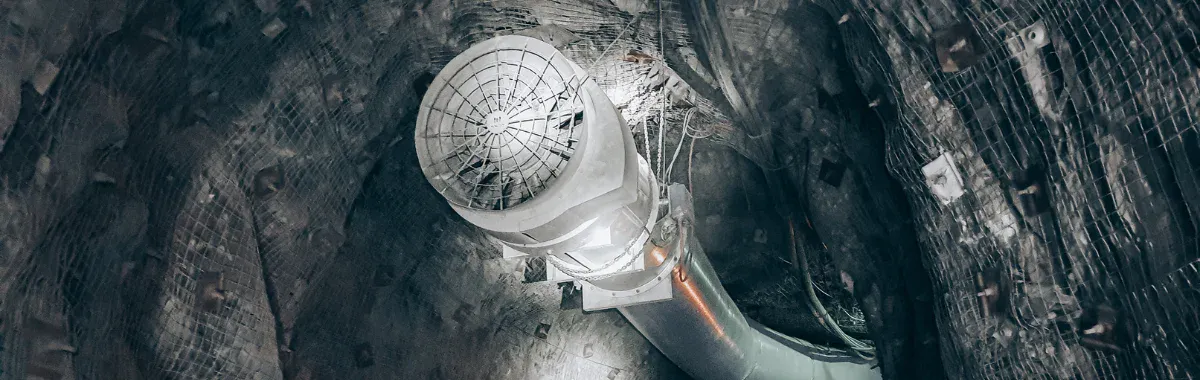
The High Output Axial fan is designed with the mining industry in mind. Its high-pressure steel fabricated impeller is at the forefront of technology and allows for operation at pressures previously thought impractical for an axial fan. Additionally, prolonged life of the impeller in even the harshest environments is achievable compared with traditional axial fans.

smv-2

The fan is supplied with a Performance On Demand (POD) system fitted to the inlet of the fan. It allows the fan to be regulated from very low flow requirements right through to more than double the duty point of a traditional vane axial fan.

The POD device offers a new level of control over secondary vent fans that have only previously been partially available with expensive and high-maintenance variable speed drives. The Performance On-Demand system allows the fan operation to be altered if the resistance is changed for any reason. This will ensure all working areas still receive the required airflow. Additionally, the POD can be opened up for blasting and can increase the airflow by up to an additional 30 m3/s, this can result in re-entry times being greatly reduced giving a direct economic impact. The Performance On-Demand controller is regulated on start-up for vent bag inflation, therefore soft starters are not always required. Bump starters are also not required.

After designing the new Minetek patented High Output Axial fan, it was very quickly realised that significant additional benefits could be realised with a level of automation. The thought that a loader operator would stop and change the fan settings, as well as open and close valves, was flawed. Therefore, the Mine Air Control (MAC) system was designed to bring the fan system together with complete automation.

Minetek Mine Air Control (MAC) system

The MAC system consists of a smart controller in each fan starter panel that controls the output at each heading. To achieve this, it receives signals from the flow meters and uses regulators to alter the flow at the face. The whole MAC system is designed to default to a preset flow at any given heading.

The MAC System receives a signal from a tracking system to alert of any machinery entering a heading. However, the default for any active heading is to have a small nominal flow above the amount required for personnel to enter the heading. This ensures its safe and allows machinery to drive straight into the heading. Without this nominal flow, machinery would need to wait at the entry to evacuate any fumes or gas. A simple RFID tracking system can be used or integrate with a pre-existing system.

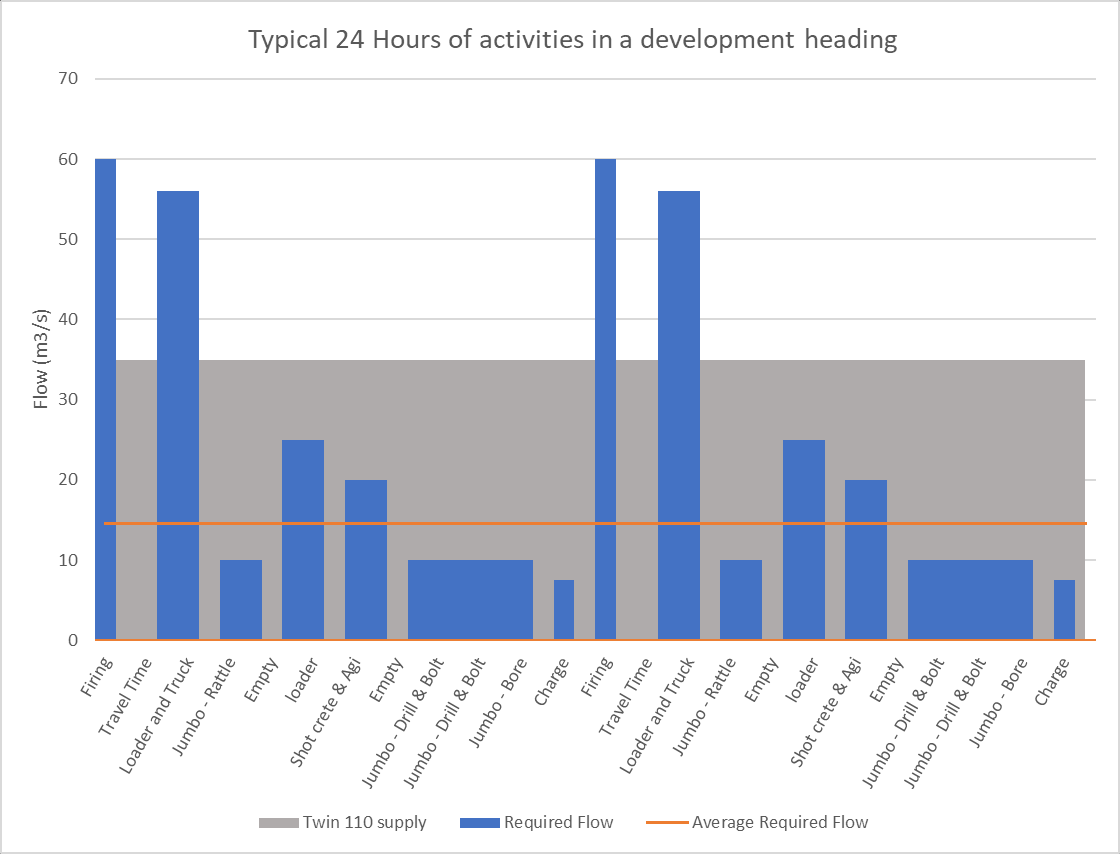
Looking at the previous costs and introducing a typical timeline for activities in a development heading, the High Output Mine Air Ventilation system will supply over 50 m3/s at 400 m when required but only consume a total of about $118,493 in power per year for the given typical activities for a development heading. Given the average mine total of 15 secondary twin 110 kW fans, the saving in power would be $1,967,505 per year.

smv-3

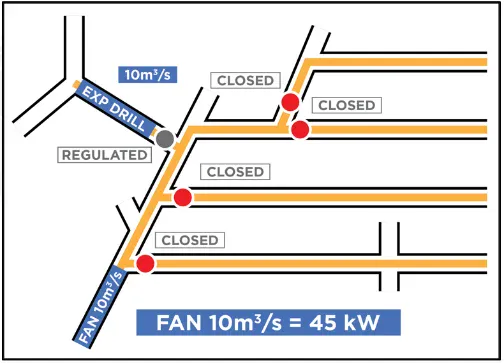
The system is simple when used in declines or single headings. All that is required is a flow meter near the face and controlling the POD to ensure the correct amount of air is delivered for the equipment in the heading.

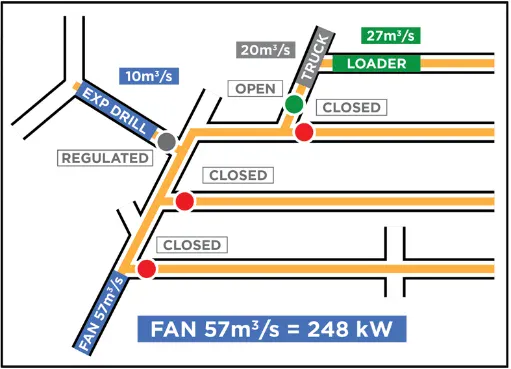
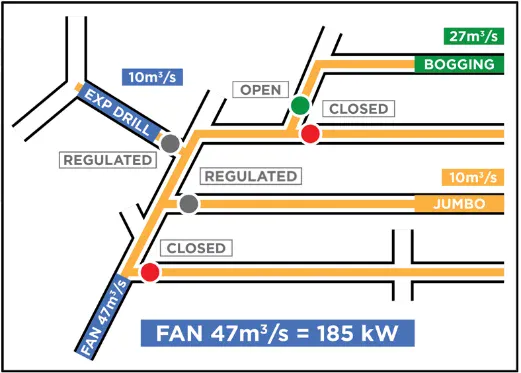
When we introduce more headings things start getting more complex, with different equipment in different headings and the system pressure increasing and decreasing as the equipment regulates different headings. Using an RFID system, the patented regulation system of all the headings becomes straightforward to manage, as each piece of equipment has an assigned value to it and thus demand is controlled and the fan raises and reduces load based on the real time demand in the mine.

Below are various multi heading scenarios possible with Minetek Air fans.

smv-4-1
smv-4-2
smv-4-3

High output axial fan for secondary ventilation

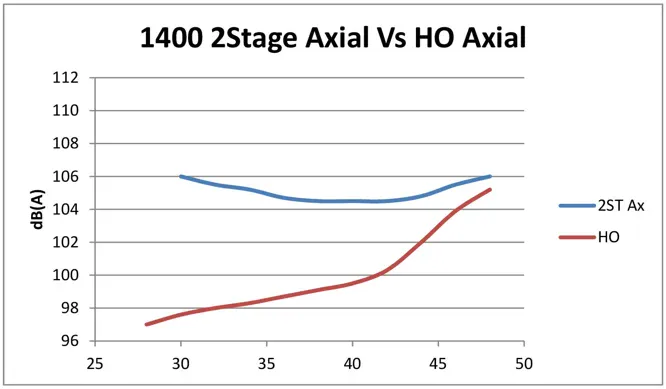
The Minetek High Output Axial Fan have other advantages compared with the market place standard Ø1400mm (55”) twin axial fans. The Minetek fan generates up to 11 dB less noise than a Ø1400 twin 110kW for the same volume flow. The overall diameter of the Minetek fan is slightly smaller than a Ø1400 twin stage axial but is 40% shorter in length and 10% lighter. It is also installed in the same way as all secondary mine vent fans.

Conventional axial fans can suffer greatly from wear on the blades. Just a 1 mm reduction in the blade nose due to wear can have a significant effect on the high-pressure portion of the fan curve. This then translates into a reduced stall point and thus the chance of failure due to stall is increased as the duct lengths get longer. The Minetek High Output Axial is not affected by wear on the blades and will perform to original duty points without adjustment.

smv-5

The Minetek High Output Axial Fan will save money on operation and ensure compliance with any regulatory requirements. The Minetek High Output Fan has a very large operating range compared to a standard axial fan offering and thus is very versatile for underground mine operations.

References

    • 1. Benchmarking the Energy Consumption of Canadian Underground Bulk Mines, Canadian Industry Program for Energy Conservation (CIPEC). ISBN 0-662-39539-5, Cat. No. M144-71/2005E, 2005.
    • 2. Investigation of Current Research Related to the Reduction of Energy Usage in Mines Through Recycling, Reuse and Other Means, LCG Energy Management Group, May 2009.
    • 3. Fatigue Implications for fans with Variable Speed Drives, K.J. Lownie & R. Bourcier, 13th United States/North American Mine Ventilation Symposium, 2010 – Hardcastle & McKinnon (Eds.), © 2010, MIRARCO
    • 4. Ventilation requirements for diesel equipment in underground mines – Are we using the correct values?, Adrian Halim, 16th North American Mine Ventilation Symposium, June 2017, ed Jurgen F. Brune
Return to news & insights

Understanding fan performance curves

Publish date: 20 June 2024

The role of fans in maintaining the air quality and safety of underground mines cannot be overstated. These ventilation systems are indispensable in providing a constant flow of fresh air, preventing the build-up of toxic gases, and protecting workers from respiratory ailments. In addition to their critical role in maintaining air quality, fans also play a vital role in keeping mining equipment cool and operational. Any downtime in production can result in significant financial losses, making optimal fan performance essential. 

Selecting the right fan is a crucial decision that demands careful consideration. However, not all fans are created equal, and their performance can vary greatly depending on various factors, such as diameter, speed, and blade pitch angle. This is where the concept of a fan curve comes in, providing an invaluable graphical representation of a fan’s performance and the relationships between its key parameters. By leveraging this information, mining operators can confidently select the right fan, safeguarding worker safety and the mine’s productivity.


fan-1

What are fan performance curves?

Fan performance curves are a powerful tool that visually represents a fan’s ability to move air at different flow rates and pressures. Understanding these curves is crucial in selecting the most suitable fan for a specific application and operating it with peak efficiency.

Fan performance curves are typically plotted on a graph with volume flowrate and pressure as the two axes. Fan curve families have multiple curves depicted on the one graph, showing how the fan’s airflow and pressure change in response to various operating conditions. Each curve will represent how the fan’s airflow and pressure change in response to various operating conditions, including different diameters, running speeds, densities and impeller configurations.

When selecting a fan, it is paramount to consider both the flow rate and pressure requirements to determine the appropriate operating point where the system’s airflow resistance and the fan’s pressure capabilities intersect. This point indicates the actual flow rate the fan will produce at the given pressure.

Moreover, fan performance curves also aid in troubleshooting and diagnosing problems with the fan’s performance. Tracking the operating point makes it possible to identify issues such as clogged filters, closed dampers, or pressure, leading to a state of stall by exceeding the fan’s design capacity. Correcting these issues ensures efficient fan operation, avoids potential damage to the motor or fan down time.

Fan performance curves are a valuable resource for selecting the most appropriate fan for a given application, optimising its performance, and diagnosing issues that may arise during operation. Engineers and technicians can ensure that fans operate at their best by leveraging the power of fan performance curves, maintaining efficient airflow and pressure to achieve optimal system performance.

fan-2

Key terminology to know when reading a fan performance curve

Reading a fan performance curve can be challenging, but it is a critical skill for efficiently selecting and operating a fan. Understanding the three primary parameters, namely static pressure (Pa or in.wg), volume flowrate (m3/s or CFM), and power (Kw or BHP), and their relationships is essential in interpreting fan performance curves.

Volume flowrate

Volume flowrate is a metric that measures the fan’s capability to generate air movement at different static pressure levels, which is typically displayed on the x-axis of the fan’s performance curve. In the United States, this is typically quantified in cubic feet per minute (CFM), while the internationally recognized unit of measurement for air volume flow rate is m³/s. The value of a fan is profoundly influenced by the speed at which it operates and the size of its awe-inspiring impeller blades, both of which play crucial roles in its exceptional performance.

Static pressure

Static pressure refers to the resistance that air encounters as it flows through a system, such as a duct or a filter. This pressure is exerted on the walls of the system and is quantified in inch water gage (in.wg). In the context of a fan’s performance, the static pressure (SP) value is typically illustrated on the y-axis of the performance curve. Higher SP values correspond to greater resistance in the system, resulting in lower m³/s values.

Power

Fan power is a crucial metric that quantifies the output of power required to propel a fan to its maximum potential. In the United States, this metric is conventionally measured in brake horsepower (BHP or HP), while kilowatts (kW) are the standard unit of measurement in most other regions such as Canada and Australia. The HP or Kw value reflects the optimal amount of power that the fan requires to achieve its designated speed and performance level.

Operating point and application

The operating point represents the intersection of the volume flowrate and SP values on the performance curve, corresponding to the conditions under which the fan operates. The application of the fan, such as ventilation, cooling, or extraction, determines the required operating point. To select the appropriate fan for an application, it is necessary to identify the operating point and match it with the fan’s performance curve.

fan-3

What is stall, and why do they occur?

Measuring these different components, such as volume flowrate (CFM), static pressure (SP), and brake horsepower (BHP), can provide critical information for keeping the system running efficiently and preventing costly fan stalls.

Fan stalls occur when the airflow through a fan is disrupted or reduced to the point where the fan blades no longer have enough air to work against. This can be caused by a variety of factors, including changes in the system resistance due to dirty air filters or ductwork, incorrect fan speed settings, or inadequate maintenance.

The consequences of fan stalls can be severe, both in terms of energy efficiency and overall system performance. When a fan stalls the state of performance reduces and may trip on vibration, over temperature or other safeties – leading to the fan stopping, causing a complete loss of ventilation or cooling, which can be detrimental to the health and comfort of occupants in the vicinity. Additionally, when a fan stalls it can cause damage to the fan motor, impeller and bearings, reducing the lifespan of the equipment and leading to costly repairs or replacements.

Measuring the CFM, SP, and BHP of a ventilation system can help identify potential issues before they lead to fan stalls. Monitoring these components regularly makes it possible to detect changes in system performance and take corrective action before they escalate. For example, if the CFM value drops below the expected level, it may indicate a blockage or obstruction in the ductwork that needs to be cleared.

fan-4

Plotting a fan performance curve

At Minetek, we pride ourselves on our ability to deliver exceptional fan solutions to our mining clients. We achieve this by creating a fan performance curve customised to the specific duty point required by the mine. This involves a meticulous selection process, where we carefully consider the client’s needs and select a fan that meets those needs and provides excellent value.

We offer an extensive range of primary and secondary fans, each with unique specifications and capabilities, ensuring that our clients can find a fan that is perfectly suited to their requirements. Our fan options range from 90kw all the way up to 1,110kw, providing a broad selection of solutions to choose from.

fan-5
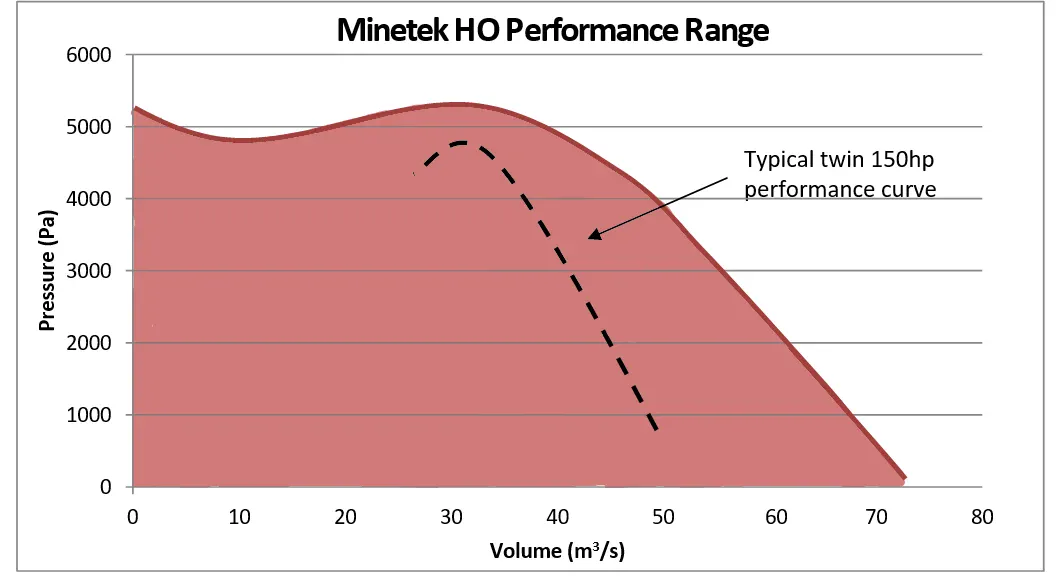
This is an example of a fan performance curve. Minetek, with its pioneering POD technology, boasts an expansive operating range that extends to the far reaches of the red area. Competitor fans, however, are constrained by a meagre operating range. Minetek fans, on the other hand, exhibit unprecedented versatility and can operate at peak performance levels across an extensive range of static pressures and airflows.
fan-6

Minetek’s fan performance

Primary / Booster Fan range

Minetek’s Primary / Booster Fan Range boasts an extraordinary range of exceptionally high-performance fans meticulously designed to cater to the highly specialised needs of underground mining sites.

    • Power range 200 – 2,700 HP / 150 – 2,000 kW
    • Volume 106,000 – 2,119,000 CFM 50 – 1000 m3/s
    • Pressure 200 – 27 in.wg / 200 – 8000 Pa
    • Efficiency > 85%
fan-7

Secondary / Auxiliary Fan range

Minetek’s Secondary/Auxiliary Fan Range presents an extensive array of fans precisely designed to meet the unique and specific demands of underground mine sites.

    • Power range 120 – 500 HP / 90 – 375 kW
    • Volume 22,120 – 211,900 CFM / 10 – 100 m3/s
    • Pressure 0.80 – 27 in.wg / 200 – 6500 Pa
    • Efficiency > 85

The benefits of Minetek’s High-Output Axial Fan

At Minetek, we strive to deliver cutting-edge ventilation technology through world-class engineering, intensive research and development, and breakthrough technology. Our underground ventilation technology is the pinnacle of innovation, providing unparalleled economic, operational, and safety benefits unmatched anywhere else in the world.

Minetek’s mine ventilation system features underground fans that enhance airflow and eliminates power wastage in underground mining applications. This remarkable system utilises a patented Mine Air Control (MAC) technology that enables the Performance on Demand (POD) units to sense the required airflow in any heading at any given time, maximising their performance. The system’s high-pressure, steel-fabricated impeller technology allows for operation in temperatures, and conditions once thought impossible for an Axial Fan.

The Axial Fan’s key feature is its POD system, which comprises an electronic controller that enables the fan to be regulated from low flow requirements to over double the duty point of a conventional vane axial fan, resulting in significant cost savings. The MAC System RFID trackers play a critical role in its cost-efficiency, continuously monitoring the movement of underground mining equipment and automatically adjusting the air volumetric flow to provide sufficient ventilation for the area and disperse the gases.

Minetek’s revolutionary anti-stall chamber is a feat of engineering, expertly regulating air movement by capturing turbulent airflow and unstable pre-swirls. This ingenious technology eliminates critical stalls and improves the fan’s operating range and overall performance, providing unparalleled outcomes for underground mining sites.

This modular system is custom-engineered and manufactured in Australia to meet the end user’s specific needs, making it a highly reliable and adaptable solution for various underground mining applications.

Contact us today to learn more about our underground ventilation solutions and how we can help you achieve optimal performance.

Return to news & insights

Mine safety and the dangers of poor ventilation

Publish date: 20 June 2024
Mining is a notoriously dangerous profession, and underground mines are particularly hazardous environments. Every year, miners are injured and killed in accidents that could have been prevented with improved or adhered to safety measures. To ensure the safety of workers, mine operators must follow mine safety and inspection regulations to provide adequate ventilation. One key element of underground ventilation is the fan or underground ventilation system, which helps to circulate fresh air throughout the mine.  This article discusses the importance of safety in mining and the dangers of poor ventilation in underground mining.
mine-safety-1

Underground ventilation systems need to be monitored closely in line with mine safety and inspection regulations as broken fans can be a source of danger if not properly maintained. Broken fans or inadequate ventilation systems can create pockets of stagnant air which can lead to a deadly build-up of methane gas.

One of the biggest dangers of an inefficient underground ventilation system is the risk of methane gas build-up. Methane is a colourless, odourless gas that is highly flammable. A build-up of methane can create an explosive environment and can lead to deadly accidents.

In addition to the risk of explosion, methane can also cause suffocation. When methane gas accumulates in an enclosed space, it displaces oxygen and can cause people to asphyxiate. Therefore it’s essential that mine operators take care to provide adequate ventilation in their mines as a broken fan or an inefficient ventilation system can have deadly consequences for miners.

In addition to the dangers of inadequate ventilation, workers can also be exposed to excessive levels of noise from fans, which can cause permanent damage to their hearing over time. Research suggested that permanent hearing damage can occur if you are exposed to sound levels at 85 dB or more for prolonged periods of time. The louder the sound of the fan or underground ventilation system, the quicker it can cause damage.

mine-safety-2

Mine Safety Measures

Mines safety and inspection regulations are in place to help mitigate the risks of methane gas build-up and prevent deadly accidents on mine sites. Operators should provide adequate safety gear, such as gas detectors, helmets and dust masks. Training workers on how to identify pockets of stagnate air and build-ups of methane gas can also help to meet mine safety KPIs.

Mineworkers should be trained in how to identify and respond to signs of methane gas build-up. If workers detect a dangerous level of methane gas in the air, they should evacuate the mine immediately. Mine operators should have an evacuation plan in place, and workers should know what to do in case of an emergency.

There are additional safety measures mineworkers can take to ensure the ventilation system is working properly;

    • Monitoring the ventilation system regularly to ensure it is functioning correctly
    • Reporting any problems with the ventilation system to a supervisor immediately
    • Wearing appropriate safety gear, such as gas detectors, helmets and dust masks
    • Training workers on how to identify and respond to signs of methane gas build-up
mine-safety-3

Minetek’s underground fans are engineered with the mining industry in mind. We have ventilation systems installed across the globe, with successful projects in snowy Alaska to the desert in Western Australia.

Our underground fan technology has a vast operating range for a single fan which is regulated by the integrated POD (performance on demand) system. The high-pressure fabricated steel impeller is at the forefront of ventilation technology and allows for operation at pressures previously thought impossible for an axial fan. The on-demand energy efficiency features half’s the power consumption, saving 50% on operating costs. You have the ability to provide the correct amount of air when and where you need it.

The robust design ensures that the steel impellers are unaffected by blade wear helping to prolong the life of your fan, in even the harshest environments. Our fans are also designed to be low noise, so they don’t cause hearing damage as some other fans can.

Mining can be a dangerous profession, therefore it’s essential that mine operators provide PPE, follow safety and inspection regulations and have adequate ventilation in their mines. Minetek’s solutions help to improve mine safety and ensure safe operations.

Interested in learning more about Minetek’s underground ventilation capabilities? Contact Us.

Minetek Underground Fans & Ventilation

Minetek’s underground fans are engineered with the mining industry in mind. We have ventilation systems installed across the globe, with successful projects in snowy Alaska to the desert in Western Australia.

Our underground fan technology has a vast operating range for a single fan which is regulated by the integrated POD (performance on demand) system. The high-pressure fabricated steel impeller is at the forefront of ventilation technology and allows for operation at pressures previously thought impossible for an axial fan. The on-demand energy efficiency features half’s the power consumption, saving 50% on operating costs. You have the ability to provide the correct amount of air when and where you need it.

The robust design ensures that the steel impellers are unaffected by blade wear helping to prolong the life of your fan, in even the harshest environments. Our fans are also designed to be low noise, so they don’t cause hearing damage as some other fans can.

Mining can be a dangerous profession, therefore it’s essential that mine operators provide PPE, follow safety and inspection regulations and have adequate ventilation in their mines. Minetek’s solutions help to improve mine safety and ensure safe operations.

Interested in learning more about Minetek’s underground ventilation capabilities? Contact Us.

Minetek Underground Fans & Ventilation

Minetek’s underground fans are engineered with the mining industry in mind. We have ventilation systems installed across the globe, with successful projects in snowy Alaska to the desert in Western Australia.

Our underground fan technology has a vast operating range for a single fan which is regulated by the integrated POD (performance on demand) system. The high-pressure fabricated steel impeller is at the forefront of ventilation technology and allows for operation at pressures previously thought impossible for an axial fan. The on-demand energy efficiency features half’s the power consumption, saving 50% on operating costs. You have the ability to provide the correct amount of air when and where you need it.

The robust design ensures that the steel impellers are unaffected by blade wear helping to prolong the life of your fan, in even the harshest environments. Our fans are also designed to be low noise, so they don’t cause hearing damage as some other fans can.

Mining can be a dangerous profession, therefore it’s essential that mine operators provide PPE, follow safety and inspection regulations and have adequate ventilation in their mines. Minetek’s solutions help to improve mine safety and ensure safe operations.

Interested in learning more about Minetek’s underground ventilation capabilities? Contact Us.

Return to news & insights

Mine ventilation insights and innovations

Publish date: 21 May 2024
After years of COVID-19, online seminars and virtual conferences, the in-person Mine Ventilation Conference organised by AusIMM came as a welcome change and demonstrated an engaged and growing market. There was an above-average turn-out of Mining managers, underground ventilation specialists, engineers, consultants, and ventilation solution providers at this Australian Mine Ventilation Conference. Key personnel from twelve countries, met for five days to discuss the latest in underground ventilation innovation and safety.

Covering both coal and metalliferous underground operations, speakers covered many topics with a focus on innovation and technology, examining the past, and looking to the future. Key themes explored technology with discussions around how it can be implemented in underground mining for safer and more efficient ventilation. Ideas like Minetek’s POD (Power on Demand) system were examined, as POD automated systems have been shown to drastically reduce operating costs for ventilation fans, by decreasing or increasing output to meet the needs of the mine site.

Mine-ventilation-conference.png
These themes demonstrate that a characteristically risk-adverse industry is growing, evolving, and adapting to utilise innovative technology, as the need for operational savings, safety, and for efficient, automation processes increase. The market has identified a growing need for quality airflow and optimisation of technology to deliver reliable air. This adaption to technology is encouraged by changes in Government Legislation like the recent changes in Western Australia. On 31 March 2022, the Work Health and Safety (WHS) laws replaced the health and safety elements of the Mines Safety and Inspection laws.

“Minetek has been excited to meet with industry experts and highlight our fans. We pride ourselves on not only performance and innovative technology, but our ability to understand unique project needs. We deliver a premium service, customised solutions, and responsive delivery that only a small, passionate, and incredibly hardworking team can deliver.”

– Matt Ryan, Minetek Air

Mine Ventilation Solutions

Minetek is internationally recognised as an innovative mining solutions provider. Facilitating commercially and environmentally sustainable outcomes for mining companies, whilst enabling safe, compliant, and profitable operations.

  • Word class engineering capabilities
  • Leaders in automation, technology, and customised solutions
  • Servicing underground mines world-wide
  • Control targeted air supply with no VSD (Variable Speed Drive) required
  • Power, performance and pressure on demand
  • Fan power range from zero load to full load
  • Savings in ventilation power consumption, up to 60%
  • Automated or manual ventilation configuration

Minetek’s POD device offers a new level of control over primary & secondary vent fans that has only previously been partially available with expensive and high maintenance variable speed drives. The POD system allows the fan operation to be altered as the demand or resistance is changed within the underground mine. This ensures all working areas receive the required air flow, at the lowest cost.

underground-mine-ventilation.png

The future of underground ventilation

With projections estimating the global mine ventilation market is set to reach USD $401 million by 2024, combined with the recent announcement of Sydney hosting the International Mining Ventilation Conference in 2024, the ventilation community of Australia is in a prime position for future growth and innovation [1].

Industry surveys suggest that Australia has the highest penetration of innovative technologies across mine sites; with drones, mine management software, autonomous and remotely controlled vehicles at the forefront [2]. More than 77% of jobs within Australia’s mining sector will be improved by innovative technological advancements, increasing productivity by up to 23% [3]. Our adoption and innovation of smart technology assists with mine planning, collision avoidance and predictive maintenance for equipment and technology.

Mine site technologies at the forefront of investment;

  • Mine planning software
  • Mine communication systems
  • Predictive maintenance for mobile equipment
  • Battery / electric vehicles
  • Fatigue detection
  • Drones
  • Predictive maintenance for plants
  • Fully autonomous vehicles
  • Wearable technology
  • 3D printing
  • Automation
  • Robotics

This positions Australia as the leading adopter of modern technology aiding future growth and innovation within the mining industry.

underground-mine-ventilation-innovation.png
At Minetek we understand that unique scenarios require customised solutions. We manage your project from end to end, including the initial consultation, design and engineering, development, removal of old equipment, installation, commission, training, maintenance, and ongoing servicing.