 English
  English (United States)
  Spanish
  Portuguese
  French
  Indonesian
  Italian
 What is a booster fan in underground mine ventilation?
A booster fan in underground mine ventilation is a supplementary fan that increases air pressure in specific parts of the mine where the primary ventilation system cannot maintain adequate airflow on its own. It is used to overcome resistance in long airways, deeper workings, and complex ventilation circuits, helping mining operations maintain airflow, mine safety, and gas and heat control.
Booster fans sit between primary and secondary fans in the ventilation hierarchy. While primary fans create mine-wide airflow and secondary fans deliver localised air to development ends and stopes, booster fans strengthen airflow through the main ventilation network where pressure drops begin to affect performance.
This article explains what a booster fan is, how it differs from primary and secondary fans, when it should be used, and how it supports underground mine ventilation, airflow management, and mining airflow efficiency.
Quick answer: Booster fans in underground mine ventilation.
- A booster fan increases air pressure in underground airways where the primary fan alone cannot maintain sufficient airflow.
- Primary fans move air through the overall mine ventilation network, while secondary fans deliver airflow to specific work areas.
- Booster fans operate within the main ventilation circuit to manage pressure loss across longer or more resistant airways.
- They are commonly used in deep mines, complex layouts, and areas with higher gas, heat, or diesel emission loads.
- The right fan selection depends on mine depth, layout, airflow demand, and energy efficiency requirements.
What is a booster fan?
A booster fan is a supplementary ventilation device installed along an underground airway to increase air pressure and volume where the main fan alone cannot deliver adequate airflow. These fans “boost” the air already moving through the system, helping overcome resistance caused by long distances, sharp bends, or constricted passages.
Booster fans typically connect to the main ventilation circuit rather than operating independently. This integration allows them to work in harmony with the primary ventilation system while targeting specific problem areas.
Minetek’s Raptor Series Booster Fans are designed to integrate with the main ventilation circuit, improving airflow and pressure in high-resistance sections of the mine.
How does a booster fan differ from primary and secondary fans?
Primary, secondary, and booster fans each serve a different role in underground mine ventilation. Primary fans create mine-wide airflow, secondary fans deliver air to specific working areas, and booster fans increase pressure within the main ventilation circuit where resistance begins to reduce airflow. Understanding these differences helps ventilation managers and engineering consultants match the right fan type to the mine layout, airflow demand, and operating conditions.
| Fan type | Primary role | Typical location | Works within main ventilation circuit | Best suited for |
|---|---|---|---|---|
| Primary fan | Creates the overall pressure differential that drives mine-wide airflow | Surface or main intake/exhaust shaft | Yes | Whole-of-mine ventilation |
| Secondary fan | Delivers localised airflow to development ends, stopes, and service areas | Underground, near active work areas | No, usually operates independently | Local ventilation in specific working zones |
| Booster fan | Increases pressure in sections of the mine where airflow drops due to resistance | Installed along underground airways within the network | Yes | Long airways, deeper workings, and complex ventilation circuits |
Primary fans
Primary fans sit at the surface or near the main intake or exhaust shaft. They move large volumes of fresh air into the mine and draw contaminated air out. These fans create the overall pressure differential that drives airflow through the entire ventilation network.
Minetek’s Raptor Series Primary Fans are designed to move high air volumes while reducing power consumption, helping operations maintain compliant airflow across the mine.
Secondary fans
Secondary fans distribute air from the main airways to specific working areas such as development ends, stopes, and service facilities. They push air through flexible ducting to locations the primary system cannot reach directly.
These fans usually operate independently of the main ventilation circuit, providing localised airflow where active mining occurs. Minetek’s Raptor Series Secondary Fans are engineered to deliver reliable localised airflow to development headings, stopes, and other active underground work areas, helping maintain safe ventilation where it is needed most.
Booster fans
Booster fans sit between primary and secondary fans in the ventilation hierarchy. Unlike secondary fans, they operate as part of the main ventilation circuit rather than serving isolated areas. Their role is to increase pressure where resistance has reduced airflow below acceptable levels.
Minetek’s Raptor Series Booster Fans are designed to reduce the load on the main fan while improving airflow through deep underground operations.
When should a booster fan be used?
Booster fans become necessary when the primary ventilation system cannot overcome the resistance in certain airways. Common scenarios where booster fans add value include:
- Deep mining operations: As a mine extends deeper, airway resistance increases. Booster fans compensate for pressure drops over long distances.
- Complex mine layouts: Multiple bends, branches, and level changes create friction losses. Booster fans restore adequate airflow to affected areas.
- High air volume requirements: Areas with high heat loads or diesel emissions may need more air than the primary system can deliver.
- Energy efficiency improvements: Instead of upgrading the entire primary fan system, adding a booster fan can be a more cost-effective approach.
Safety and regulatory considerations for booster fans.
Mining regulations in most jurisdictions place strict requirements on booster fan installation and operation. These rules exist because booster fans can recirculate contaminated air if they are improperly positioned.
A site ventilation officer should verify that booster fan placement does not create short-circuiting, where contaminated return air mixes with fresh intake air. Proper monitoring systems and airflow measurements help maintain compliance with occupational health and safety standards.
Key factors when selecting a booster fan.
Selecting a booster fan requires more than matching airflow to a heading or drift. The fan needs to suit the mine’s ventilation network, resistance profile, operating conditions, and long-term efficiency objectives. For ventilation managers and engineering consultants, the goal is to select a booster fan that improves airflow where pressure losses occur without creating new constraints elsewhere in the system.
Duty point
The fan’s required duty point should match the pressure and airflow demands of the airway where it will operate. This includes accounting for resistance from airway length, bends, changes in cross-section, and any future mine development that may alter ventilation demand over time.
Integration with the main ventilation circuit
Because booster fans work within the main ventilation network, they need to be selected and positioned as part of the broader system rather than as standalone equipment. Poor integration can affect pressure balance, airflow distribution, and overall ventilation performance across connected sections of the mine.
Installation configuration
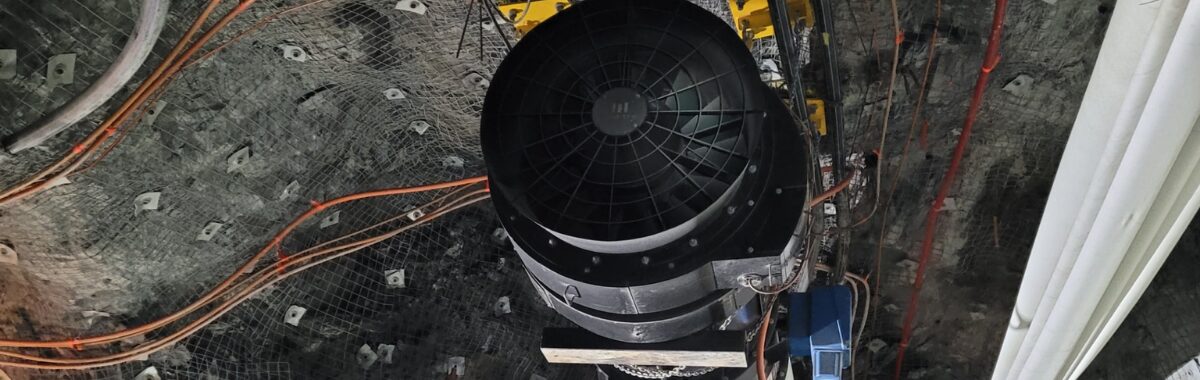
Booster fans can be hung from the backs, surface mounted, or installed in bulkheads depending on the mine layout and available infrastructure. The selected configuration should support safe installation, practical access, and reliable long-term operation in the intended location.
Energy efficiency
Energy use is a major consideration in underground ventilation, particularly in deeper or more complex mines where fans run continuously. High-efficiency fan design can help reduce operating costs over the life of the mine while improving mining airflow efficiency across the ventilation system.
Durability and maintenance access
Underground conditions place constant pressure on equipment through dust, vibration, moisture, and corrosive environments. Booster fans need to be designed for durability, with construction and access arrangements that support easier inspection, servicing, and long-term reliability.
Scalability
Ventilation demand changes as mines deepen, expand, or move into new production areas. A booster fan should not only suit current conditions but also support future airflow management requirements without forcing major redesign too early in the mine plan.
How do booster fans improve energy efficiency in underground ventilation?
Booster fans improve energy efficiency by adding pressure only where the ventilation network needs it most, rather than forcing the primary fan to work harder across the entire mine. In deeper operations, long airways, complex layouts, and changing mine geometry can increase resistance and make airflow harder to maintain. A booster fan helps manage those pressure losses in a more targeted way.
This improves mining airflow efficiency in several ways:
- Reduces the load on the primary fan: Booster fans support airflow in high-resistance sections of the mine, so the primary fan does not need to carry the full pressure burden alone.
- Targets pressure where it is needed most: Instead of increasing energy use across the entire network, booster fans improve airflow in specific areas where resistance affects performance.
- Supports deeper and more complex mines: As underground operations expand, booster fans help maintain airflow more efficiently across long distances and changing ventilation circuits.
- Helps control operating costs: Ventilation is one of the largest energy demands in underground mining, so even modest efficiency gains can reduce power consumption over time.
Minetek’s Raptor Series Booster Fans are designed to support this more efficient ventilation strategy. By integrating with the main ventilation circuit, they help improve pressure where it is needed while reducing reliance on harder-working primary systems alone. Across the Raptor Series range, Minetek also supports energy-efficient fan performance through design features such as Performance On Demand (POD) technology, helping operations improve underground mine ventilation efficiency while maintaining safe, compliant airflow.
Ready to optimise airflow in your underground mine? Connect with our Minetek underground ventilation experts to discuss your requirements and identify the right solution for your ventilation system.
Frequently Asked Questions (FAQs)
A booster fan increases air pressure in specific underground airways where the primary ventilation system cannot deliver sufficient airflow. It works as part of the main ventilation circuit to overcome resistance from long distances or complex mine layouts.
No. Booster fans supplement your primary ventilation system rather than replace it. You still need a primary fan to create the overall pressure differential that drives airflow through the mine. Booster fans address localised pressure drops that the primary fan cannot overcome alone.
Position booster fans along airways where pressure drops have reduced airflow below required levels. The exact location depends on your mine layout and airflow modelling. Minetek engineers can help determine optimal placement based on your site’s specific conditions.
Booster fans maintain adequate airflow in areas where contaminants, heat, or gas could accumulate. By ensuring fresh air reaches all active workings, they help you meet ventilation requirements that protect worker health.
The terms are sometimes used interchangeably, but booster fans typically operate as part of the main ventilation circuit. Auxiliary fans usually refer to smaller units providing localised ventilation to specific areas like development headings. Minetek’s Raptor Series includes options for both booster and secondary fan applications.
Booster fans require similar maintenance to other underground ventilation equipment. Regular inspections, impeller cleaning, and motor servicing keep them operating efficiently. Minetek fans feature accessible designs for ease of maintenance and optional auto-grease systems to extend service intervals.