 English
  English (United States)
  Spanish
  Portuguese
  French
  Indonesian
  Italian
 Underground mine ventilation can account for up to 40% or more of total mine energy costs, making it one of the biggest opportunities for reducing power consumption underground. Ventilation on demand (VOD) helps cut energy use by automatically adjusting airflow based on real-time mine conditions, such as equipment activity, personnel location, and air quality.
Instead of running ventilation systems at full capacity around the clock, VOD delivers air where and when it is needed. This allows underground mines to maintain safe working conditions while reducing unnecessary fan operation and energy waste.
Minetek designs high-efficiency underground ventilation fans that support safer, more efficient airflow control. In this article, we explain how VOD works, why it improves energy efficiency, and what to consider when evaluating ventilation systems for your underground mine.
Key Takeaways: How Ventilation on Demand cuts energy in underground mines.
- VOD adjusts fan speeds and airflow based on real-time underground conditions rather than running at full capacity constantly.
- Research indicates VOD systems can reduce ventilation energy consumption by up to 50% compared to fixed ventilation approaches.
- Sensors tracking vehicle locations, personnel positions, and air quality trigger automated airflow adjustments throughout your mine.
- Minetek’s high-efficiency Raptor Series fans with Performance On Demand (POD) mechanisms integrate with mine control systems for automated airflow adjustment.
- Effective VOD implementation requires variable speed drives, air monitoring stations, and control logic tailored to your mine’s layout.
What Is Ventilation on Demand in underground mining?
Ventilation on demand (VOD) is a mine ventilation control strategy that adjusts airflow based on actual underground activity and environmental conditions. Instead of running ventilation systems at maximum capacity at all times, VOD matches air supply to current operational requirements.
Traditional ventilation systems are often sized for peak demand and operated continuously. This can result in mines delivering more air than required during inactive periods, increasing electricity consumption and overall ventilation costs.
VOD changes this approach by using sensors, control systems, and variable-speed fans to monitor underground conditions and adjust airflow in real time. When equipment enters a heading, airflow can increase. When the area is inactive, airflow can be reduced. This dynamic approach helps mines deliver the right air quantity to the right area at the right time.
How does VOD reduce energy consumption in mining operations?
Ventilation on demand (VOD) reduces energy consumption by lowering fan output when full ventilation is not required. According to AMCA International’s Derivation of the Fan Laws, fan power varies with the cube of fan speed. Under the fan affinity laws, reducing airflow and fan speed to 50% of the original operating point reduces theoretical power demand to approximately 12.5% of the original level, equivalent to an 87.5% reduction.
VOD captures savings during periods of reduced underground activity, including shift changes, meal breaks, blasting clearance periods, and inactive headings. Energy savings can compound across primary, booster, and auxiliary fan systems. By coordinating control across multiple fans rather than optimising each fan in isolation, mining operations can improve overall ventilation efficiency while maintaining required air quality and safety standards.

What components make up a Ventilation on Demand system?
A ventilation on demand (VOD) system combines intelligent controls, monitoring technologies, and high-efficiency ventilation equipment to deliver airflow where and when it is needed. Minetek’s Ventilation on Demand solution brings these components together to help underground mines optimise airflow, reduce unnecessary energy use, and maintain safe working conditions.
1. Variable Speed Drives for fan control
Variable speed drives (VSDs) or variable frequency drives (VFDs) allow fans to operate at speeds matched to current demand. Without VSDs, fans typically operate at fixed speeds regardless of actual airflow requirements.
VSDs adjust motor speed by changing the electrical frequency supplied to the fan motor. This enables precise control of airflow output and supports more efficient fan operation. In its Improving Fan System Performance: A Sourcebook for Industry, the U.S. Department of Energy notes that variable frequency drives are commonly used in fan systems to adjust speed and reduce unnecessary energy use.
Minetek’s ventilation solutions use variable speed control to adjust fan output based on changing underground ventilation requirements. By matching airflow to actual site activity, mines can reduce unnecessary fan operation and improve energy efficiency.
2. Sensors and monitoring stations
Air monitoring stations track key parameters including air velocity, temperature, humidity, and gas concentrations. These measurements feed into the control system to guide airflow decisions.
Additional sensors may track vehicle locations, personnel positions, equipment operating status, air pressure, and scheduled site activity. This data helps the system identify where activity is occurring and what ventilation support each area requires.
Minetek’s Ventilation on Demand platform can integrate with sensor inputs and tracking systems, including air quality monitoring, pressure sensors, vehicle and personnel location data, RFID systems, and time-based schedules. These inputs allow mines to automate airflow changes based on real-time underground conditions.
3. Control systems and logic
The control system receives sensor data and determines appropriate fan setpoints. Logic rules define how the system should respond to different scenarios, including when to increase airflow, when to reduce it, and what minimum ventilation levels must be maintained.
Modern VOD systems often integrate with mine air control platforms to automate ventilation decisions across the underground network. Minetek’s Mine Air Control (MAC) system, used in conjunction with the fan’s Performance on Demand (POD) technology, integrates with the mine’s operating layer to optimise airflow across the entire ventilation circuit. This enables airflow to automatically ramp up or down based on schedules, vehicle movements, and underground activity, helping ensure the correct amount of air is delivered where and when it is required. The system also allows operators to remotely control and monitor the ventilation network from the surface, supporting true mine ventilation on demand.
What role do efficient fans play in Ventilation on Demand?
Fan efficiency directly affects the overall performance of a VOD system. High-efficiency fans require less power to deliver the required airflow, helping mines maximise the benefits of ventilation optimisation.
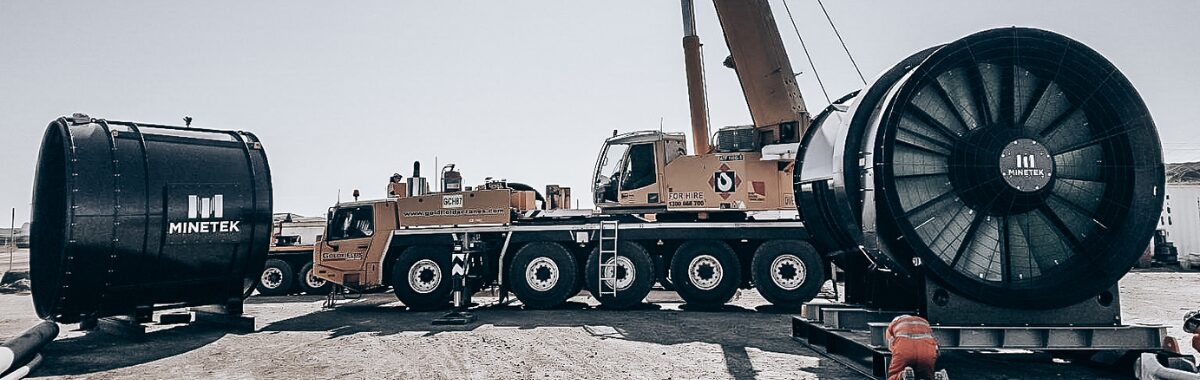
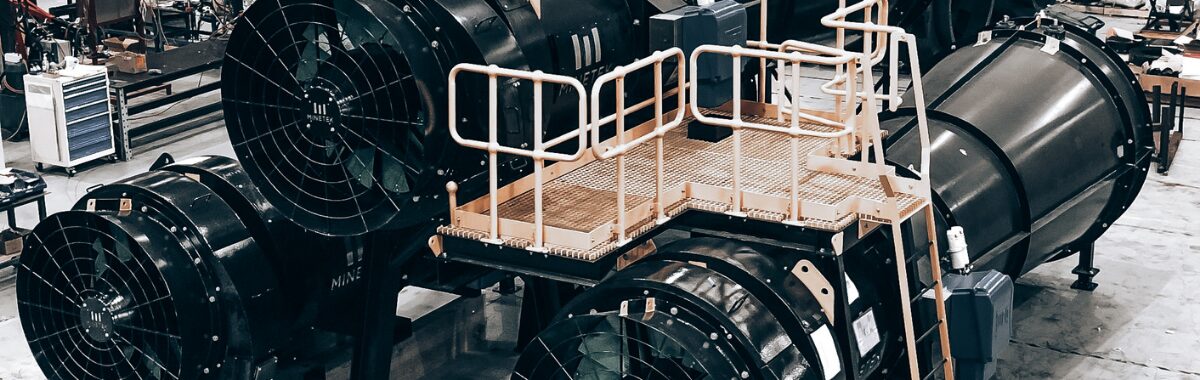
Minetek’s Raptor Series includes Primary Raptor™ Fans, Secondary Raptor™ Fans, and Booster Fans for underground ventilation applications. Across these systems, Minetek’s Performance on Demand (POD) technology automatically adjusts fan output to match real-time ventilation requirements. When combined with Mine Air Control (MAC), airflow can be optimised across the entire ventilation circuit, helping ensure the correct amount of air is delivered where and when it is needed.
Fan selection should consider duty point requirements, pressure characteristics, efficiency, and control capabilities. Primary, secondary, and booster fans each perform different functions within the ventilation network, and selecting the right equipment for each application plays an important role in overall system performance.
How does VOD support heat and gas control underground?
Beyond energy savings, VOD helps mines manage underground environmental conditions. Air temperature and gas concentrations vary depending on location, depth, ventilation design, equipment activity, and production schedules.
In deep mines, where heat and humidity can increase the risk of heat stress, targeted airflow can help support safer working conditions in active areas. In its Stay Heat Safe on Mine Sites fact sheet, the NSW Resources Regulator states that underground mines must implement control measures, including monitoring, to manage heat stress in areas where workers may work or travel and wet-bulb temperatures exceed 27°C.
VOD enables mines to direct cooling air to areas where personnel and equipment are operating, rather than distributing air uniformly across inactive zones.
For gas and contaminant management, VOD systems can respond to sensor readings by increasing airflow when contaminant levels rise. According to the International Council on Mining and Metals’ Diesel Particulate Matter in Underground Mining fact sheet, improving ventilation systems is essential to dilute and remove diesel exhaust pollutants from underground work areas.
Diesel particulate matter, methane, and blasting fumes all require adequate dilution. VOD systems can trigger increased ventilation when detected levels approach defined threshold values.
What are the regulatory considerations for mine ventilation systems?
Mine ventilation regulations in Australia require operators to maintain adequate air quality and develop ventilation control plans. Any VOD system must demonstrate that minimum airflow requirements can be maintained whenever workers are present underground.
In its Technical Reference Guide: Ventilation Control Plan, the NSW Resources Regulator states that ventilation control plans should describe the design and operation of the ventilation system, including standards for the placement, operation, maintenance, and monitoring of ventilation plant.
NSW Work Health and Safety regulations also require ventilation control plans to include arrangements for inspecting, monitoring, maintaining, and testing the ventilation system, as well as procedures for areas where people work or travel.
When implementing VOD, mine operators should document how the system maintains compliance under varying operating conditions. Control logic should include fail-safes that maintain minimum airflow if sensors malfunction, communications are interrupted, or automated controls lose signal.
What should mines consider when evaluating VOD?
Mine layout, depth, production schedule, equipment fleet, and activity patterns all influence VOD potential. Operations with significant variation in activity levels across different zones typically have greater opportunity to reduce unnecessary ventilation energy use.
Existing fan age and capability should also be assessed. Older fixed-speed fans may require VSD retrofits or replacement with modern equipment. Minetek’s Raptor Series fans are designed for demanding underground conditions and can be integrated with VOD strategies through Performance on Demand (POD) technology and Mine Air Control (MAC).
Implementation costs may include sensors, control systems, network infrastructure, and new or upgraded fans. The economic return on a VOD system depends on site-specific factors such as electricity costs, ventilation demand, equipment configuration, mine layout, and operating patterns.
Minetek’s underground ventilation case studies show how different sites have applied fan upgrades, automation, and demand-based control to solve specific ventilation challenges:
- In a Nyngan Copper Mine, one 375kW auxiliary High Output Axial Fan with an integrated Performance on Demand (POD) system, soft starter, PLC, and automation was used to support ventilation for a long development decline. The case study notes that POD allowed the mine to access performance, power, and pressure on demand while controlling the fan from the surface.
- In a Western Australia Gold Mine, a primary booster fan solution with POD vane inlet controls, PLC automation, and an HMI interface was developed to support life-of-mine ventilation requirements, continued production, mine extensions, and brownfield exploration.
- In a Leinster Gold Mine, compact primary fans and a pressure-on-demand system helped the site scale ventilation flow to suit production requirements while reducing downtime during installation. The life-of-mine fan optimisation across primary and secondary ventilation saved the site approximately $1.2 million in capital.
Making VOD work for underground ventilation.
Ventilation on demand offers a practical approach to reducing ventilation energy costs while maintaining safe underground air quality. By matching airflow to actual site requirements rather than operating at maximum capacity continuously, mines can reduce unnecessary power consumption across the ventilation network.
Successful implementation depends on efficient fan equipment, appropriate sensor coverage, reliable control logic, and integration with the mine’s operating layer. Minetek supports VOD strategies with high-efficiency underground ventilation solutions, including Raptor Series fans, Performance on Demand (POD) technology, and Mine Air Control (MAC), engineered to optimise airflow across demanding underground environments.
FAQs about Ventilation on Demand in underground mines.
How much energy can VOD save in underground mines?
Research indicates savings of 30% to 50% on ventilation energy costs are achievable with properly implemented VOD systems. Actual savings depend on your mine’s layout, activity patterns, and baseline ventilation approach. Minetek’s high-efficiency fans help you maximise these savings by delivering required airflow with lower power consumption.
Can VOD work with my existing ventilation fans?
Many existing fans can be upgraded with variable speed drives to enable VOD operation. However, older fans may not deliver optimal efficiency across the speed range required. Minetek’s Raptor Series fans are engineered for variable-speed operation and include the Performance On Demand mechanism for automated output adjustment.
What sensors does a VOD system require?
Typical installations include air velocity sensors, gas detectors, temperature monitors, and tracking systems for vehicles and personnel. The specific sensor package depends on your mine’s hazards and control strategy. These sensors feed data to your control system, enabling real-time airflow adjustments based on actual conditions.
Is VOD compliant with Australian mine ventilation regulations?
Yes, VOD systems can meet Australian regulatory requirements when properly designed. Your ventilation control plan must demonstrate how the system maintains minimum airflow standards and responds to abnormal conditions. Minetek works with mine ventilation teams to engineer systems that satisfy regulatory requirements while delivering operational benefits.
How long does it take to implement a VOD system?
Implementation timelines vary based on scope and complexity. A phased approach starting with key zones can deliver early benefits while the full system is completed. Planning should include fan assessment, sensor placement design, control logic development, and integration with your existing mine monitoring systems.