 English
  English (United States)
  Spanish
  Portuguese
  French
  Indonesian
  Italian
 How many times can water be moved around site before transfer stops being a solution and starts becoming a risk?
Pond-to-pond transfer can relieve short-term pressure, but it does not reduce the total volume of water a mine site must continue to manage. When internal transfer becomes routine, the same water burden is spread across multiple storage areas, keeping capacity tight and limiting flexibility when rainfall, inflows, or operational demands change.
A stronger mine water management plan needs more than internal redistribution. It needs active volume reduction. Mechanically enhanced evaporation plays an important role by removing water from site inventory, creating airspace, and helping operations maintain a safer, more resilient water balance.
As storage pressure increases across tailings systems, process water ponds, and site-wide containment infrastructure, the cost of delaying volume reduction also increases. What starts as a practical short-term response can become a long-term operational constraint, especially when sites are already managing water under tighter climatic, regulatory, and production pressures.
Key summary: Pond-to-pond transfer impacts at mine sites.
- No net reduction: Pond-to-pond transfer can relieve pressure in one area, but it does not reduce total site water volume.
- Water stress context: In 2024, 37% of industrial sites tracked for water targets were located in water-stressed areas.
- Capacity pressure spreads: Repeated internal transfer can keep multiple ponds tight at once, reducing usable airspace when rainfall or inflows increase.
- Tailings risk remains: 33% of member tailings facilities were still in partial conformance with the GISTM, reinforcing the importance of controlling stored water volume.
- Reactive costs rise quickly: At Leviathan Mine, pond water treatment and maintenance costs reached about US$1.3 million for 2024–2025 after record precipitation pushed ponds near capacity.
- Proactive water reduction: Mechanically enhanced evaporation helps remove water from site inventory and create airspace before capacity becomes critical.
- Minetek water evaporation technology: Minetek evaporators can process more than 135 m³/hour per unit and scale beyond 2,160 m³/hour in larger configurations, with automated 24/7 operation and engineered performance for demanding mine water conditions.
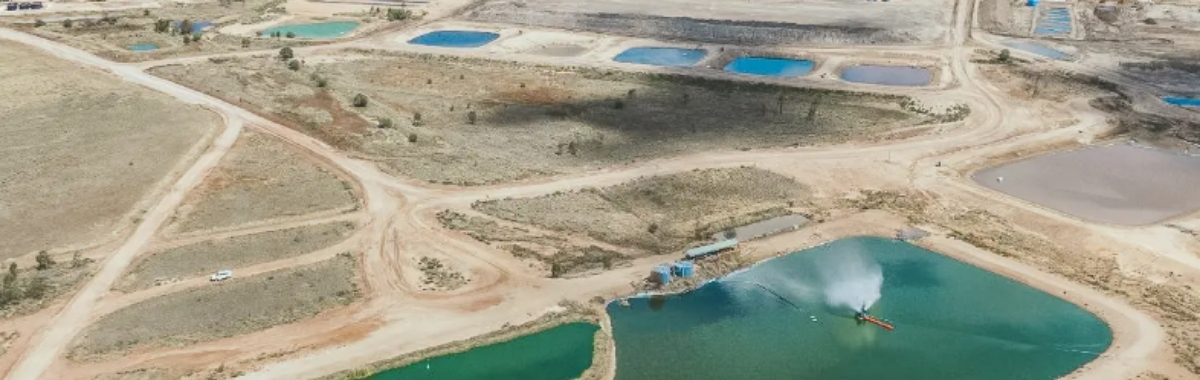
Why does pond-to-pond transfer feel like progress?
Pond-to-pond transfer feels like progress because it creates short-term relief in one part of the site, even though it does not reduce total stored water volume.
When one pond is close to capacity, transferring water to another area can protect access, reduce immediate pressure, and help operations respond to rainfall or inflows. In the short term, that makes it a practical operational tool.
The limitation is that the water remains on site. Instead of reducing the total water burden, the site is redistributing it across other storage areas. That can make the system look more manageable without creating any new airspace.
This is where transfer can become a habit rather than a strategy. Relief in one pond often means tighter capacity somewhere else, leaving multiple areas of the site exposed to the same underlying volume problem.
According to Glencore’s 2024 Sustainability Report, in 2024, 37% of the industrial sites tracked for water targets were located in water-stressed areas. In that context, internal transfer may buy time, but it does not solve the broader challenge of site-wide water balance.
What are the risks of relying on internal water transfer?
Relying on internal water transfer can increase operational, stability, and financial risk because it keeps excess water on site instead of reducing the total volume the operation must manage.
Operational risk increases when pressure is spread across multiple storage areas.
What begins as relief for one pond can quickly become tighter capacity somewhere else, leaving several parts of the site exposed at the same time. When rainfall, inflows, or processing demands change, that lack of available airspace can turn a manageable situation into a site-wide constraint.
Stability risk remains closely tied to stored water volume.
ICMM’s Tailings Progress Report: Implementing the Global Industry Standard on Tailings Management (GISTM) found that 67% of member facilities had reached full conformance with the GISTM, while 33% remained in partial conformance. That matters because the Global Industry Standard on Tailings Management (GISTM) states that operators should minimise the volume of tailings and water placed in external tailings facilities, particularly where flowable water can increase the physical area affected by a potential failure.
Decant pond management remains a practical risk issue, not just a reporting issue.
MMG’s 2025 GISTM Disclosure Report identifies decant pond control as a critical operational priority for maintaining TSF stability, with several active facilities still assessed as only partially conformant because of water-to-tailings management challenges.
Financial risk can escalate quickly when containment stays near capacity.
The Lahontan Water Board and US EPA’s Leviathan Mine Update in 2024 reported that summer pond water treatment and site maintenance costs for the 2024–2025 fiscal year rose to nearly US$1.3 million after record precipitation pushed ponds close to capacity.
Taken together, these risks show why ongoing pond-to-pond transfer is rarely a complete strategy. It may preserve flexibility in the short term, but it can also leave operations managing the same water burden under tighter site-wide, regulatory, and financial constraints.
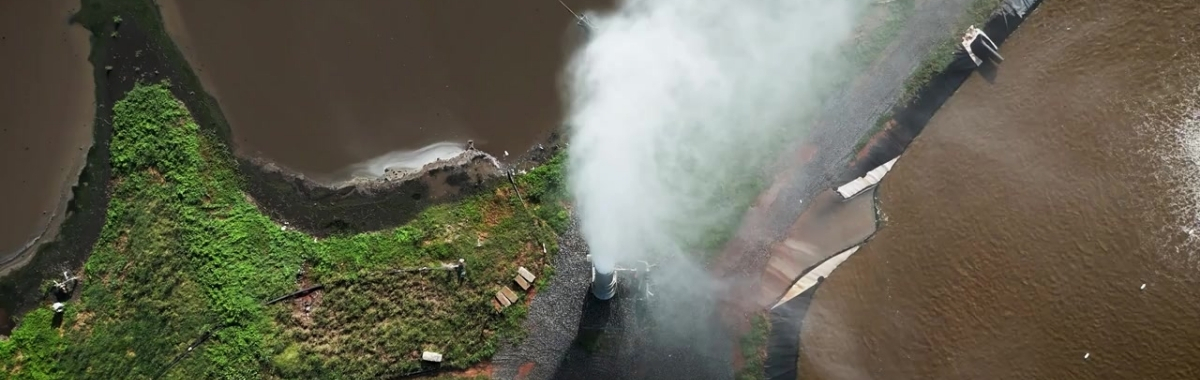
Why is storage alone no longer enough?
Storage still plays an important role in mine water management, but it is no longer enough as a standalone strategy when sites are carrying high water volumes, managing variable inflows, and operating under tighter compliance expectations.
1. Regulatory expectations are changing.
Resources Victoria’s Guidelines for the Management of Water in Mines and Quarries state that operators should apply the waste hierarchy to mine water management, with waste minimisation and treatment preferred ahead of disposal.
That means containment and storage may still be necessary, but they are no longer enough on their own to demonstrate a strong long-term water strategy.
2. Storage preserves volume rather than reducing it.
When excess water stays on site without an active removal pathway, pressure can build across ponds, containment systems, and tailings infrastructure. This leaves less available airspace when rainfall, inflows, or operational conditions change.
3. Climate variability is reducing storage buffer.
The Murray–Darling Basin Authority’s 2025 Sustainable Rivers Audit highlights the effect of increasing temperatures and higher evapotranspiration on river systems and water availability, reinforcing the need to rethink how water is stored, moved, and managed under changing climatic conditions.
What this means for mine water management.
Storage remains part of the system, but it is no longer enough as the primary answer. Stronger mine water management depends on combining storage with active water reduction, treatment, and site-wide planning that creates capacity instead of simply preserving pressure.
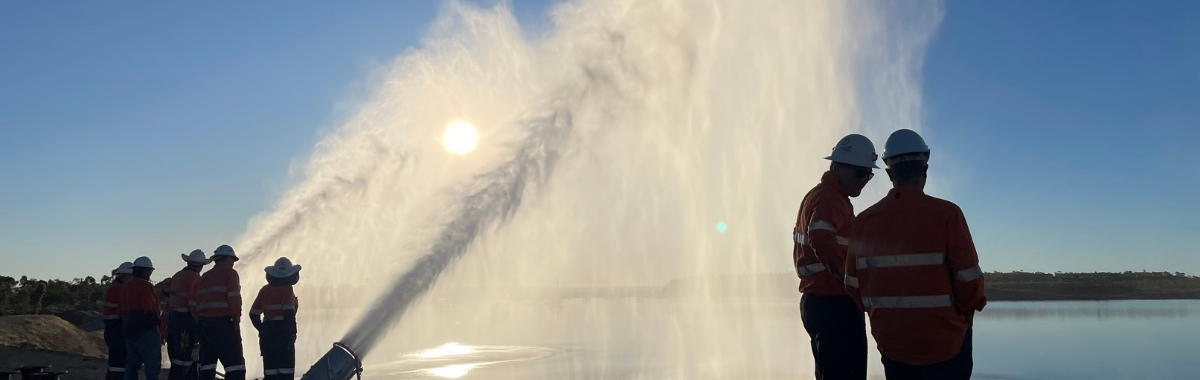
What is mechanically enhanced evaporation and how does it reduce site water risk?
Mechanically enhanced evaporation reduces site water risk by actively removing water from site inventory, rather than redistributing it between storage areas.
It creates airspace by reducing stored volume.
Unlike pond-to-pond transfer, mechanically enhanced evaporation addresses the underlying volume issue. By removing water from the system, it helps sites recover usable storage capacity and maintain more flexibility across ponds, containment areas, and tailings infrastructure.
It supports a more proactive response to rainfall and inflows.
According to University of Kentucky research published in the World of Coal Ash 2025 Conference Proceedings, precision mechanical evaporation can create critical airspace before extreme weather events by using atomisation to remove water mass directly from site rather than shifting it between ponds.
That matters because creating airspace before capacity becomes critical gives operations more control over how water is managed when conditions change.
It aligns with the need for enhanced volume reduction.
New Mexico State University’s WERC 2026 Environmental Design Contest Task 5: Enhanced Evaporation of Produced Water highlights the need for enhanced evaporation processes to manage large industrial water volumes cost-effectively.
For mine sites managing sustained inflows, limited storage headroom, or seasonal pressure, mechanically enhanced evaporation provides a more direct pathway to reduce stored water volume and restore capacity.
It changes the role of water management on-site.
Once water reduction becomes part of the plan, the question shifts from where water can be moved next to how much water can be removed before it becomes a constraint. That shift is important because it moves mine water management away from repeated internal redistribution and toward a more stable, proactive operating model.
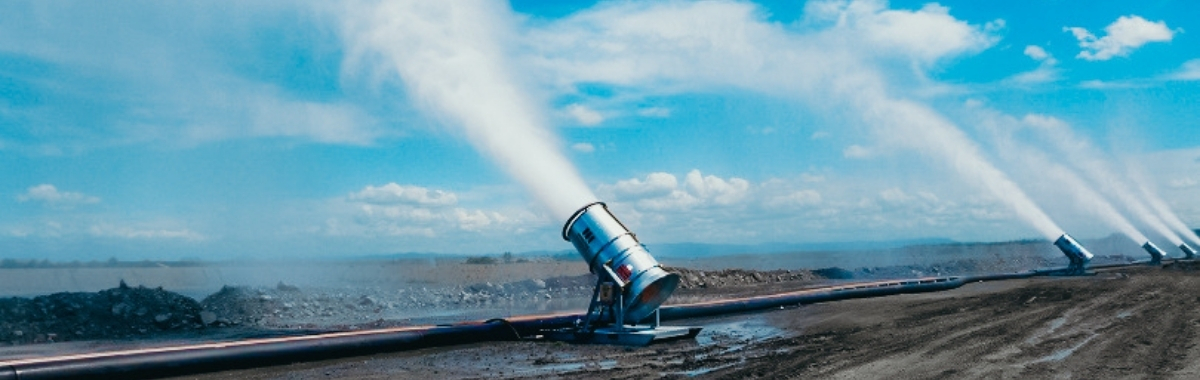
Pond-to-pond transfer vs. mechanically enhanced evaporation.
The difference is straightforward: one moves water around site, while the other helps reduce the total volume the site must continue to manage.
| Feature | Pond-to-pond transfer | Mechanically enhanced evaporation |
| Net site water volume | No reduction. Water is moved between storage areas. | Active reduction, with up to 50% efficiency per pass. |
| Effect on capacity | Creates short-term relief in one area, but can tighten capacity elsewhere. | Creates usable airspace by reducing stored volume. |
| Operational impact | Can help manage immediate pressure, but often requires repeated pumping and ongoing coordination. | Supports a more proactive water balance strategy by reducing reliance on repeated transfers. |
| Risk profile | Can increase site-wide storage pressure if multiple ponds remain near capacity. | Helps reduce storage pressure ahead of rainfall and peak inflow periods. |
| Strategic role | Tactical control measure. | Long-term volume reduction measure within a broader water management plan. |
The comparison highlights why internal transfer and evaporation serve different purposes in mine water management. Transfer can provide short-term flexibility when one area is under pressure, but it does not change total site water inventory.
Mechanically enhanced evaporation plays a different role by actively reducing stored volume, helping sites create airspace and strengthen their overall water balance strategy.
Minetek’s engineered approach to high-rate water evaporation.
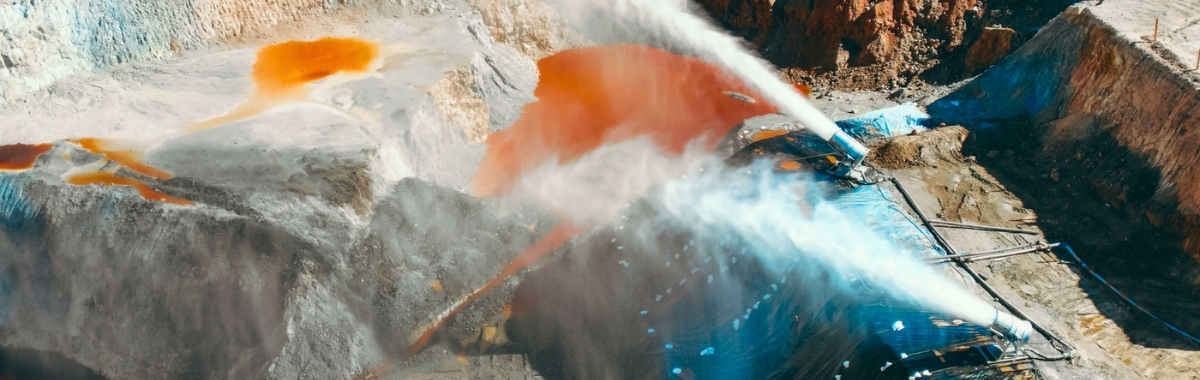
Minetek applies high-rate mechanical evaporation through engineered system design built for mining conditions.
Our systems use atomisation and optimised airflow, supported by fan engineering principles, to deliver rapid water volume reduction in demanding environments. This matters because mine water often contains high levels of dissolved solids, suspended solids, and variable chemistry that can challenge conventional equipment.
Minetek water evaporators are designed to handle high-TDS and high-TSS waters, solids up to 4.0 mm, and pH ranges from 1.8 to 14+. Our evaporation systems can process in excess of 135 m³/hour per unit, with automated 24/7 operation and scalable deployment across different site requirements.
Minetek capability at a glance.
- Engineered for mine water: Designed for high-TDS, high-TSS, acidic, caustic, and contaminated water conditions.
- High-rate performance: More than 135 m³/hour per unit, with larger site configurations scaling significantly higher.
- Low-fouling design: Engineered nozzle performance helps support reliability in difficult water conditions.
- 24/7 automated operation: Continuous operation helps sites respond faster to changing water volumes.
- Rapid deployment: Systems can be mobilised quickly where excess water is already affecting operations.
Move beyond short-term transfer and reduce stored water volume at the source.
If your site is relying on ongoing pond-to-pond transfer to manage capacity, Minetek Water can help you take a more proactive approach.
Connect with our Minetek water management experts to discuss the right evaporation solution for your site conditions, water volumes, and operational requirements.
Frequently Asked Questions (FAQs)
Pond-to-pond transfer can provide short-term relief, but it does not reduce the total volume of water a site must continue to manage.
Repeated internal transfer can spread capacity pressure across multiple storage areas, reducing usable airspace and limiting flexibility when rainfall or inflows increase.
The main risk is that excess water remains on site, increasing operational, compliance, and storage pressure instead of removing the underlying volume issue.
Mechanically enhanced evaporation is a water reduction method that removes water from site inventory by accelerating evaporation, helping sites reduce stored volume and create usable airspace.
Mechanically enhanced evaporation reduces site water risk by actively lowering stored water volume, which helps relieve pressure on ponds, containment areas, and tailings-related water systems.
A mine site should consider mechanically enhanced evaporation when pond-to-pond transfer becomes routine, storage capacity stays tight, or excess water starts limiting operational flexibility.
Minetek helps reduce excess water at mine sites through mechanically enhanced evaporation technology designed to create airspace, reduce stored water volume, and support stronger long-term water management.