 Portuguese
  English (United States)
  English
  Spanish
  French
  Indonesian
  Italian
 Selecionar o tipo certo de ventilador para minas subterrâneas é crucial para manter a conformidade, controlar o calor e os contaminantes, e dar suporte a operações subterrâneas seguras e eficientes. Em ambientes de mineração profunda, a ventilação eficaz não se trata apenas de mover mais ar. Trata-se de combinar o tipo certo de ventilador e o papel do sistema com a demanda de fluxo de ar, pressão, carga de calor, exposição a partículas de diesel, condições de gás e metas de eficiência energética.
À medida que as minas subterrâneas se aprofundam e as redes de ventilação se tornam mais complexas, a seleção de ventiladores tem um impacto direto no gerenciamento do fluxo de ar e na qualidade do ar, no desempenho regulatório e nos custos operacionais. Ventiladores primários, secundários, de reforço e de britagem desempenham cada um um papel distinto nos sistemas mais amplos de ventilação de minas.
Este guia descreve os principais tipos de ventiladores utilizados em ventilação de minas subterrâneas, as condições que eles abordam e os critérios de seleção que os líderes de engenharia devem considerar ao equilibrar conformidade, controle e ventilação energeticamente eficiente em condições de minas profundas.
Key summary: Underground ventilation fan selection for compliance and control.
- Fan type fit: Different fan types support different duties across primary airflow, local ventilation, booster support, and crusher applications.
- Compliance impact: Ventilation selection affects heat and gas control, diesel particulate dilution, and air quality compliance.
- Deep mine pressure: Deeper mines place greater demand on airflow delivery, pressure performance, and ventilation control.
- Sizing inputs: Fan selection should reflect airflow volume, pressure, mine layout, resistance, equipment activity, and future expansion.
- Energy performance: Energy-efficient ventilation depends on matching fan type and system role to actual site conditions.
- Minetek Air solutions: Minetek supplies Primary Raptor™ Fans, Secondary Raptor™ Fans, Booster Fans, and Crusher Fans for underground mine ventilation applications across complex and demanding operating conditions.
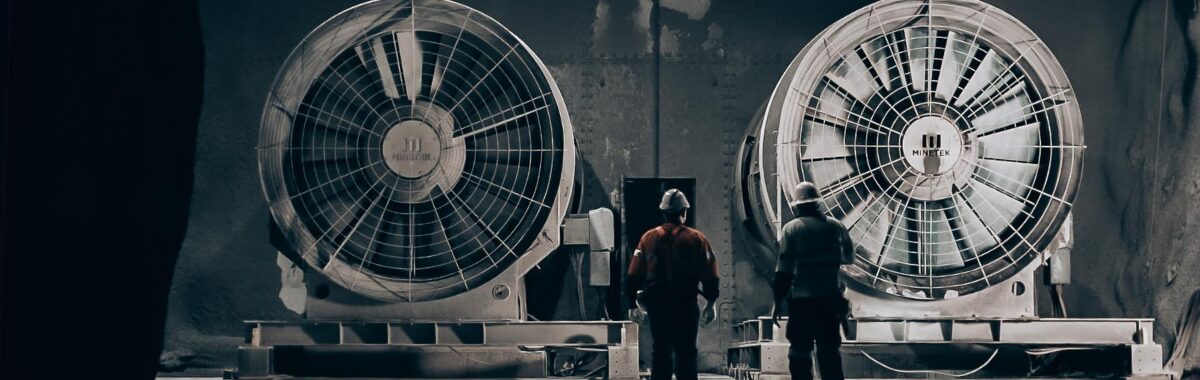
Tipos de ventiladores de minas subterrâneas e funções do sistema.
Different underground mine ventilation fan types serve different roles across the broader ventilation network. In deep mining environments, selecting the right fan is not only about airflow volume. It also involves matching the fan type to the duty it needs to perform across mine-wide airflow delivery, local ventilation support, pressure-intensive circuits, and application-specific air quality control.
No single fan type is designed to solve every ventilation challenge. Effective mine ventilation systems rely on the right combination of fan types to support airflow management, compliance performance, and operational efficiency across changing underground conditions.
| Tipo de ventilador | Função primária do sistema | Mais adequado para | Relevância de conformidade e controle |
|---|---|---|---|
| Ventiladores de ventilação primária | Dê suporte ao fluxo de ar em toda a mina através da rede de ventilação principal | Circuitos principais de admissão e retorno de ar, infraestrutura de ventilação subterrânea ampla | Auxilia no desempenho geral da ventilação de minas subterrâneas, na distribuição de ar e no controle de ventilação em todo o local. |
| Ventoinhas de ventilação secundária | Entregar um fluxo de ar direcionado para áreas de trabalho subterrâneas específicas | Títulos de desenvolvimento, zonas de trabalho ativas e pontos de entrega de fluxo de ar local | Helps maintain airflow management and air quality where personnel and equipment are working directly |
| Ventiladores de reforço | Reforçar o fluxo de ar por seções da mina mais profundas ou de maior resistência | Circuitos subterrâneos extensos, redes mais profundas e caminhos de alta pressão | Supports heat and gas control by helping maintain required airflow through more demanding sections |
| Fãs de trituradores | Fornecer suporte de ventilação localizado para áreas de processo subterrâneas específicas | Zonas de britagem subterrâneas e ambientes relacionados específicos da aplicação | Ajuda a apoiar o controle da qualidade do ar local e o desempenho da ventilação direcionada em áreas operacionais confinadas |
Selecting between these ventilation fan types depends on the layout, resistance profile, and operating priorities of the mine. In most underground environments, the strongest-performing ventilation strategy combines fan types according to system role, rather than relying on a single solution to manage every airflow requirement.
Desempenho de ventilação em condições de mineração subterrânea profunda.
Ventilation performance becomes harder to maintain as underground mines extend deeper, develop further from primary air pathways, and operate across more complex networks. In these conditions, ventilação de mina subterrânea must do more than deliver air volume. It must maintain consistent airflow, manage resistance, and support safe working conditions where heat, diesel particulate, and gases can build more quickly.
Why is ventilation performance critical for underground mining safety?
Ventilation performance is critical for underground mining safety because it directly affects the quality, quantity, and distribution of air reaching underground work areas.
When ventilation performance falls short, the consequences can escalate quickly:
- Heat build-up: Higher thermal load can reduce working comfort and increase safety risk.
- Diesel particulate exposure: Poor airflow makes it harder to dilute contaminants generated by mobile equipment.
- Gas accumulation: Inadequate air movement can allow hazardous gases to remain in active zones.
- Compliance pressure: Poor ventilation performance can place operations closer to air quality and exposure limits.
- Operational disruption: Unsafe or unstable airflow conditions can affect access, productivity, and continuity underground.
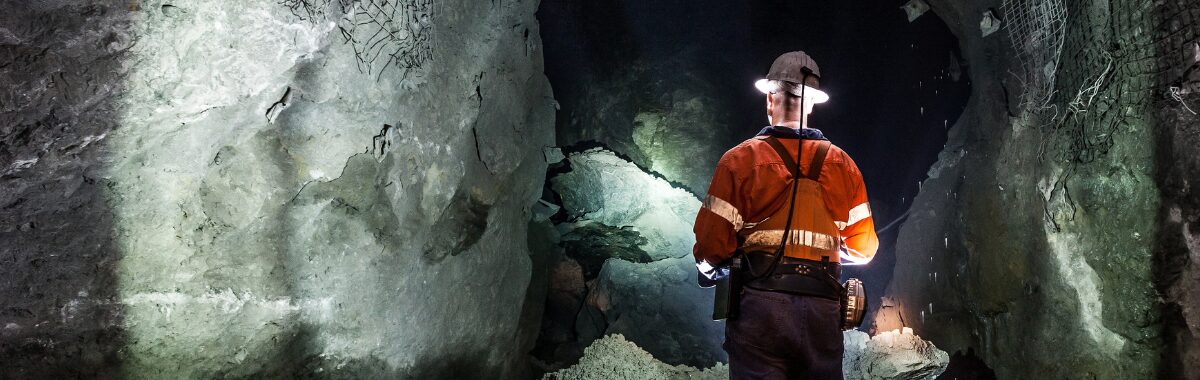
Deep mine conditions that increase ventilation demand.
Deep underground mines place more pressure on sistemas de ventilação de minas because airflow must be maintained across longer, more resistant, and more variable networks.
Key conditions that increase ventilation demand include:
- Greater mine depth: Deeper operations typically require ventilation to perform across longer vertical and horizontal distances.
- Longer airways: Extended intake and return paths can make it harder to maintain required airflow volumes.
- Higher network resistance: More complex layouts increase the pressure required to move air effectively.
- Rising heat load: Deeper and more intensive operations often face greater thermal management demands.
- Changing development areas: Active headings and production zones can shift airflow requirements over time.
- Higher equipment activity: More diesel-powered equipment can increase contaminant dilution requirements.
How does mine expansion change ventilation system requirements?
Mine expansion changes ventilation requirements because the system must support a larger and often more demanding underground footprint.
In practical terms, expansion can mean:
- More distance between primary air pathways and active working areas
- More resistance across the ventilation network
- More variability in where airflow is needed most
- More pressure on existing fan capacity and system design
A ventilation system that performed well earlier in the mine life may no longer provide the same level of control once workings extend deeper or further from the original layout. That is why fan selection, system configuration, and airflow distribution need to evolve with the mine.
Which ventilation solutions are best suited to deep underground mining and air quality compliance?
The ventilation solutions best suited to deep underground mining and air quality compliance are those that maintain airflow performance across longer, more resistant networks while supporting heat control, gas management, diesel particulate dilution, and stable air delivery in active work areas.
In most underground operations, this means combining fan types according to system role:
- Primary ventilation fans: Support broad airflow through the main underground ventilation network.
- Secondary ventilation fans: Deliver targeted airflow into headings and active underground work areas.
- Booster fans: Help maintain airflow through deeper or higher-resistance sections of the mine.
- Crusher fans: Support localised airflow management and air quality control in specific underground applications.
The right solution depends on mine depth, ventilation resistance, production layout, contaminant profile, and compliance priorities. In deep underground environments, ventilation performance depends on how well these system elements are matched to actual site conditions, not simply on total airflow capacity.
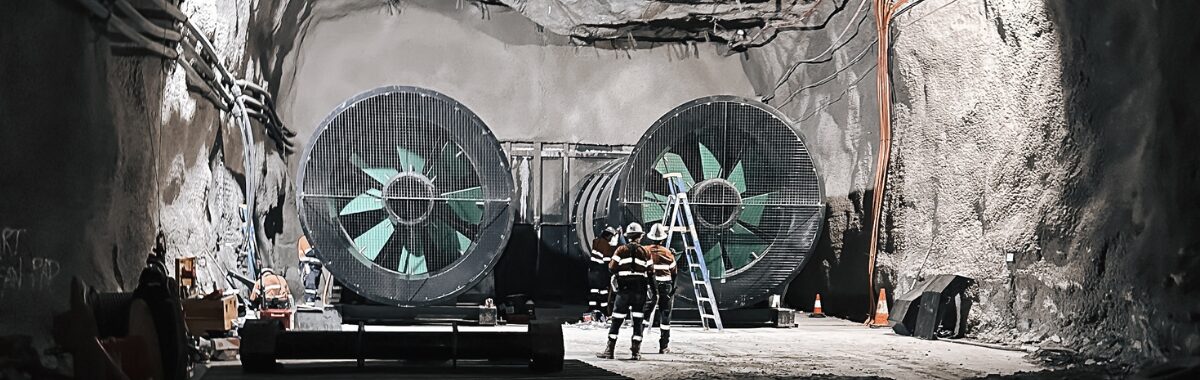
Selecting mine ventilation systems for compliance and control.
Selecting the right mine ventilation systems requires more than meeting a nominal airflow target. In underground operations, system selection should reflect the duty the fan must perform, the areas it needs to serve, and the compliance outcomes it must support across the ventilation network.
Selection criteria for underground ventilation fan performance.
Fan selection should be based on a clear set of engineering and operational criteria.
Key selection criteria include:
- System role: Is the fan intended for primary ventilation, secondary delivery, booster duty, or a localised application?
- Airflow requirement: How much air must the system deliver to support the intended underground area?
- Pressure requirement: How much resistance must the fan overcome to maintain that airflow?
- Ventilation pathway: How far and through what type of network must the air travel?
- Duty stability: Will the fan operate under relatively stable conditions, or will demand vary across the mine?
- Expansion fit: Can the selected system support future changes in mine layout or production activity?
Compliance inputs that affect ventilation system design.
Ventilation selection also needs to reflect the control outcomes the system is expected to support underground.
These inputs typically include:
- Heat management requirements
- Diesel particulate dilution
- Gas control priorities
- Air quality targets in active work areas
- Site-specific compliance expectations
What should engineering consultants evaluate when selecting mine ventilation systems?
Engineering consultants should assess whether the selected fan type and system design are aligned to the mine’s actual ventilation duties.
Key evaluation points include:
- Application fit: Is the selected fan type suited to the intended underground function?
- Network fit: Does the system match the layout and ventilation path it will serve?
- Control fit: Will the system support required heat, gas, and contaminant control outcomes?
- Performance fit: Can the fan maintain the required airflow under expected operating conditions?
- Scalability fit: Will the solution remain suitable as the mine develops?
Sizing inputs for deep underground ventilation applications.
Accurate sizing depends on the conditions the ventilation system must manage in practice, not only on headline airflow figures.
Important sizing inputs include:
- Required airflow volume
- Static pressure demand
- Ventilation route length
- Resistance profile
- Leakage and system losses
- Equipment activity
- Heat and contaminant load
- Planned system expansion
Heat, gas, and diesel particulate control underground.
Ventilation systems play a direct role in controlling underground conditions that affect safety, compliance, and operational continuity. In practical terms, ventilation must deliver air where it is needed most, maintain effective circulation through active zones, and support acceptable working conditions in areas affected by heat, gases, and diesel-powered equipment.
How do ventilation systems support heat and gas control underground?
Ventilation systems support heat and gas control by moving fresh air into active underground areas and removing contaminated or heated air from the working environment.
This helps mining operations:
- Manage heat load in active headings and production zones
- Dilute hazardous gases before they accumulate in occupied areas
- Maintain air movement across zones with changing ventilation demand
- Support safer working conditions where underground exposure risks are higher
Managing diesel particulate through effective airflow distribution.
Diesel particulate control depends not only on total air volume, but on how effectively that air reaches the areas where diesel equipment is operating.
Effective airflow distribution helps:
- Dilute diesel particulate in active work zones
- Reduce stagnant air pockets where contaminants can linger
- Support cleaner air pathways around equipment-intensive areas
- Maintain more consistent air quality across changing underground activities
This is why fan selection and system configuration matter. A ventilation system may have sufficient capacity overall but still underperform if airflow is not directed effectively to the points of highest exposure.
How can mines improve underground airflow and air quality in active work areas?
Mines can improve underground airflow and air quality by aligning fan type, system layout, and ventilation delivery to the conditions of each working area.
Practical improvement measures include:
- Matching fan type to duty across primary, secondary, booster, and localised applications
- Improving airflow delivery to headings, production areas, and other active zones
- Supporting consistent air movement through areas with changing operational demand
- Reducing poorly ventilated zones where heat or contaminants can build
- Reviewing system fit as mine layouts and ventilation requirements evolve
In most operations, improving air quality is not about one isolated equipment change. It comes from a ventilation strategy that supports the right airflow in the right place.
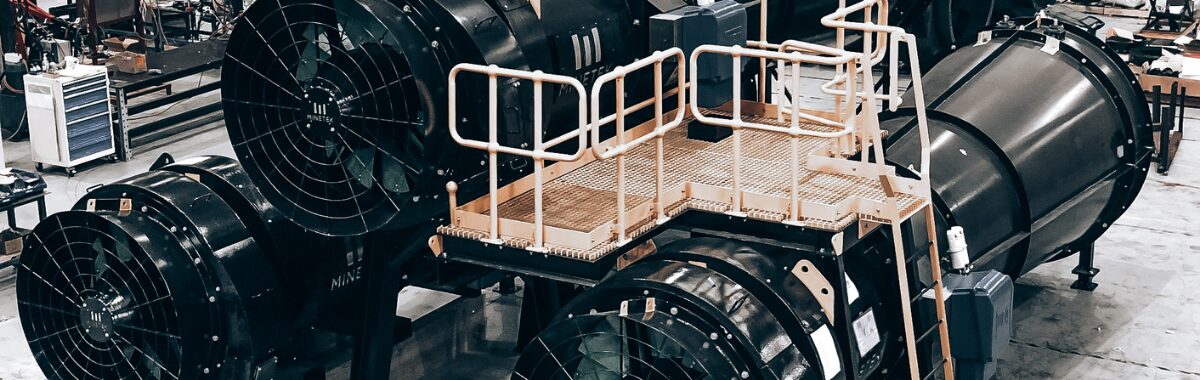
Minetek underground mine ventilation solutions.
Minetek delivers engineered underground ventilation technology designed to support airflow performance across complex and demanding mining environments. From mine-wide ventilation infrastructure to localised underground applications, Minetek’s fan range helps operations align ventilation system selection with airflow delivery, control requirements, and site-specific operating conditions.
| Minetek Fans | Designed for | Operational fit |
|---|---|---|
| Ventiladores Raptor™ primários | High-volume airflow delivery across the main underground ventilation network | Best suited to operations requiring broad, stable airflow across core underground circuits |
| Ventiladores Raptor™ secundários | Targeted airflow delivery into headings and active underground work areas | Best suited to development areas and local work zones where airflow needs to be directed precisely |
| Ventiladores de reforço | Additional airflow support through deeper or higher-resistance pathways | Best suited to extended circuits where airflow becomes harder to sustain |
| Ventiladores de trituradores | Localised ventilation support around underground crusher infrastructure | Best suited to confined process areas requiring dedicated air movement and local air quality support |
Which Minetek Air solution is best suited to your site conditions?
The right Minetek Air solution depends on the ventilation duty, the underground area being served, and the control outcomes the system needs to support.
- Primary Raptor™ Fans: Broad mine-wide airflow duties
- Secondary Raptor™ Fans: Targeted airflow delivery to active underground zones
- Booster Fans: Additional support through deeper or higher-resistance pathways
- Crusher Fans: Localised ventilation support for underground crusher applications
In many underground operations, the most effective approach is to combine the right fan types across the ventilation network so airflow performance, compliance support, and operational efficiency align with actual site conditions.
Need to select the right underground mine ventilation solution for your site?
Talk to one of our Minetek ventilation experts about airflow requirements, compliance priorities, and ventilation system selection for your operation.
Perguntas frequentes (FAQ)
Underground mine ventilation typically uses a combination of primary ventilation fans, secondary ventilation fans, booster fans, and crusher fans. Each fan type serves a different role across the ventilation network, from mine-wide airflow delivery to targeted airflow support in active underground work areas.
Ventilation performance is important because it helps maintain safe working conditions, control heat and contaminants, and support compliance across deeper and more complex underground networks. As mine depth and resistance increase, ventilation systems need to maintain stable airflow where it is needed most.
Mines select the right ventilation system by assessing airflow demand, pressure requirements, mine layout, resistance, heat load, diesel particulate exposure, gas conditions, and site-specific compliance priorities. The most effective solution is usually a combination of fan types matched to the required duty across the ventilation network.
Ventilation solutions that improve underground airflow and air quality include primary fans for broader network airflow, secondary fans for targeted delivery into headings and work zones, booster fans for deeper or higher-resistance pathways, and crusher fans for localised process areas. The right combination depends on site conditions and ventilation objectives.
Minetek supplies engineered underground ventilation technology for mining operations, including Primary Raptor™ Fans, Secondary Raptor™ Fans, Booster Fans, and Crusher Fans. These solutions are designed to support airflow performance across demanding underground mining environments.