 Indonesian
  English (United States)
  English
  Spanish
  Portuguese
  French
  Italian
 Choosing the right underground mine ventilation system depends on matching fan type, airflow capacity, and pressure performance to the mine’s layout, heat load, gas risks, and operational requirements. Selecting the right system affects worker safety, energy costs, and regulatory compliance. As underground operations extend deeper and airflow networks grow more complex, the difference between adequate and optimised ventilation becomes measurable in operational hours, power consumption, and safety outcomes.
Underground ventilation controls heat, dilutes hazardous gases, manages diesel particulate, and delivers fresh air to active work areas. It supports safe working conditions, regulatory compliance, and consistent production. As mine development advances, ventilation systems must also accommodate longer airflow paths, greater resistance, and changing operational demands across the network.
Minetek delivers engineered ventilation technology designed for demanding underground mining environments. This article covers the essential factors involved in selecting mine ventilation systems, from understanding fan types and system roles to assessing site-specific operating conditions and long-term efficiency requirements.
Key takeaways: How to choose underground mine ventilation systems.
- Application-specific fan selection: Effective underground mine ventilation depends on matching the right fan type to its intended role across primary, secondary, booster, and localised applications.
- Ventilation performance outcomes: System performance directly affects heat control, gas management, diesel particulate dilution, and air quality compliance in deep underground operations.
- System design criteria: Fan selection should account for airflow volume, static pressure demand, mine layout resistance, equipment activity, and future expansion plans.
- Adaptive ventilation control: Ventilation on Demand systems adjust airflow based on real-time underground conditions, improving energy efficiency without compromising safety or compliance.
- Power consumption reduction: Minetek’s Raptor Series fans can reduce ventilation power consumption by up to 56% through Performance On Demand technology.
What is underground mine ventilation and why does it matter?
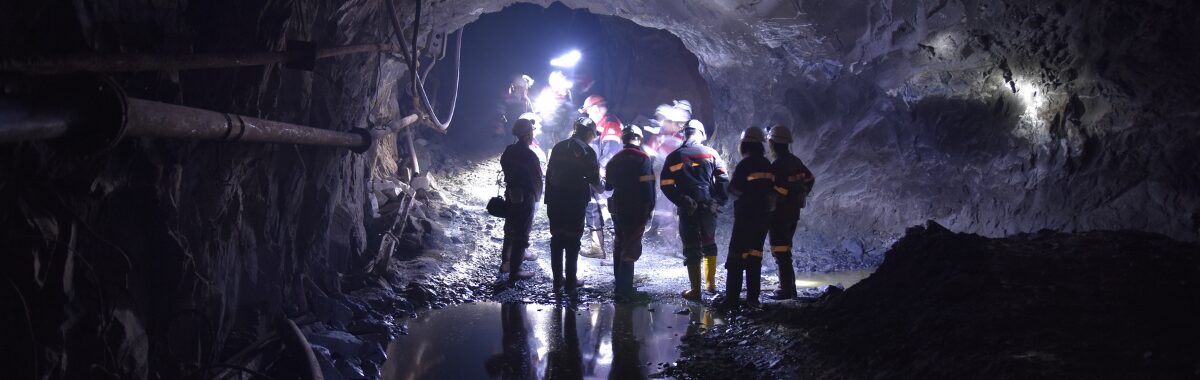
Underground mine ventilation is the engineered movement of air through underground workings to maintain safe and productive working conditions. It delivers fresh air to active headings, production areas, and service zones, while directing contaminated air out through return pathways.
The system controls methane and other hazardous gases, reduces dust concentrations, dilutes diesel emissions, and manages heat in deeper workings. Ventilation is a mine-wide engineering function that directly affects safety, regulatory compliance, and operational continuity.
Poor ventilation creates immediate and measurable risks. Gas concentrations can rise, heat stress can affect worker performance and safety, and dust exposure can contribute to long-term occupational illness. Effective ventilation maintains airflow and air quality across underground work areas and supports safer, more reliable production.
How much energy do mine ventilation systems consume?
Ventilation systems represent one of the largest energy consumers in underground mining operations. According to Euler De Souza in Cost Saving Strategies in Mine Ventilation, ventilation systems may account for 40% to 50% of the energy consumption of a mine operation and 25% to 40% of total energy costs. This makes system efficiency a direct driver of operating costs.”
The energy demand stems from moving air through long underground routes and overcoming network resistance. As mines develop deeper, airflow must travel greater distances through more complex pathways. Pressure losses accumulate across the network, requiring more fan power to maintain required air volumes.
However, the problem often involves inefficient delivery rather than insufficient capacity. Excessive pressure loss, air leakage, poor system balancing, and inflexible operating conditions can all increase power consumption without improving ventilation where it is actually needed. This is why modern operations increasingly adopt energy-efficient ventilation strategies such as Ventilation on Demand systems.
What are the main types of underground mine ventilation fans?
Different fan types serve distinct roles across your underground ventilation network. Understanding these roles helps you match equipment to operational requirements. No single fan type solves every ventilation challenge.
Primary Ventilation Fans
Primary fans move large volumes of fresh air into the mine through main intake shafts or adits. These fans establish the overall airflow capacity of your underground operation. They create the pressure differential that drives air movement through the entire ventilation circuit.
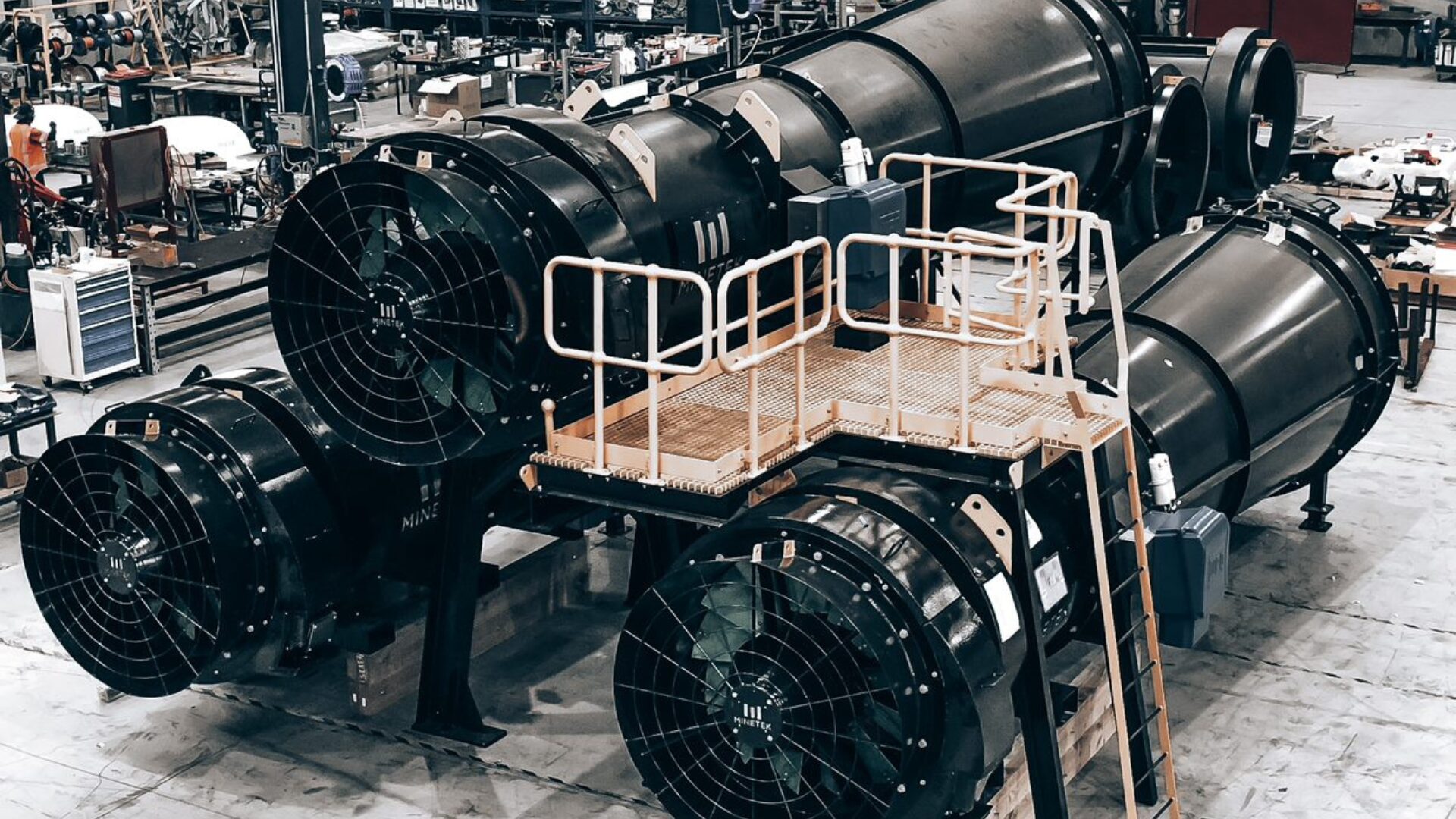
Primary fans typically operate at the surface and must generate sufficient pressure to push air through the main network against all accumulated resistance. Minetek’s Raptor Series Primary Fans are designed to move significant air volumes while reducing power consumption through high-efficiency design and customisable configurations including surface mounting, horizontal mounting, and bulkhead mounting.
Secondary Ventilation Fans
Secondary fans deliver targeted airflow to specific underground work areas not directly served by the primary circuit. These include development headings, stopes, service facilities, and active production zones.
Secondary fans push air through flexible ducting or ventilation tubing to reach areas that would otherwise remain poorly ventilated. They must overcome the resistance of duct runs while maintaining adequate air velocity at the face. Minetek’s Raptor Series Secondary Fans can push air greater distances on various duct sizes than standard secondary fans, making them suited for development and long duct run applications.
Kipas Penguat
Booster fans strengthen airflow through deeper or higher-resistance sections of the mine. As workings extend further from primary air pathways, resistance increases and airflow can drop below required levels.
Booster fans operate in series with primary fans to maintain adequate air pressure and volume through extended circuits. They strategically optimise underground airflow by connecting with the main ventilation system. Minetek Raptor Series Booster Fans help deep underground operations maintain required airflow performance across demanding ventilation networks.
Crusher Fans
Crusher fans address localised ventilation requirements around underground crushing and material handling infrastructure. These areas generate significant dust during dumping and crushing processes.
Crusher fans must handle high abrasion rates caused by airborne particulate passing through the fan. Minetek Crusher Series Fans feature robust steel impellers designed to withstand demanding conditions without performance degradation.
How do mine operators determine airflow requirements for underground ventilation?
Calculating required airflow involves assessing multiple factors specific to your operation. You need sufficient air volume to dilute contaminants, manage heat, and maintain breathable conditions across all underground work areas.
1. Regulatory minimum air quantities
Mining regulations establish baseline air quantity requirements. In the United States, 30 CFR § 75.325 specifies minimum airflow for underground coal mines. Metal and non-metal mines operate under similar standards requiring adequate air to dilute contaminants to safe levels.
Australian regulations require ventilation sufficient to maintain oxygen content above 19% and keep contaminant concentrations below workplace exposure standards. Your ventilation plan must demonstrate how calculated air quantities meet these requirements across all working areas.
2. Contaminant dilution calculations
Beyond regulatory minimums, you must calculate air quantities needed to dilute specific contaminants. Diesel-powered equipment generates particulate matter and gases requiring dilution. Blasting produces fumes that must be cleared before workers re-enter affected areas.
The required air volume depends on the type and quantity of equipment operating, production rates, and the allowable contaminant concentrations in your jurisdiction. Higher equipment activity or stricter exposure limits demand greater airflow.
3. Heat load assessment
Deeper mines face increasing heat from surrounding rock and groundwater. Air temperature rises as depth increases due to the geothermal gradient. Equipment operation adds additional heat load.
Ventilation must deliver sufficient air volume to manage thermal conditions. In some deep operations, ventilation alone cannot maintain acceptable temperatures, requiring supplementary cooling or refrigeration systems. Your airflow calculations should account for heat sources and target working temperatures.
What factors affect ventilation system pressure requirements?
Understanding pressure requirements helps you select fans capable of maintaining required airflow throughout your ventilation network. Pressure must overcome all resistance the air encounters as it travels through the mine.
Airway resistance
Air flowing through underground passages experiences friction against tunnel walls and surfaces. Rougher surfaces create more resistance. Smaller cross-sectional areas increase air velocity and resistance. Longer airways accumulate more total pressure loss. The total resistance of a mine’s ventilation network determines the pressure your fans must generate. As mines develop and airways extend, resistance increases. This is why booster fans become necessary in deeper operations.
Shock losses
Airflow direction changes, contractions, expansions, and obstacles create additional pressure losses. Ventilation doors, regulators, brattices, and other control devices add resistance to the system. Poor airway design or obstructions can significantly increase shock losses. Smooth transitions and properly designed airways minimise unnecessary pressure requirements.
Air leakage
Leakage occurs when air escapes the intended ventilation pathway through cracks, damaged seals, or poorly maintained controls. Leakage represents wasted energy because your fans work to move air that never reaches its intended destination. Regular maintenance of ventilation controls and seals reduces leakage. System audits help identify where air is escaping and prioritise repairs.
How does Ventilation on Demand (VoD) reduce energy consumption?
Ventilation on Demand (VoD) adjusts airflow according to actual underground conditions rather than running at constant maximum capacity. This approach can deliver substantial energy savings while maintaining safety and compliance.
1. Real-time airflow adjustment
VoD systems use sensors throughout the mine to monitor air quality, temperature, equipment location, and personnel presence. Based on this real-time data, the system adjusts fan speeds and airflow distribution to match current requirements.
When areas are unoccupied or equipment is idle, airflow can be reduced. When activity increases, the system responds by increasing ventilation to affected zones. Research on ventilation efficiency describes VoD as a method to maintain safety while reducing fan energy consumption by adjusting power according to changing underground parameters.
2. Variable Frequency Drives
Variable Frequency Drives (VFDs) enable precise fan speed control. Unlike fixed-speed fans that run at full capacity regardless of demand, VFD-equipped fans adjust their operating point to match required airflow.
Power consumption in fan applications follows the cube law, meaning small reductions in speed yield disproportionately large energy savings. A 20% reduction in fan speed can reduce power consumption by approximately 50%.
3. Minetek Performance On Demand Technology
Minetek Kinerja Sesuai Permintaan (POD) mechanism enables fans to adjust their operating performance according to ventilation requirements. This technology can reduce power consumption costs by up to 56% compared to fixed-speed operation. POD-equipped fans deliver required airflow while minimising energy waste during periods of lower demand.
How to select ventilation fans for deep underground mines?
Deep mining operations place additional demands on ventilation systems. As depth increases, operations face greater heat loads, longer airways, higher resistance, and more complex airflow distribution challenges.
1. Matching fan capacity to duty point
Every fan has a characteristic performance curve showing the relationship between airflow volume and pressure at different operating points. Fans should be selected whose curves intersect with the required operating point at an efficient location. The duty point represents the specific combination of airflow and pressure the system requires. Selecting a fan too large for the duty wastes energy. Selecting a fan too small results in inadequate airflow. Proper fan selection matches capacity to actual requirements.
2. Pressure performance for extended networks
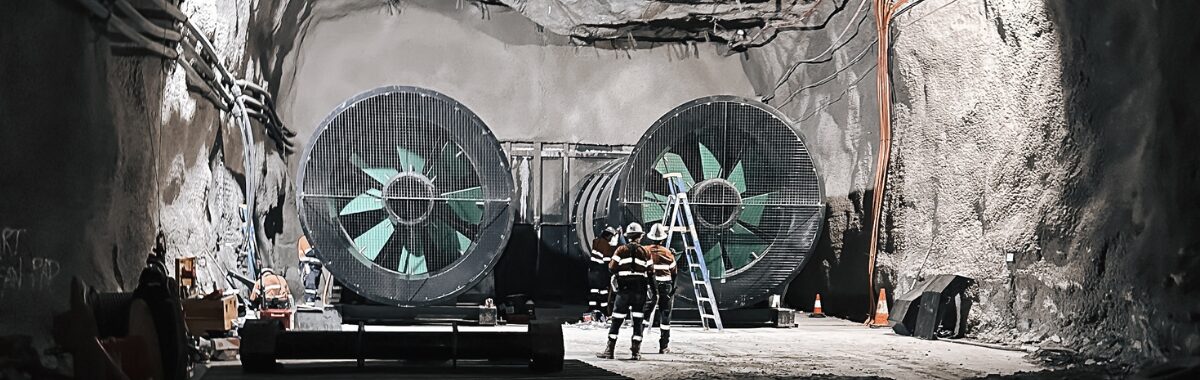
Deep mines require fans capable of generating higher pressures to overcome increased network resistance. Primary fans must have sufficient pressure capability to drive air through the entire circuit. Booster fans become increasingly important as depth extends. Strategically placed boosters maintain airflow through high-resistance sections without requiring oversized primary fans.
3. Configuration flexibility
Underground conditions change as mining progresses. Fan selection should accommodate future requirements, not just current conditions. Consider whether fans can be reconfigured as the mine develops.
Minetek underground ventilation fans offer multiple configuration options including hung from the backs, container mounted, horizontal, ducted, bulkhead, and development applications. This flexibility allows ventilation systems to adapt as operational requirements evolve.
What role does fan efficiency play in ventilation system selection?
Fan efficiency directly affects operating costs and energy consumption over the equipment’s operational life. Higher efficiency fans deliver the same airflow with less power input.
1. Aerodynamic design
Efficient fans incorporate optimised blade profiles, hub designs, and casing geometry to minimise aerodynamic losses. Modern computational fluid dynamics enables designs that extract maximum airflow from input power.
Minetek Raptor Series fans are engineered for high efficiency, which translates to lower power consumption and reduced infrastructure load. High-efficiency design reduces ongoing operational costs throughout the mine’s life.
2. Motor and drive efficiency
Electric motor efficiency affects total system performance. Premium efficiency motors reduce electrical losses compared to standard designs. Properly sized motors operating near their rated load achieve better efficiency than oversized motors running at partial capacity. Drive systems also contribute to overall efficiency. Direct drive configurations eliminate gearbox losses. Variable speed drives, while adding some electrical losses, often improve overall system efficiency by enabling operation at optimal points.
3. System efficiency considerations
Individual component efficiency matters less than total system efficiency. A highly efficient fan connected to leaky ductwork or operating against unnecessary resistance still wastes energy. System-level thinking considers fan efficiency, duct losses, leakage, control effectiveness, and operating strategy together. The goal is delivering required air to working faces with minimum total energy input.
How can mine sites address heat and gas control in underground ventilation?
Controlling heat and managing hazardous gases are primary functions of underground mine ventilation. Your system design must address both challenges simultaneously.
1. Heat management strategies
Ventilation air absorbs heat from rock surfaces, equipment, and workers. Increasing airflow improves heat removal but requires more fan power. The balance between ventilation capacity and cooling requirements depends on your specific conditions.
In very deep or hot mines, ventilation alone may be insufficient. Supplementary cooling through spot coolers, refrigeration plants, or ice systems may be necessary. Your ventilation system must integrate with cooling infrastructure where required.
2. Gas dilution and removal
Ventilation dilutes hazardous gases including methane, carbon monoxide, nitrogen dioxide, and blasting fumes. Fresh air mixes with contaminated air to reduce concentrations below exposure limits.
Effective dilution requires proper airflow direction and distribution. Fresh air should reach workers first, then flow past contamination sources toward return airways. Poor airflow patterns can allow gas accumulation in stagnant zones.
3. Diesel particulate management
Diesel-powered equipment generates particulate matter that must be controlled through ventilation and other measures. Airflow must be sufficient to dilute diesel emissions and prevent accumulation in work areas.
Effective airflow distribution matters as much as total volume. Air must reach areas where diesel equipment operates. Stagnant zones or recirculating flows can concentrate particulate exposure. Minetek secondary and booster fans help deliver targeted airflow where diesel equipment operates.
What should be included in a ventilation system evaluation?
A thorough evaluation ensures the selected ventilation system meets operational requirements and supports long-term efficiency.
Current and future airflow requirements
Document current airflow needs including regulatory minimums, contaminant dilution requirements, and heat management volumes. Project future requirements based on planned development and production increases. Size ventilation capacity for expected future conditions, not just current needs. Retrofitting undersized ventilation systems is expensive and disruptive.
Network resistance analysis
Model the ventilation network to understand resistance throughout the circuit. Identify high-resistance sections that may require booster support. Calculate total pressure requirements for primary fans. Ventilation modelling software helps predict system behaviour and optimise design before installation. Regular surveys confirm that actual performance matches design expectations.
Energy efficiency assessment
Calculate expected energy consumption for different ventilation strategies. Compare fixed-speed operation against variable speed and VoD approaches. Consider total life-cycle costs including installation, energy, and maintenance. Energy-efficient options often have higher upfront costs but lower total costs over the equipment’s operational life. Factor energy savings into the economic analysis.
Maintenance and reliability requirements
Evaluate maintenance requirements for different fan options. Consider accessibility for servicing, spare parts availability, and expected equipment life. Minetek fans feature accessible designs for ease of maintenance. Features like auto grease systems reduce routine maintenance requirements. Wear-resistant impellers extend service life in abrasive conditions.
How can ventilation be integrated with mine control systems?
Modern ventilation systems increasingly integrate with broader mine control and automation infrastructure. This integration enables more sophisticated monitoring and control strategies.
1. Integration with Mine Air Control
Minetek fans can integrate with Mine Air Control (MAC) systems for automated airflow adjustment based on vehicle movements and activity. When equipment enters or leaves an area, ventilation responds automatically to match changed requirements. This integration supports Ventilation on Demand strategies without requiring manual intervention. The system continuously optimises airflow based on actual conditions.
2. Environmental monitoring integration
Real-time sensors monitoring gas concentrations, temperature, humidity, and airflow can trigger automatic ventilation responses. If conditions exceed thresholds, the system increases airflow to affected areas. This continuous feedback loop maintains conditions within target ranges while minimising energy consumption during periods of lower demand.
3. Data collection and analysis
Integrated systems collect operational data that supports ongoing optimisation. Analysis of airflow patterns, energy consumption, and environmental conditions identifies opportunities for improvement. Historical data helps predict future requirements and plan ventilation upgrades ahead of need. Trend analysis can identify developing problems before they affect operations.
What questions should be asked when evaluating ventilation equipment suppliers?
Engaging with equipment suppliers requires asking the right questions to ensure selected equipment meets operational requirements.
Performance verification
Request fan performance curves showing airflow, pressure, power consumption, and efficiency across the operating range. Confirm that curves are based on tested performance, not just theoretical calculations. Ask about performance verification methods and whether independent testing results are available. Understand how quoted efficiency figures were determined.
Application experience
Ask about experience with similar applications and operating conditions. Request references from comparable operations where actual performance can be verified. Minetek has delivered over 2,800 projects in more than 60 countries, demonstrating extensive experience across diverse underground mining environments. This track record helps confirm that equipment performs as expected in real operating conditions.
Support and service capability
Understand what support the supplier offers during installation, commissioning, and ongoing operation. Ask about spare parts availability, service response times, and technical support resources. Minetek delivers end-to-end solutions including engineering design, manufacturing, installation, commissioning, and lifecycle support. This integrated approach ensures ventilation systems perform as designed throughout their operational life.
Making informed underground ventilation decisions.
Choosing the right underground mine ventilation system requires understanding fan types, system roles, airflow requirements, pressure demands, and efficiency considerations. The best solution combines appropriate equipment with informed system design.
Start with clear requirements based on site-specific conditions. Calculate required airflow for safety, compliance, and operational needs. Understand network resistance and how it will change as mining progresses. Consider efficiency across the total system, not just individual components. Evaluate Ventilation on Demand strategies for energy savings. Plan for future requirements, not just current needs.
Minetek delivers underground ventilation technology engineered for demanding mining environments. From primary fans moving mine-wide airflow to secondary fans delivering targeted ventilation to active work areas, Minetek solutions help operations achieve airflow performance, energy efficiency, and compliance outcomes.
FAQs about how to choose underground mine ventilation systems
Underground mines use primary, secondary, booster, and crusher fans. Primary fans move mine-wide airflow through main circuits. Secondary fans deliver air to specific work areas through ducting. Booster fans strengthen airflow through deep or high-resistance sections.
Minetek’s Raptor Series includes fan types designed for each of these roles, helping operations match equipment to specific ventilation duties.
Airflow calculations consider regulatory minimums, contaminant dilution needs, heat management requirements, and equipment activity. You must account for all underground work areas where personnel operate.
The calculation starts with baseline requirements and adds volumes for specific contaminants and heat sources. Your ventilation plan documents how calculated quantities meet regulatory standards.
Ventilation on Demand adjusts airflow based on real-time underground conditions rather than running at constant maximum capacity. Sensors monitor air quality, equipment location, and personnel presence to match ventilation to actual needs.
Minetek’s Performance On Demand technology helps fans adjust performance according to requirements, reducing power consumption by up to 56% compared to fixed-speed operation.
Deeper mines face greater network resistance, higher heat loads, and longer airways. These conditions require fans with higher pressure capability and often necessitate booster fans to maintain airflow through extended circuits.
Fan selection for deep mines must account for current and projected depth. Minetek booster fans help maintain required airflow through demanding ventilation networks as operations extend deeper.
Consider accessibility for servicing, spare parts availability, wear resistance, and expected service intervals. Fans operating in abrasive environments need wear-resistant designs.
Minetek fans feature accessible designs for ease of maintenance, with options like auto grease systems that reduce routine maintenance requirements. Wear-resistant impellers extend service life in demanding conditions.